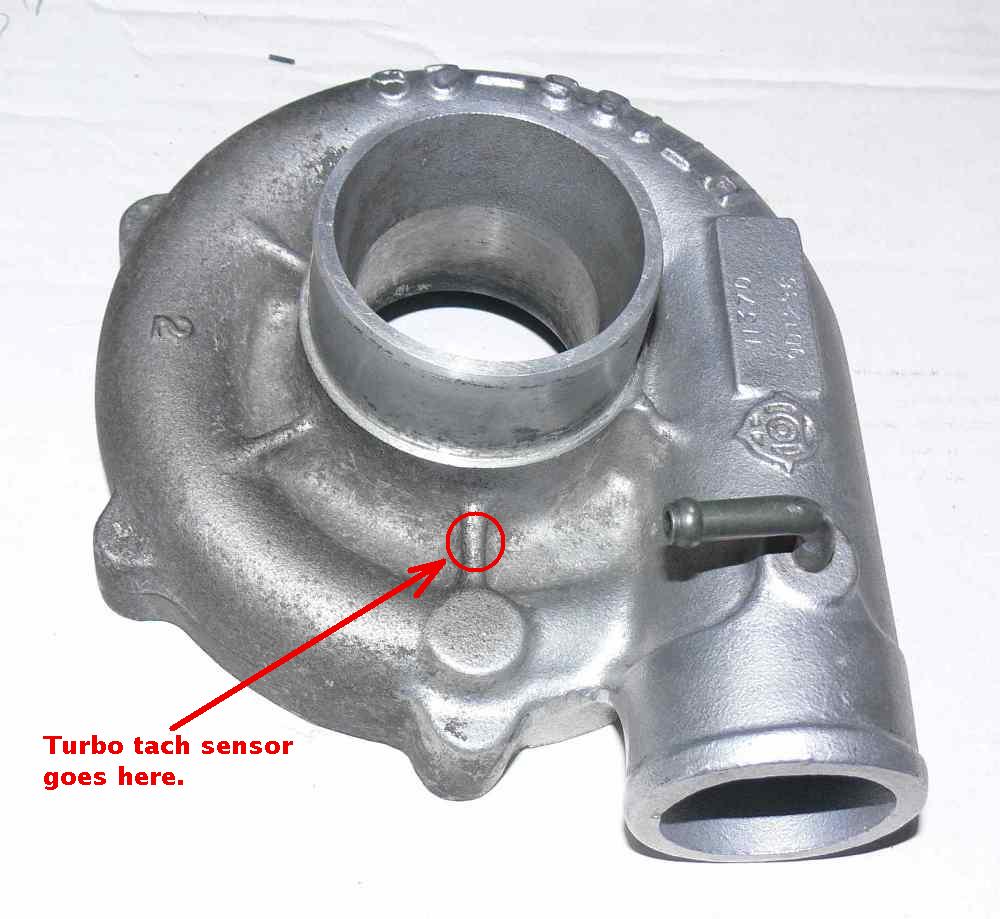
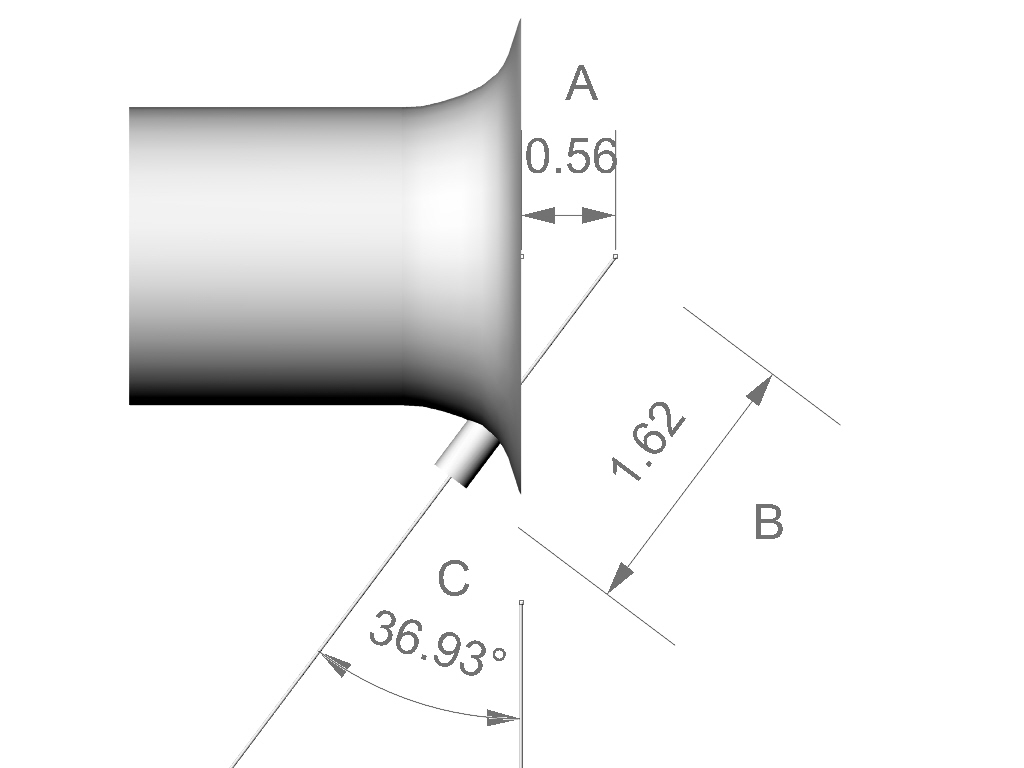
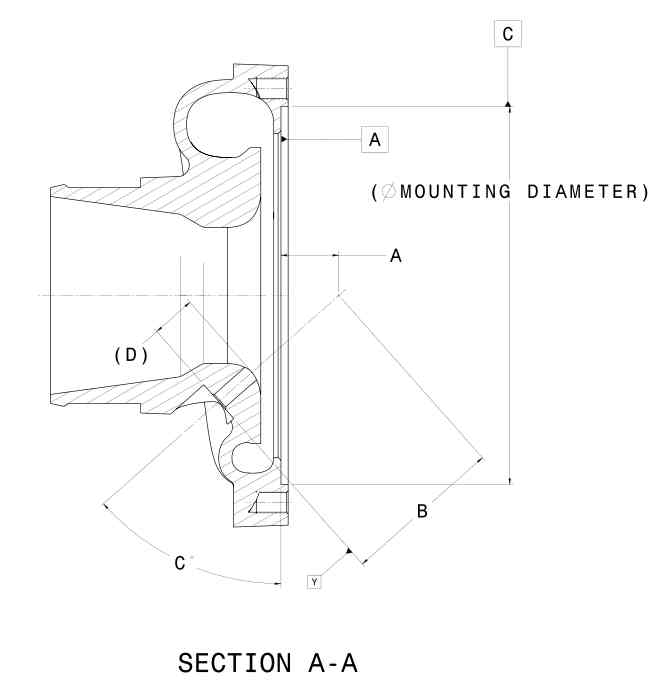
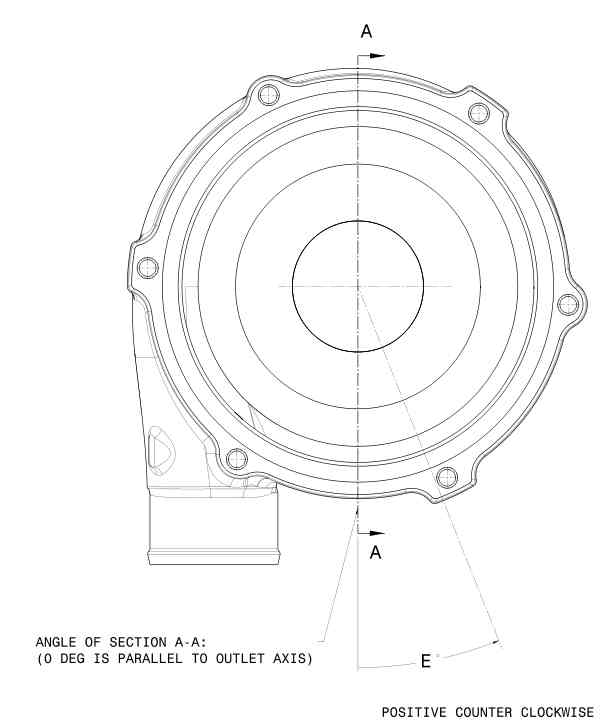
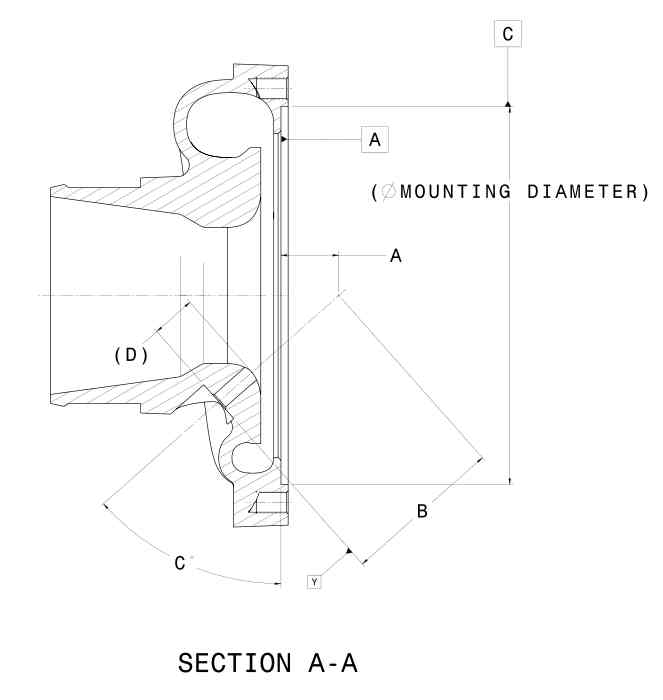
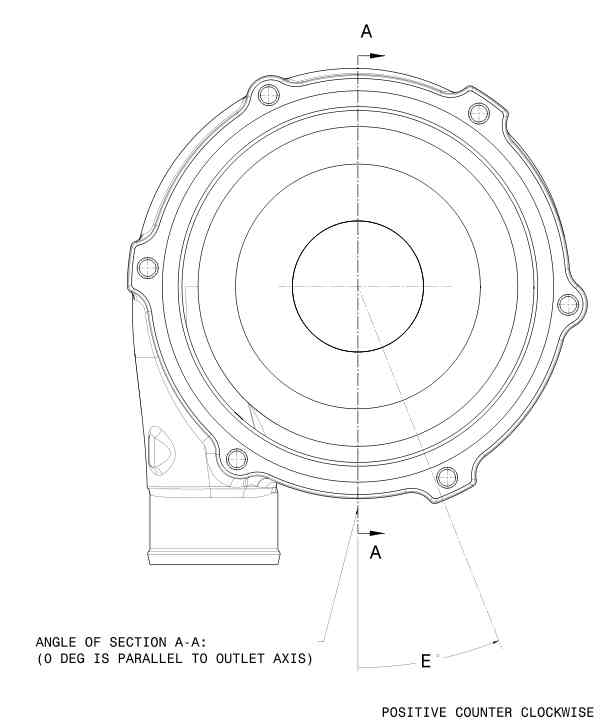
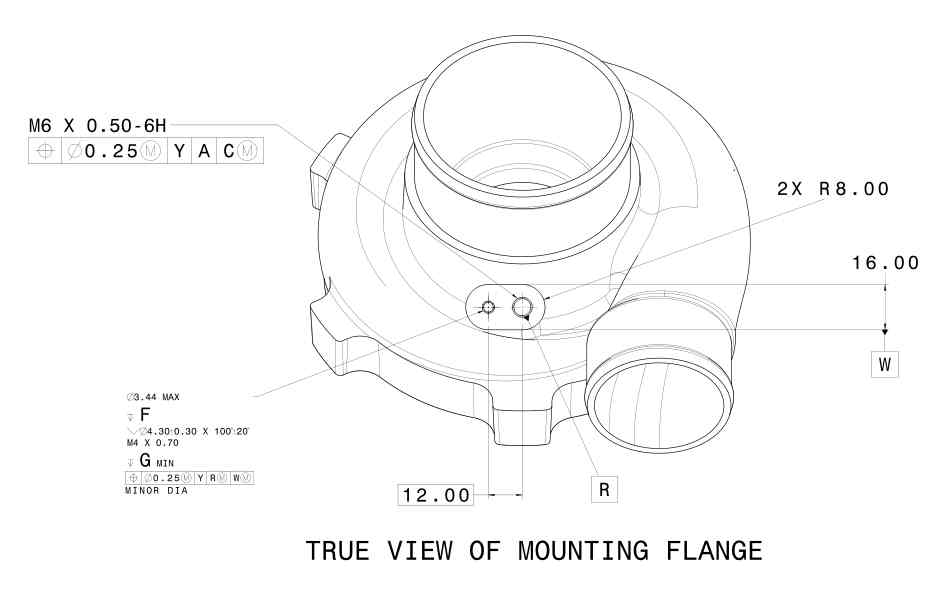
This was a lot harder than it looks.
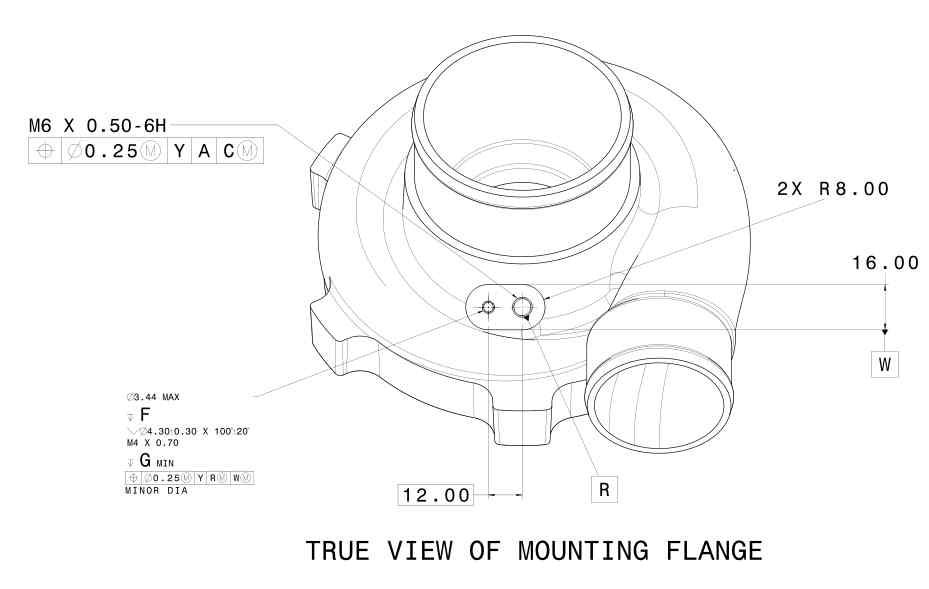
There were no specific dimensions from Garrett on exactly
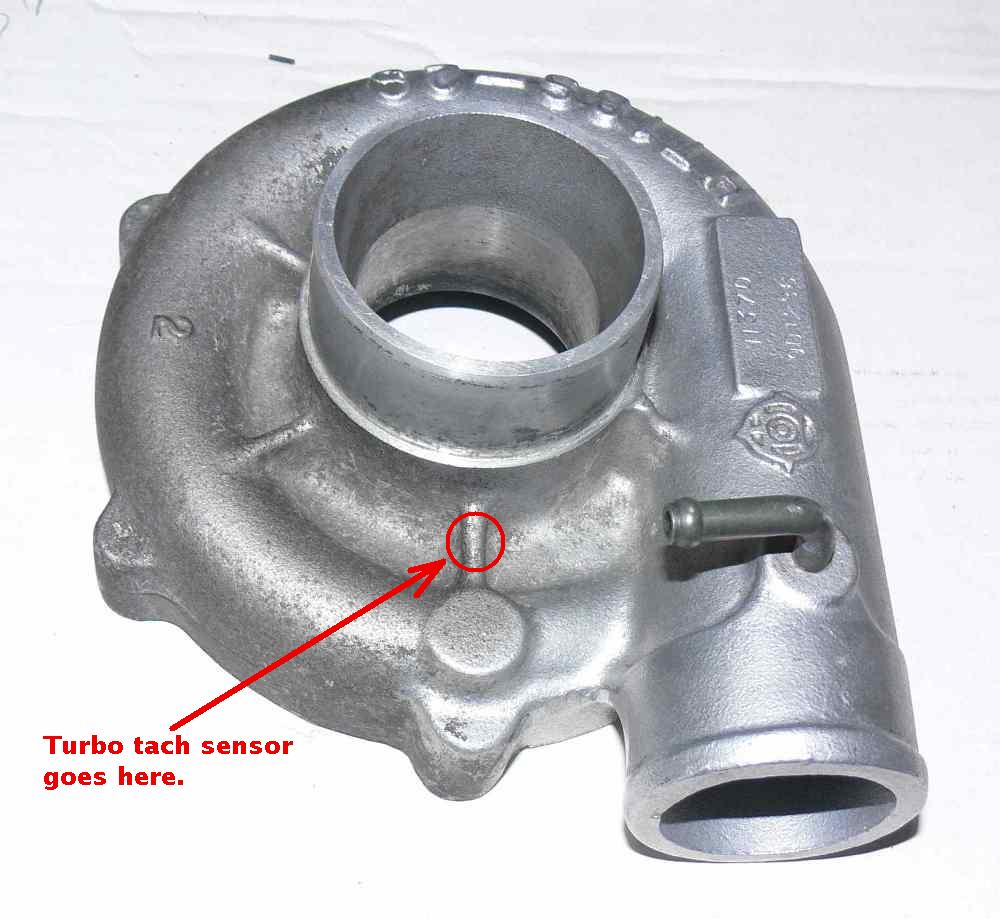
how to install this in an Hitachi compressor AKA 2nd gen Mazda
turbo. They merely say take this to a machinist. Yea sure.
The learning curve was rather steep. The sensor has
a 6 mm .5 mm pitch extremely fine thread.
We at first tried to tig weld the mounting tube in. That
proved to be unworkable as it distorted the threads.
We had to start over with a new threaded tube.
JB Weld is the only practical solution. One must treat
the aluminum with a preparation kit or the epoxy
in JB Weld will not adhere to aluminum that has had a chance
to oxidize or weather in other words.
The rational for this tachometer kit is the centrifugal loads
on the turbine blades are extremely high at over 100,000 RPM.
The loads are in fact proportional to the SQUARE of the RPM.
If the loads are 100% of failure at 100,000 RPM they
will only be 72% at 85,000 RPM. Since we don't have
any real numbers of how long the blades will last at any
given RPM I have decided to limit the RPM to 85,000 for now.
Later on, after we get some real world numbers on what continuous RPM
the blades fail, than maybe we can up the turbo red line.
Many people have failed Mazda 2nd gen turbo turbines and Mistral had gone
through three all by themselves. Unfortunately they did not
record turbo RPM numbers. Nor did anybody else for that matter.
The rotary exhaust temperature being several hundred degrees F higher
than a piston engine does not help. That drastically weakens the metal.
The metal tensile strength goes from 60,000 psi at 1200 F
down to 5,000 psi at 1600 F. BTW That is the root cause of exhaust valve
failure in piston engines. An exhaust valve dropping its head is a
catastrophic failure. That alone makes the rotary ten times more
reliable.
No exhaust valve!!!
If a turbo charger turbine fails it is more like an annoyance as the
parts go out the exhaust. The engine still runs while still generating
considerable HP. No crashes have been attributed to turbo charger
failure.
In a car the turbo never runs flat out for long. Usually just
a few seconds in an all out drag race. The opposite is true for
cruising at high altitude in an aircraft engine hour after hour.
The higher the altitude the lower the back pressure on the turbo
and the higher the turbo RPM.
Paul Lamar
Paul,
I would think that there would be a direct proportion between
the boost pressure (at the time of failure) and the rpm. That is to
say if other parameters are equal; runner size, exhaust diameter/length,
etc... Has any of these failed turbo owners remarked as to how much
boost they were making at the time of the failure (or had they peaked out
just prior to things coming undone?)? IIRCC, turbine tach.s read percentage
of total power and the source is oil pressure, not actual blade count.
rnc
The pressure on the turbine blades plays a minor role.
The boost is generally a function of the turbo RPM but it varies
with the size and detail design of the compressor.
It is the centrifugal load on the blades and high temperatures that
cause them to fly off. These same forces limit the RPM of a turbine,
the rotary engine itself and how fast a car can go around a corner.
The formula is m * V squared divided by the radius.
This is a fundamental LAW of physics not to be trifled
with :) It is not just a good idea. It is the LAW!!! :)
Here is a little demo. Get a small drill motor and clamp it in a vise.
Tie a 6-32 nut on one end of a rubber band.
Chuck the other end in the drill motor. Place a large cardboard box around
the drill motor. Have absolutely nothing in the plane of the drill motor.
Lock the drill motor trigger on with tape before plugging it in. Plug it in
from a safe place out of the plane of the drill motor. 3/4 inch plywood
should be adequate armor.
Paul Lamar
Paul,
Would it be more reliable and simpler to tig weld a boss to drill and tap to size?
William Hagood
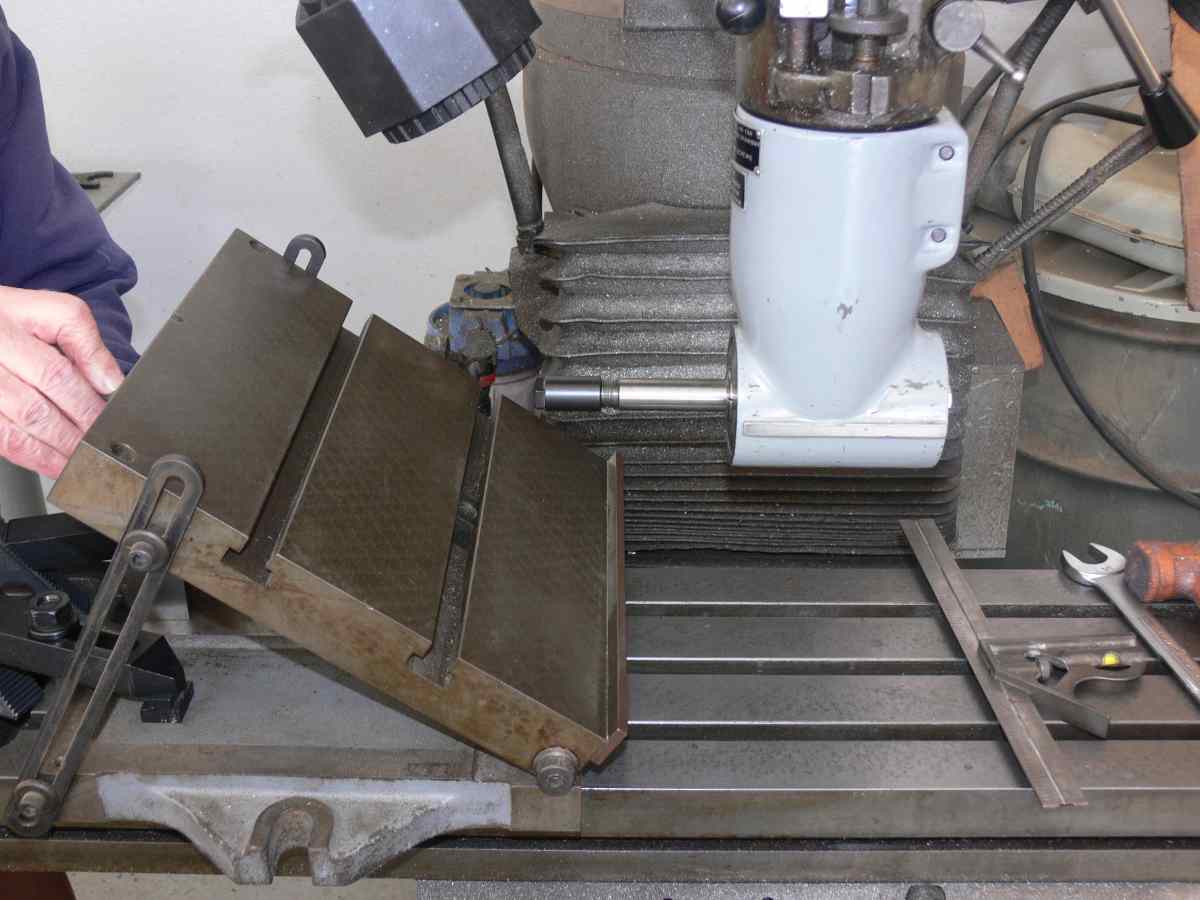
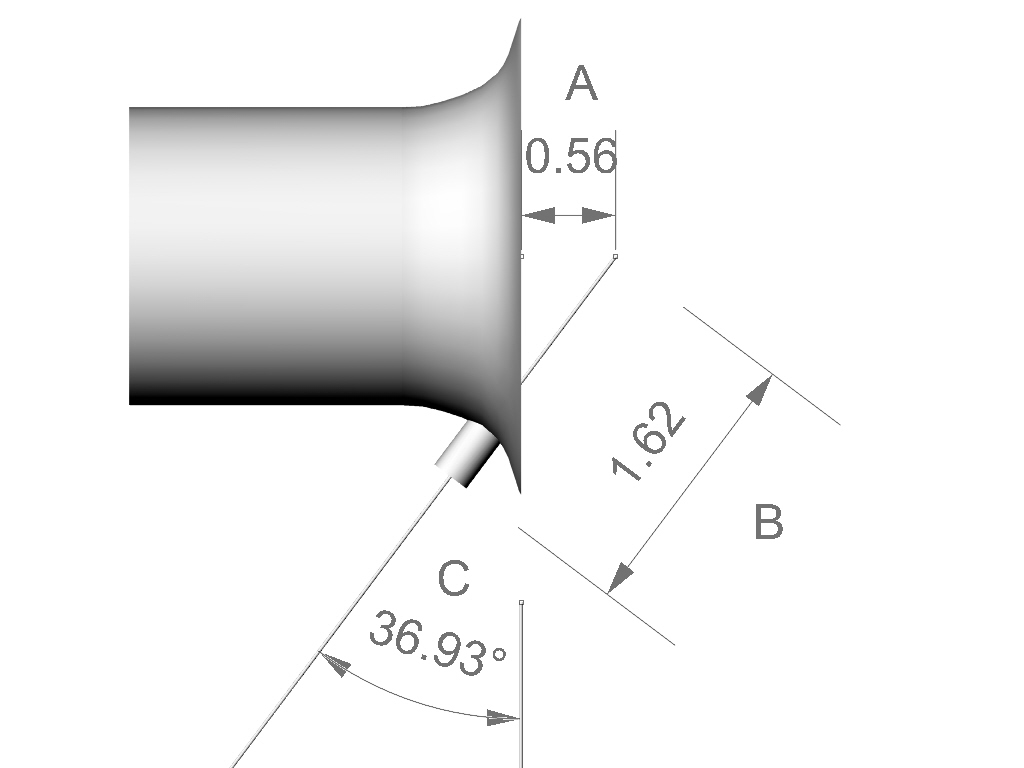
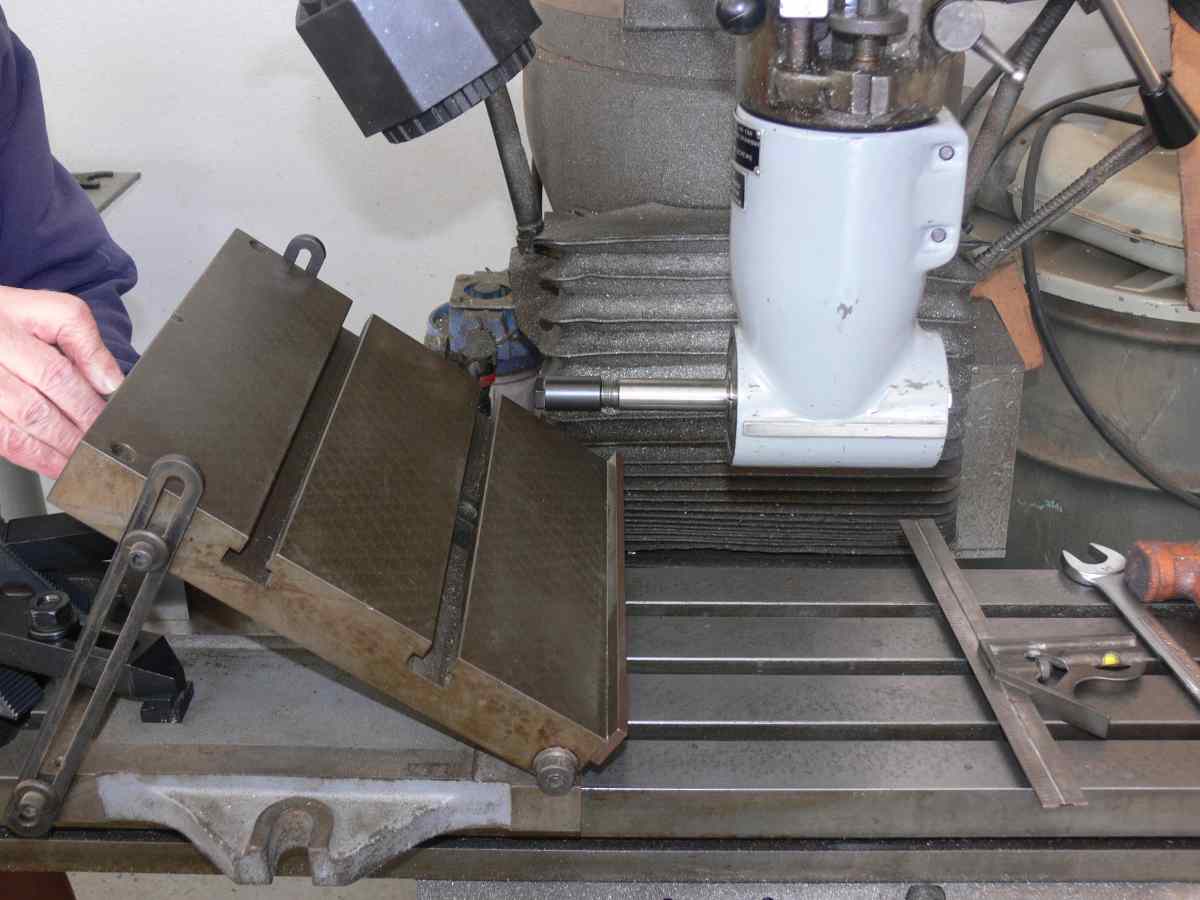
It is very tricky to get the super fine thread metric 6 mm tap aligned with
the tap drilled hole. We did it in a lathe. The thread pitch is only .5 mm.
The whole operation required a right angle drive on the Bridgeport and a sin
plate. It is very tricky. My machinist friend owned a machine shop with up to 40
employees for years and he has a very good collection of Bridgeport accessories.
The angle needs to be just right as does the point at which the hole
is started. We both learned a lot and had to rethink things a bit. Made
some mistakes and had to start over. The Hitachi 2nd gen compressor had no
counterparts in the Garrett list.
Paul Lamar
--
The Rotary Engine NewsLetter. Powered by Linux.
ACRE NL web site.
http://www.rotaryeng.net
Youtube key word PaulLamar2
Copyright 1998-2011 All world wide rights reserved.