Paul,
I'm looking into the possibility of using the '89-'92 year 9.7:1 rotors
on the P.P test engine. Do you happen to know the redline for these
rotors?
T.O. will be at 8300, but I would like the engine redline to be 9,000
which is less than the Renesis engine I believe.
I may have to have the 9.7:1 rotors lightened a bit.
http://www.mazdatrix.com/faq/rotorwgt.htm
I was going to go with Renesis rotors for the 110 grams reduction in
weight and the slight increase in compression ratio, but to use them
in a
13B engine I would have to incorporate lots of the Renesis engine parts.
E-shaft, stationary gears, counter weights etc. The biggest issue
is the
durability of the stock apex seals going over the P-ports. The Renesis
rotors would have to be machined both to accept a deeper 2mm apex seals,
and fix side clearance issues encountered when used with 13B housings.
Doug in Japan
It is the rotor bearing that is the limit. As I recall the "windowed"
version of the rotor bearing is good to 11,000 RPM with just about
all stock cast iron rotors. The RX8 rotors are just a little bit
lighter.
Racing Beat uses a 3D NC mill to get a few ounces out of the stock
rotors
at great expense. M V squared over R.
The 13B intake p-port, if anything, is better than 13B side input
port as
the
apex seals are cooled better. The worst effect on the apex seals
comes from the p-port exhaust. Not the p-port intakes. RX8 side exhaust
are
easier on the apex seals. The P-port RX8 engine IMHO is the best of all
worlds.
If money is no object why fool around? Go with Iannette silicon nitride
apex seals. Guaranteed to last for ever and be unbreakable.
Dave Lemon at Mazdatrix melted a steel rotor housing liner by running
the
engine
long after all the coolant blew out. He took the Iannette seals
out and is still running them to this day in new engines.
Paul Lamar
Paul,
The "window" bearings are the main bearings in the stationary gears.
For an engine that will see sustained high rpm, the high power RX8
stationary gears should be used. They incorporate many of the changes
used
for years in racing.
The rotor gear will walk out and bind the rotor between the side
housings if
used for sustained high rpm. there are a couple of methods to stop it
with
the most popular being having racing beat snap ring the gear into the
rotor.
May not be an issue on RX8 rotors (one reason to use them!)
That's my 2 cents on making them last at sustained rpm.
Can you do me a favor and see if Dave Lemon has a scrap late model
(2010 or
2011) RX8 rotor housing he can sell me?
Thanks,
Larry
He usually has scrap housing of all types for sale at around $30.
562-426-7960
Paul Lamar
Hi Doug;
IIRC, the 89-92 stock NA redline was 8000rpm.
The RX8 high powered stationary gears are a cheap upgrade for the older
pre93 rx7 engines.
Take a look at the racing beat tech tips.
http://www.racingbeat.com/mazda/performance/rotary-tech-tips/rotors.html
In particular, look at race clearancing (beveling) the rotor tips for
the older S5 NA 9.7 rotors.
Run higher oil pressure.
Lynn and others have posted high rpm mods in places such as . e.g.
pinning rotor bearings
www.nopistons.com
Cheers
Cary
Cary, we could not get to 8000 RPM if we tried. The prop load is always
on the engine and that limits the RPM to about 7500 max. We cannot just push
in the clutch pedal. There is no clutch. Then only for a few minutes.
The guys are cruising the motors at 4500 to 6000.
All these race modification are pretty much unnecessary at these RPMs.
You are going to scare some people.
Paul Lamar
Hey Paul;
(you have succeeded in getting me to elaborate again ;)
I'm not trying to scare anyone. STOCK is fine.
The Racing beat tech tips are definitely worth a read for anyone that
hasn't seen them. Years ago you had to buy their book for this valuable
information.
Doug mentioned 8300 TO and 9000 redline.
At or above 8500rpm, Racing beat recommends reliability mods.
carbon/ceramic apex seals are recommended above 9k.
In fact, since there is no clutch (accompanied by the occasional bad
shift), sudden over rev and many other "problems" will likely cease to be
an issue...
8300/2.85=2900rpm is in the range of current props. The losses for a
matched (constant? speed) prop at velocity would be minimal.
Drivers habitually run cars to 9k red line. Many racers do little more
than bevel the rotors and use carbon apex seals for 11k.
Cheers
Cary
I disagree. If you ask the people that are flying with 2.85:1 PSRU nobody
has reported over 7300 RPM. Mark Steitle has a MT or Hoffman 3 blade
constant speeds or variable pitch prop. That is 2561 prop RPM.
Ken Welter, as far as I know, is the only other guy besides Doug that
Has a 3:1 PSRU and as far as I know he has never seen 7000. Even with NOS and
300 HP.
The max RPM on the CS metal prop on the 230 HP C182 is 2400 RPM.
The people that run over 3000 on the prop is the VW and O-200 F1 guys and the
diameter is about 54 inches as I recall. Prop efficiency falls off drastically
as the diameter drops below 70 inches. Particularly low speed thrust as needed
by a sea plane in the zero to 50 MPH range.
Here are some curves on the subject from the late great Vance Jaqua.
Rocket scientist extraordinair.
Paul Lamar
Paul,
How about this explanation. Gearbox inefficiencies:
Work load limits engine rpm. Work is the energy absorbed by turning the prop,
gearbox and attached engine accessories.
I propose a mind exercise:
Imagine two engines on identical airplanes with identical C/S props. Both have
the pitch set flat and are spinning at 2700 rpms. Both props shafts are seeing
290Hp. of power. One engine is an Lycoming IO-540 and the other is a rotary.
If you like, imagine both identical airplanes are amphibians and that it has
been proven both take off just fine at these power settings. The rotary could
be an 'enhanced' 13B or 20B. Either one is within the realm of technical
reality. . Selecting which engine to use in an airplane is an exercise in
optimizing the power to weight ratio. That often means operating the engine near
it's peak efficiency point for the five minutes during the T.O. and climb event.
Unlike the Lycoming however the rotary will have to produce over 300 hp, Here's
why.
The rotary engine is turning the prop through a gearbox. This gearbox reduces
the e-shaft engine rpm and increases the torque the propeller shaft sees in
direct relationship to its' gear set ratio. It also reduces power to the prop by
incurring friction loses. Said another way the gear box acts like a drag
lowering engine rpm and hence some power output is absorbed by the gearbox and
turns to heat. Some gear box designs are more efficient then others. The number
of gears, contact area, gear profile and cut, line speed, oiling method,
planetary bearing type and windage all affect the gearbox losses. No gearbox
is almighty but some designs are less draggy than others without compromising
reliability. A robust planetary cluster able to handle huge torque loads does
not necessary mean it is designed to handle high speeds without incurring huge
losses.
For planetary gear boxes, a 2% efficiency loss per step down stage is consider
state-of-the-art in large megawatt wind turbine applications. These are
megabuck designs resulting from megabuck R&D programs. The transmissions are
usually two stages and input and output a maximum of 60 and 1800 rpms
respectively. That's a 6:1 ratio followed by a 5:1 ratio.
For Tracy's 2:85:1 gearbox, I'd guess the efficiency is in the neighborhood
of 95% +/- 1%. Anyone monitoring gear box temperatures?
In our above example this loss of power through friction is going to cost the
rotary engine rpms and hence power. How much prop power loss depends on the
power curve shape and where on the curve the gearbox is set-up to operate.
In conclusion for any engine with PSRU attached, it is going to have to produce
more power to overcome gearbox parasitic losses.
Prop pitch and prop efficiencies are other variables affecting engine rpm. Those
effects are multiplied by gearbox inefficiencies.
Doug in Japan
5% of 250 HP is 1.25 HP. At 745 watts per HP that would be almost
1000 watts. I doubt seriously Tracy's gear box is generating 1000
watts of heat.
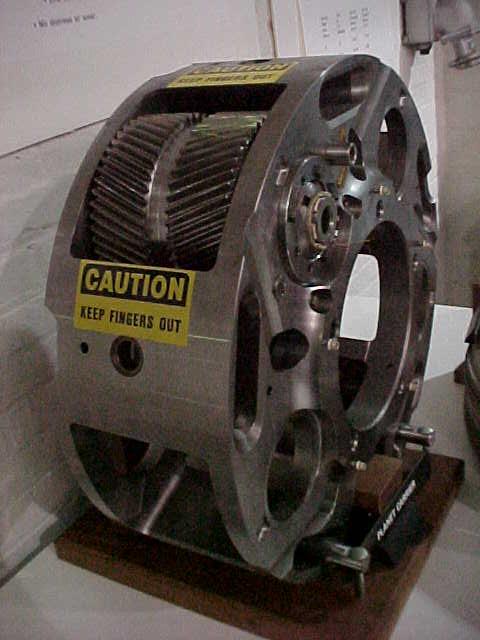
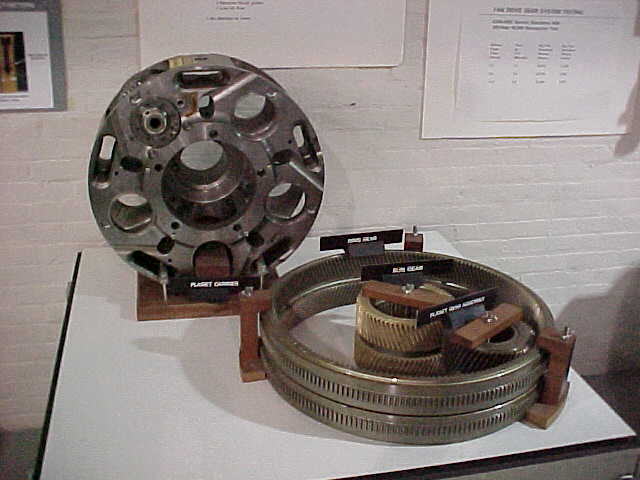
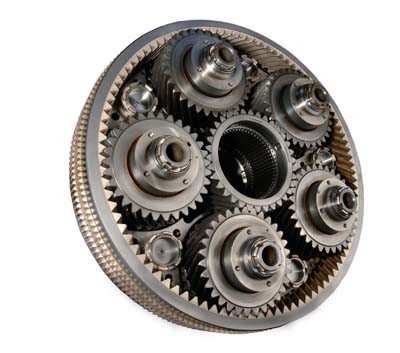
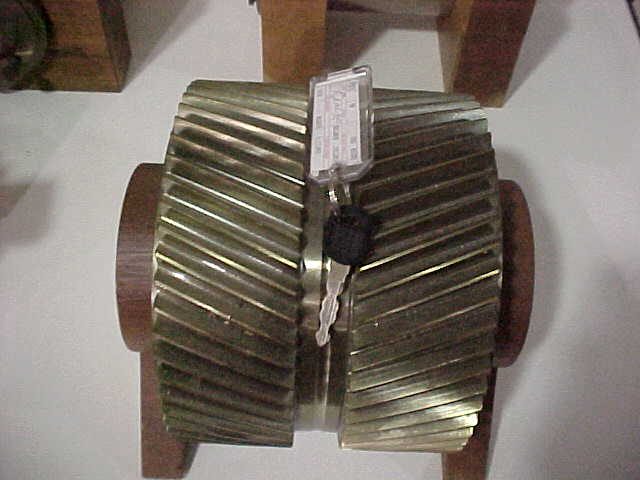
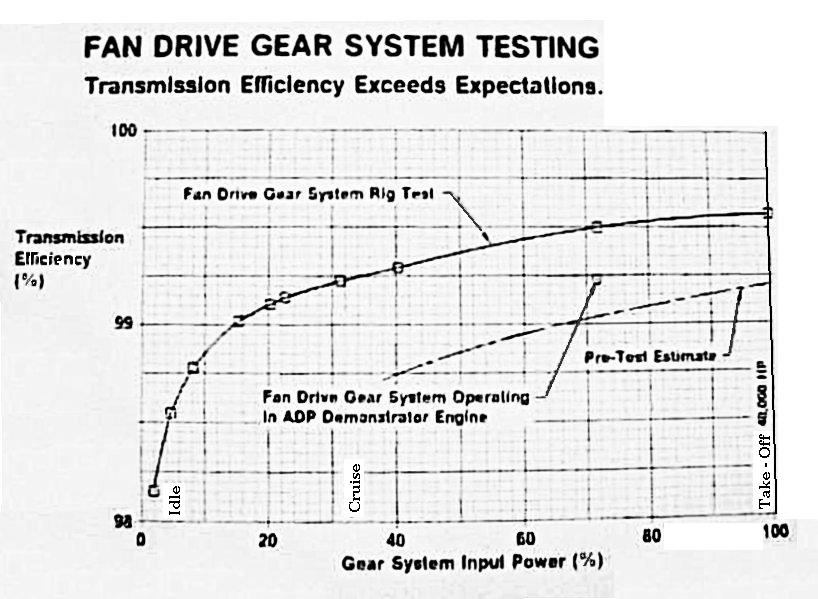
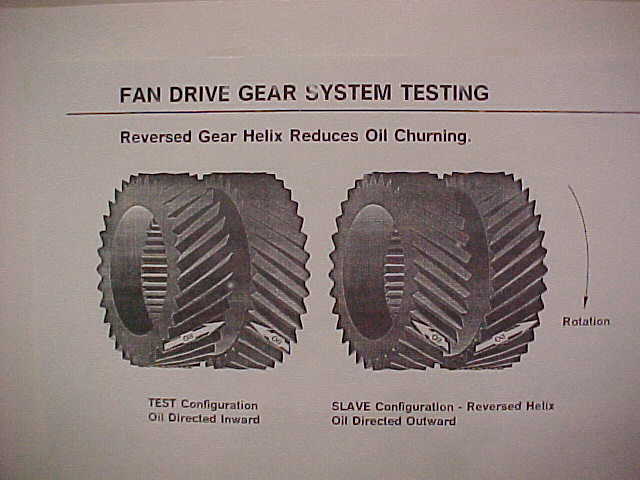
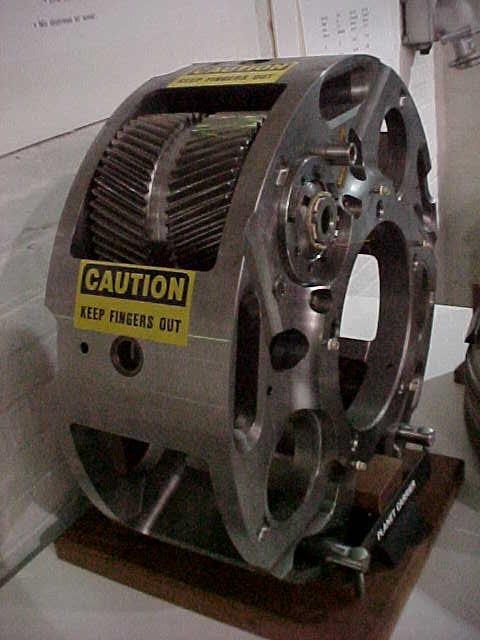
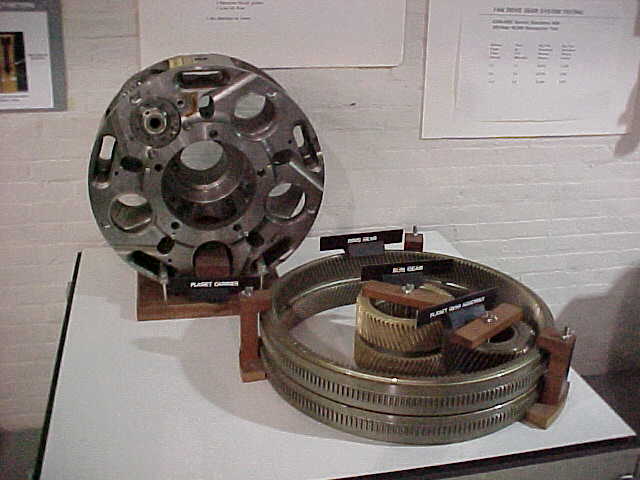
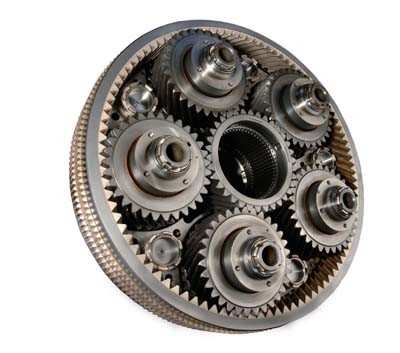
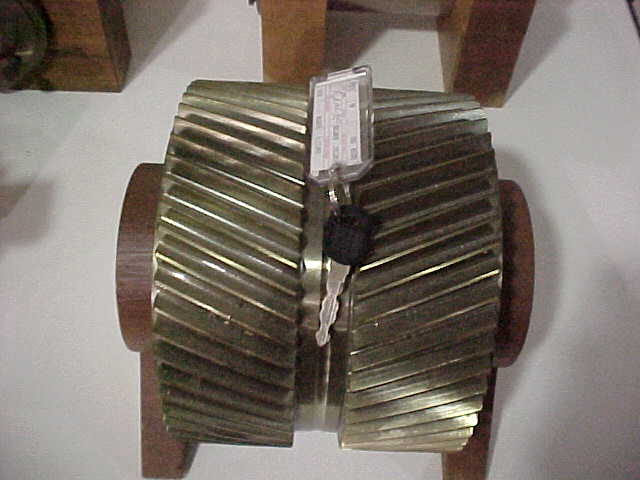
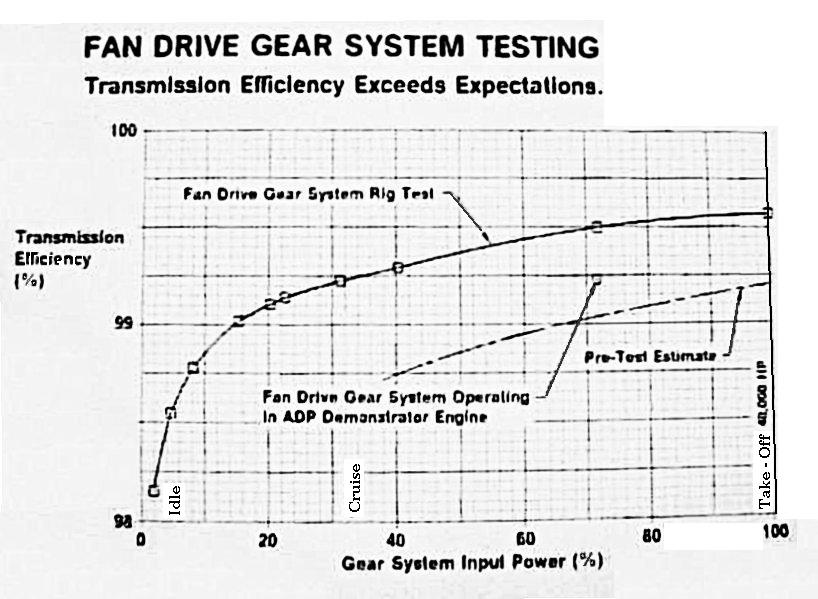
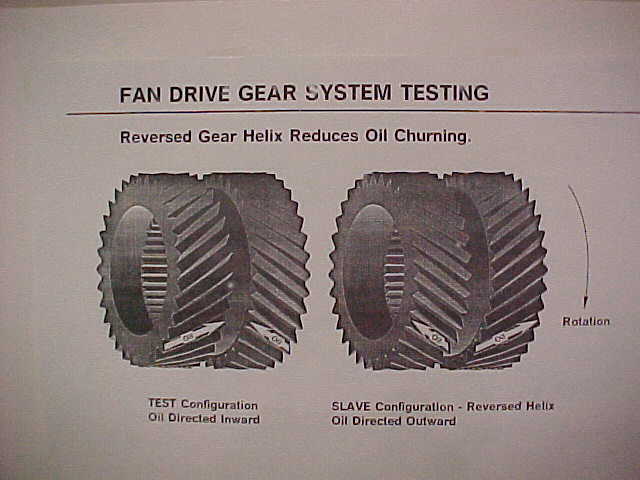
Here is a P&W planetary that is over 99.5% efficient from 60% to 100% power.
Doug, please try limiting the line length to 75 characters.
I am trying to figure out what is going on.
Paul Lamar
--
The Rotary Engine NewsLetter. Powered by Linux.
ACRE NL web site.
http://www.rotaryeng.net
Youtube key word PaulLamar2
Copyright 1998-2011 All world wide rights reserved.