Doug in Japan::
Hope all is well
I notice Rotrex has a new small compressor that apparently spins our
direction up to 240Krpm. I hav'nt seen enough postings here regarding
traction drive compounding so I am not sure of some of the critical
details like the relative size of the turbo conjoined to size 'X'
Rotrex
I did some business with a local turbo rebuilder recently who talked
about left hand and right hand turbin scrolls. I hav'nt looked yet; my
guess is, there will likely be something that could be retrofitted to
the inlet side of a Rotrex.
I am considering modifying an Aerocharger for this purpose; if,
Aerocharger does not make a right hand turbin scroll setup.
Ed Carver
There is a bunch of stuff
at
http://www.rotaryeng.net/turbo-compound.html
Also here are some pictures of the rotrex.
Paul Lamar
Ed,
The designer of the Rotrex traction drive told me it would work in
either direction, however the oil pump ports, the drive shaft
thread, and drive plate thread need to be reverse to turn CCW. I
haven't played with the little one you mentioned but I think it is
for motorcycles. The 13:1 ratio 30's series can handle up to about
30 hps. The 7:1 ratio 35's series up to 70hp. Turbo compound
devices increases the torque to the shaft and the final drive
pulley can get large or the traction drive outlet very small.
Matching a turbine to the traction drive is no easy trick. The
best way may be to have an axial turbine constructed by some of the
small jet engine hobbyists. Jet Beetle comes to mind.
Concept viability can be tested using a radial turbine however.
Doug in Japan
Reversing the rotation means both sides get reversed. If that is true,
then we must use a right hand scroll turbine because our engines spin to
the right, the rotrex drive to the right, and the rotrex compressor to
the right (veiwed from their respective ends. So even the small one will
not solve our problem if using a left hand turbine.
The only belt drive I know of that will reverse the rotrex pulley,
thereby facilitating our right hand drive engine and a right hand drive
turbine, is a timing belt with cogs on both sides and an idler pully
placed furthest from the crank used as the tensioner.
I believe you are suggesting that if we use a max turbine speed of
80krpm, then the compressor side of the rotrex should also be turning
the same speed at our desired engine speed. This means that both the
turbine and the rotrex outlet shaft should each have an equivalent
linear rotation speed up to our desired redline.
I suppose before the engine comes up to power, the turbine is being
driven by the rotrex until at some point the exhaust begins pushing the
turbine and power recovery begins.
I think it is time to look hard for a suitable right hand turbine with a
sweet spot on the turbine map at around 80krpm. I guess that is where
you left us before Doug. Just making sure I'm part of the way caught
with ya.
Ed Carver
This device works with most turbo's. You don't need reverse
rotation.
Paul Lamar
A lot of the reason I commented on using the rotrex, is it's simplicity
if joined to a standard turbine. What am I missing in understanding the
traction drive/gearbox setup? Is it that without a traction drive the
turbine doesn't spool properly, then you end up losing some energy?
I picked up a used aerocharger with a slightly damaged compressor wheel.
Easy fix, just had to disassemble to fix. Also wanted to know the shaft
size and design to see how worthy it might be for turbo compounding use.
Perhaps Doug can fill us in on the diameter of the two larger rotrex
output drive shafts. I don't know what 70hp means when talking about
shaft capacity. I guess it is mostly a torsional load.
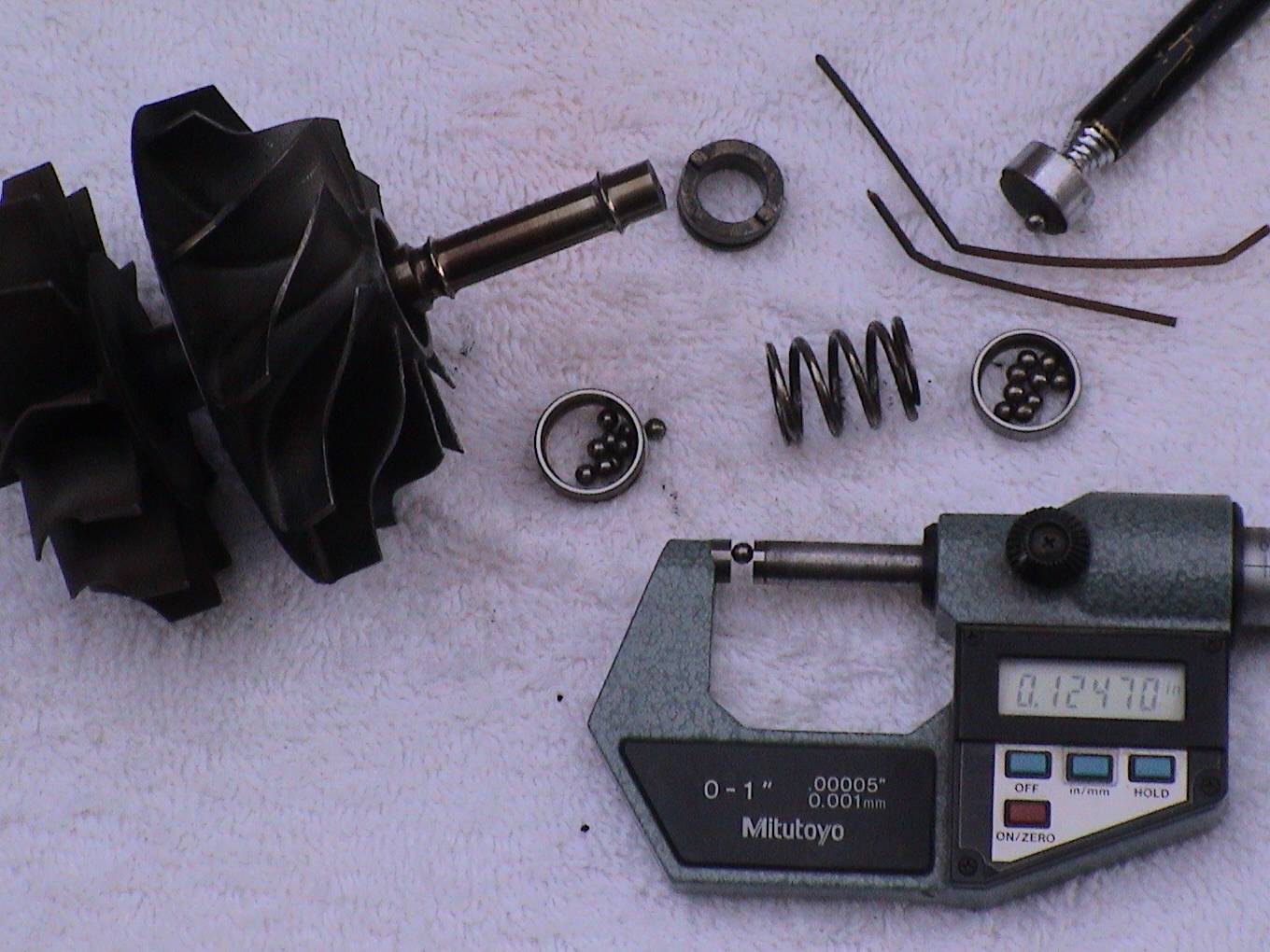
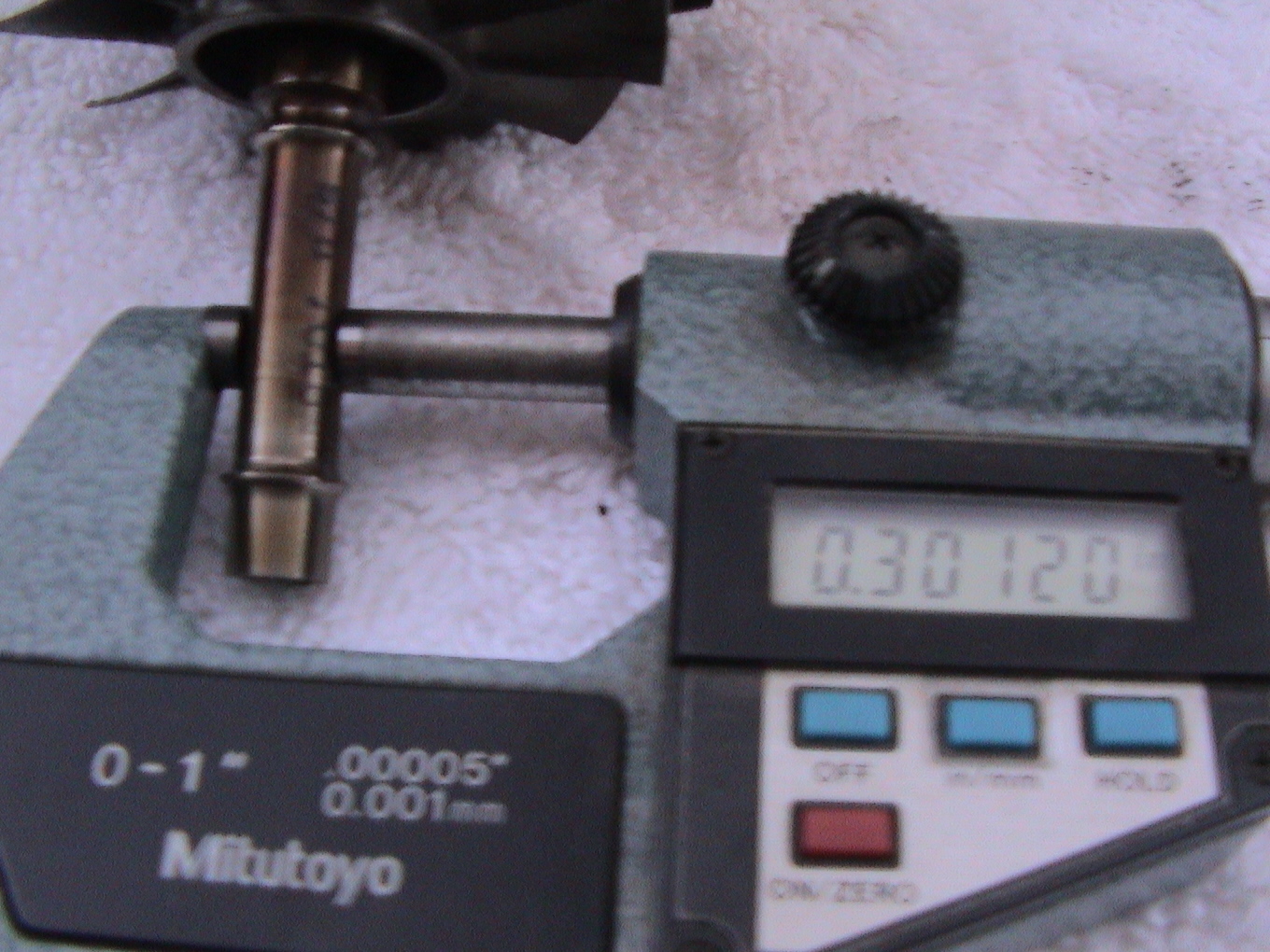
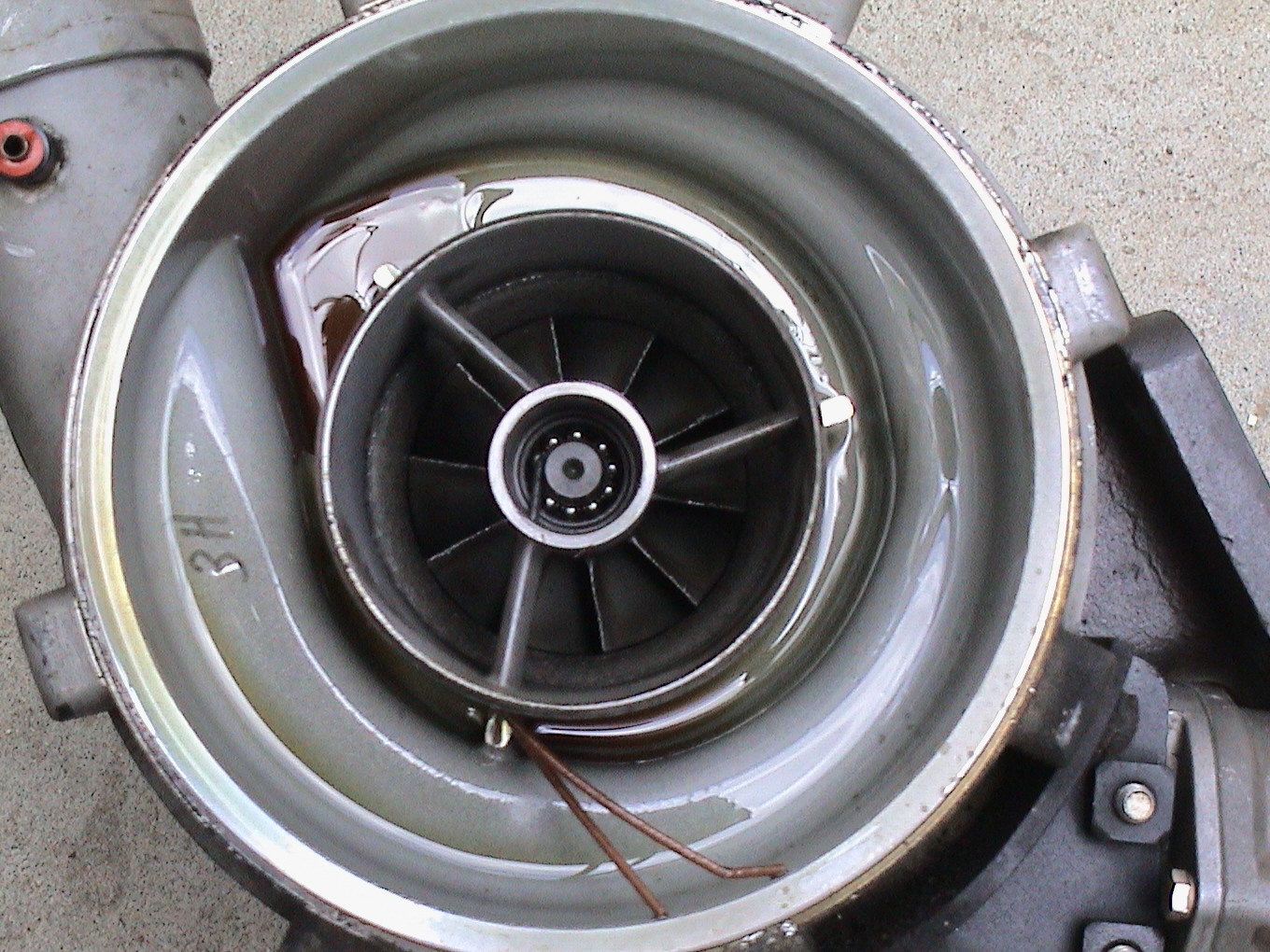
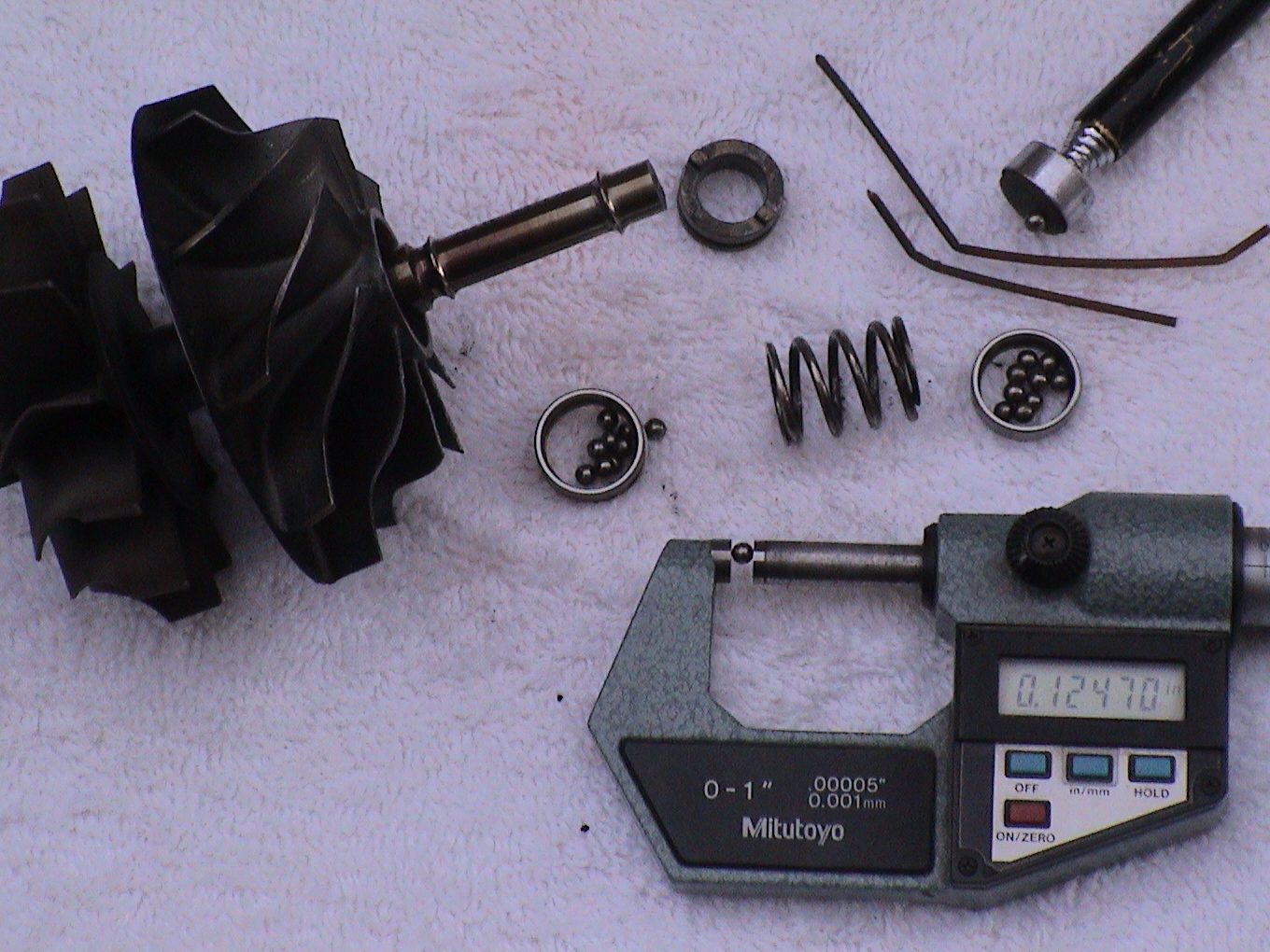
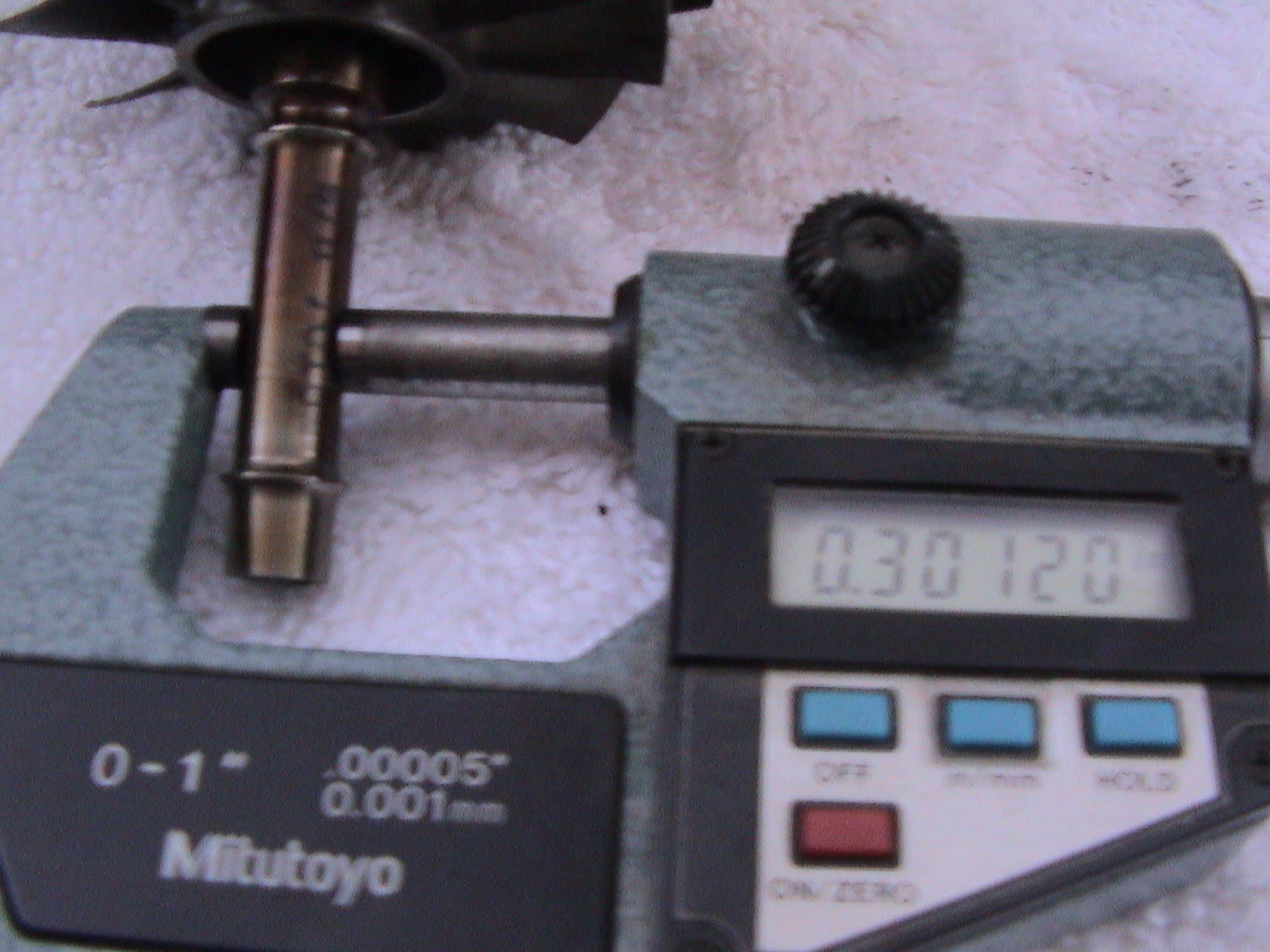
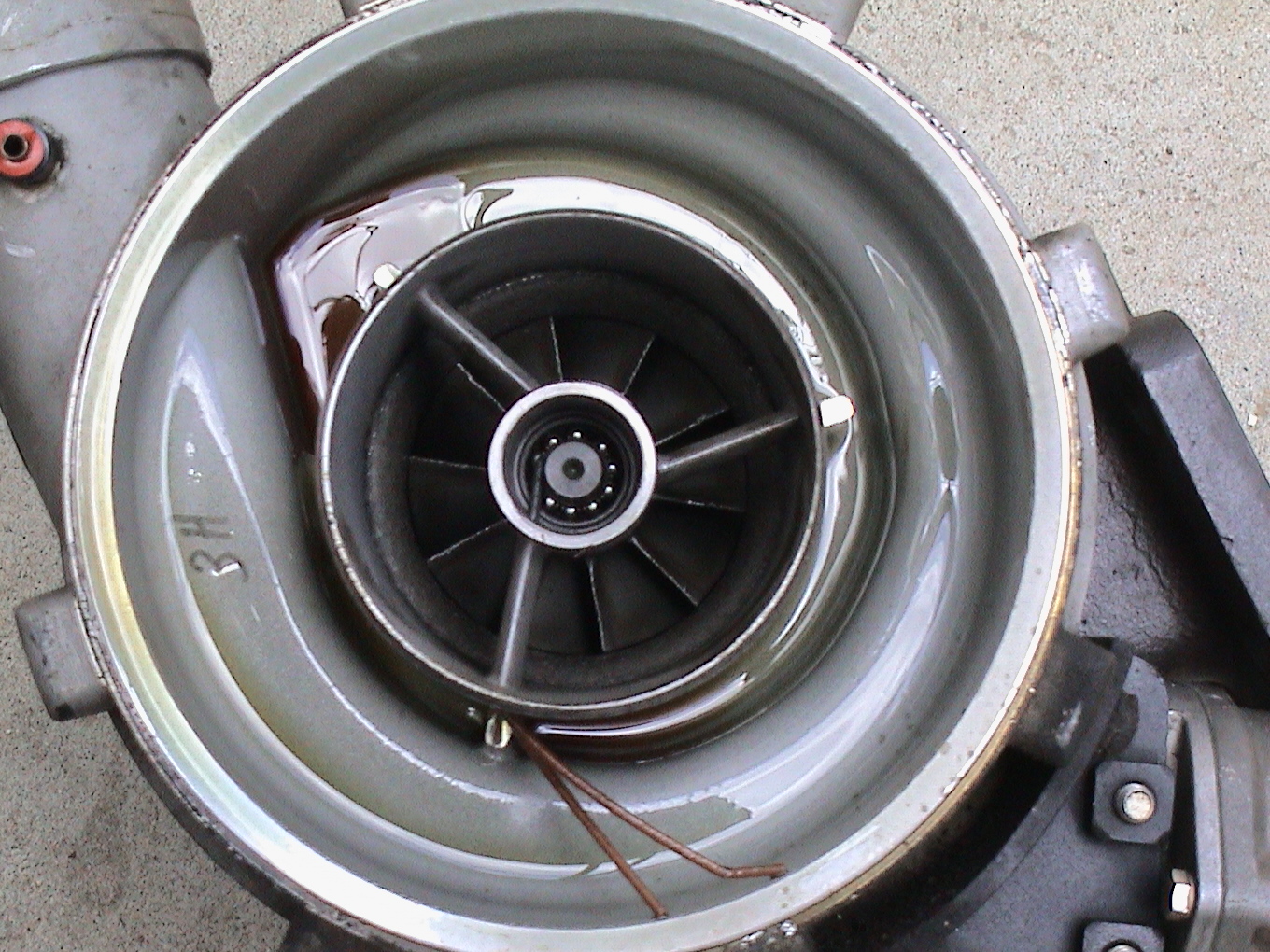
Here's some picks of the aerocharger components.
The 300 thousandths shaft is also what the ceramic bearings directly
ride on. The outer bearing races are merely held in place by some shims
next to the compressor wheel, while on the inlet end, a coil spring
keeps tension against the outer race. Surprisingly simple. No oil feed,
no water feed. Just two oil wicks feed the bearings. There is a cogged
sleeve which is press fit on the shaft and keeps the compressor wheel
from spinning on the shaft and holds it in position against it's land.
Not a single nut on the whole assembly.
Are ceramic bearings magnetically attracted? These turbos are supposed
have ceramic bearings.
Ed Carver
--
The Rotary Engine NewsLetter. Powered by Linux.
ACRE NL web site.
http://www.rotaryeng.net
Youtube key word PaulLamar2
Copyright 1998-2011 All world wide rights reserved.