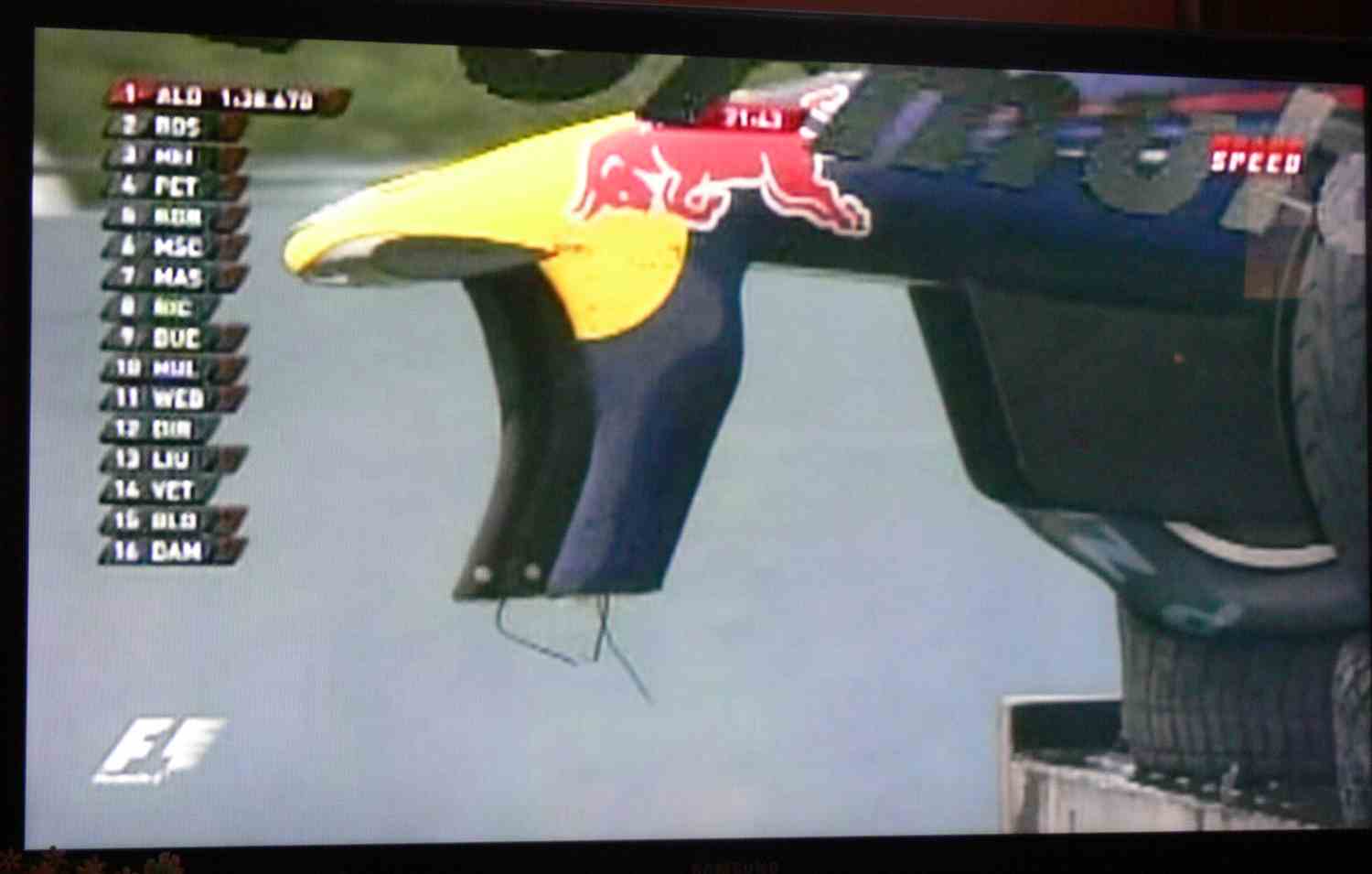
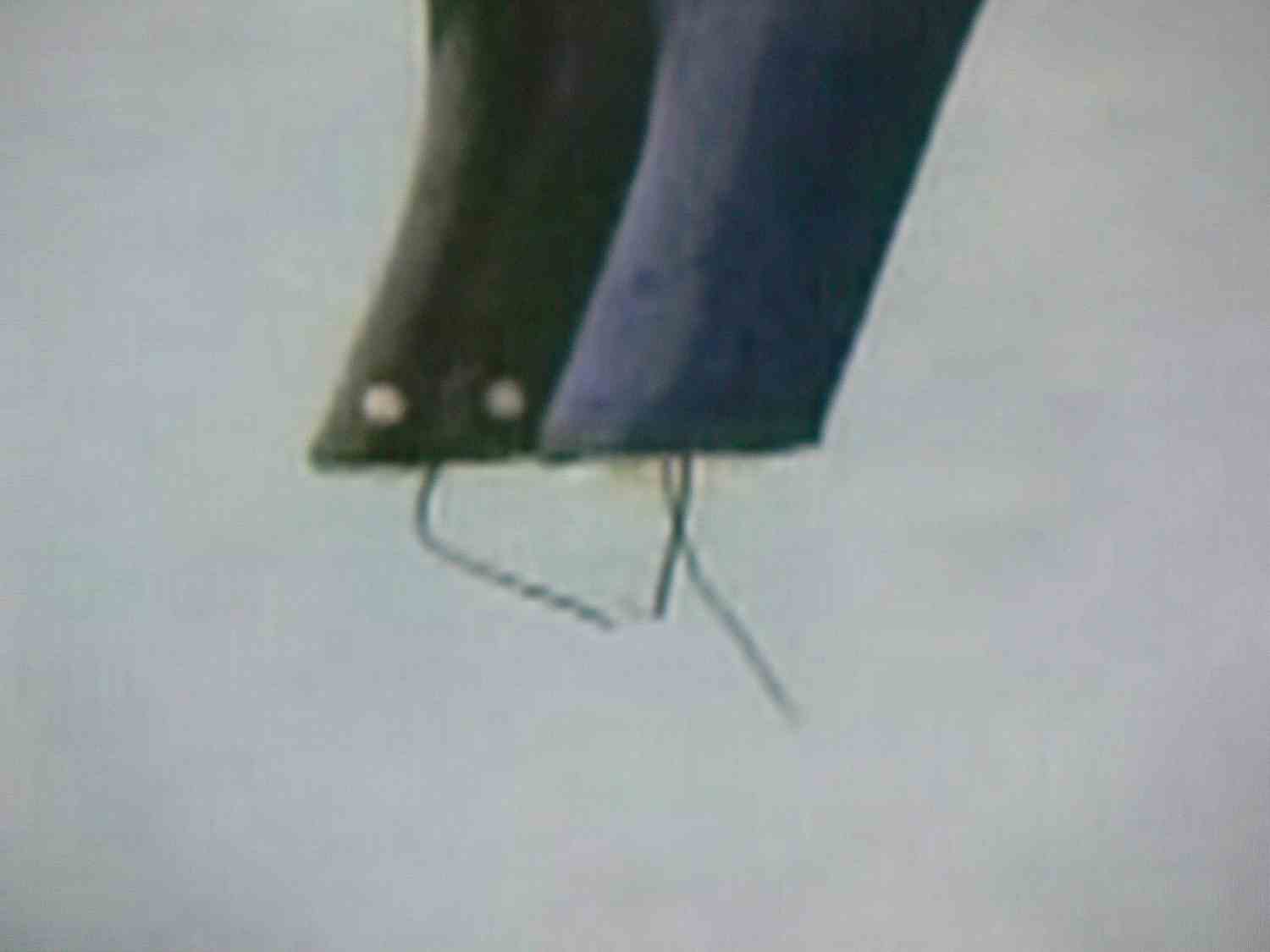
I just saw a video the wires hanging down from the Red Bull front
wing pylons after a crash on the Speed Channel Spanish GP
practice.
The closer the wing is to the ground the more the down force.
A lot more. I discovered this back in the late 1960's
when I was working at Chaparral.
There are at least two ways to use wires to change
the bending stiffness of a front wing. First and simplest
is to change the tension on the wires mounted near the top surface of the wing.
Think of a composite I beam. The upper flange is in tension and the lower
flange is in compression. Pretension a wire in the upper flange and
the beam will be stiffer. Relax the tension and the beam will
be more flexible.
The second way is use stuff called Shape Memory Alloy.
"The nickel-titanium alloys were first developed in 1962–1963 by the United
States Naval Ordnance Laboratory and commercialized under the trade name Nitinol
(an acronym for Nickel Titanium Naval Ordnance Laboratories). Their remarkable
properties were discovered by accident. A sample that was bent out of shape many
times was presented at a laboratory management meeting. One of the associate
technical directors, Dr. David S. Muzzey, decided to see what would happen if
the sample was subjected to heat and held his pipe lighter underneath it. To
everyone's amazement the sample stretched back to its original shape."
http://en.wikipedia.org/wiki/Shape_memory_alloy
This stuff is being considered to change the twist of the
Boeing VTOL V22 rotor blades. Less twist for take off and more
twist for high speed cruise.
http://www.rotaryeng.net/VTOL.html
Paul Lamar
--
The Rotary Engine NewsLetter. Powered by Linux.
ACRE NL web site.
http://www.rotaryeng.net
Youtube key word PaulLamar2
Copyright 1998-2011 All world wide rights reserved.