14 CFR Part 91: General Aviation
Accident occurred Saturday, May 07, 2011 in Conroe, TX
Aircraft: WOODWARD HAROLD L RAVIN 500, registration: N913RA
Injuries: 2 Fatal.
This is preliminary information, subject to change, and may contain
errors.
Any errors in this report will be corrected when the final report
has been completed.
On May 7, 2011, approximately 0855 central daylight time, a Woodward
Ravin 500 experimental amateur built airplane, N913RA, impacted
forested terrain shortly after takeoff from Lone Star Executive
Airport (CXO), Conroe, Texas. Visual meteorological conditions
prevailed at the time of the accident. The personal flight was being
conducted under the provisions of 14 Code of Federal Regulations
Part 91. The pilot and student pilot rated passenger were fatally
injured. The flight was originating at the time of the accident and
was en route to Temple, Texas, for the airplane to be displayed at
an aviation event.
According to CXO tower personnel, the pilot was cleared to depart
runway 14 with a right turn on course. The airplane departed and as
the pilot began his initial right turn he reported smoke in the
cockpit. The pilot was cleared to land on any runway and giving the
wind as being from 160 degrees at 8 knots. The airplane was observed
to perform an approximate 240 degree right turn and crossed back
over the departure runway before entering the left downwind leg for
runway 14. While on the downwind leg of the traffic pattern the
airplane was observed flying, �¢<80<9Cslow�¢<80<9D, wings level,
at an estimated altitude of 700 to 800 feet above the ground. While
approximately 4,500 feet along the downwind leg the landing gear was
extended. Shortly thereafter, the airplane started a descending left
turn towards the closer runway 19. The airplane overshot the
extended centerline to runway 19 and the airplane�¢<80<99s bank
angle increased. The airplane continued in the descending left turn
toward the runway until approximately 300 feet above the ground. At
which point the airplane appeared to �¢<80<9Cstall�¢<80<9Dand
impacted into forested terrain. A post impact fire ensued. Tower
personnel reported that during the event they did not observe any
smoke or flames coming from the airplane until impact.
A pilot rated eyewitness located near the crash site reported
hearing what he described as an engine that was
�¢<80<9Cscreaming�¢<80<9Dand varying in RPM. When he saw the
airplane it was flying �¢<80<9Cvery slow�¢<80<9Dat an estimated
altitude of 300 to 500 feet above the ground. As the airplane made a
high bank angle turn back towards the airport the witness observed
the nose and left wing drop before the airplane went out of sight.
Seconds later he heard it impact trees followed by an explosion.
The airplane came to rest in an upright position about 1,600 feet
out on the extended center line from the approach end of runway 19.
The measured impact heading was 200 degrees magnetic.
------------------------------------------------------------
Sounds like they will never know what happened.
I am guessing. One possible scenario is the automotive clutch Bud
used started slipping causing the smoke and the
[WINDOWS-1252?]�¢â?¬�?screaming�¢â?¬� engine. The clutch
disk could wear
rather
rapidly due to normal high torque fluctuations at high continuous power.
IMHO the TBO on an automotive V8 in aircraft use should be 300 hours.
Any piston engine can develop a crack in the critical parts leading
to a hand grenade failure without warning. The main purpose of the
TBO is to magnaflux the critical parts to detect cracks early before
the engine explodes. Through years and millions upon millions of
hours of experience and detail refinement the TBO on aircraft
engines has increased to 2000 hours.
The TBO on my C182 engine was 1500 hours. By adding another
torsional damper on the crankshaft the TBO was increased to 2000
hours. However unlike a piston engine in a car the aircraft crank
and rods are made of the finest material possible. Only the best
methods of manufacturing and finishing are used.
Parts in an automotive V8 are made as cheaply as possible as the
average required power is only about 40 HP despite a 400 HP rating.
We are so lucky the Wankel rotary does not see the same kinds of
reverse loading on the e-shaft and the rotor that are seen on a
piston engine cranksaft and rods. Fatigue failures of the e-shaft
and rotor are unheard of.
Paul Lamar
It sounds like the pilot might have stopped flying the airplane, but
instead was trying to save it. My training was that in case of fire,
you get the airplane on the ground immediately, as you really don't
know what's burning. I can understand the smoke could have been
incapacitating, so that might have been the issue, but if it was the
clutch burning, it seems unlikely somehow.
Matt-
I agree but people that build airplanes have so much invested in
them (more than money alone) they appear to be reluctant to crash
land straight ahead as we were all told to do in case of engine
failure on take off. Here is a map of the area and there does not
appear to be many clear fields other than on the airport itself. In
the case of rotary crashes at least two fatals were caused by the
pilots attempting to turn back. In both cases there were suitable
fields straight ahead. One rotary crash was caused by engine seizure
after the loss of all oil pressure due to a split cheap oil cooler
and the other an interruption in the fuel supply due to a poorly
designed fuel plumbing system.
IMHO there is another more subtle factor. One is naturally reluctant
to do a 180 and land downwind on a controled airport or busy
airport. We had an incident at SZP where a pilot had an engine
failure in a Bonanza and successfully made a 180 and landed down
wind. He slammed it in so hard on the 2500 foot runway it bent the
spar and broke the motor mounts totaling the airplane but he was not
hurt. He skillfully ground looped it when it looked like he was
going to run out of runway at thew other end. I was standing 50 feet
from the point of impact.
I think people should practice 180's at altitude with the engine at
idle. Just to get a feel of what the airplane will do. Note the loss
of altitude.
Paul Lamar
--
Persons close to the parties blame it on a bad oil line connection
to the engine....not the clutch......FWIW.... Marc
Why the "screaming" engine? Or did it sound like that all the time?
Paul Lamar
Re: Matt's comment about clutch burning unlikely. Yes unlikely, but
possible.
Hi-way haul trucks have got the brakes on fire coming down long hills. I
worked on a Ford 1/2 ton that had stopped on the side of the road.
Questioning
the driver/owner he said it slowed and stopped going. The engine ran
fine.
The
fellow said when he looked under the truck there was fire underneath.
When I
removed the clutch cover, a couple of handfuls of clutch fiber came out.
The
flywheel, pressure plate, trans input shaft and the back of the
crankshaft
were blue from the heat of the slipping clutch. The trans input and the
crank
just had small spots. The fire was the release fork boot burning
from the
radiated heat. Surfaced the flywheel and put new clutch in. I also
had to
replace the trans input bearing as this fellow would shift into OD at
40MPH.
Ford dealer had replaced the noisy brg 3 times previous. Only 45K
miles on
the
truck. He came back two weeks later to see if I had the clutch core.
Said he
was talking to his insurance agent and they figured the fire burnt the
clutch
out. There we go with the only thing more dangerous than a dumby, is a
dumby
that thinks he is smart.
Dale Davies
Burning brakes happened to me when I was driving a semi as a teenager.
Paul Lamar
Wouldn't the clutch gripping strength be stronger than the other
components in the drive train? I'm thinking rev up and pop-the
clutch.. And the clutch clamping surface is quite a distance from the
center of the shaft, lowering the slipping force (torque) required.
In automotive use, clutches fail when they are slipped, or engaged
suddenly. If the clutch is healthy to start with (not worn out from
miles or abuse), it won't slip. I think your 1/2 ton truck customer
rode (left his foot on) the clutch pedal. That's a quick way to wear
one out - abuse.
As a side note, I went hunting a while back with a friend.. We were
in his pickup, he was driving. I have never ridden with anyone that
slipped the clutch as much as this guy.. I mean, probably half the
time we were accelerating, the clutch was slipping. I could tell he
was doing it by watching his leg/foot.. I have no idea how long that
clutch lasted, but it couldn't have been many miles.
I guess the crash airplane might have had the clutch
linkage/hydraulics mis-adjusted so that it didn't allow the clutch to
provide its full clamping pressure.. That brings up a thought...
Maybe airplanes with clutches (or anything that could slip) should
have a tachometer on both the prop and the engine.. And a little
circuit that keeps track of the ratio between them. And which sets an
alarm if there's any discrepancy between the engine and prop RPM -
indicating slipping - which might not be immediately detectable to the
ear.
I understand that there may be torsional resonant loads at certain RPM
ranges, but I'd guess that they would threaten the prop shaft, or
output gear.. There's lots about this that I don't know - obviously.
Predicting the RPM at which resonant forces build doesn't seem to be
something that can be done by guessing or TLAR.. None the less, I
think the torsional loads would tear the center out of the clutch
before other failures, assuming proper engagement.
Matt-
Bud claimed the clutch damped the torsional pulses which implied it
had to slip.
Paul Lamar
Almost all automotive clutch packs have a spring loaded center section
intended to help soften any shock to the drive train resulting from
injudicious engagement of the clutch and/or throttle. Perhaps this
action was what he was referring to when he said that the torsional
pulses were damped by the clutch.
I doubt that the clutch would slip in response to any torsional pulse
that could be generated by the engine. What is far more likely is that
the spring loaded center section would fatigue from the varying forces
resulting from the referenced torsional pulses.
My thought is that a damaged oil line would allow the clutch to be
contaminated resulting in excessive slippage under full load resulting
in functional failure. The oil leak probably occurred before the clutch
was engaged as the symptoms appear almost immediately after take off.
I'm not familiar with the crank design on the Chevy engine involved but
I do know that on some Chevy crank flanges the bolt holes provide a path
for engine oil to leak from the crank case if one of the bolts becomes
loosened. Those engines require the application of some type of
anerobic sealing compound, i.e. "Loctite", on the threads of the
flywheel bolts. Were the crank bolts lock wired? Did the sealing
compound fail?
Mark LaPierre
"What is far more likely is that
the spring loaded center section would fatigue from the varying forces
resulting from the referenced torsional pulses."
Has happened in Ken Welters rotary powered Coot.
Tracy uses rubber bushing which makes more sense.
Here too is a rubber damper in Randy Lewis's belt drive PSRU.
I don't know where it came from.
An ounce of rubber is better than a Pound (British monetary Pound) of
engineering :)
Paul Lamar
There seems to be a lot of confusion on the application of a
"CLUTCH' for an automotive engine used in aircraft. There is NO
reason to have a clutch on any aircraft engine since there is no
need to disconnect the engine from the propeller. The function of a
clutch is to disconnect the engine power going to the drive train
(Propeller). What IS needed is a mechanism which will absorb or dampen
the
torsional pulses from the engine to the reduction gears or PSRU. That
device
is generally incorporated into the clutch disk and can
be found on almost all standard transmission vehicle, however it is
independent of the clutch function. (Automatic transmissions have a
torque converter which accomplishes the dampening.) A series of
springs, that
can be seen on the clutch disc picture
above, is designed so that the center of the disc can rotate up to
3/8 inch which compresses the springs and absorbs the pulses. There
are stop pins which limit the rotation. The spring size is
determined by the maximum torque which can be applied to the system.
The
steel springs began replacing rubber dampers which were used
into the mid 1930's and have been used in millions of vehicles and
are still used today. The springs are much more reliable and non
flammable.Looking at the ken Welter torsional dampener, it
appears that a little too much metal was removed in an attempt to
save weight.
What some people will do to have a torsional dampener, that is
inexpensive, is to use an automotive clutch system. However, the
clutch release mechanism should be disconnected so that the clutch
friction pads are permanently compressed against the flywheel. With
this
setup there will be NO slippage in the drive train (NO
HEAT) and the torsional dampener will still function. If you are
still apprehensive about slippage, you can place several bolts
through the clutch disc into the flywheel.
There is nothing in the clutch assembly that will burn. A clutch
that is slipping will generate a large amount of heat and will have
the capacity to ignite nearby flammable parts such as rubber, oil
lines, etc. Asbestos was used until the 80's when the EPA limited
its' use. Now ceramic materials are used.
Joel
The clutch was set up as a centrifugal. Torsional resonance is
usually at
low revs so the idea is to have the engine engage at higher than
critical
rpm. Some of the gearboxes for the small engines have a centrifugal
clutches for the two strokes where there are other benefits. The faster
the clutch turns, the harder the lock up. If the engine was running away
it would indicating a loss connection and power to the prop.
Murry I. Rozansky
Joel - Porsche, and others, still use the rubber dampers in the
clutch disc
today. Modern Porsche's are so quiet, that customers can hear the
gear noise.
Hence they seems to go back and forth between the metal springs
(crisp shifting)
and rubber dampers (noise reduction).
On the rally Mazda's, we ran solid clutch disc (no springs), with a
pretty solid
on/off disc action. Horrible on the street, but on dirt you just
rev'd and
dumped the clutch. Rotary torque pulses being less than a Piston
motor, but we
would still trash the gear boxes with our bridge ported motors. At
the time I
was buying "blown engine" RX2's for $100 each, hence low buck racing
with the
RX2's.
As to the Raven crash... pure speculation. I was talking with Bud,
Phyllis,
and Larry after the '07 fire that consumed the Wheeler. That was a
split oil
line. Bud was cool in an emergency, and would have kept flying the
plane. It
may have been a cockpit fire, but in the Raven perhaps just too much
speed loss
for a 180 return. Too much of the plane was consumed after the fire, so
unlikely we will ever know the real issue.
I did go out in the 172, with a CFI, and explained I wanted to try
'turn back
180' routines to simulate take off engine failures. We went up to
4000 AGL, and
the tighter the turn, the more vertigo set in. We picked some
reference points
to simulate our home runway (GTU) and kept at it for a while.... My
best case
was 400' loss (worst was 800'). Bottom line, at 500 AGL on take off,
it MIGHT
be possible.... but without constant practice, the skill gets old
and the "do I
have a problem.... and few second delay... meant I'd hit thr ground
first. 500'
with the 172 was my magic number (rather than 180... best options
being from 10
O'clock to 2 O'clock. Worth while training, but if you are in an
unknown plane,
and haven't practiced... keep flying into the trees will increase
your chances
of surviving.
Tom
Thanks Tom. Good information.
I like the rubber clutch as the rubber actually damps by heating
up while the springs give it all back. I was wonder where Randy's
damper came from. Now I know.
Paul Lamar
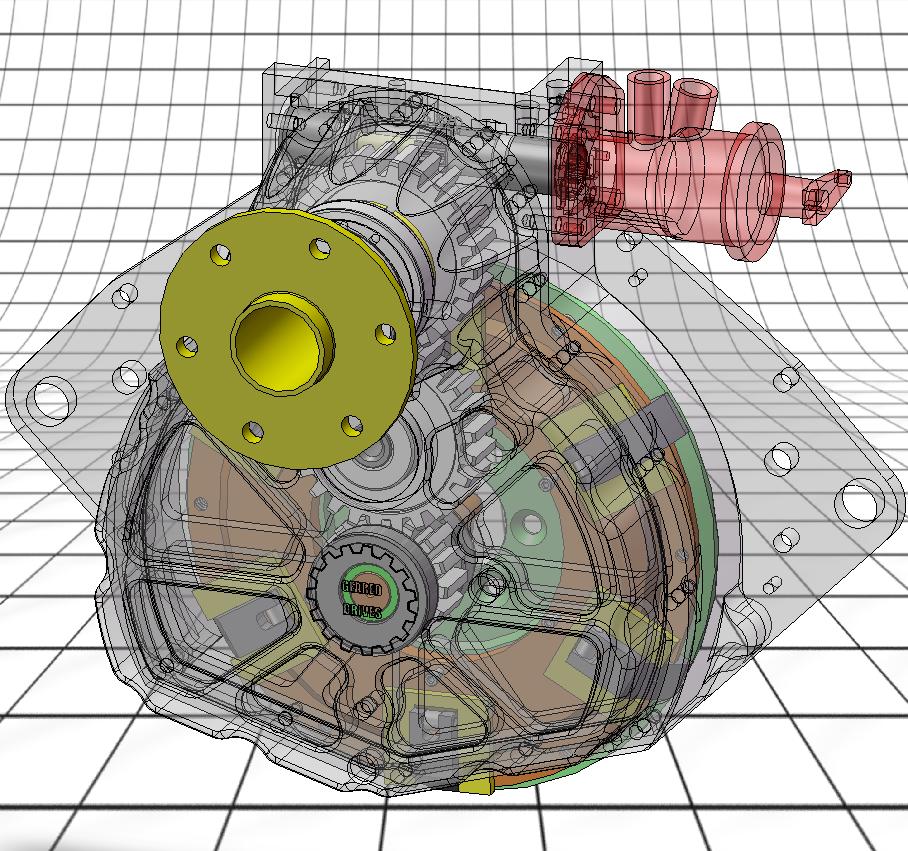
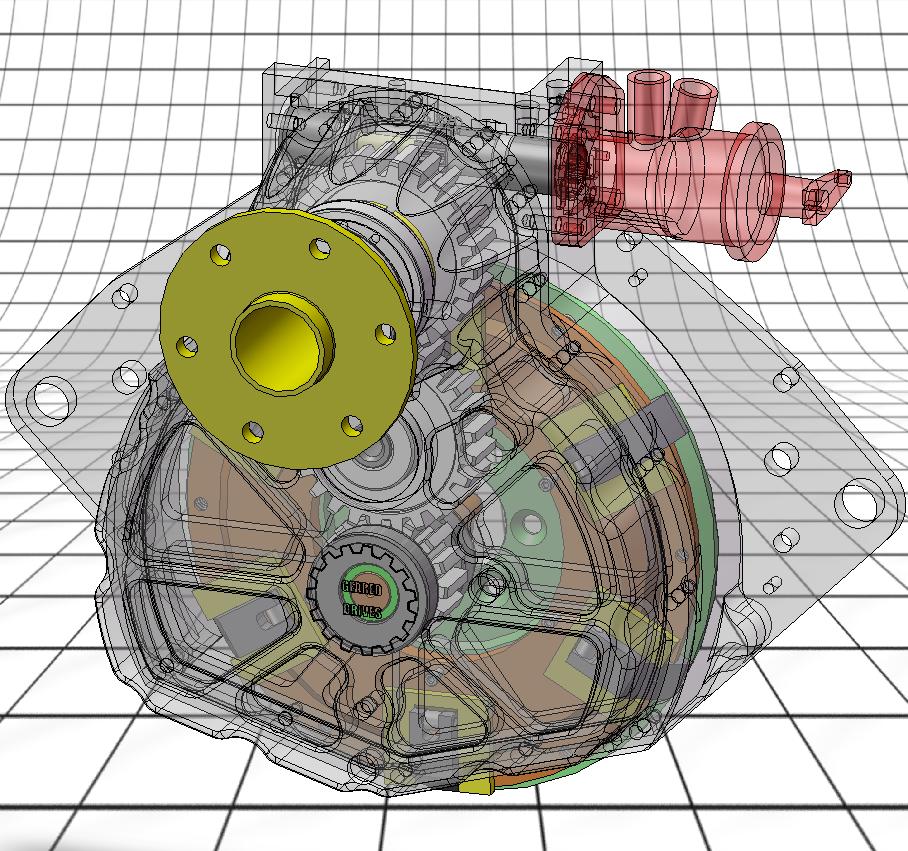
If anybody went to Buds website you would see that the system uses a
standard disk clutch plate. (Friction) The configuration is a
bob weighted centrifugal clutch. The faster the engine turns the more
locked up the system is. The clutch should only slip at low rpms, taxi
and below run-up. For the engine to over speed, if that is what actually
happened, likely required a major mechanical failure.
Bill Jepson
http://www.geareddrives.com/
--
The Rotary Engine NewsLetter. Powered by Linux.
ACRE NL web site.
http://www.rotaryeng.net
Youtube key word PaulLamar2
Copyright 1998-2011 All world wide rights reserved.