Paul,
Have lost track of where you are up to with an electric
control for the flaps. AS I mentioned before on our combine harvesters
we have electric control on the sieves and the rotors which can set
everything to within a mm. time and again. Went to town today and asked
the mechanic how it worked. Seems the electric actuator has a
potentiometer that has an output in volts (1 to 5) that is read by the
main computer to set the actuator exactly where it should be. He
suggested that you could hook up the potentiometer up to either lights
or a volt meter, or whatever is needed to get the required stroke.
Naturally full stroke would be full flap with no flap fully closed. I
am sure that a smart bloke like you could figure out how to get what is
required in-between electrically. Can get the manufacturer of the
actuator if required quite easily as I think we carry a spare for our
machine regardless. Neil.
Take a picture of the flap actuator for me. There are two kinds. Simple
DC motors and stepping motors. Unlikely it is a stepper but possible.
Probably just a small DC motor. Hook plus 12 volts to one terminal and
it rotates one way. Reverse the polarity and the motor rotates in the other
direction. The computer reads the one to five volts out of the
potentiometer and knows where it is as you stated above. The computer
knows where it wants to go so it applies either plus 12 volts or minus
12 volts and the actuator moves in the direction it needs to go.
Here is what you need to do to control it. A small volt meter that
reads the pot and displays the info on the instrument panel. (Or just look
out the side window and look at the flap position.)
Then wire a momentary two way toggle switch center off.... on the instrument
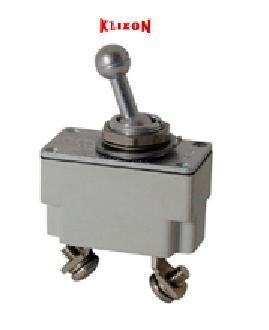
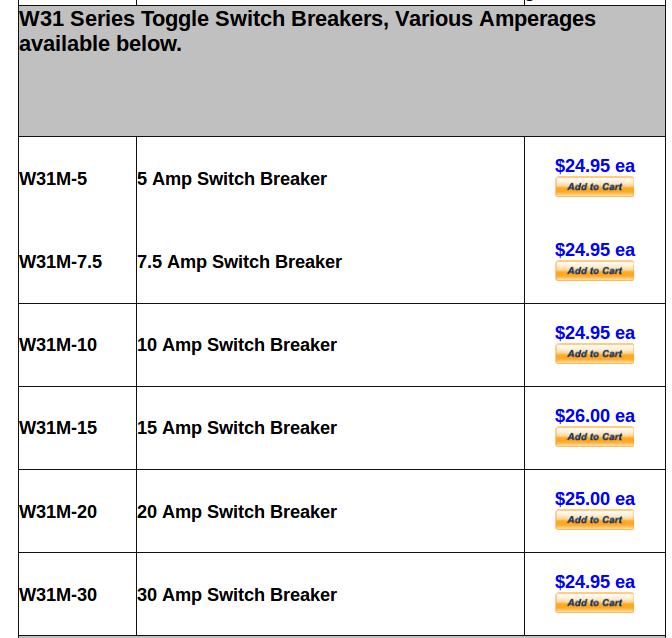
panel. See the enclosed jpg. In addition use a circuit breaker switch on the
instrument panel so you can reset it in the air.
http://www.sensata.com/klixon/circuit-breaker-aircraft-7270.htm
If you forget and hold the switch up or down for too long you can damage the
act. motor. In that case when the motor bottoms out for a few minutes it will
blow the circuit breaker. You can then reset the C.B.. Easier than wiring limit
switches or a separate fuse that cannot be quickly replaced. It might also blow
if you try to move the flaps down at too high of an airspeed.
I like to use these for most circuits as it saves a lot of wiring work.
However they are expensive. It is nice to be able to reset the breaker
while in the air without fumbling around with fuses. I used these
back in the 1960's on the BOAC 500 winning Chaparral 2F. Sometimes the problem
is just a momentary short. These are widely used on airliners.
Paul Lamar
--
The Rotary Engine NewsLetter. Powered by Linux.
ACRE NL web site.
http://www.rotaryeng.net
Youtube key word PaulLamar2
Copyright 1998-2011 All world wide rights reserved.