One of my favorite car magazines over the years has been
GM High Tech Performance.
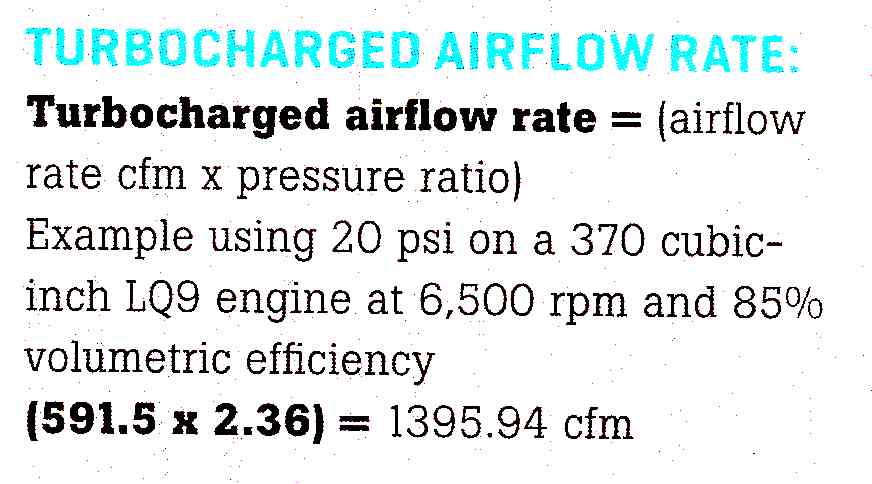
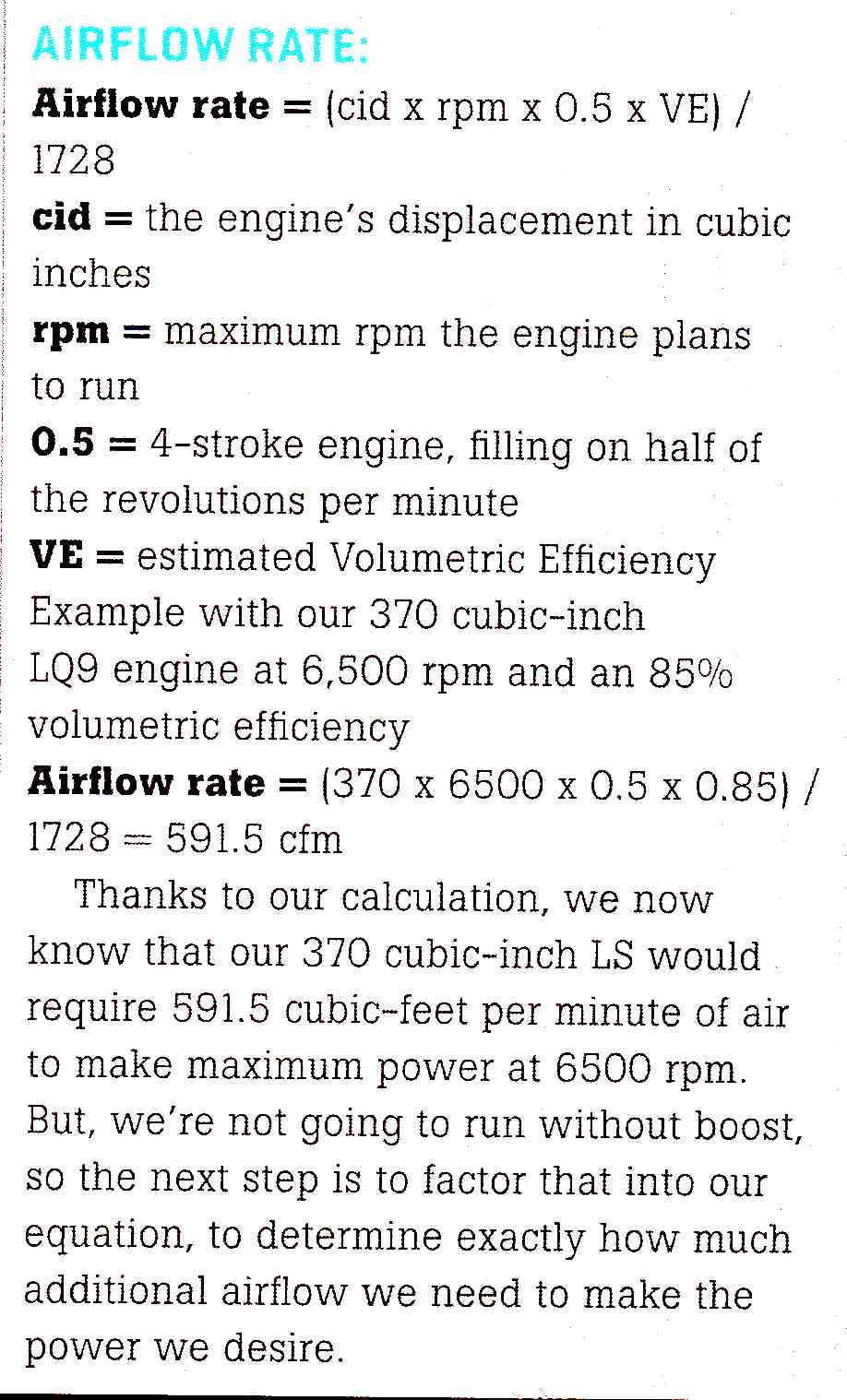
They recently had an article on turbo charging.
I have extracted the important parts
and here they are.
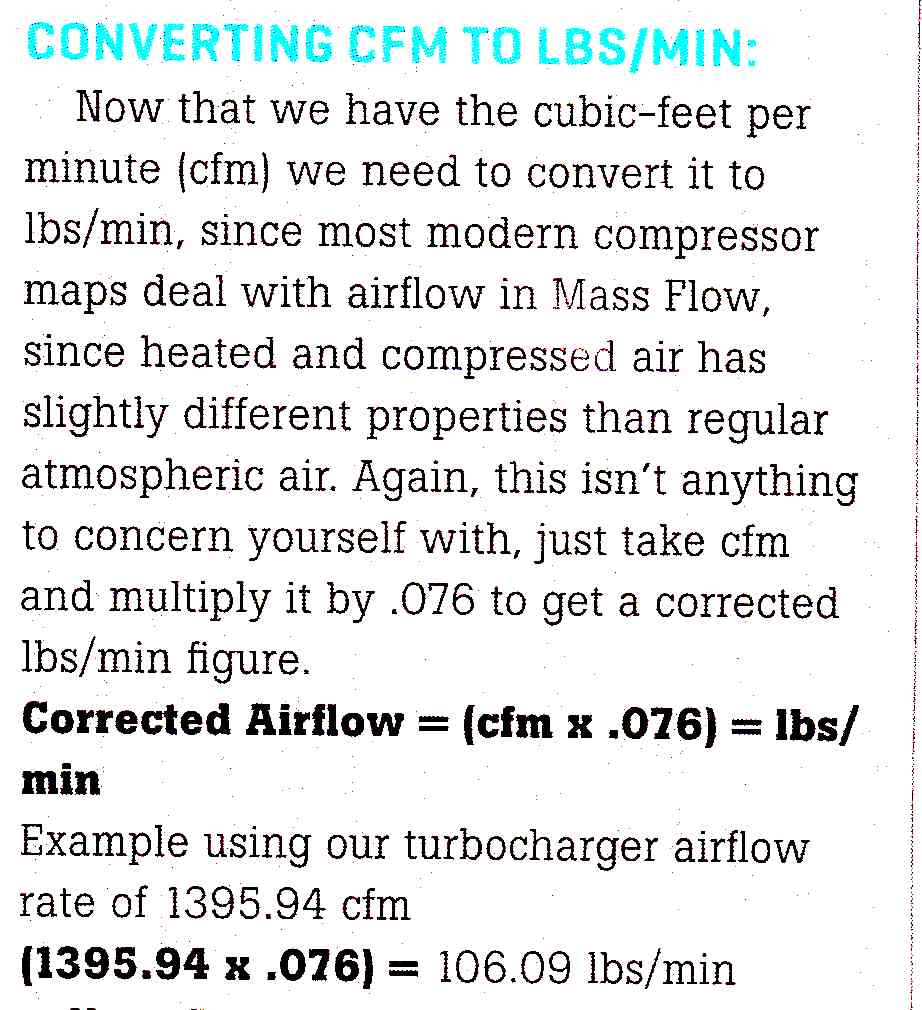
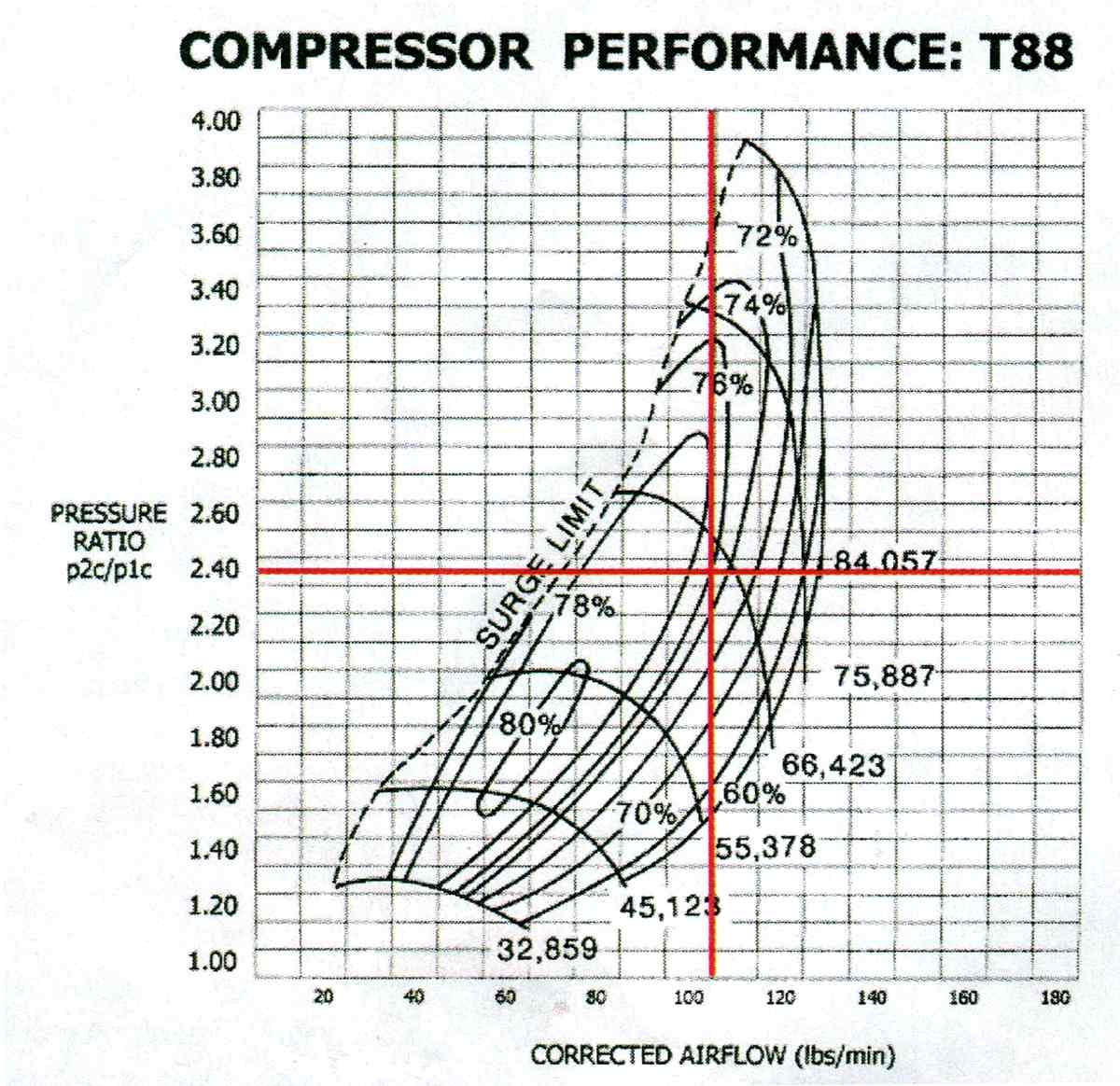
You go through the numbers step by step and choose a turbo
map from a turbo companies catalog with your desired pressure ratio
and flow rate cross hairs on the most efficient part of the map.
The 13B and the RX8 engines are 159 cubic inches.
The VE volumetric efficiency for a very good side port manifold is
about 100%. The VE for a slide throttle p-port is 120%.
The problem with this is the turbines associated with a given map
are sized for automotive use so one should choose a turbine separate
from the turbo charger for continuous aircraft use. Not always
possible.
What one wants is a high A/R for the turbine. This will slow the turbo
charger RPM and produce less back pressure on the engine. Choose a map
with the desired pressure ratio and flow on the low RPM part
of the map. High RPM and high rotary exhaust temperatures up to 1800 F
are turbine blade killers. The law of physics is centrifugal force on the
blade is mass of the blade times circumferential velocity squared divided
by he blade CG radius. Squared is the key word here. Dropping
the RPM from 100K to 80K reduces the load to 64% of what it is at 100K
Even from 50K to 40K is 80% of the load.
At 1800 F the material strength of the blade is only about 10% of what
it is a room temperature. Not much you can do about the exhaust
temperature unless you want to mount the turbo in the aft fuselage
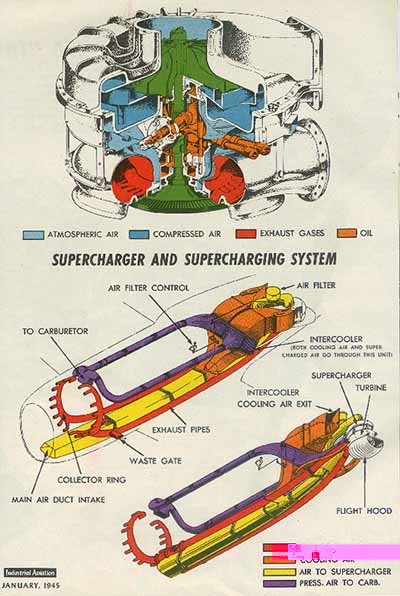
like a P47. See the P47 jpgs.
The article author multiplied the flow rate (lbs per minute) by 10 to
get the HP as a quick and dirty rule of thumb.
Normally one leans an aircraft engine to 15:1 and uses about 12.5:1
for max power.
When the rotary is leaned to about 18:1 the BSFC is the best but
the power is down a bit. BSFC of course is pounds of fuel burned per
hour per HP generated. The exhaust temperature will come down
at 18:1.
Normally the BSFC number is .47 for a leaned rotary cruising and
about .45 for a non leaned Lyc.
However we can burn auto fuel for a 25% savings over 100 LL and many
late air cooled aircraft engines with 9:1 or greater compression
ratio cannot. They require 100 LL.
Also Lycoming does not want you to lean their engines.
Your warranty is void if you do. However many get away with it.
If you don't you are looking at a very expensive valve job.
Paul Lamar
--
The Rotary Engine NewsLetter. Powered by Linux.
ACRE NL web site.
http://www.rotaryeng.net
Youtube key word PaulLamar2
Copyright 1998-2011 All world wide rights reserved.