I'm going to ground my airplane until I get to the bottom of this. I can
tune it on the ground and it will run just fine all the way from idle to
full throttle. I get about 5300 rpm at full throttle at 29 in hg. MP. I
have 12 hours in the air so far but can't get past this issue. Other
than this, the plane is an absolute joy.
When I get off the ground, when I go through around 5400 RPM, I start
to get stumbling and engine roughness. At this RPM I am about 18 inches
MP. Just below this point, I am making about 50% power and the engine
will run smoothly.
I went to another airport and had a lot of roughness on takeoff, but I
am used to it and so continued on my way to my home airport. When I got
back I found out that someone at the other airport wanted to report me
to FSDO because he thought my engine was going to blow up, but he didn't
get my tail number.
So, I thought I had it sorted out before I flew today, but it's back to
the drawing board. I've tried both leaning and enriching the mixture at
all throttle settings, but to no avail. At and above 5400 rpm I start
getting all sorts of roughness so I think that it has to be an ignition
issue. My injector wiring is separated from my coil wiring, but could I
be getting inductance between the different coil wiring?
I have a 93 13 BREW normally aspirated, 2.85 RWS redrive, EM2, EC2, 88x
74 CAtto Prop. This is getting to be really frustrating. It's got to be
something simple that I'm overlooking. I don't know anyone with an
ocilliscope, and have never used one.
Brian Trubee
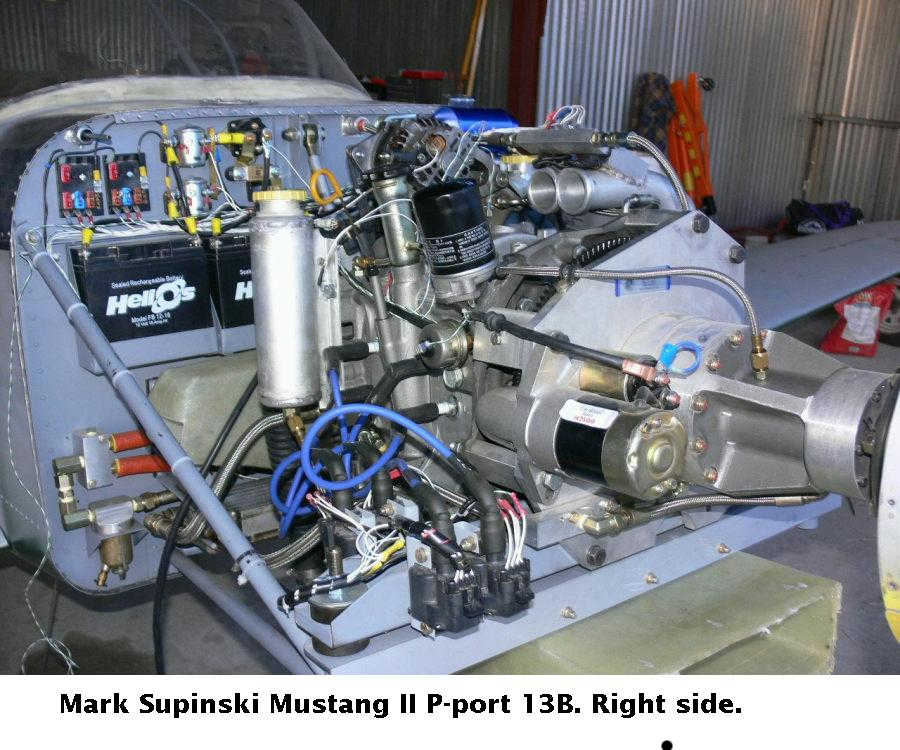
Does the intake system still look like this? If so remove
the large right angle pipe before the throttle body and fly it again.
Don't worry about where it is getting the intake air. There are probably
enough
leaks in the cowling to supply enough air for the engine.
That pipe is resonating somewhere in your RPM range. Probably around 5500
RPM. I
don't know for sure if that is the problem but it is worth a quick try.
Is there an opening in the cowl on the bottom for the intake air?
If so take some pictures of it.
---------------------------------------------------------------------
I am looking for a different response Brian. Without the pipe
it still may run rough so it will need to be re tuned for that
configuration. In principle it is a good idea to keep the length
of the intake tract up to the throttle body as sort as possible.
That means an air intake some where near the throttle body
on top of the cowl.
I am sorry but every time I hear about these kinds of problems I get angry.
If I put on my programmers hat I know that Tracy's EM2 engine monitor
could be ten times better if only he added a USB port and sent all the
data to a net book, tablet or God forbid even a recent cell phone.
Back in the
early days of the personal computers and the Apple II we immediately
discovered that less than 80 characters per line and 25 lines was not
a viable user interface. The EM2 screen is a far cry from this minimum
required user interface. Now a days we can have 100 characters and 100
lines on a high resolution color net book or tablet screen.
Here is the problem. You can not see a complete map of the mixture as
a function of RPM and intake manifold pressure on the EM2 screen.
This makes it far more difficult to trouble shoot these intake manifold
problems.
As an illustration of what I am talking about here are a couple of the
possible tuning screens on a Megasquirt system. The Megasquirt has an
USB port to talk to a PC, tablet, net book, notebook, etc., etc.
I am not advocating Megasquirt as it is not optimized for aircraft use
and it has a steep implementation and learning curve despite its open
software and hardware. I am advocating a much higher res EM2 display
screen and or a USB interface.
Tracy's computer already has one or more serial interfaces that
can be converted to USB ports. Here are some examples of cheap hardware
that can do it. The PC software can be programmed in something
simple like Visual Basic.
It would be way less of a tuning problem if everybody built P-ports.
That is the closest thing we have to a standard intake manifold
configuration over a wide range of 13B engines starting in 1973 up
to the current RX8 engine.
Unfortunately there are a lot of engines still out there with
all sorts of variations on side ports not to mention some with turbo's.
The side port engine can be a nightmare if there are two or more resonant
intake systems in series. The stock RX8 intake manifold is a classic
example.
Paul Lamar
I believe that the EM3 has such an interface as an option.
Rich
Excerpts from Tracy's web site.
------------------------------------------------------------------------
EM3 Engine Monitor
Data Logging (Parameters logged at 1 second intervals. Includes software to
display data on PC) $259.00 additional
The EM3 is designed with a separate data acquisition module (as opposed to the
integrated, one piece design of the prior EM2 unit). This allows the data
acquisition module (DAqM) to be placed closer to the engine sensors, which can
simplify the number of wires running between the engine compartment and the
instrument panel.
The DAqM utilizes screw terminal blocks (instead of the connectors used on the
EM2), simplifying wiring and eliminating the troublesome soldering of thermal
couple sensors to connector pins. The DAqM is connected to the display by a
simple 3 wire connection.
The data logging option allows recording of all monitored engine functions at
one second intervals. Data is logged on a common, inexpensive USB thumb drive.
Even a small thumb drive will hold hundreds of hours of data.
The data logging option includes software to display engine parameters on your
laptop or PC. This can be invaluable for analyzing engine, cooling and other
system performance problems.
-------------------------------------------------------------------------------
This is a step in the right direction but it is not what I had in mind
for easier tuning. It is no where near what Megasquirt offers.
The price is high as one can buy a data logger for about $100.
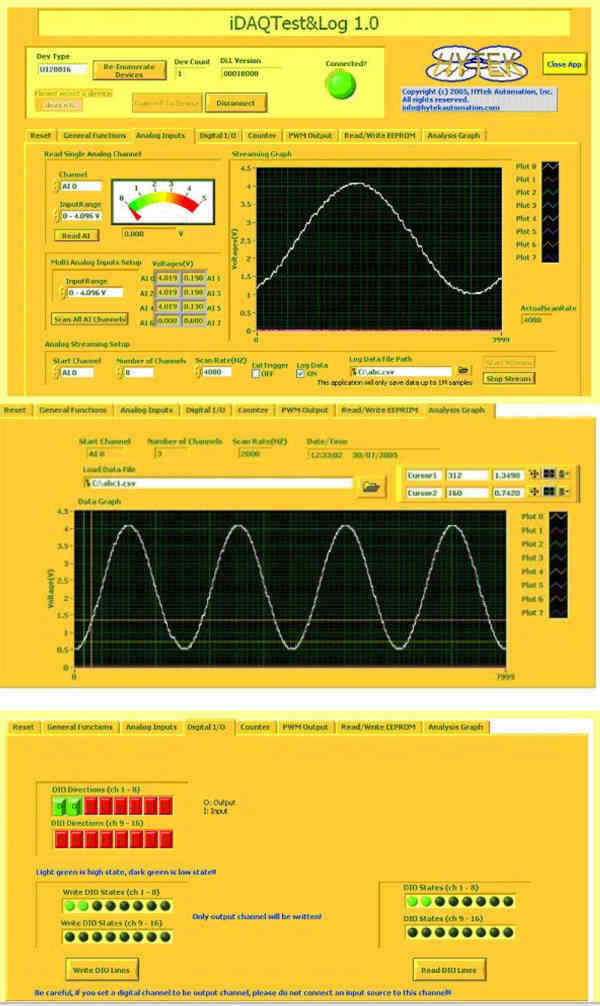
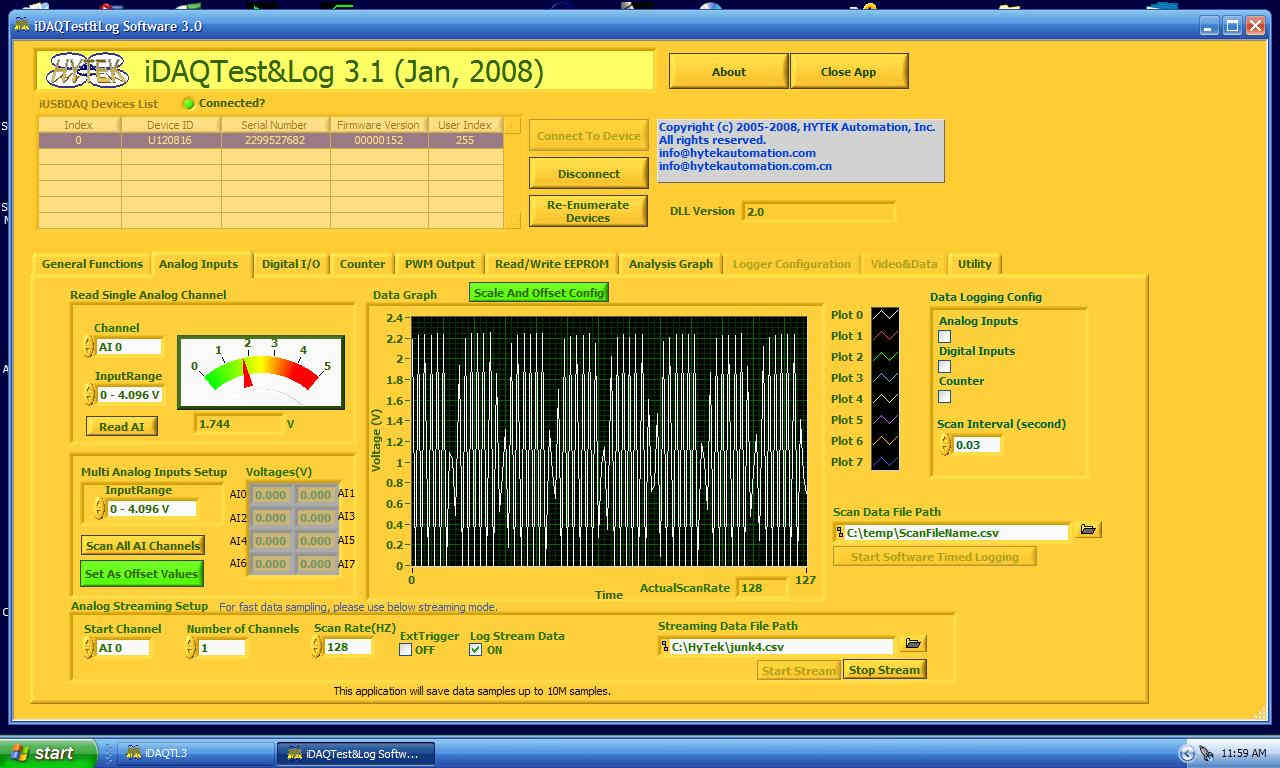
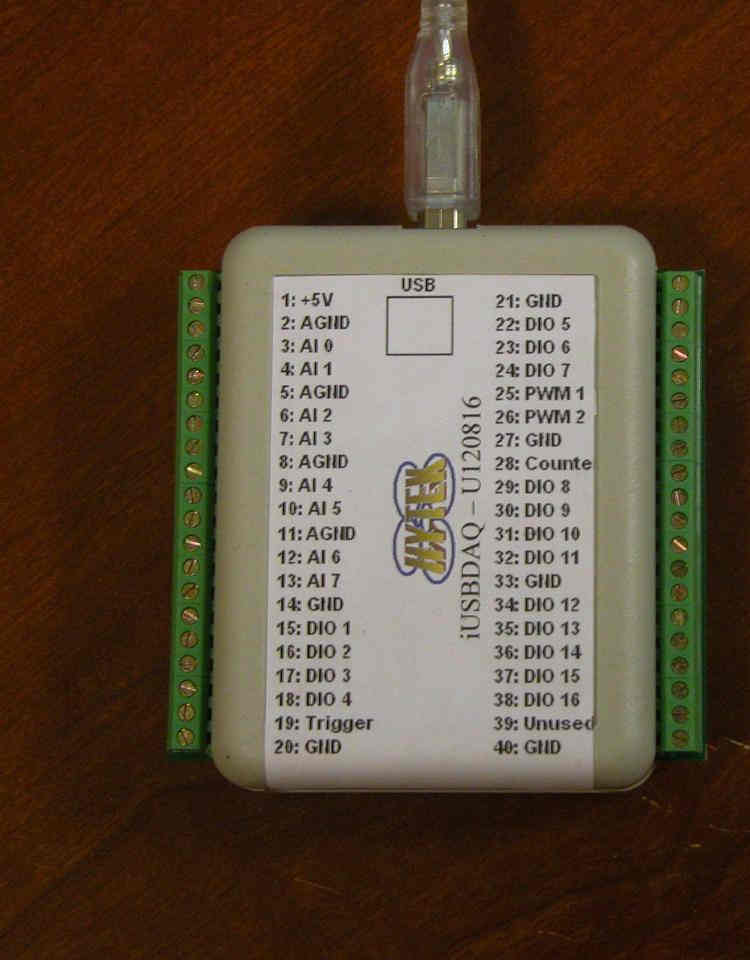
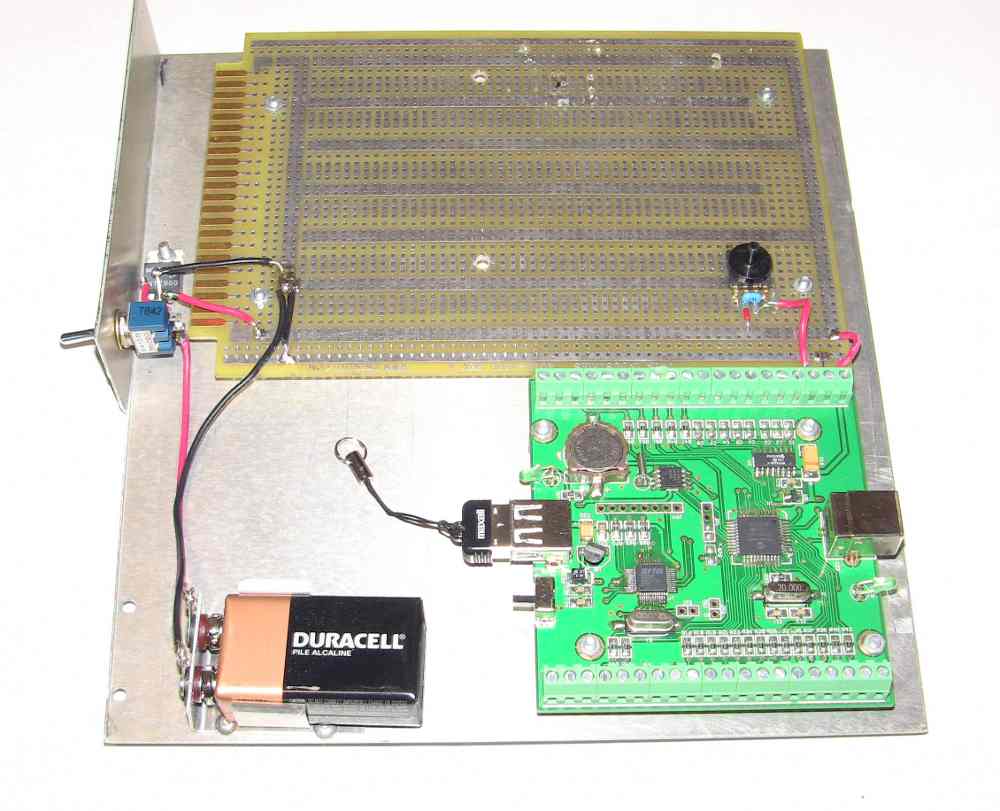
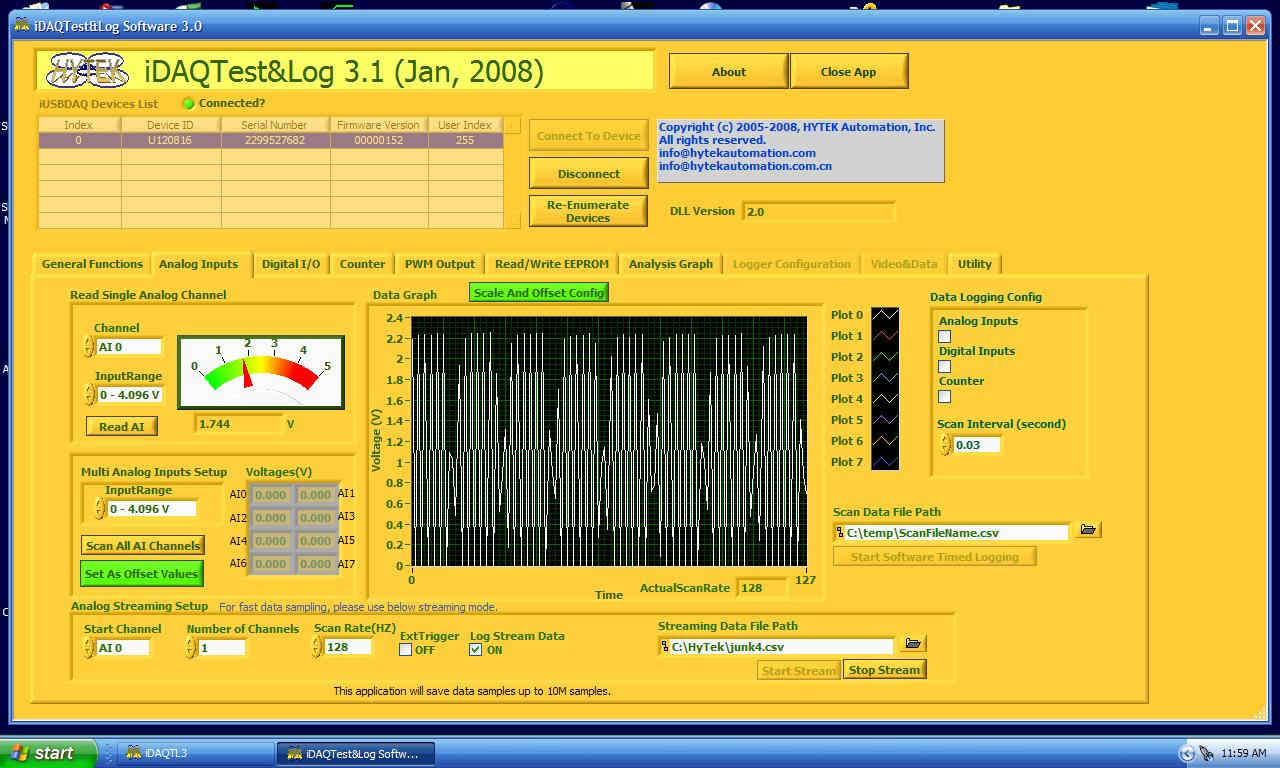
Here is a good one I have used on a Rotary Powered Mustang II.
From the sounds of Tracy's web site this data logger is wired
in a similar fashion with direct connect to the sensors or
injectors and coils.
http://www.hytekautomation.com/Products/IUSBDAQ.html
Does anybody have an EM3 with data logging?
Paul Lamar
--
The Rotary Engine NewsLetter. Powered by Linux.
ACRE NL web site.
http://www.rotaryeng.net
Youtube key word PaulLamar2
Copyright 1998-2011 All world wide rights reserved.