-
I'm going to try to borrow a prop which will allow higher RPM on the ground for
ground testing. The first variable is to remove the inlet pipe from the throttle
body and put just a filter or a screen "air Strainer" there and try to replicate
the stumbling. Then I'm going to do a run on just the primaries and then
secondaries. Then I'll try separating all my coil leads to see if I am getting
inductance.
At that point. if I have not found the issue, I'm sure I will have thought up
more potential causes and test for those.
Brian Trubee
It is a mistake to do more than one thing at a time.
Take off the intake pipe.
Re tune if necessary to get it to run well up to static RPM at
5300 RPM. Leave the upper range over 5300 RPM as is in the mixture
map for now.
You have a long runway for 747s. Tell the tower you may abort
the take off. Get it up to take off speed. Prop RPM should start to
increase at around 60 MPH. Then abort if necessary if the engine
starts to stumble.
The air intake scoop is critical. Please take a picture before
you do anything else. NACA did a lot of R&D on this for the P51.
The prop slip stream has a large effect on scoops mounted on cowls.
The prop slip stream is fundamentally different when the aircraft is
moving quickly.
Paul Lamar
Yes, sorry I was not clear. Each one of those changes is to be done separately
and then tested. I want to borrow prop that will allow a full rpm run on the
ground for this testing,
I've got 12 hours on the plane so far. I was flying it with the theory that once
I got up in the air, I could then troubleshoot a few miles to the west over an
airport on South Whidbey island. I can retard the throttle
to about 45-50% throttle and the engine will run smoothly. This will give me
speeds of around 110 MPH. Above that, people on the ground start making phone
calls, and I don't blame them.
I am no longer comfortable flying like this, I think the smarter approach is to
kick this problem on the ground. I am becoming weary of doing serious soul
searching prior to every flight.
I need to resolve this on the ground.
The plane flies just fine otherwise, I've done some loops and barrel rolls, it
handles fine in the air and on the ground.
Brian Trubee
Well if it is truly a coil problem Tracy has changed the dwell time
over the years. If the dwell is too long the coil will misfire.
Scopes should be cheap to rent as the price has come way down
in recent years to the PC scope.
http://www.amazon.com/100MS-Based-Digital-Storage-Oscilloscope/dp/B002Z34QUA
Handy for checking dwell time and looking at your 3rd gen crank angle
sensors. You can also use it to look at the pulse width on the
injectors.
Ask Tracy what the dwell time is for your computer.
What coils are you using?
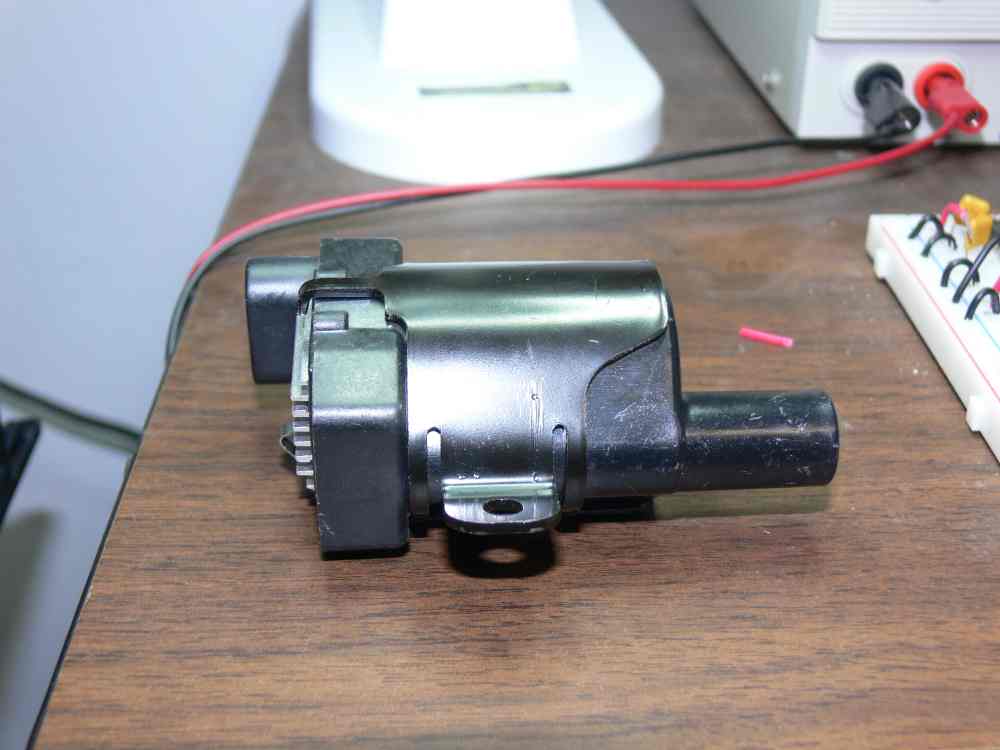
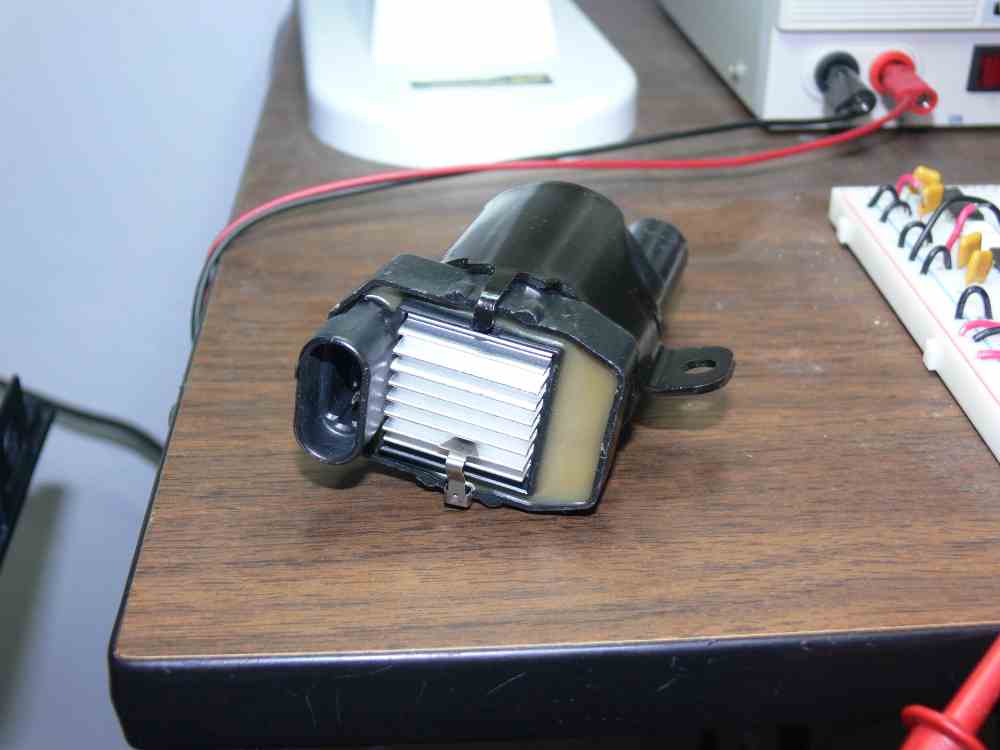
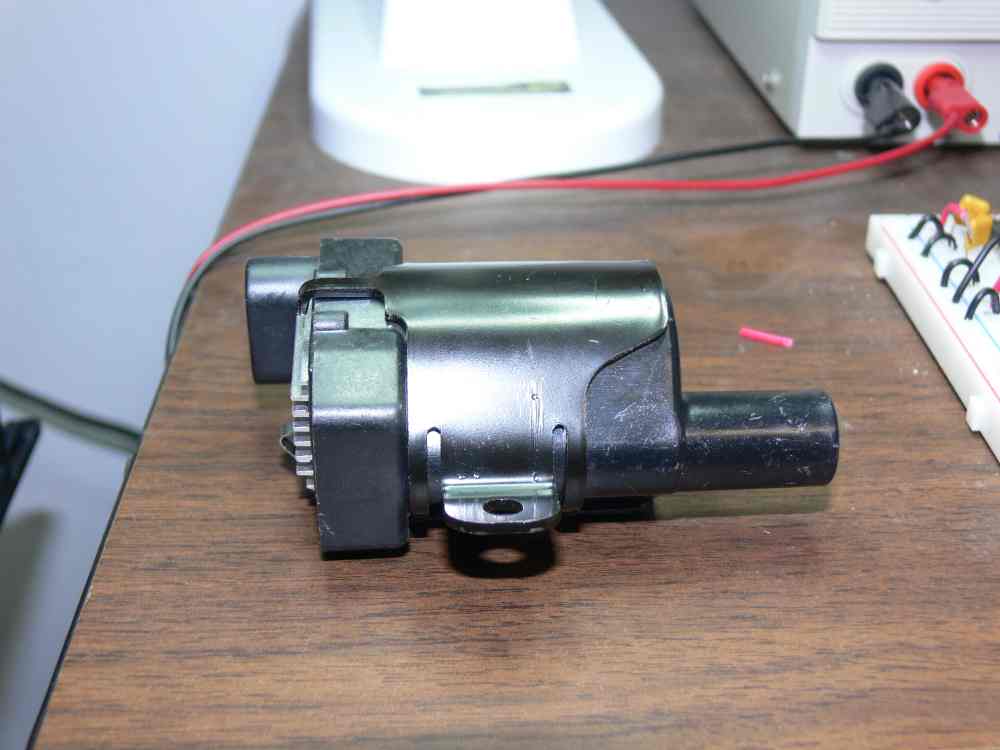
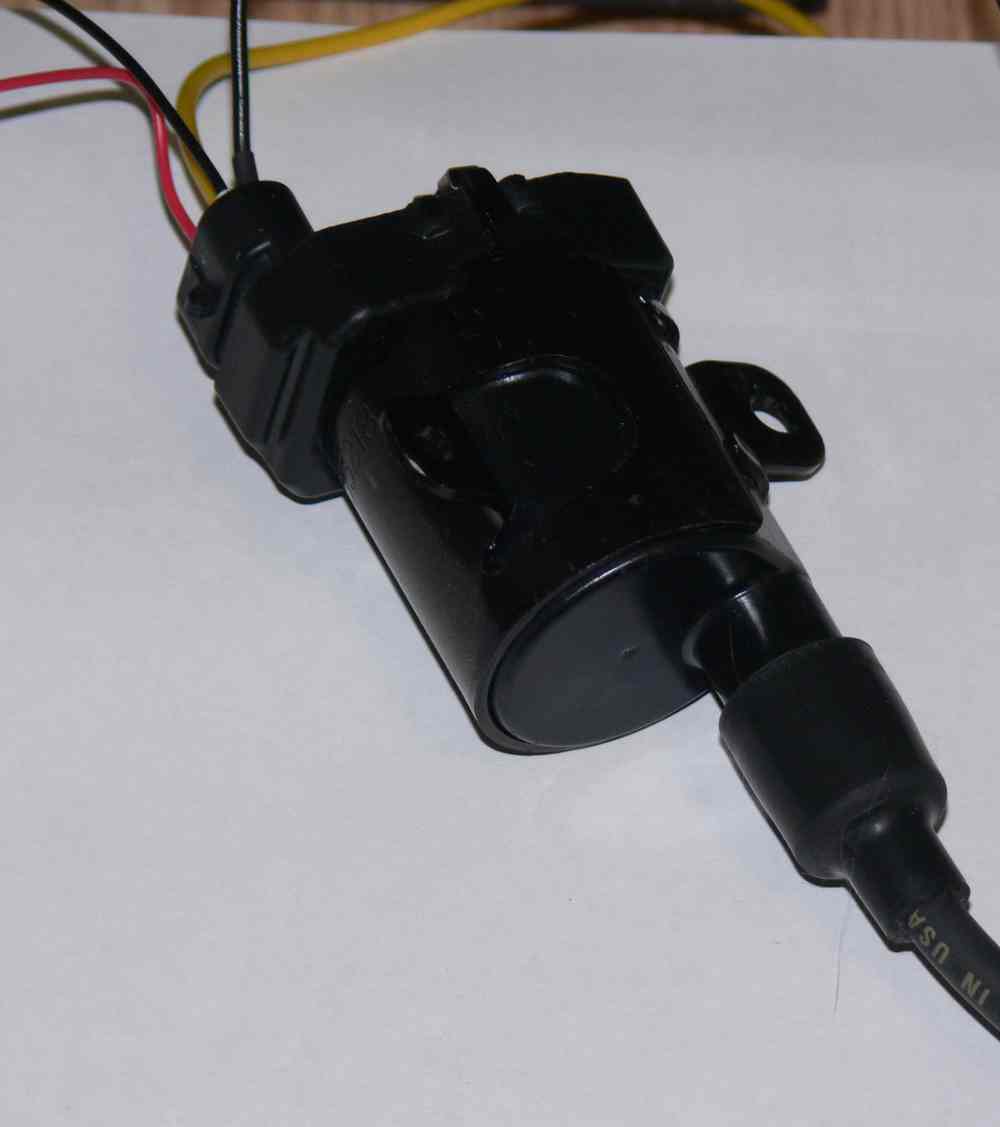
From the pictures they look like early chevy coils.
Paul Lamar
How about a dwell meter?
http://www.amazon.com/gp/aw/d/B00062YUUS/ref=redir_mdp_mobile/176-6354762-0803467
Matt-
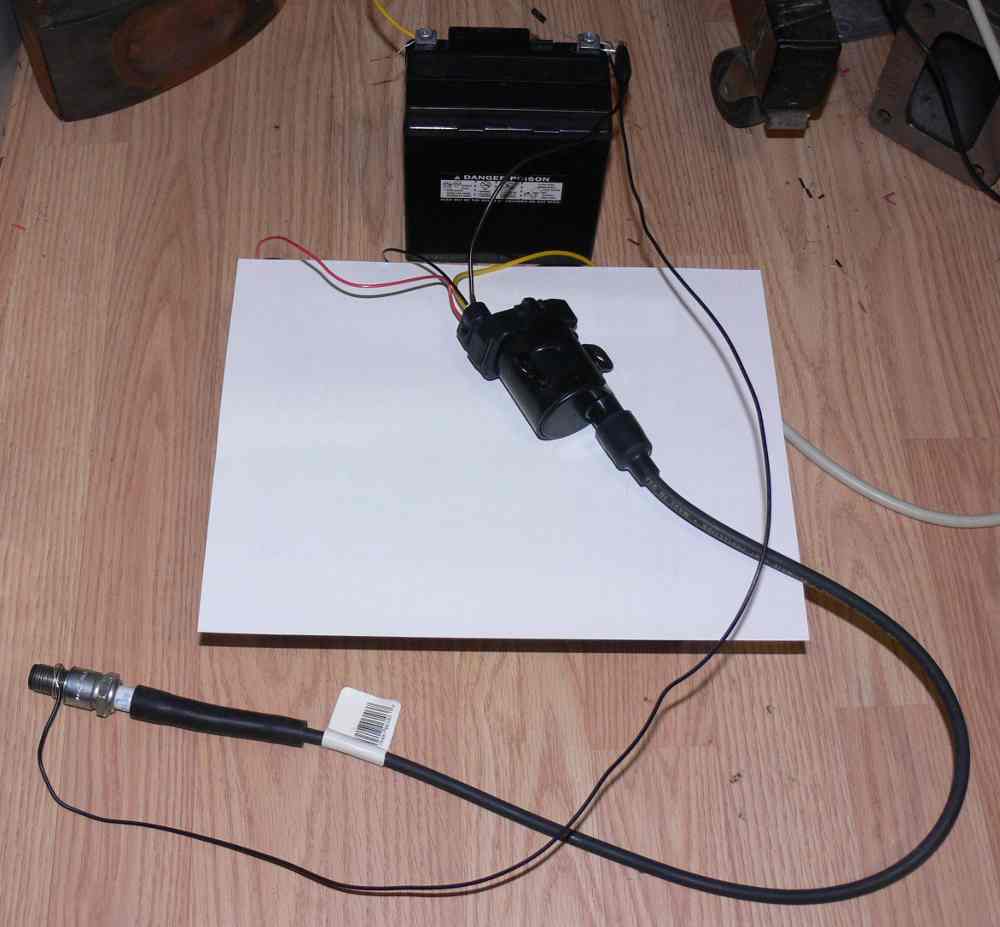
There are several versions of the LS1 coils. As I recall Tracy had problems
with the early version and people recently have gone with the LS2 truck
version. Looks like this.
I prefer the RX8 coils but that requires a change in dwell time.
It is a good idea to put a blast tube on all GM coils as they fire every
other rev on a piston engine.
Paul Lamar
If as you say, it gets smoother with retarded throttle. This suggests too
low a secondary ignition voltage. At that RPM where you have tuned your
runner lengths for.....you get the best cylinder filling. That gets you higher
cylinder pressures, and that requires higher secondary output.
(higher voltage).
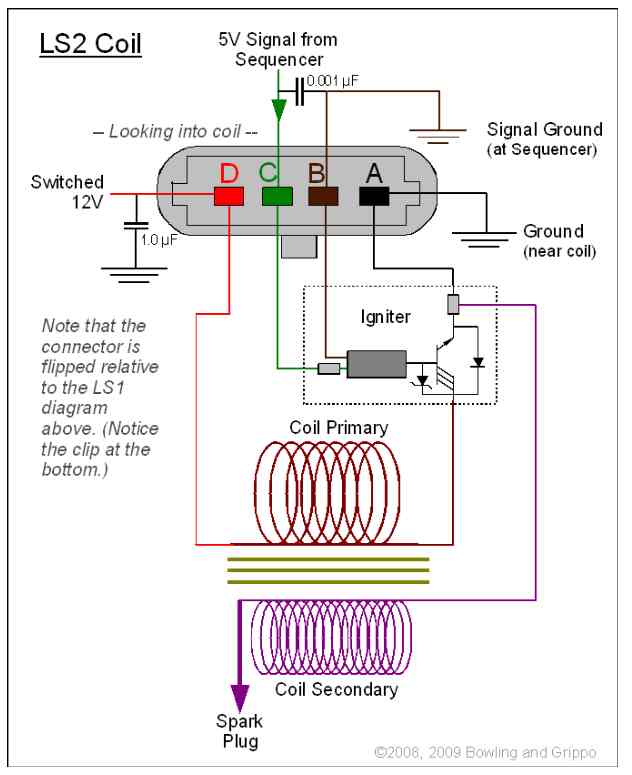
I have forgotten most of my electric stuff but the LS coil schematic
looks to portray a simple SCR cutting coil power on command, like the 70s
Chrysler pieces. Just an electrically clean power cut. No CD or MSD pieces. The
coil thinks it on a Chevy V-8 turning 11,000 RPM.
The coil is unhappy. The coil is too hot. The coil would like a longer
dwell time but that adds heat as well. That is how the close gap on the plugs
helps identify the secondary low voltage situation. When you throttle back a
bit, cylinder filling goes down and the plug can fire on the lower
voltage. That is why some folks add a blast tube to the coils to cool them.
But, I could be completely wrong. I made my fender liner fit poorly to allow
air to get to my MSD Blaster coils which run on 400 volts to the primary
Lynn E. Hanover
--
The Rotary Engine NewsLetter. Powered by Linux.
ACRE NL web site.
http://www.rotaryeng.net
Youtube key word PaulLamar2
Copyright 1998-2011 All world wide rights reserved.