Many thanks to everyone for their support and empathy of my nasty little
situation. But life will continue, even though I might have to commit
suicide to get better.
After further inspection, I see some blistering in several areas on top of
the wing. That means the alcohol has penetrated the wing skins to the upper
fiberglass covering. That does it for those wings.
A fellow Glass Gooser has offered me his wings, so I'm going to "rewing" my
airplane.
I used AdTech CER 112-2 epoxy and hardener that is supplied with the Glass
Goose. I talked to the techs at AdTech and they confirmed that ethanol is
very destructive to their epoxy. However, he said there are other epoxies
that are very durable with ethanol. I'll certainly look into those.
Sandy McNabb
Good news for me Sandy. Makes me happy. I don't like to see that much effort
and
good workmanship thrown away. I would not give up on the bladder idea just
yet.
I should know in a week or two how difficult it is to bond neoprene.
I had trouble finding the neoprene fabric again on the McMaster web site.
It is listed under Polyester, Polypropylene & Nylon Fabrics. Page 3201
of the printed 108 catalog. McMaster has so much stuff things are
sometimes hard to find. I ordered a 5 by 5 foot sheet for testing.
Also use a small box wrench to tap on the skin and listen for a change in
sound.
Believe it or not this is a technique they teach to certified aircraft
mechanics
working on composite parts for airliners.
If you have a sample of the foam you used in the old wings please soak
it in auto fuel for a few weeks.
Since you have new wings please cut apart the old wings and take pictures of
the
inside damage before throwing them away.
BTW what is the rib spacing in the fuel tank area?
I assume the top and bottom skin is double wall.
Is there an illustration in the plans showing the basic
construction? I would like to calculate what would happen
deflection and strength wise if the sandwich skin was thicker to do away
with the ribs. Perhaps a layer of carbon top and bottom on
the skin will do the job. The C82 has no ribs in the 45 gallon fuel tank
area.
This whole issue is key to the acceptance of the
rotary because one of its main advantages is the ability to burn
low cost auto fuel.
I'll pay to have a large chunk of those old wings shipped to me
for R&D.
Paul Lamar
---------------------------------------------------------------------------
Hello Paul,
I won't be giving up on the bladder idea or any other since I still need to
solve the ethanol problem in a fiberglass fuel tank.
Scott Gettings, another Glass Goose builder, put a fiberglass and foam
samples in jars of diesel, avgas, and gasoline (without alcohol). The
samples have been in the fluids for 7 to 9 years. He says the is very little
to no damage to the epoxy.
I will be happy to take pictures of the old wings and send you a sample to
test.
There are no ribs in the tanks, however the main spar runs through the
tanks. The wing skin is a single layer of fiber glass on both sides of 3/8"
foam...Typical Rutan design.
Sandy McNabb
Sounds like the Long EZ wing strake tanks.
Well that sounds strong enough for bladders in front of and behind the
spars. Most of the weight of the fuel is supported by the aero pressure
on the bottom skin. Not all of course as most of the lift comes
from the top skin.
They can feed through small holes in the root rib as I think
that is what they do now. The 6 by 12 oval holes can have a cover with
a lot of small machine screws with nut plates to restore the
skin strength. Just like a C182. I'll have some material pictures by
Monday or Tuesday.
Paul Lamar
The Goose wing tanks are very tight, with a single outboard filler that handles all
the bays. The tanks are lined with Jeffco prior to wing closure, but the
bonding process will allow some of the epoxy to be in contact with the fuel no
matter
what you do. Fuel bladders would be very difficult in this small,
multi-compartment
tank system configuration - using a resistant sealer and resin in the wings would
be far easier.
As Sandy mentioned, my test articles have been in fuel for 9 years without any
damage to the Jeffco or bonding epoxy. I have not tested them in gasohol.
Scott Gettings
Do you have a set of plans for the wings that can be scanned Scott?
If you mail them to me I can scan them and send them back. I'll pay postage.
There is a process called roto molding where the liquid sealer is placed
in the tank and then the tank is continuously rotated on at least two axis's
untill the sealer sets up. This process uniformly coats the interior
of the tank with a uniform thickness.
http://en.wikipedia.org/wiki/Rotational_molding
Paul Lamar
I screwed up. Neoprene is not good for fuels.
I got it confused with NBR / Nitrile or Buna N
Acrylonitrile Butadiene
Now I need to find a source for the NBR fabric.
--------------------------------------------------------------
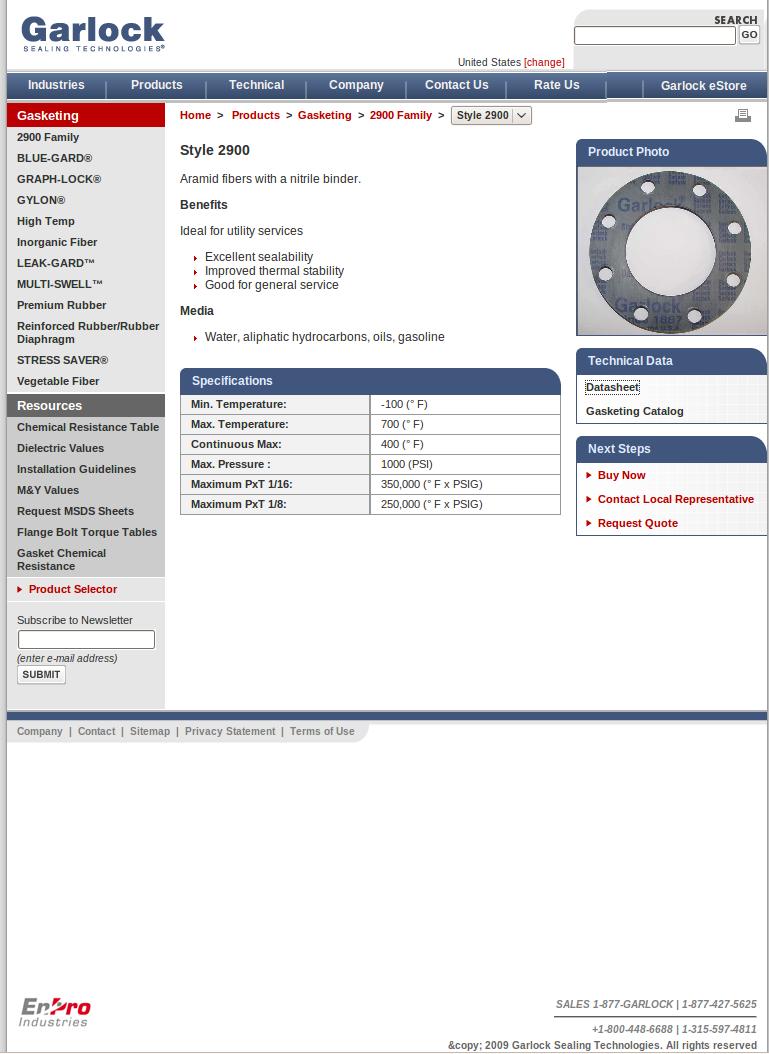
GarLock is a division of Goodyear.
They sell gasket NBR material which has the needed characteristics
for fuel cell material.
http://www.garlock.com/ViewProduct?product=259®ion=1
GoodYear also has some other divisions that may sell more or less
the same stuff.
http://www.goodyearrubberproducts.com/goodyear/AlphaCatalogs.asp
Paul Lamar
I have been working for Trelleborg designing seals for aerospace and
automotive... NBR is not fuel resistant. Is such case you need to use FKM or FVMQ
I suggest that you visit
www.trelleborg.com for more info
Roderick Scotto
No doubt FKM AKA Viton is better but it is a lot more expensive.
http://www.fkm-ind.com/sheet_rubber.html?gclid=CMLf-O2A3qkCFQVLgwodP0_cYw
We don't need the 400 degree F temperature capability.
If it is good enough for Goodyear it is good enough for me :)
Paul Lamar
The Rotary Engine NewsLetter. Powered by Linux.
ACRE NL web site.
http://www.rotaryeng.net
Youtube key word PaulLamar2
Copyright 1998-2011 All world wide rights reserved.