Here is some good evidence that we will not be able to use the flywheel in
place of the flex plate.
On this page at Mazdatrix, scroll down until you see the tools labeled
"flywheel stopper"
http://www.mazdatrix.com/****ftools.htm<
http://www.mazdatrix.com/**ftools.htm
<http://www.**mazdatrix.com/ftools.htm<
http://www.mazdatrix.com/ftools.htm
Note that one of them fits the non-turbo flywheel BUT NOT THE AUTO. And
the
other fits the turbo (Which I assume is different than the n.a. auto since
they don't list it there either). We may be stuck just trying to beef up
the existing flex plate.
--
David Leonard
Turbo Rotary RV-6 N4VY
http://N4VY.RotaryRoster.net
http://RotaryRoster.net
I would not look upon it as being "stuck". I would now look at it
as being better :)
Ideally one could make a die and form thin 4130 to nest inside
the flex plate. Bond it in with RTV. That would allow motion between
the plates and damp the vibration. Unfortunately sandwiching it
between 4130 plates would help but it would move it towards the starter.
Perhaps we could space the starter out 1/16th of an inch.
Also lighten Tracy's damper plate to reduce its moment of inertia. Drill
the
bolts and cut away low stress parts of the plate. I will do a sketch.
Let Jeff do this as he can set up a static balance rig.
------------------------------****-----------------------
Here is the sketch. Use shear lock nuts instead of full size.
That will allow shortening the bolts a small amount. Every little
bit helps when it is out near the rim doing 6500 RPM.
We can also make a die for cutting 500 F silicone rubber washers to
replace
the 200 F black rubber bushings.
Paul Lamar
Some great ideas but I am not in favor of cutting down the damper plate...
It was basically holding my flex plate together waiting for me to discover
the cracks... but I was a bad inspector and the pin broke first. I also do
not mind a little more weight out there to smooth out idle a littls
(albeit would be better on the flywheel side of the dampers). Though you
are right, it was possibly the high RPM that did me in (although I though
the RD-1C guys ran at 7500 all the time).
If you can figure out how to make silicone dampers instead, I would buy
them!
--
David Leonard
Turbo Rotary RV-6 N4VY
http://N4VY.RotaryRoster.net
http://RotaryRoster.net
I'll get Jim started on the cutting tools tomorrow.
What is the ID and OD? I have the thickness and the material.
BTW what do you think of this idea? See the attached 3D.
Paul Lamar
I will get the ID and OD of the inserts later today when (if) I get to the
hangar.
That plate is not a bad idea but I don't like the idea of transmitting the
torque through those spacers.
Cary, good point about the age of my flex plate, I was thinking that too.
--
David Leonard
Turbo Rotary RV-6 N4VY
http://N4VY.RotaryRoster.net
http://RotaryRoster.net
The engine torque at best is 250 foot pounds or 3000 inch pounds.
At a 6 inch bolt circle diameter it is 500 pounds side load total.
Six bolts 83 pounds side load each. Piece of cake
but a cylindrical spacer is easy to make if it makes one
feel better :)
BTW the inertia of two nine pound rotors and counter weights overwhelms
the flex plate inertia in the over all scheme of things. As far as idle
smoothness is concerned.
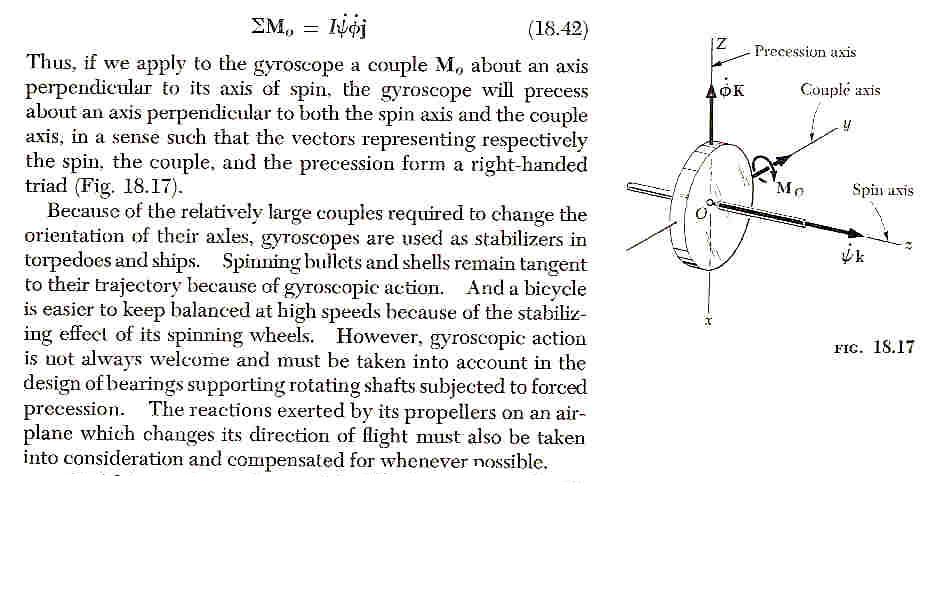
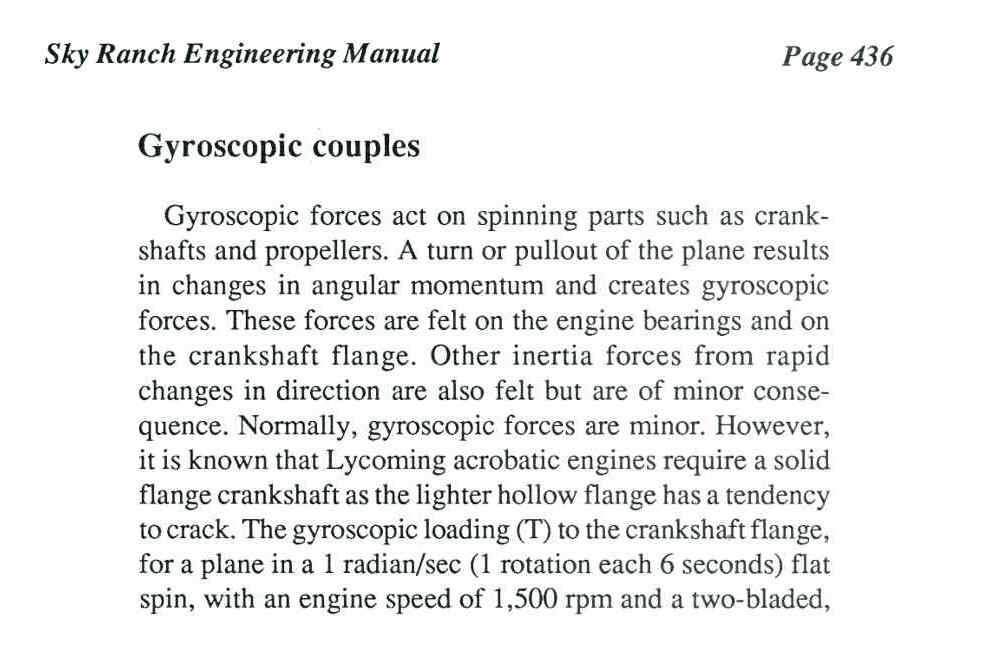
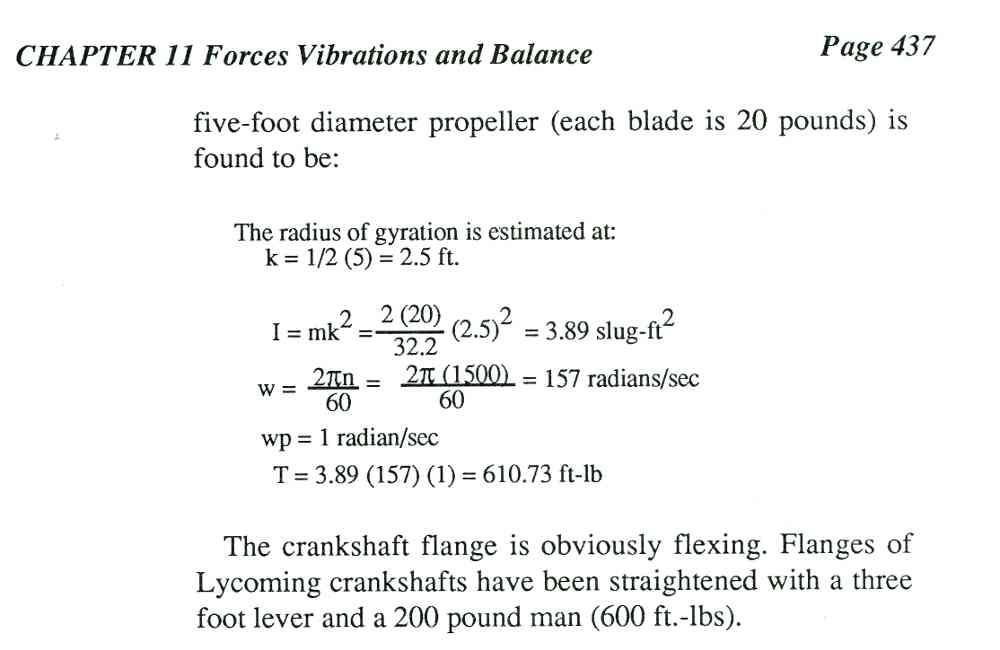
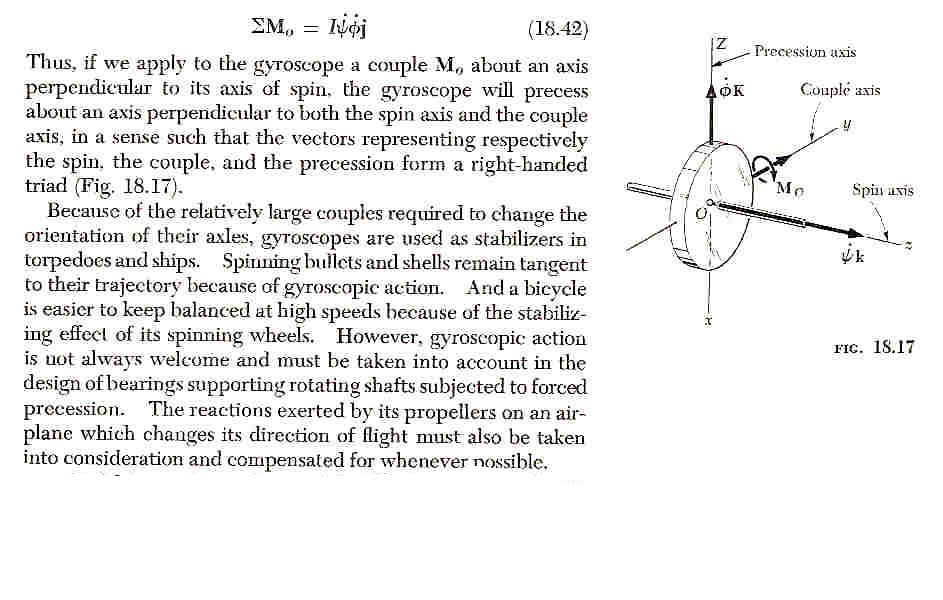
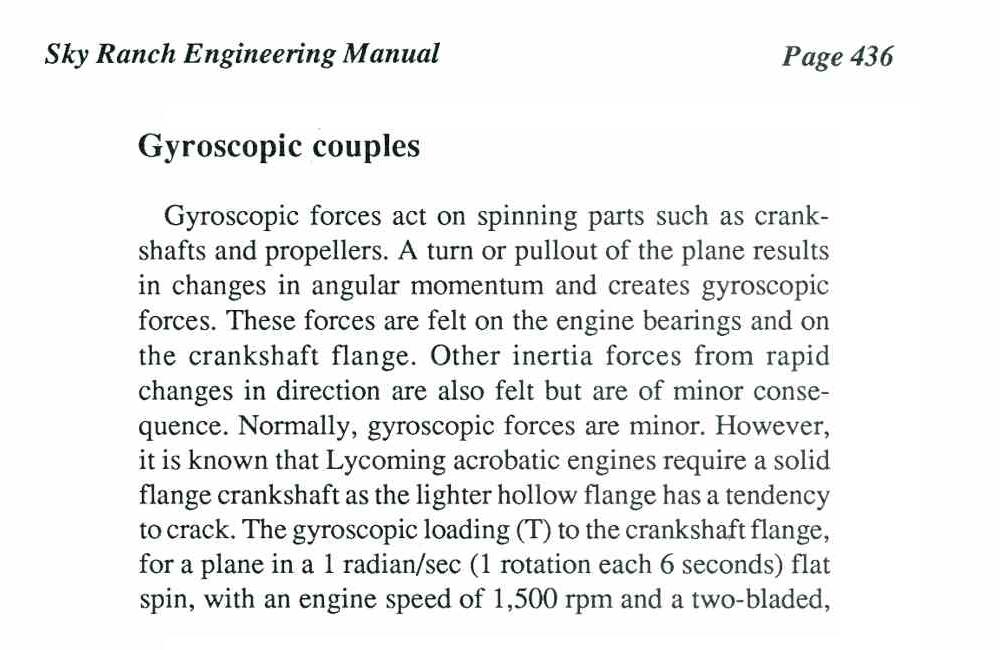
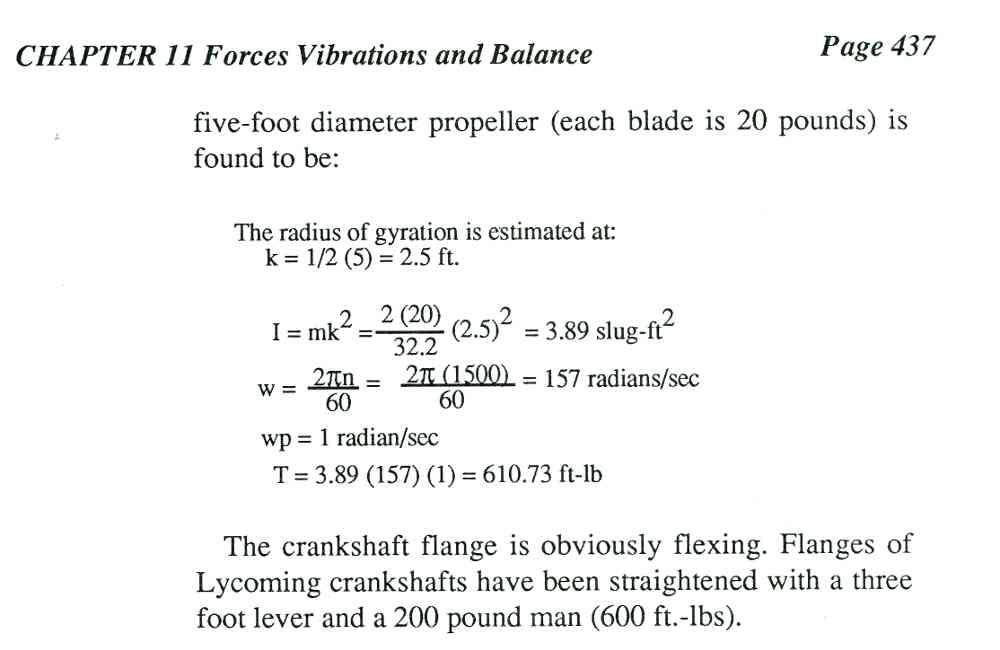
However in the local flex plate world where you are in a continuous
two G turn the gyro reaction of the plate itself is significant.
Think of the flex plate as a gyro and you are continuously trying
to change its rotational axis.
Assume for the moment the lap time at Reno is 2.2 minutes.
8 miles around at 220 MPH or .036 hour or 2.2 minutes.
Put some bearings on the flex plate and an axle.
Spin the 5 pound flex and damper plate at 6500 RPM.
Hold each end of the axle.
Now turn 360 degrees in 2.2 minutes and you will feel the problem.
The flex plate is in a continuous state of reversing bending.
At 6500 RPM it reaches the one million cycle fatigue limit
in only 153 minutes. Add in air turbulence. Flex plates do not see
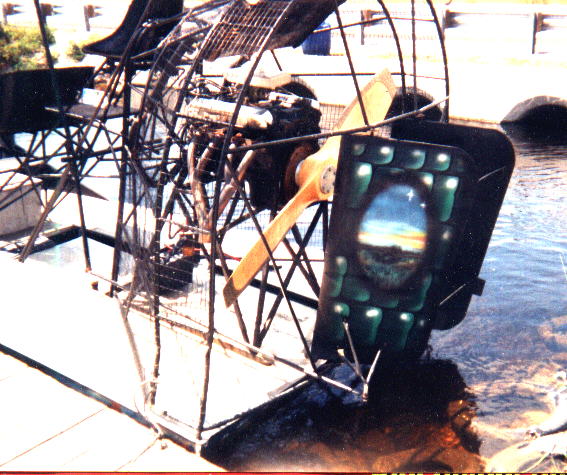
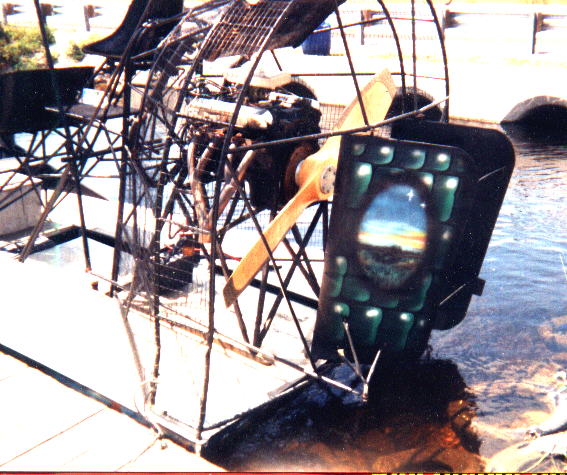
that in cars. Only the occasional bump. I went for a ride in the
Everglades in a two passenger air boat powered by a 500 ci Cadillac
direct drive V8. The boat owner/builder slowed down to go over
short hammocks. I asked him why. He told me if you do it fast the
cast iron crankshaft cracks.
Hartzel and Hamilton limit the life of an aluminum sport class custom racing
prop at Reno to one half hour or 30 minutes as I recall. Perhaps
because of a blade bending mode excited by severe four cylinders torque
pulses. We have that too to a lessor extent.
A flex plate that flexes mitigate the bending load on the hub by deflecting
the rim mass into a plane of choice the same way a wood prop works.
The modulus of elasticity of a wood prop is way less than an
aluminum prop. About one tenth. Wood is tough. One can bend it back and fourth
almost indefinitely and it does not crack or break. Fiberglas will do the
same thing. Lets make it out of plywood or fiberglass. Thin spring steel
is the next best thing. You want it to flex.
Paul Lamar
--
The Rotary Engine NewsLetter. Powered by Linux.
ACRE NL web site.
http://www.rotaryeng.net
Youtube key word PaulLamar2
Copyright 1998-2011 All world wide rights reserved.