Ok, jean. Here they are.
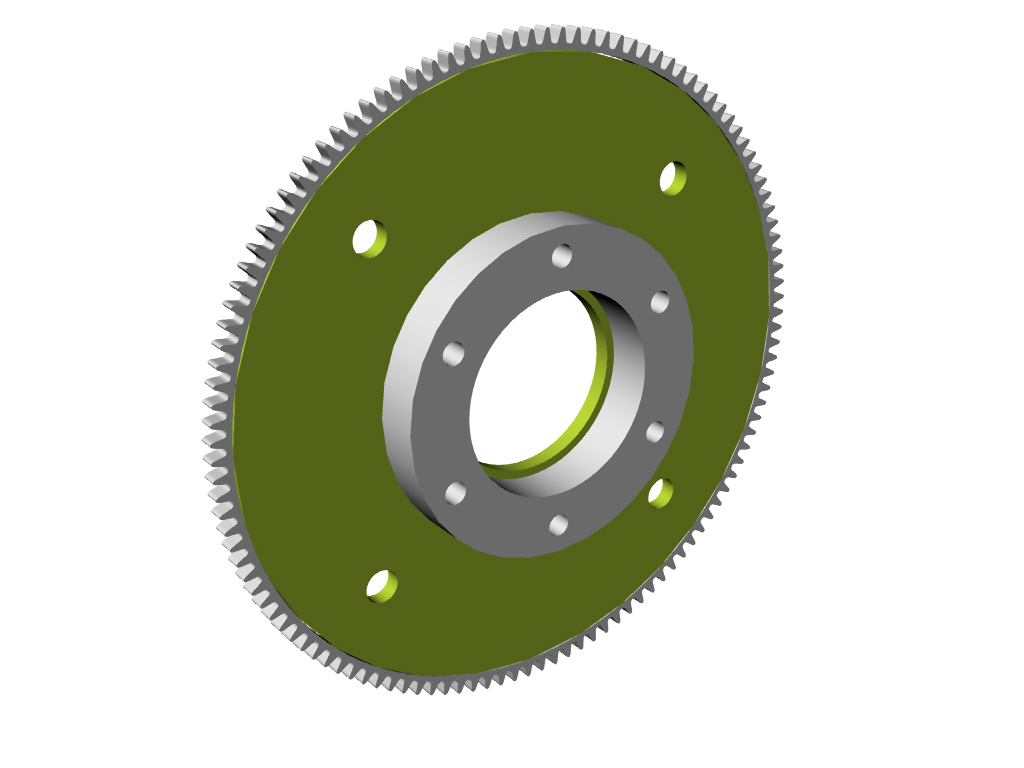
The thickness of the plate is 2.1mm at the center.
The diameter of the central hole is 78mm
The inner circle of 6 bolt holes centers on a radius of 48.55mm and the hole dia
is 10.5mm
The inner set of 4 lightening holes is centered on a radius of 75.4mm and the
holes are 30mm in diameter.
the outer set of 2 lightening holes is centered on a radius of 108mm, elipses
with 15mm radii and 5mm between 2 rad centers.
outer 4 bolt holes are centered on a radius of 112.25mm and are 11.3mm in dia.
there are 4 slots, 8.3x30mm with a tab at 90 degrees to the plate. long axis is
45 degrees to the radius, centered on the 108mm radius.
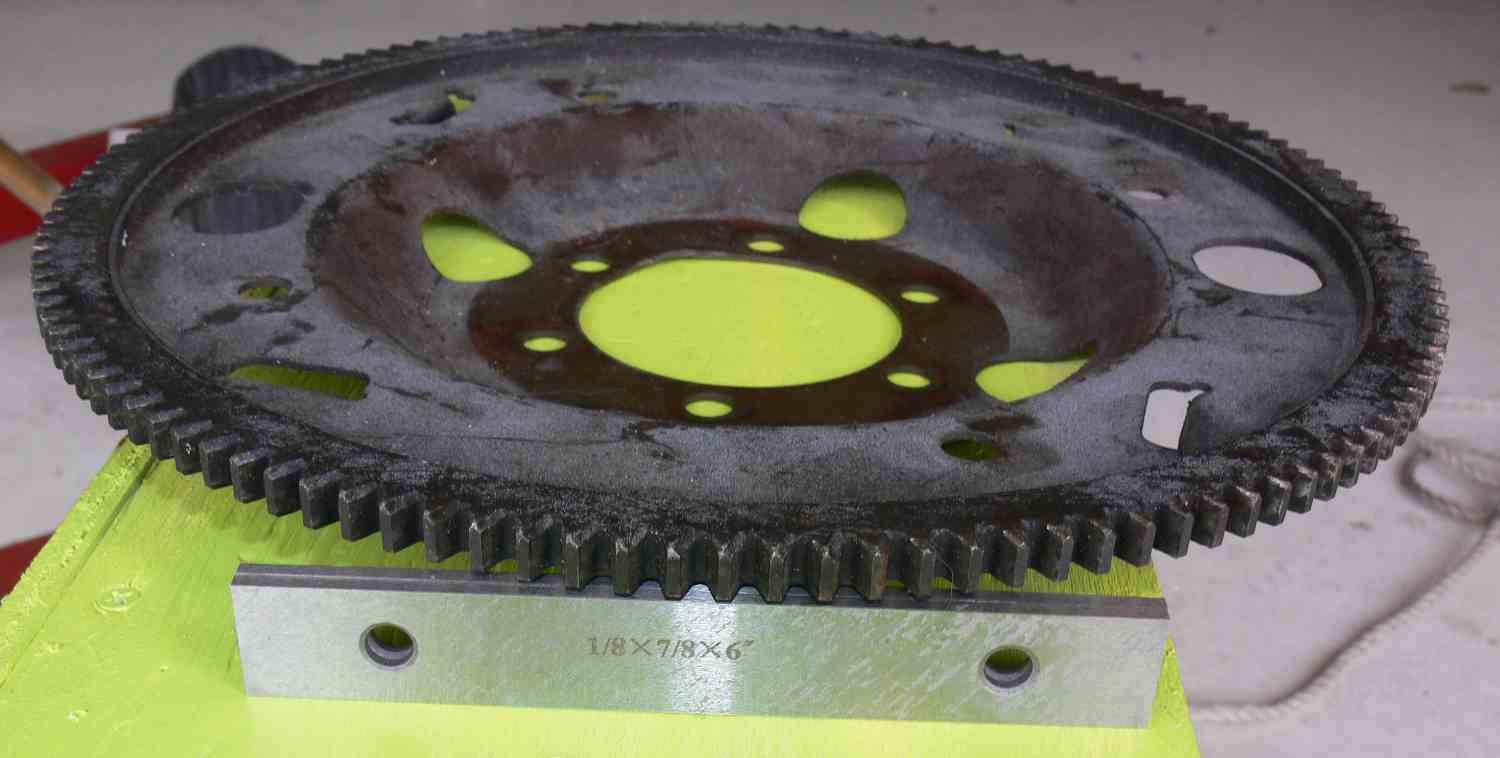
Total radius to top of teeth is 160.6.
the outer geared ring is 18.2mm deep.
I did not measure the thickness of the ring gear, or complete depth of flex
plate along axis of rotation.
Hope this helps. Measurements may not reflect factory specification. Used a
digital caliper.
C. Smith
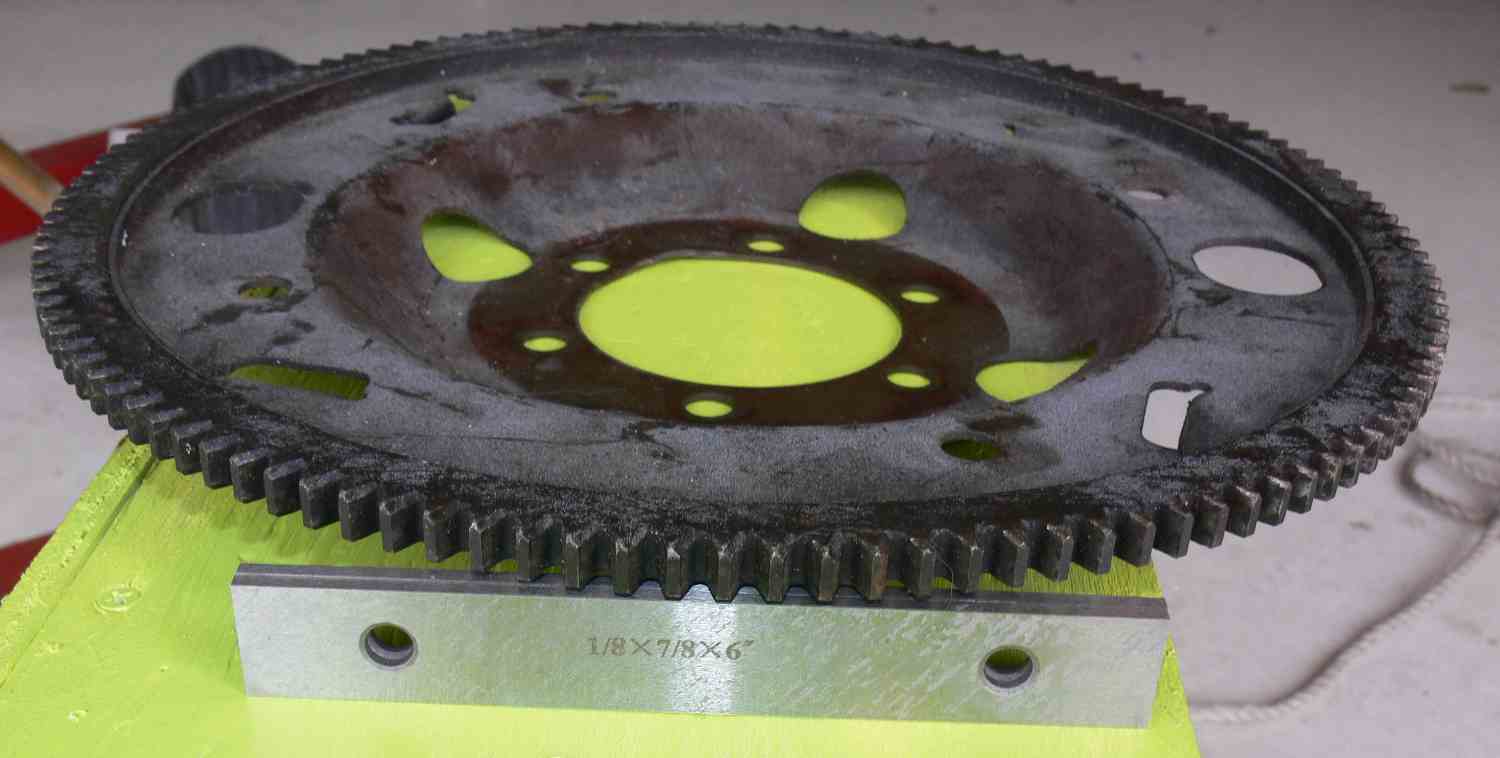
Just filling the large holes near the center would be major
improvement. That is probably where Dave's cracks started.
Paul Lamar
I check the inner bolt circle and the mid holes and the RX-8 flexwheel will fit
there and the plate thickness is the same
Jean Prudhomme
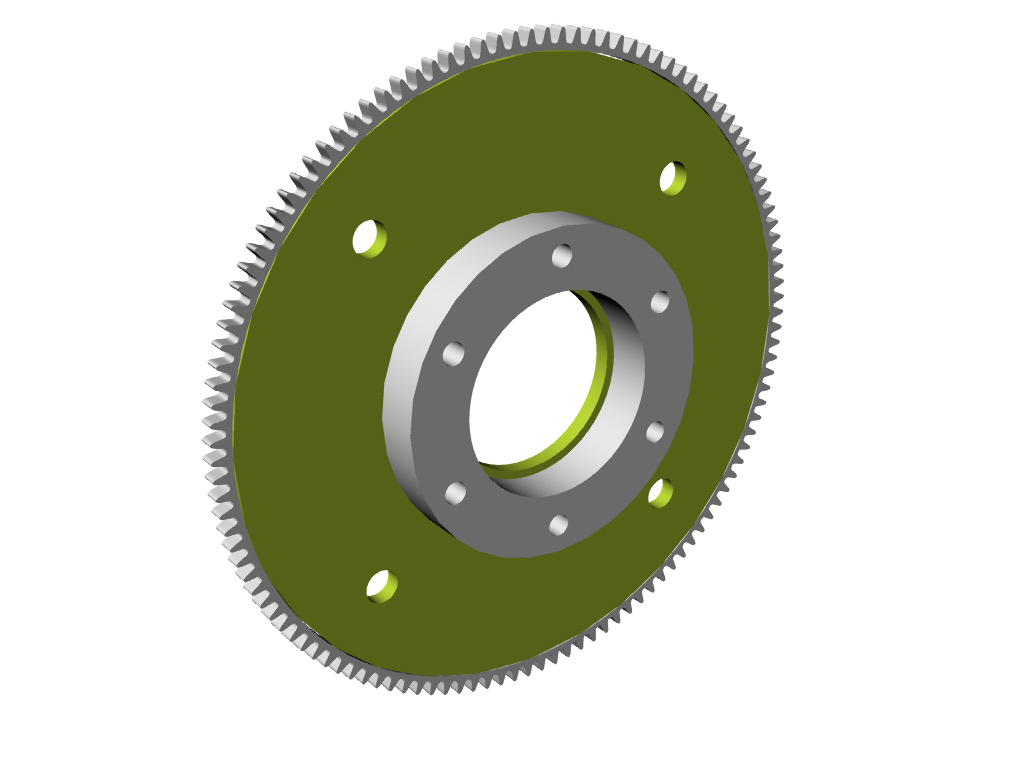
The advantage to the flat solid flexplate is you can make it any thickness you
want. I would start with .090" thick 4130. The spacer need be only 7/8th of an
inch long to put the ring gear in the right position.
Here is another option Jean,
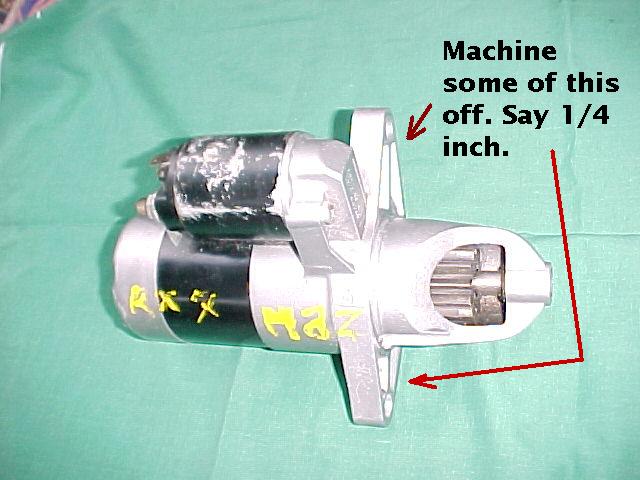
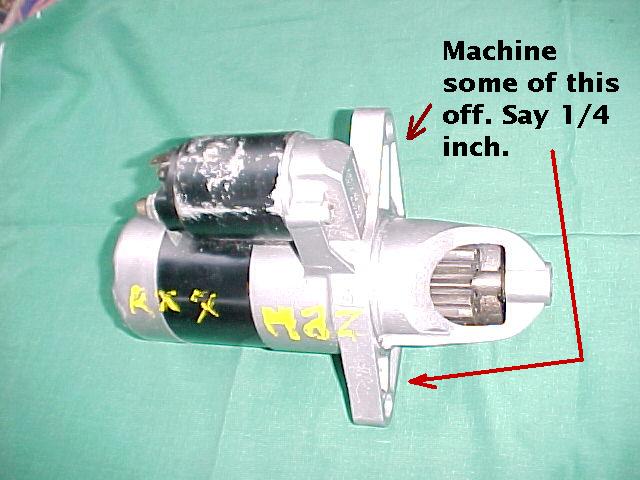
You can move the ring gear closer to the block if you machine a bit
off the starter flange and/or recess Jeff's adapter motor mount plate and use a
shorter flexplate spacer. That will give you a bit more room for the alternator.
You gain a lot of flexibility with this approach.
Paul Lamar
--
The Rotary Engine NewsLetter. Powered by Linux.
ACRE NL web site.
http://www.rotaryeng.net
Youtube key word PaulLamar2
Copyright 1998-2011 All world wide rights reserved.