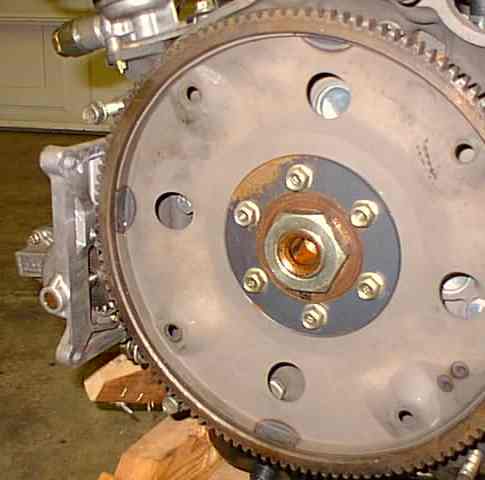
This reduces the number of parts.
The flex plate can be .090" thick 4130 or anything up to 1/4 inch.
The damper plate has been reduced to one ring part instead of
a large thick Al plate four Al blocks and 16 rivets.
A large ring with twelve 1.375 inch holes easily
drilled on an NC machine. Only four of which are
used fro the rubber bushings. The rest are there to save
weight.
The Ford auto TX part is turned around 180 degrees
to nest inside the flex plate. Only 10 steel
10-32 screws are used to bolt it to the damper ring
instead of 20 rivets.
The rubber bushings and washers are the same.
No need to move the starter or change the damper
design as I suspect would be required with the RX8 flex plate.
What do you think Dave?
Paul Lamar
Looks elegant to me. Does the "Ford auto TX part" seat into the guide
bearing in the E shaft?
Mark LaPierre
The input shaft with the sun gear does that.
The Ford part has an internal spline that runs on the input shaft.
The Ford part is the same as Tracy uses now and it can be salvaged and re
used by drilling out the rivets.
Paul Lamar
If you decide to make a run of these, count me in for one. Or whatever
solution is decided to be best.
C. Smith
This is going to hinge on what Dave says as he is our
chief part Zerstörer right at the moment. Mark Steitel is
second in command with a p-port 3 rotor now flying.
I'll take over when I get a P-port in the RV4.
Paul Lamar
LOL, Thanks Paul. Nice work. I really like the idea of a more purpose
built and dampened connection. In your design, I don't understand where
the
dampening is coming from. If it is all the big holes in the damper plate,
at first that seems like a good idea then I think than maybe it will make
it
too firm of a connection unless the the rubber is really soft.
BTW, I measured Tracy's rubber dampers today: 1/2 inch.
So I had previously narrowed it down to 2 options, now we add your design
as
a third:
1) Paul's design. Nice, elegant, probably first choice if we spent some
time hashing out the details. The cost and work will invariably be higher
than the off-the-shelf solutions. Cost ??, Work??
2) RX8 Flex plate. Very easy solution. Requires an intermediate plate
for
adaption then it is good to go. I went to an online machine shop and we
could get the plate for about $50 (I have it all designed and ready to
ship,
thanks to Jeans measurements). The only other work would include welding
if
you wanted but 4 bolts alone would work fine, and an hour's work with a
die
grinder to bevel the other side of the gear ring. Cost - $160 for the
flex
plate and $50 for the intermediate adapter. If welded, this would be
exceedingly stiff and light weight. (5 lbs for the flex plate, 1.4 lbs for
the intermediate plate, and 0.8 lbs for bolts if you didn't want to weld.)
So this is the lightest weight, lowest cost, and least work solution! But
it only makes moderate improvements in durability over Tracy's current
design - which has done very well and moderate improvements should be all
we
need.
3) Off the shelf flywheel. Requires drilling some holes in the flywheel,
and possibly machining it to accept the bolts on the back (because of
non-flat surface) and possibly reduce the height of the clutch surface.
Also requires wielding on a ring gear to fit the current starter, or (only
if we are lucky) switching to a different starter. Durability seems to be
the toughest of the lot, but with aftermarket stuff you never really know.
So, I am just a little push from diving into option #2. with option 3 as
the
favorite if the turbo starter happens to fit... Kelly has one on the way
to
test.
--
David Leonard
Turbo Rotary RV-6 N4VY
http://N4VY.RotaryRoster.net <
http://n4vy.rotaryroster.net/ <
http://n4vy.rotaryroster.net/ <
http://n4vy.rotaryroster.net/
http://RotaryRoster.net <
http://rotaryroster.net/ <
http://rotaryroster.net/ <
http://rotaryroster.net/
The damping is EXACTLY the same as the damping in Tracy's
design. At this point in time we are only using four holes.
I don't believe in fixing something that is not broken.
We do have softer rubber bushings available. Down to 40
durometer if you want to try them but I don't recommend
it at this time. The ones we are building now are
about 70 durometer. If durability of the silicone is
a problem we can go to more holes.
Is the RX8 ring gear the same diameter as the 13B?
I did not think it was. It just looks larger.
If it is you will need to relocate the starter.
No holes down near the clamp and the thicker (.090")
material is a big plus.
Paul Lamar
Paul, I was looking at your new flywheel design. It seems to me that the
spacer should have a pilot extending into the .090 plate for centering ,
Also the transmission hub recessed into the 12 hole damper plate. Once
the
relative dimensions are in Rhino you may find that the spacer could be
eliminated and the ring gear could be shrink fit onto the aluminum damper
plate. Welding the ring gear to the flat .090 plate has a probability of
creating stresses that could put runout in the plate which may only be
aparent when the plate is at operating RPM. Moving weight to the damper
plate puts it on the splined hub which gives some degree of freedom for
gyroscopic loads from the fit on the splines. The damper plate in it's
final
form could easily have the front and back surfaces thinned down between
the
rim, hub, and 12 bushing/lightening holes.
george grimes
A lot of good ideas.
The ring gear is welded on the stock plate but I don't think it is
normalized after words. Gets too expensive for production.
The welds are short. Skip welding.
Actually I like Joe Berki's idea of beefing the stock plate with carbon
fiber
better. It is the cheapest, lightest and easiest thing to do. One could use
uni
to do it if .125" high (long) SS spacer or spools went under the damper and
counter weight bolts. The longer I think about it the better I like the
idea.
Even glass would be a huge improvement. Great way to damp random vibrations
One could use high temp epoxy.
Paul Lamar
Paul, the carbon reinforced 13B plate seems like a real good idea. I
however might lean towards useing kevlar 49 layed up at + and - 45 degrees
to a radial. Start with a ring of material 1" larger than the hub and add an
inch on each layer so that only 1 layer is left with an exposed edge out
at the ring gear. I am not sure about the result of adding metal sleeves
around the bolt holes. That would only contact the flexplate at the sleeves,
and similarly at the clamping ring under the bolts. Possibly setting the
retaining ring in the wet layup and bonding it permanently might be better.
I don't think ring gears are welded on flywheels but shrink fit in
place. For a flex plate they are welded because of the thickness of the
flexplate being so thin. The 12 hole damper plate would be wide enough for
the shrink fit with a 1/8" wide shoulder to fit it against (1/2" plate -
3/8 wide gear).
George Grimes
Flywheels and flex plates take a beating from internal
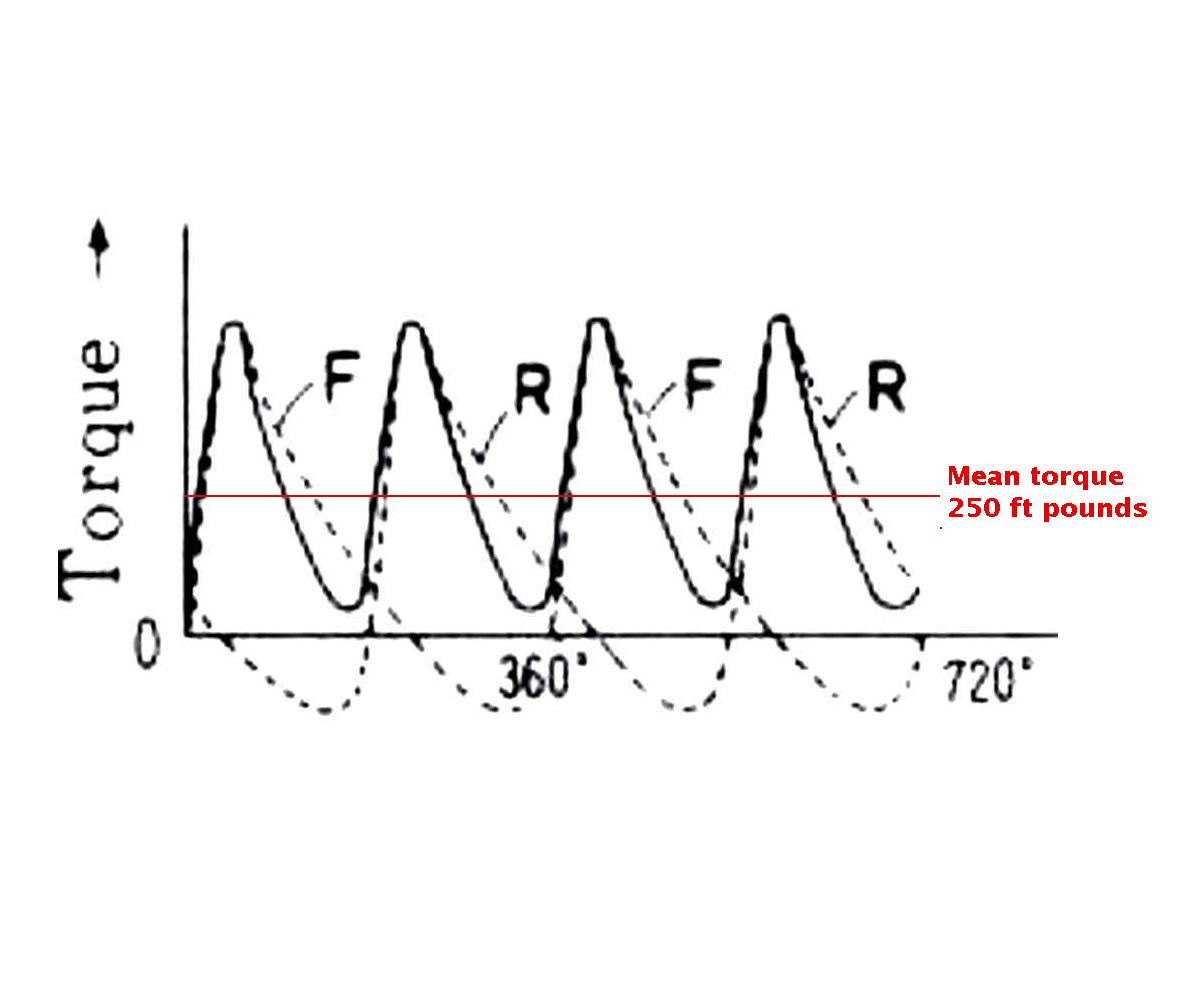
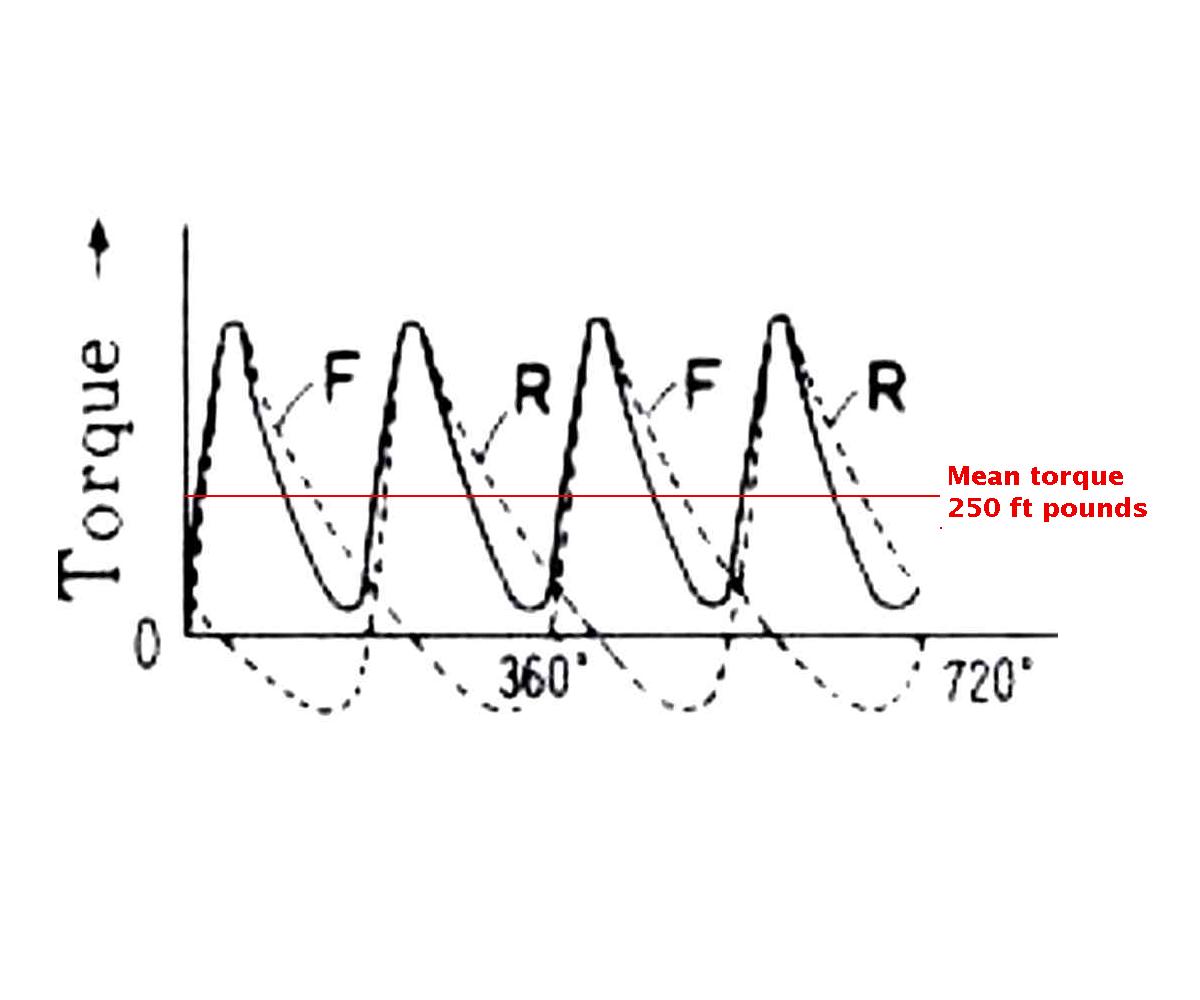
intermittent combustion engines. The peak torque pulse from a 250
HP 2 rotor is about 500 foot pounds. Here is a graph.
The rotary however is far better in this regard than a 360 cubic
inch 4 cyl aircraft engine. That one tries to drive the prop
in reverse twice per rev. A diesel aircraft engine with
a very sharp torque pulse is death on props.
All 2 rotors and 4 cyl's are trying to speed the flex plate up and
slow it down twice per revolution. This leads to reversing stresses
near the hub which leads to metal fatigue. AKA cracks.
Back about 12 or 15 years ago Power Sport
experienced dyno coupling failures from p-port two rotors.
Obviously the engine did not have a heavy flywheel so the
coupling was subject to the full torque pulse hammer blow.
It also failed a spur gear in the Power Sport PSRU not
being isolated with a rubber coupling. Ken Welter destroyed
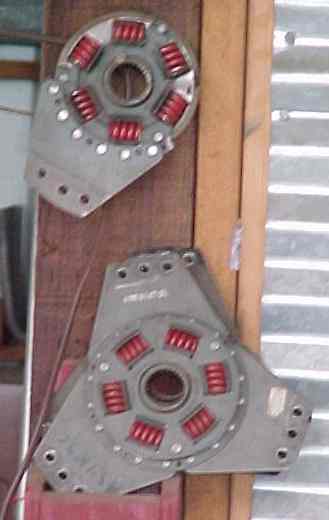
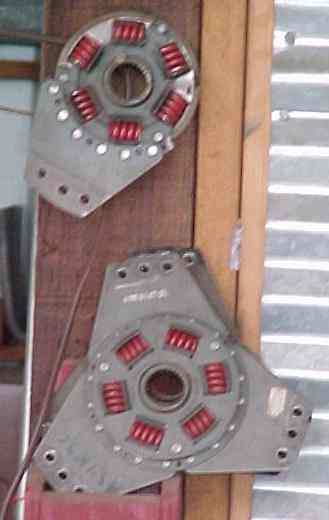
a spring type manual trans mission damper disk running
nitrous oxide in his 300 HP 2 rotor. These damper plates were
used in most Ross PSRU's for years.
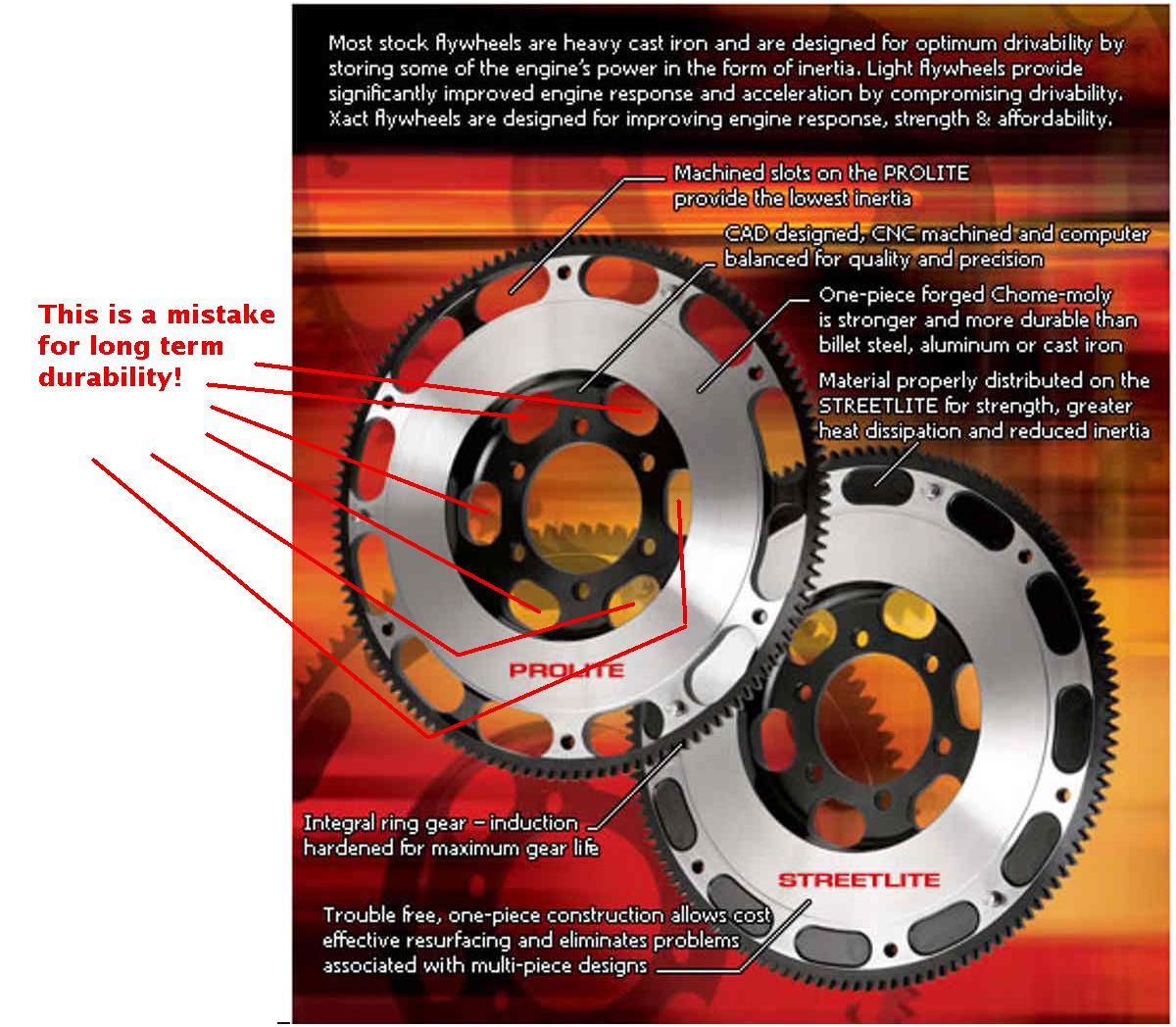
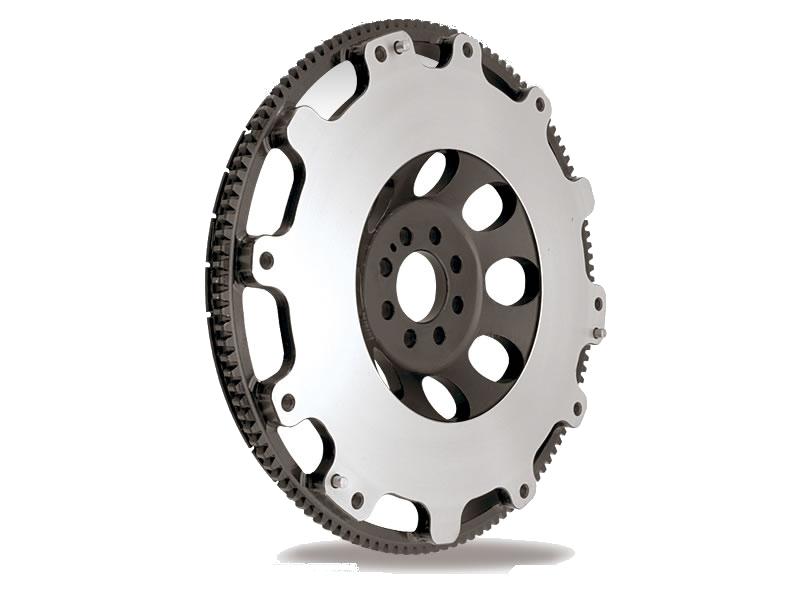
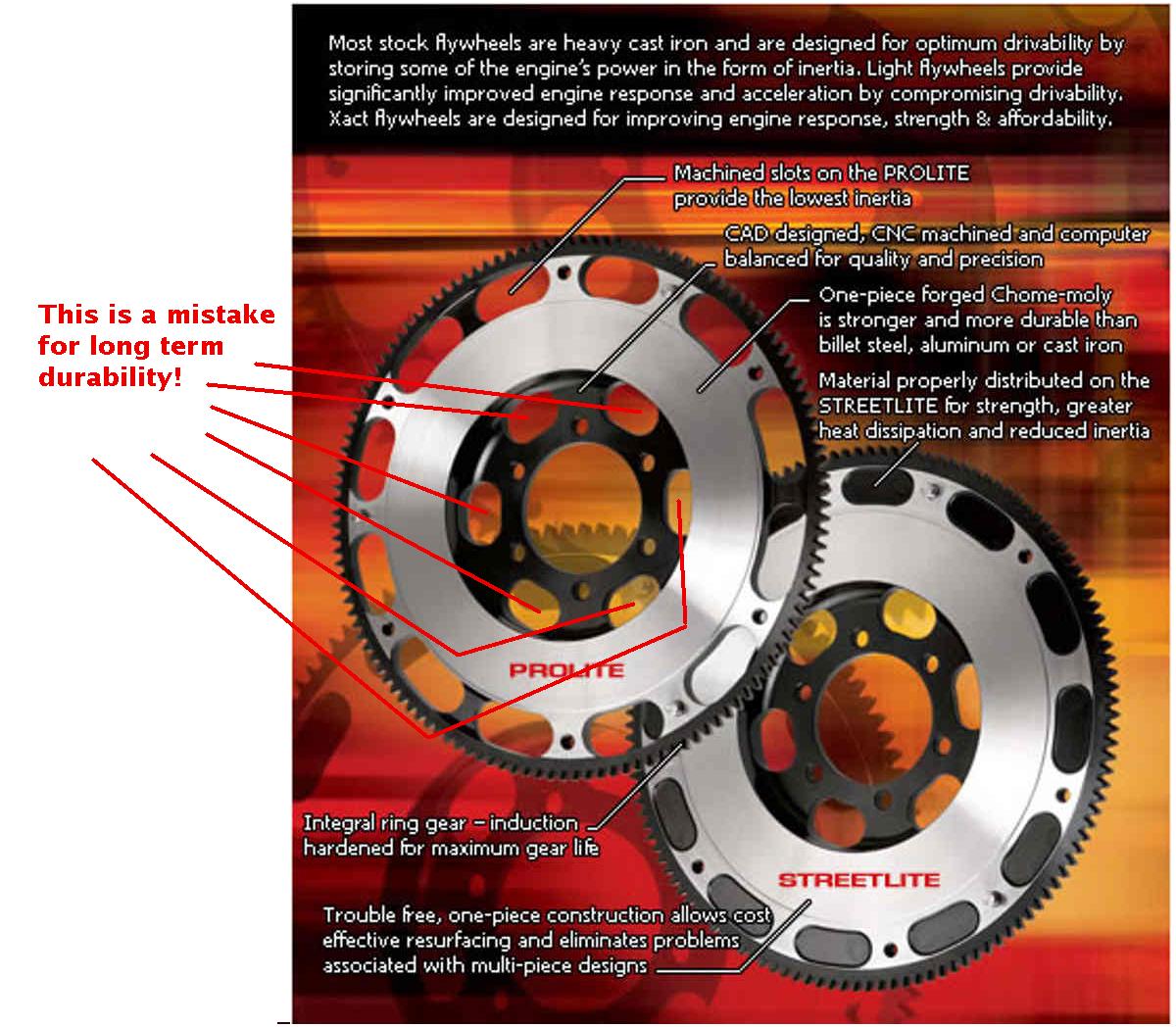
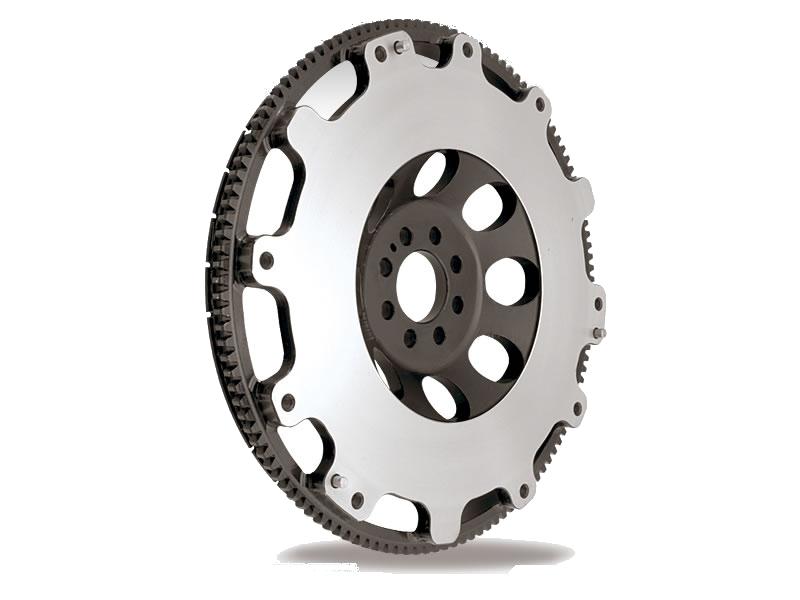
Consequently I don't like the holes near the hub in this
chrome molly flywheel.
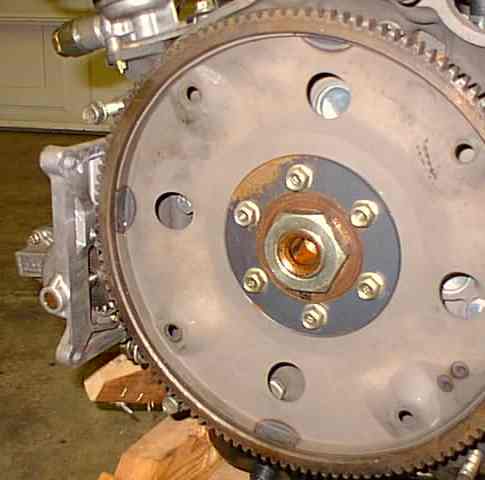
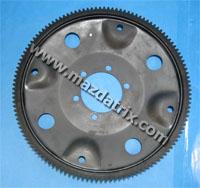
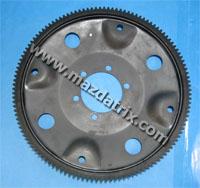
Notice the holes are gone in the 20B and RX8 flex plates.
I am not surprised about the 13B flex plate failures.
Paul Lamar
--
The Rotary Engine NewsLetter. Powered by Linux.
ACRE NL web site.
http://www.rotaryeng.net
Youtube key word PaulLamar2
Copyright 1998-2011 All world wide rights reserved.