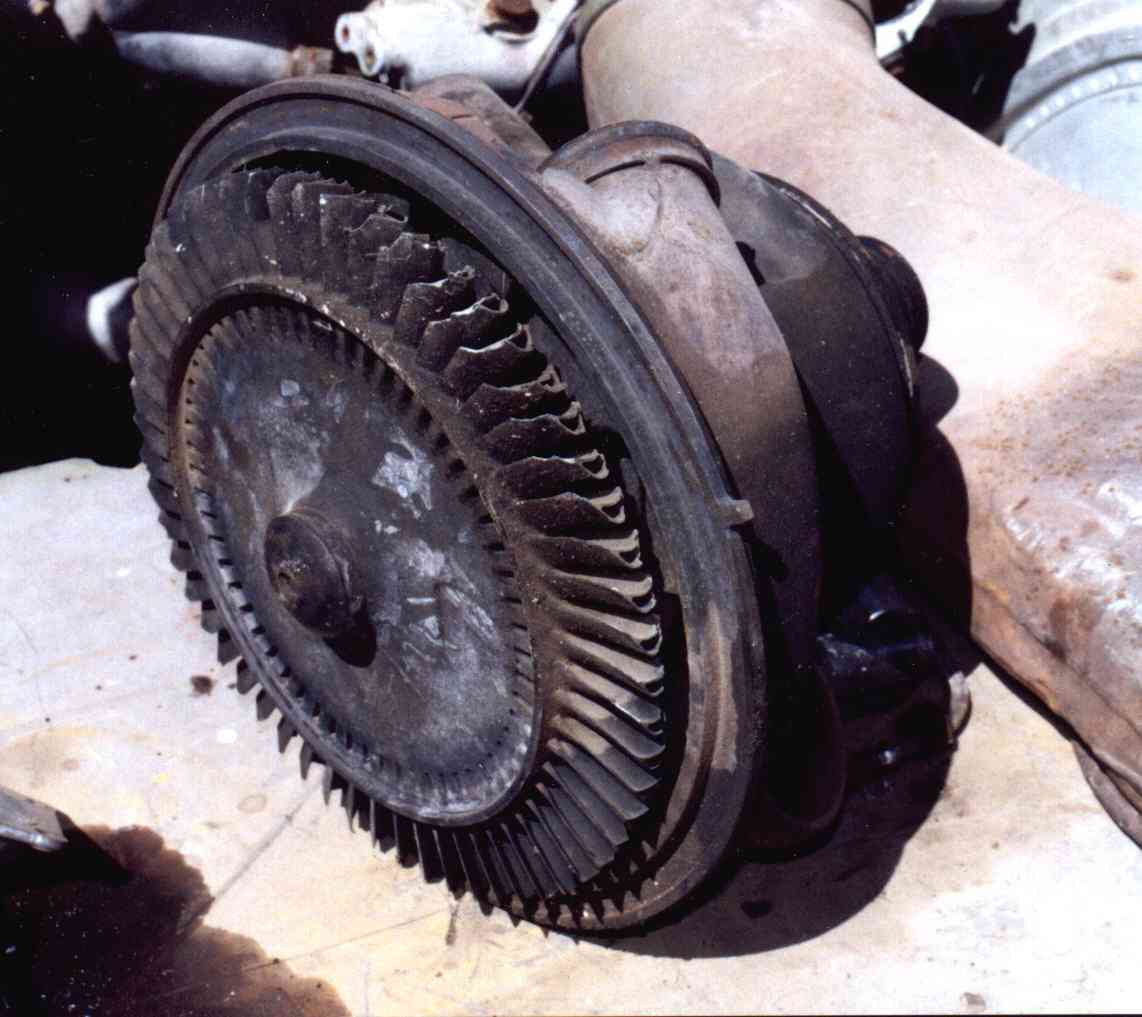
Back in the late 1940's, 1950's and 1960's over 9000 turbo compound
aircraft engines were built. They reached a TBO of 3000 hours in airline service.
As far as turbo compound piston engines are concerned they are very hard on
exhaust valves and much energy is therefore lost in the exhaust valves. Needless
to say the rotary has no exhaust valves so in theory it would be significantly
more efficient.
Paul Lamar
When my father was a Flight Engineer at United flying the DC-7C, the average
time between in-flight shutdowns (on each airplane) was 400hr.
I also had a long conversation with a professor of mine who was a USMC C-119
squadron commander, he had buckets of trouble with the 3350TC, had to get a CW
engineer in to consult and teach everybody how to operate the engines, and
reliability got to an acceptable level.
It is probably more of a function of that particular design then that of the
whole idea of compounding.
The heat efficiencies are just too good to overlook. It's a shame that the
commercial GA manufacturers are completely hamstrung by 1) certification costs,
and 2) a complete lack of want to change the product.
Jim Tiemann
As I said most of the trouble was with the exhaust valves.
When a valve broke it would take out the turbine blades.
The rotary has no exhaust valves.
Paul Lamar
The PRTs were made to fail-soft in that event - the disc would become frangible
and completely take itself out (in theory also not destroying the turbine
housing/exhaust pipe) in the case of an imbalance. (like a valve trying to make
it down the exhaust) and also they were on fluid clutches to help disconnect
themselves in case of failure.
Jim Tiemann
--
The Rotary Engine NewsLetter. Powered by Linux.
ACRE NL web site.
http://www.rotaryeng.net
Youtube key word PaulLamar2
Copyright 1998-2011 All world wide rights reserved.