Hi Paul,
Here I go with that thinking stuff again.:-)) If you were doing a turbo
compound system on your RX8, would you also change the rear axle
ratio to something taller? On a car the higher gear ratio would put
more load on the engine to maintain cruise speed, resulting in the
throttle being more open. That reduces pumping losses and more hot
air to apply force on the turbine. That should then add slightly
more advantage from the turbo compound system. With that in mind,
what gear would you chose instead of the 4.44:1 they have?
Dale Davies
Lets assume the car has a frontal area of 20 square feet.
The rule of thumb is 80% of the height times the width estimates
the frontal area. Lets say 6 feet wide and 4 feet high.
Or 5.5 feet wide and 4.4 feet high.
Lets also assume the C sub d of .3! Typical for a Prius. Drag would
then be 20 x .3 x 75 x 75 x .0026 or 88 pounds at 75 MPH. 75 MPH is
110 FPS. So required HP is then drag x FPS or 8250 pound foot per
second or 15 HP. Double that for tire rolling resistance and you get
30 HP needed to maintain 75 MPH on a level road at sea level.
Automotive turbo compound is a real challenge. 90% of the time a car
cruises on the freeway or autobahn at 30 HP while the engine may be
rated at 400 HP. In order to make that highly efficient you need a
small engine running at about 75% of it's max power at best torque
RPM. This is the rational for shutting of some of the cylinders in a
piston engine.
The rear axle ratio could be the same as the current RX8 at around
3.5:1 for acceleration and hill climbing reasons.
What would be great is a 2.5 rotor Wankel engine. In other words 2
rotors for acceleration and hill climbing and a smaller one rotor
for cruise. The unique configuration of the e-shaft makes that possible.
http://www.rotaryeng.net/RX8-**TC-eng3.html<
http://www.rotaryeng.net/RX8-TC-eng3.html
The small one rotor engine would have a tiny turbine to get the
BSFC below .36! Diesel range or below. The fuel burn would then be
about 10.8 pounds per hour or about 1.7 gallons an hour. At 75 MPH
the MPG would then be about 44 MPG.
The advantage over a hybrid is less extra weight and cost for
electric motor and battery. Not to mention the limited availability
of lithium. The advantage over the diesel is better acceleration and
less cost and weight. No carcinogenic black smoke problems either.
Paul Lamar
Ok. How would you propose to couple and decouple the "main" engine when
needed? The trick will be to do it seamlessly. With cylinder deactivation
and drive by wire this is fairly simple. When engaging a whole other
engine would be difficult. The rotary has low rotational braking forces.
It would likely be easier to build a 3 rotor with one rotor being 50 or
60mm wide for full time use. The advantage would be that current machining
equipment can be used. Then the cut rotors need lube while reducing air
intake to reduce pumping loses. An R100 size rotor should be around 125HP
with Renesis end housings. If narrowed to 40 or 50mm the power would be
reduced and a larger throttle position required.
I welcome your thoughts,
Dale Davies
One way clutch. AKA Sprag clutch.
Paul Lamar
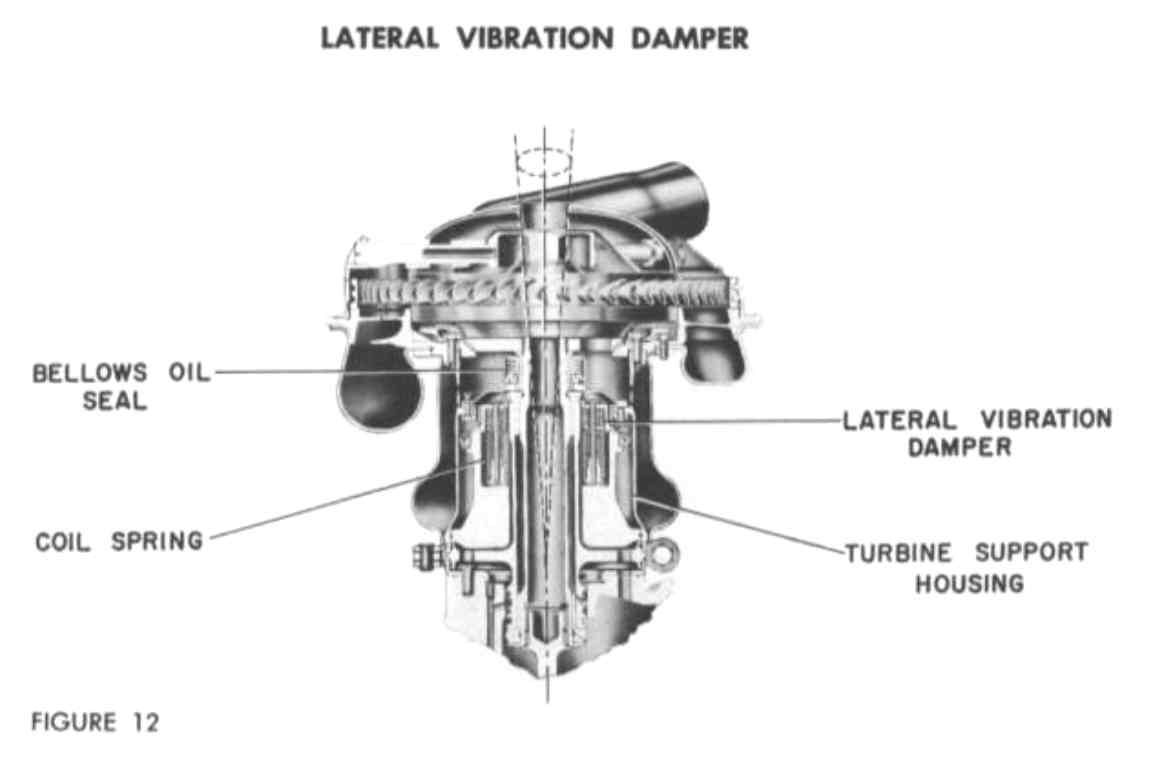
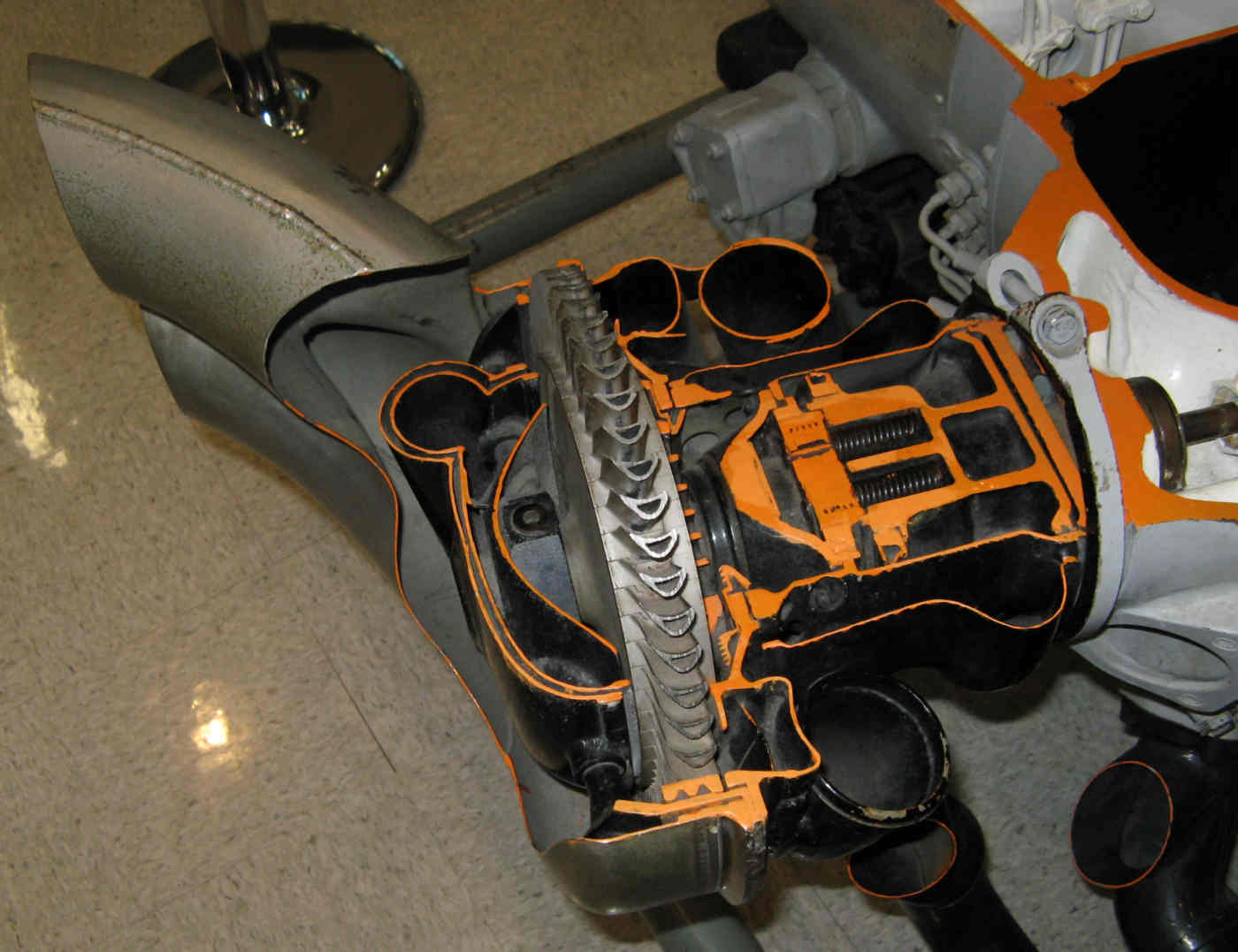
Paul Just wondering. These large radial engines only turn 1/3 the RPM of
our engines so it would seem to need three times the RPM reduction from the
turbine speed to the engine shaft. Looking at the posted images there
doesn't seem to be a lot of reduction in the gearing (posibly 12 to 1?)
Does the exhaust turbine operate at a much lower speed or is the fluid
coupling a torque converter with a very high lock up speed. Are we
investigating the traction drive in order to use a more efficient recovery
turbine that runs at a higher speed or is there some other reason?
george grimes
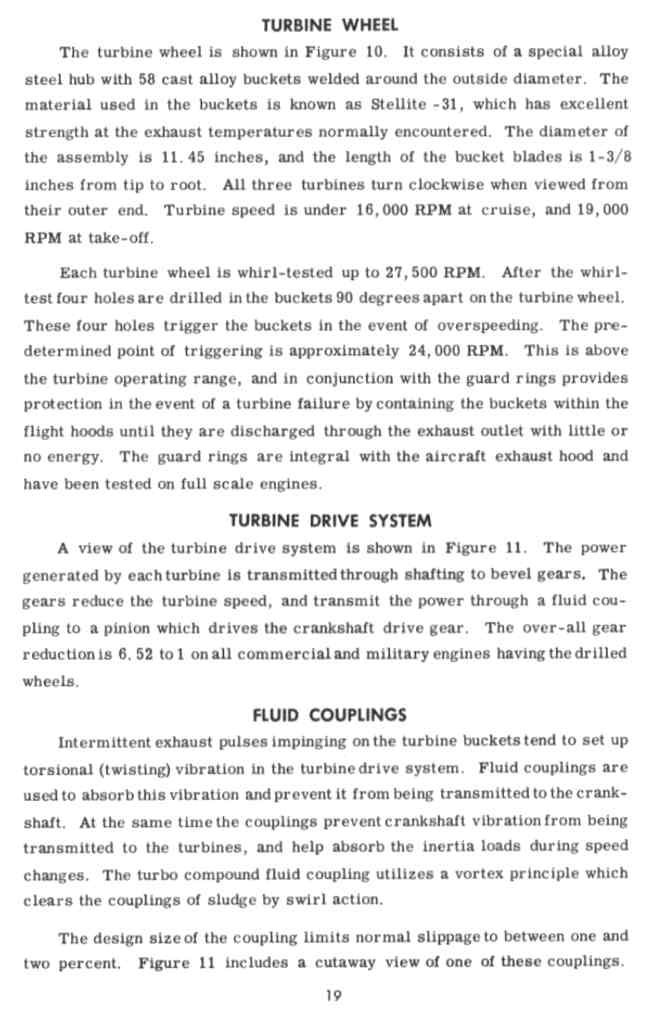
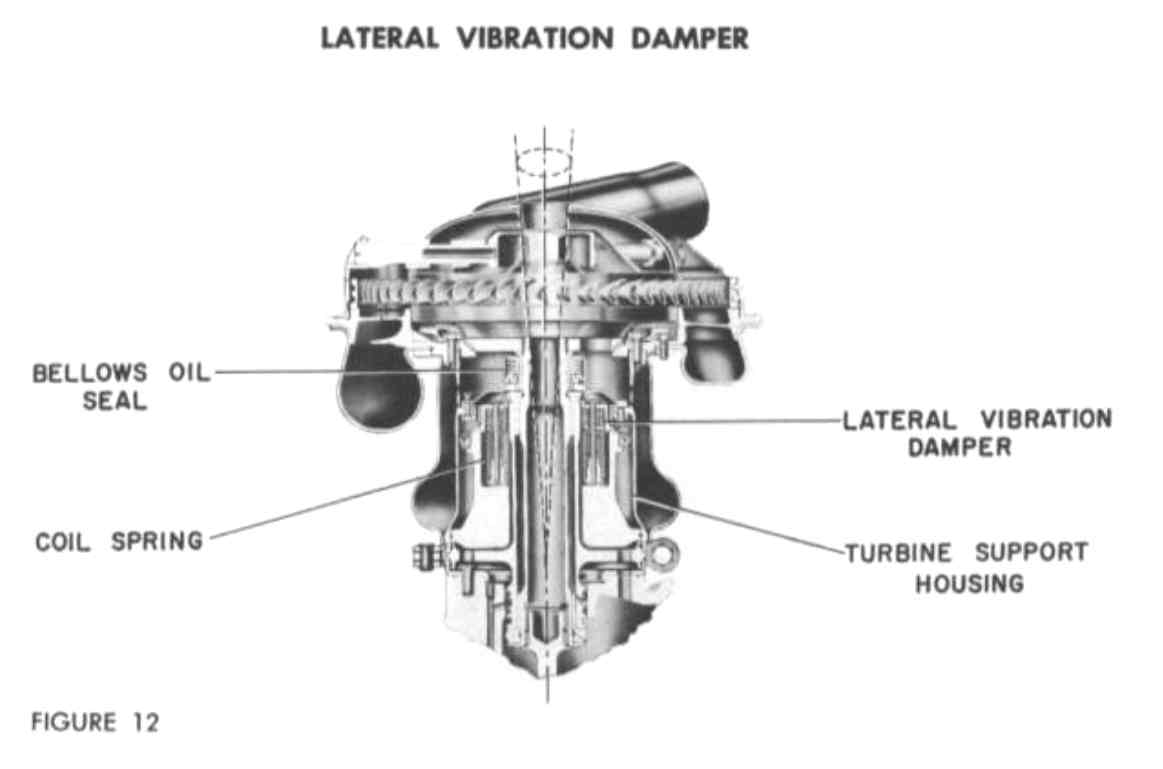
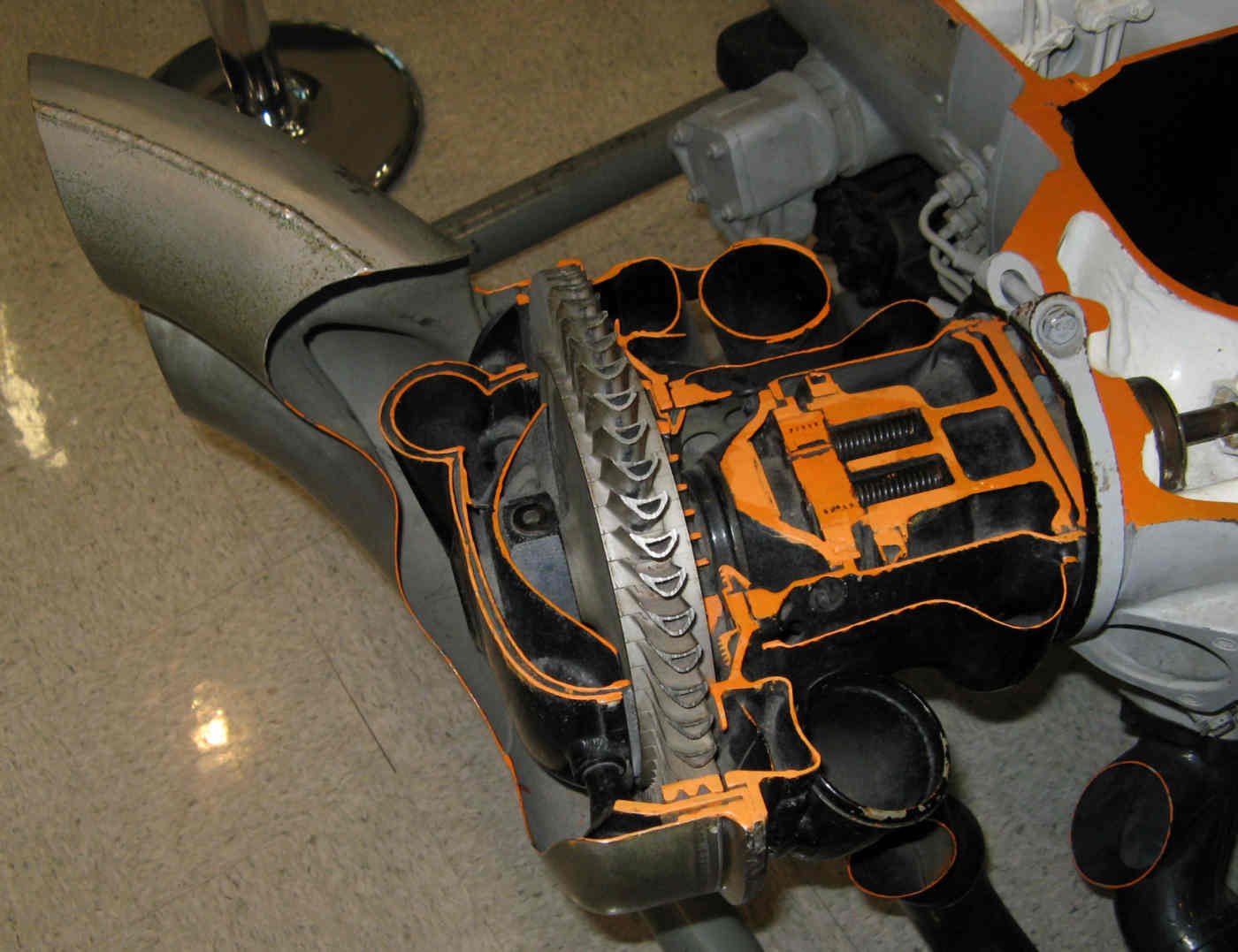
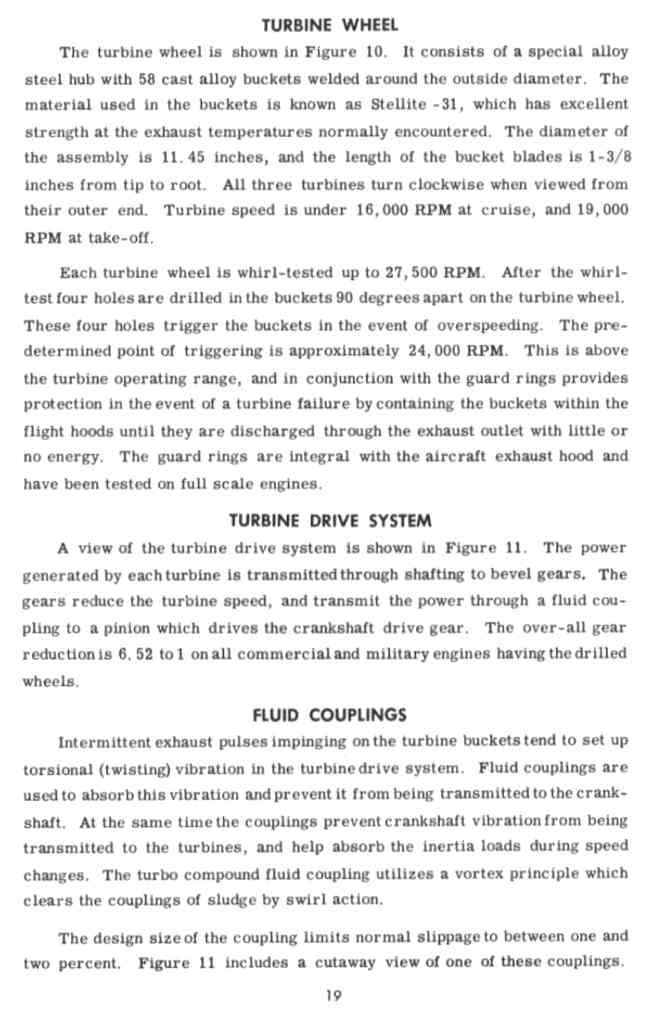
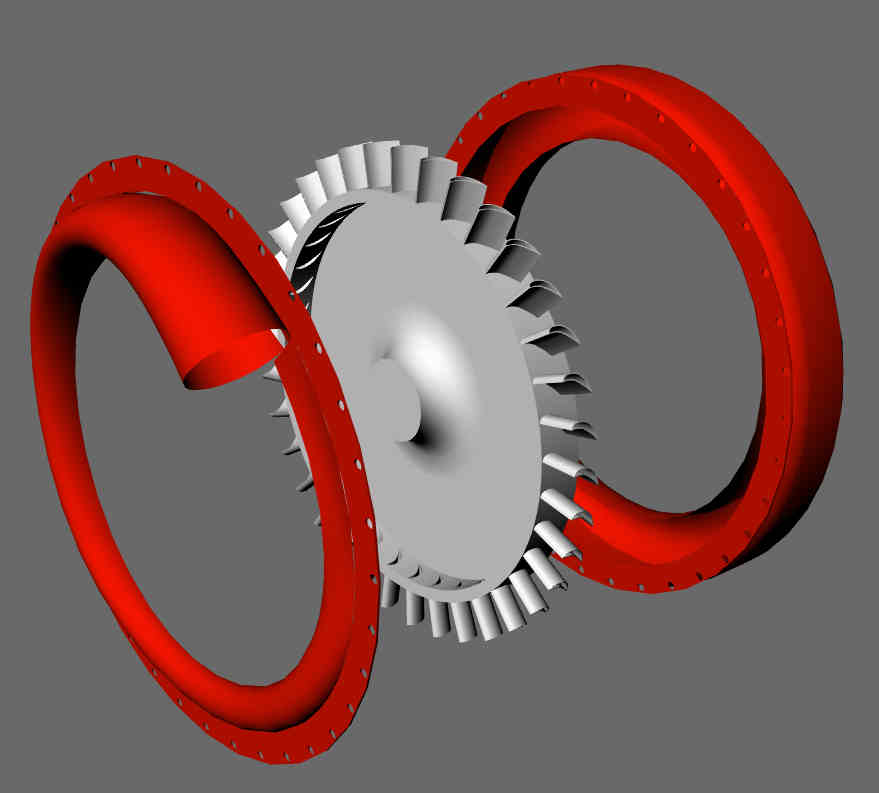
The R3350 turbines were turning 16,000 RPM at cruise and 19,000 at take off.
A turbo charger size turbine would have to run upwards of 80,000 RPM.
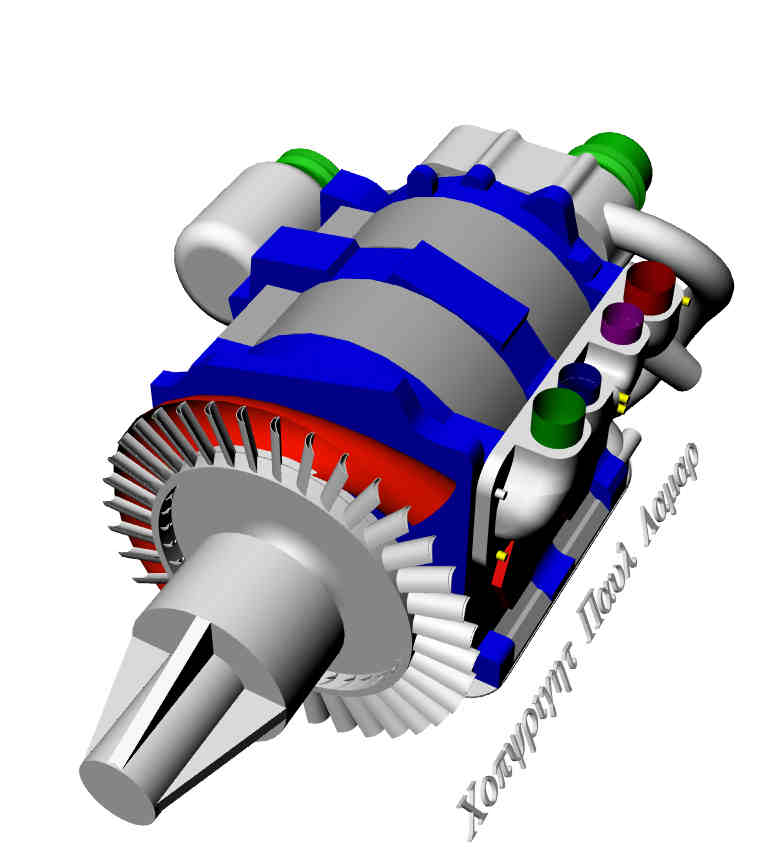
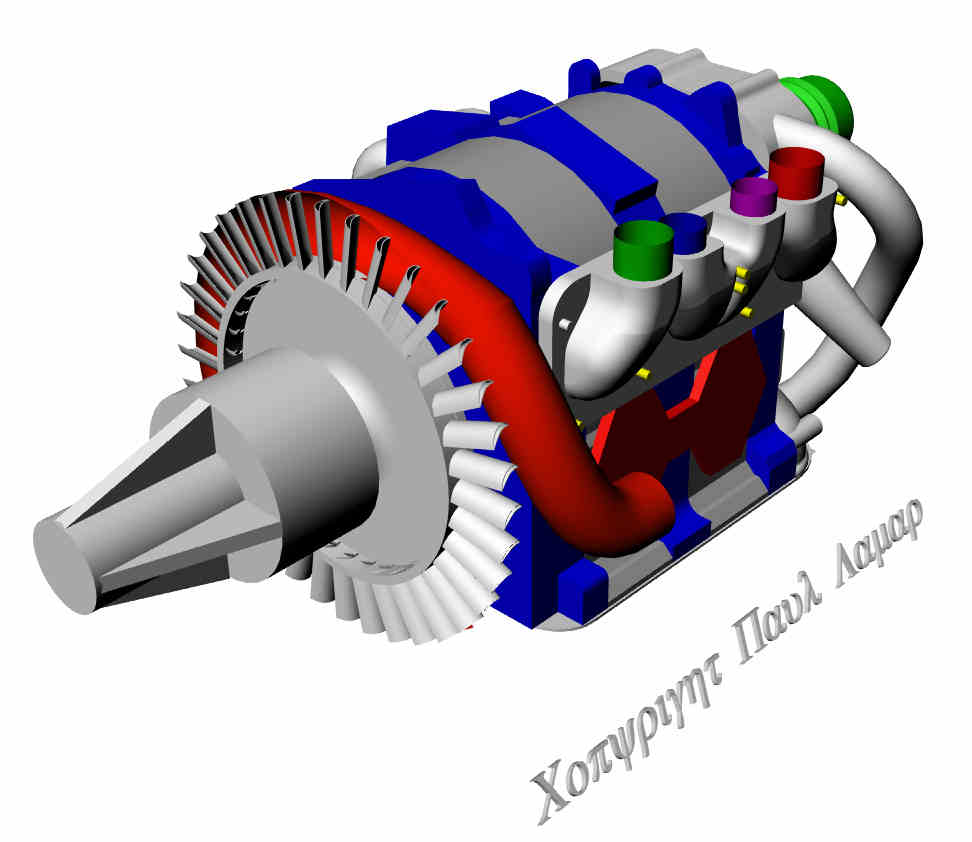
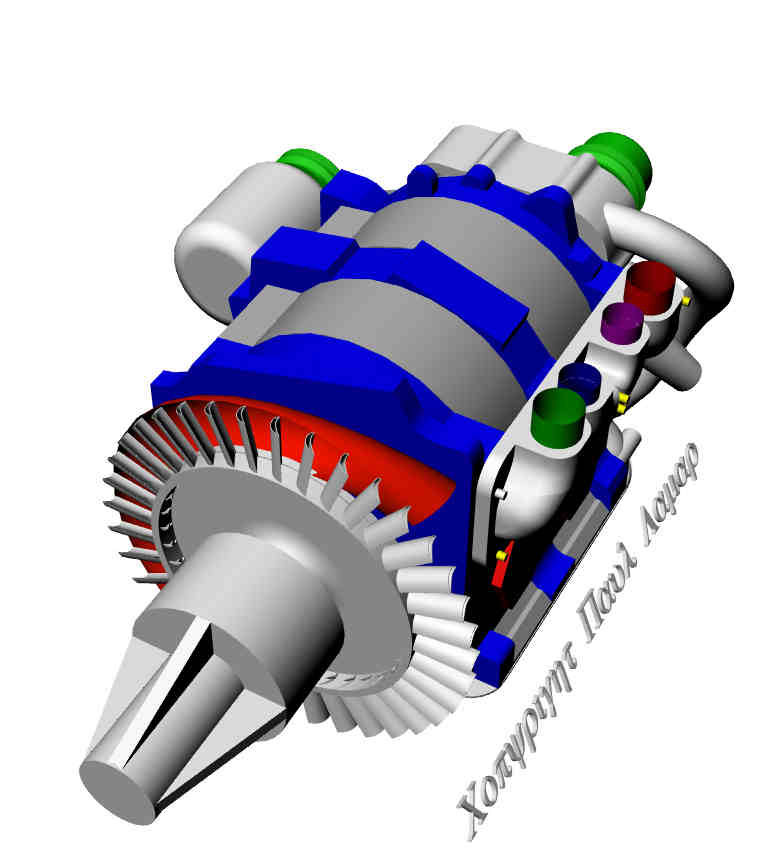
If you make the turbine about the size of the rotary you may get
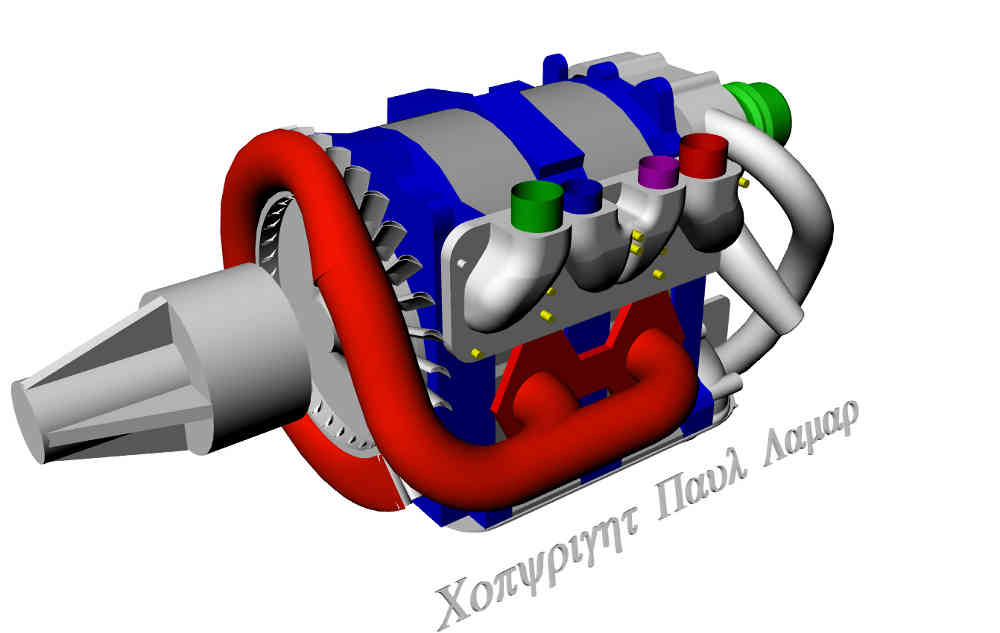
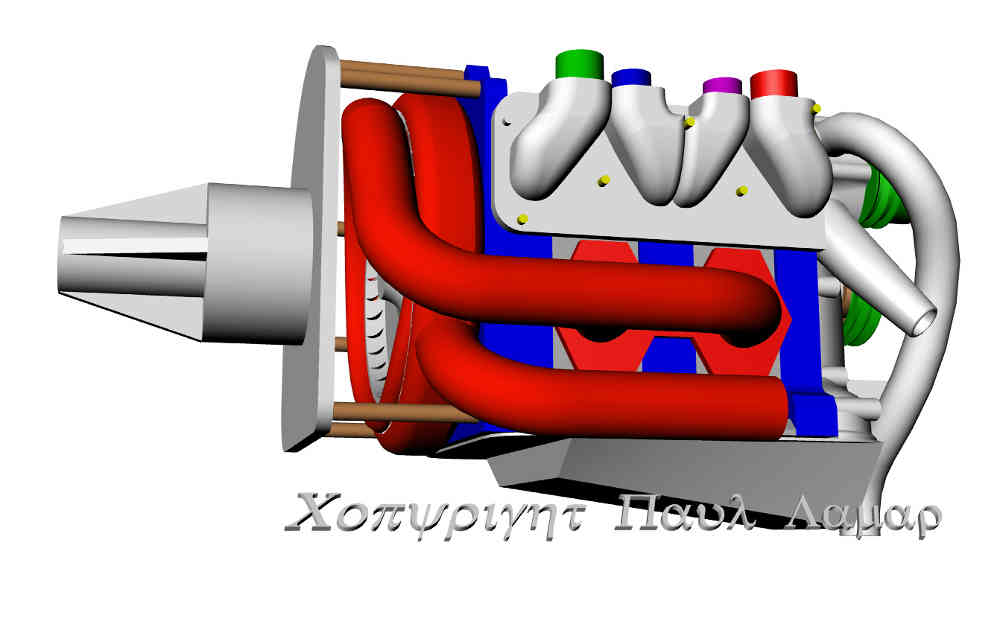
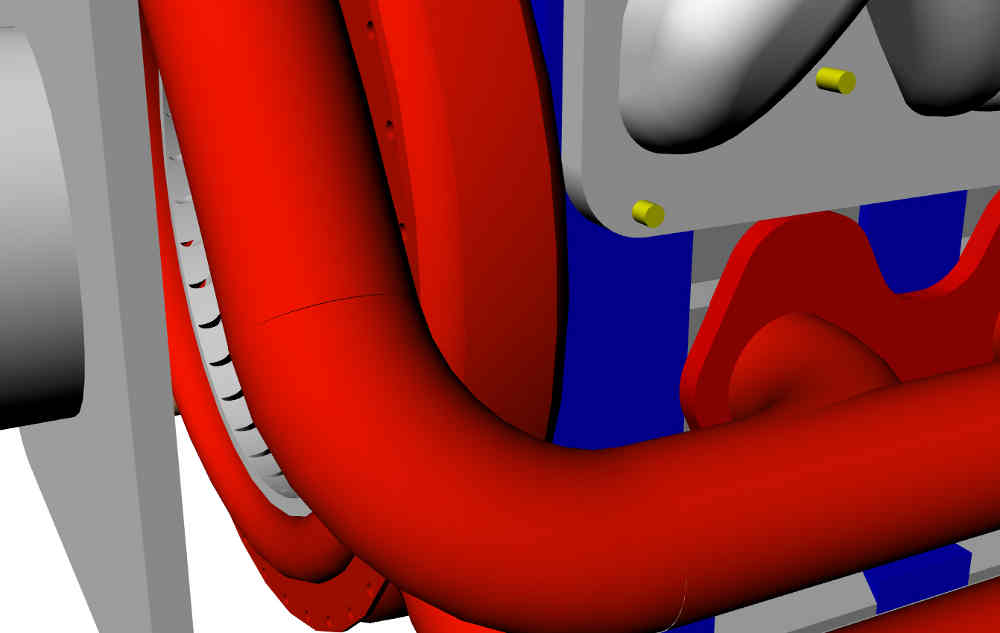
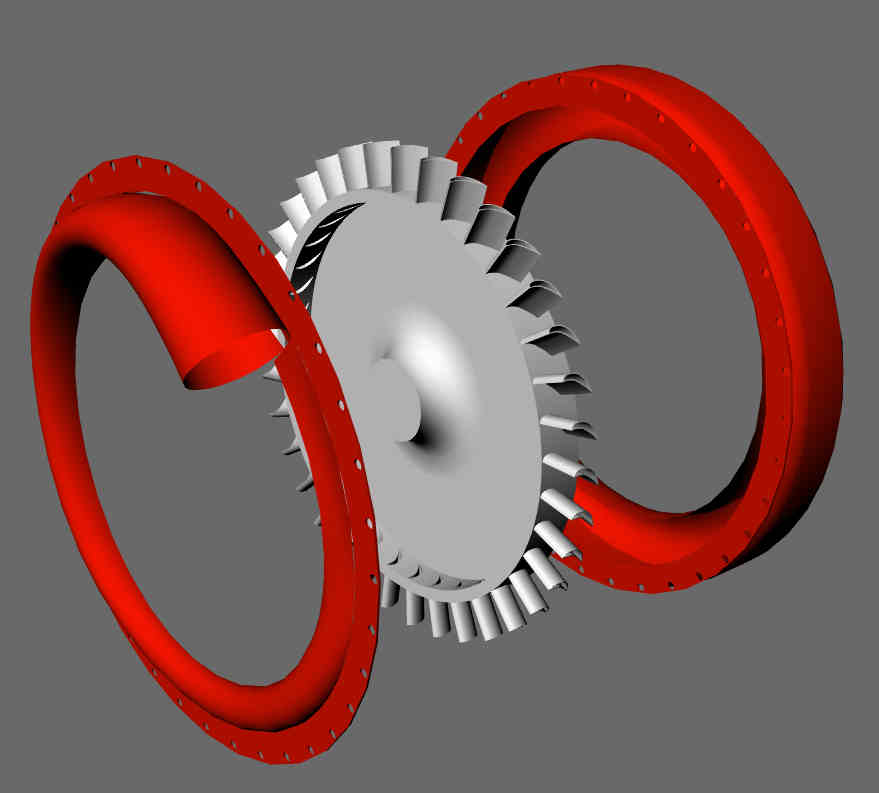
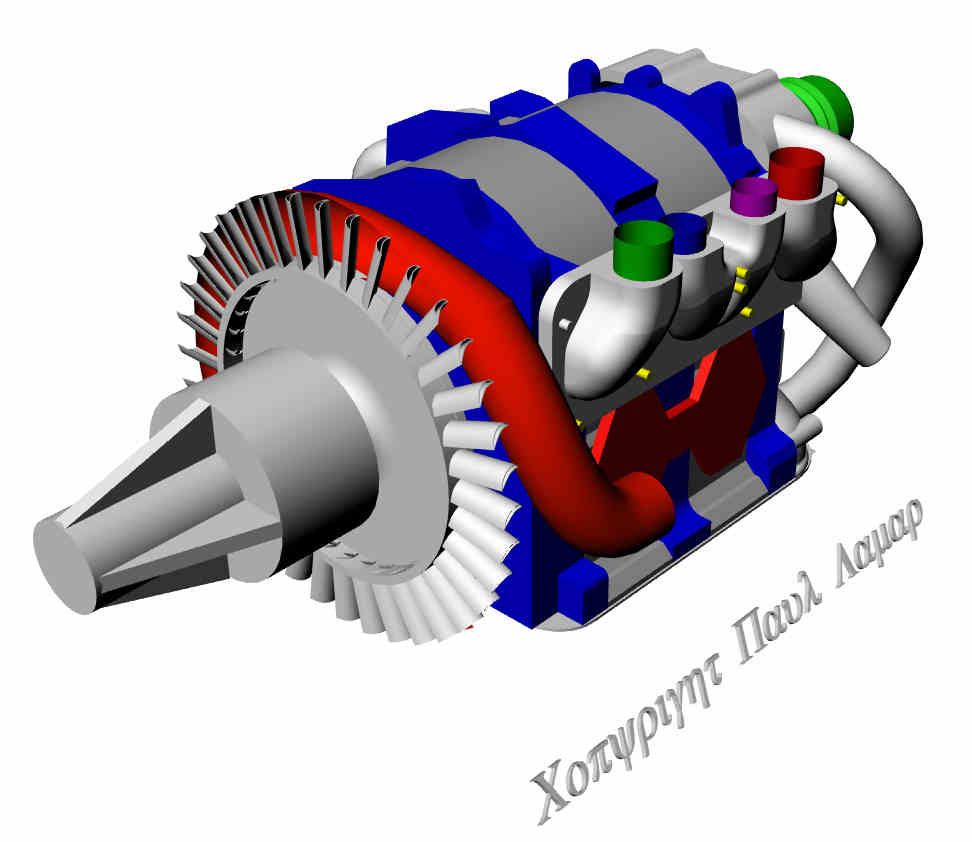
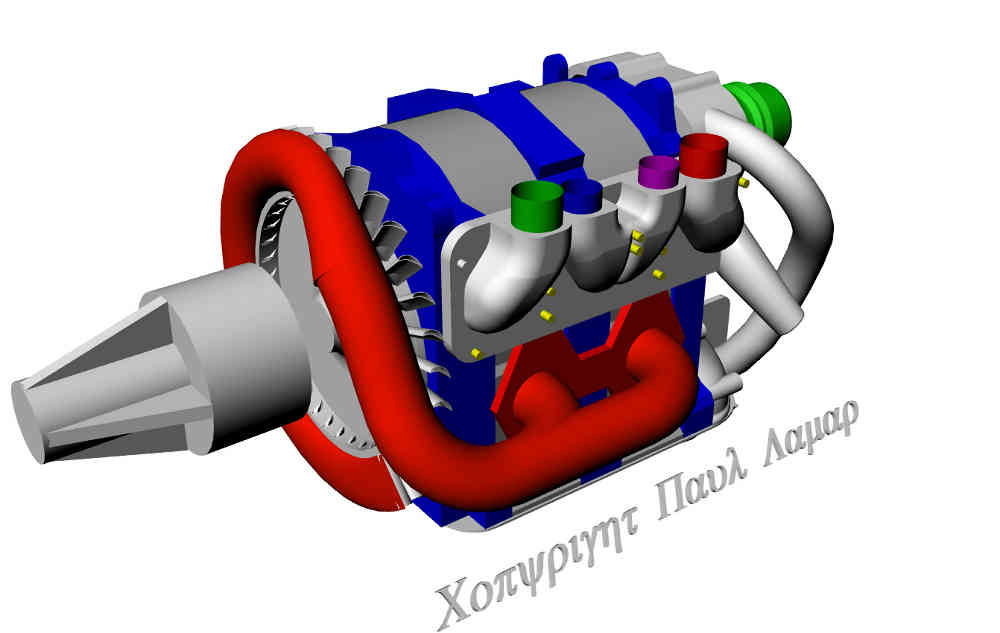
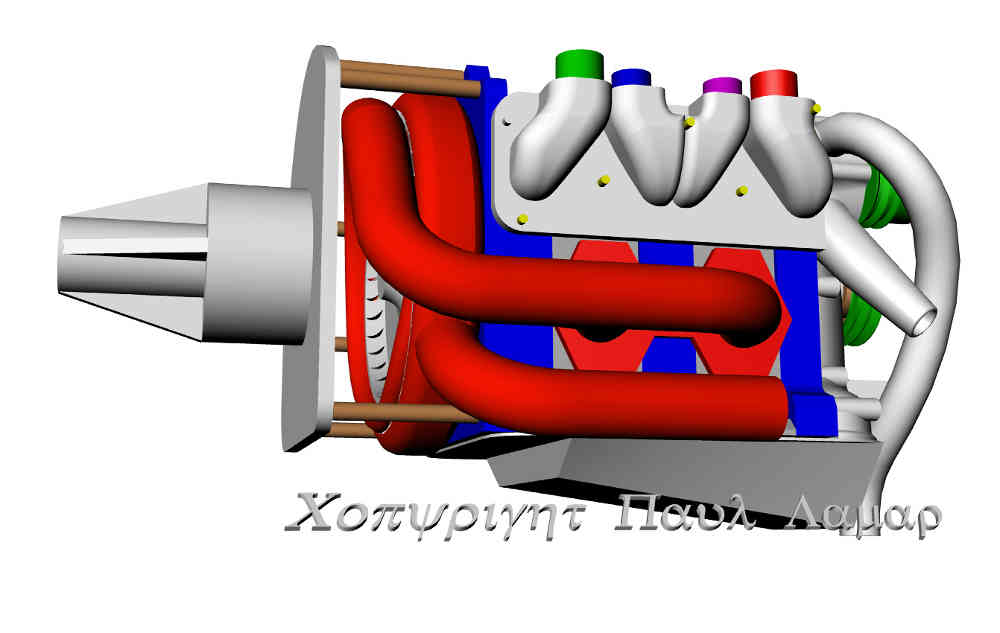
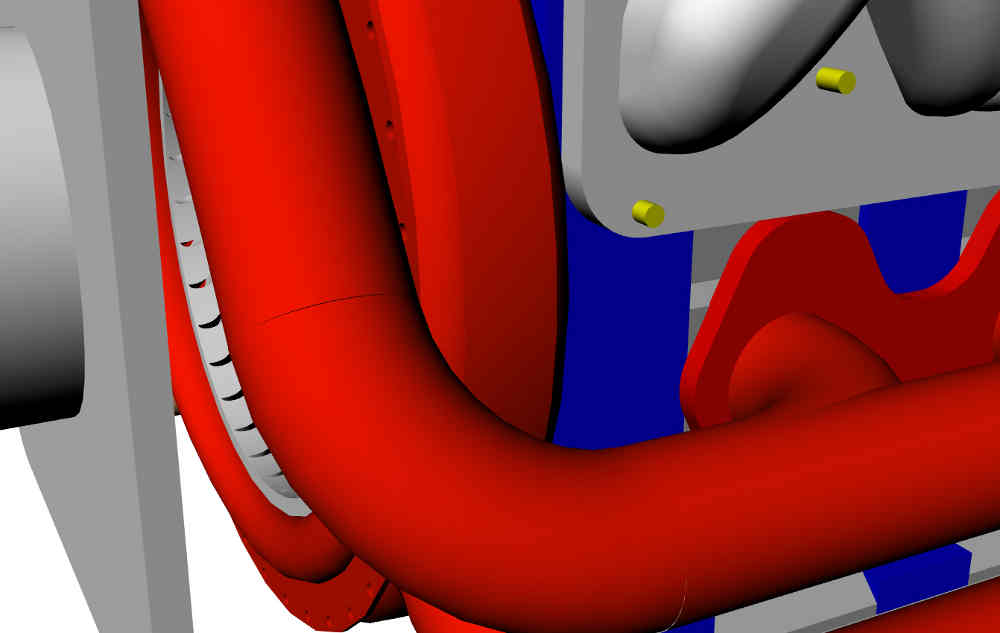
sufficient HP recovery direct drive. No gear box. Here are some old 3D's.
When a light weight rotor is developed (not the current cast iron) a 16,000 RPM
version of the Mazda rotary will become possible.
Paul Lamar
--
The Rotary Engine NewsLetter. Powered by Linux.
ACRE NL web site.
http://www.rotaryeng.net
Youtube key word PaulLamar2
Copyright 1998-2011 All world wide rights reserved.