When I first saw Bud Warren's centrifugal clutch something in
the back of mind was trying to tell me he did not build it.
The parts looked too slick and too finished to be custom made.
I think I figured it out. They are stock parts out of Center Force
clutches. Of course Bud never talked about that.
http://www.centerforce.com/clutches.tpl?subsection=clutchtypes#
Ironically I have one in my my RX8. I love it. It works great.
This will solve the gear box chatter problem if set up properly.
The question is how thick must be the flywheel? That will
affect the over all weight.
BTW I don't think it was the cause of Bud's fatal crash.
Paul Lamar
Confusing pics though.... it seems you've got a few pics of
subaru/eggenstein's -- did they use
bud's drives? William Mason
Yes. He sold several.
--------------------------------------------------------------
Center Force also make a compatible aluminum flywheel for the 13B.
Paul Lamar
There is another way to eliminate the gear chatter. Throw the gear
box
out. Mount an alternator on the eshaft, a prop on a direct drive
electric
motor and all the drive line problems go away. Like a diesel electric
locomotive. Any remaining problems can be handled in the software of the
controller. The option of adding batteries would exist if you want to be
way trendy.
Murry I Rozansky
As I said many times before on here electric drives of that type suck big
time. This is a recording :)
The motor is 85% times the alternator is 85% the over all effciency is
.85 times .85 = .72% over all. You are wasting 30% of your fuel.
Locomotives do it for one reason and one reason only. High starting
torque.
Paul Lamar
Hi Paul, was meant to be a humorous. If there are no torque reversals,
it must be drive line resonance. What else could it be? Has any one tried
running with a solid shaft connection, no flexible element? A soft enough
coupling should work. A disconnect will of course and a Bud type is simple
and compact enough to fit. If it does not cause operational or safety
problems to idle the engine above the chatter speed, why is gear chatter
getting so much attention? Some of the couplings have a surprising amount
of wind up at their rated torque. I think some were over 10 degrees. If
chatter at idle, when there are very low loads does not damage anything,
maybe the problem is of a more psychological or esthetic nature. Tracy's
damper design just seems overly massive to me.
Murry I Rozansky
Tracy's rubber bushings are so stiff for all practical purposes it is locked
up. I suspect there would be no difference. Same gear box chatter.
It is not unique to the rotary either. That is why Bud attempted to deal
with it. You have this huge flywheel on the out put end of the gear box
called a prop :) Could be caused by a combination of many things. Slop in
the splines or gear back lash. You will never get away from some wear or
slop.
Molt Taylor was the first to deal with it by using a centrifugal coupling.
It was noticed by Allison on the shaft drive P39 back in the 1930's.
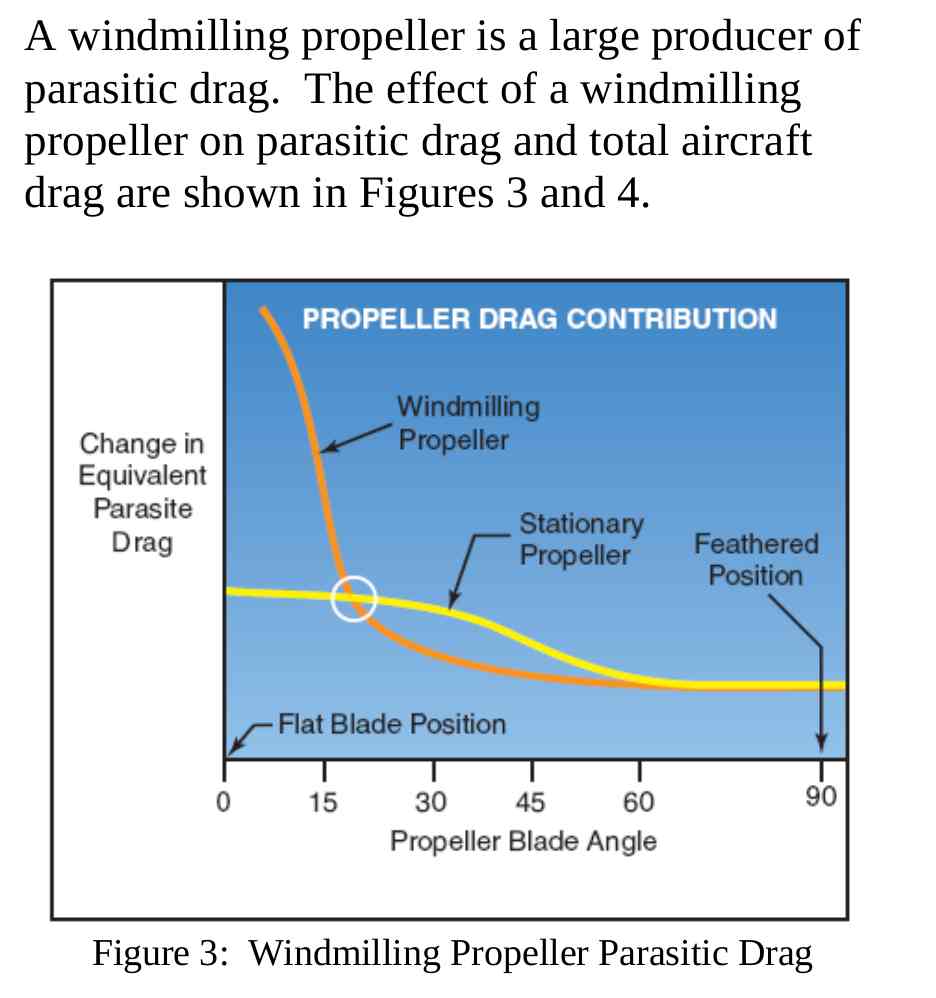
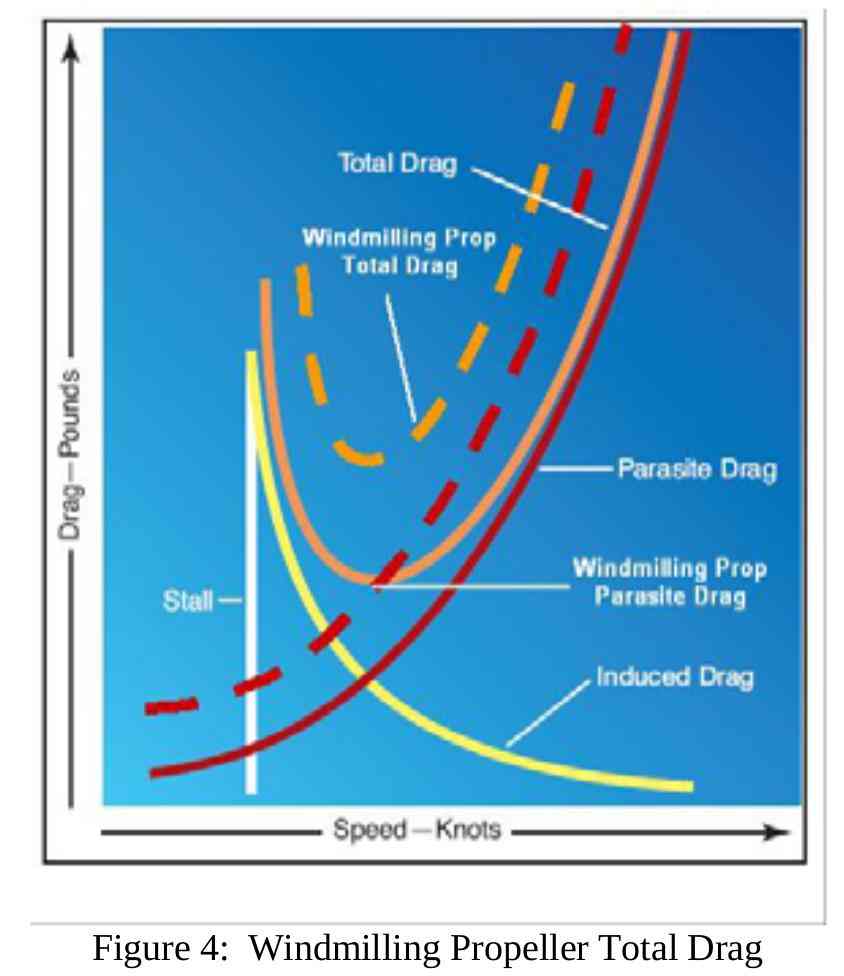
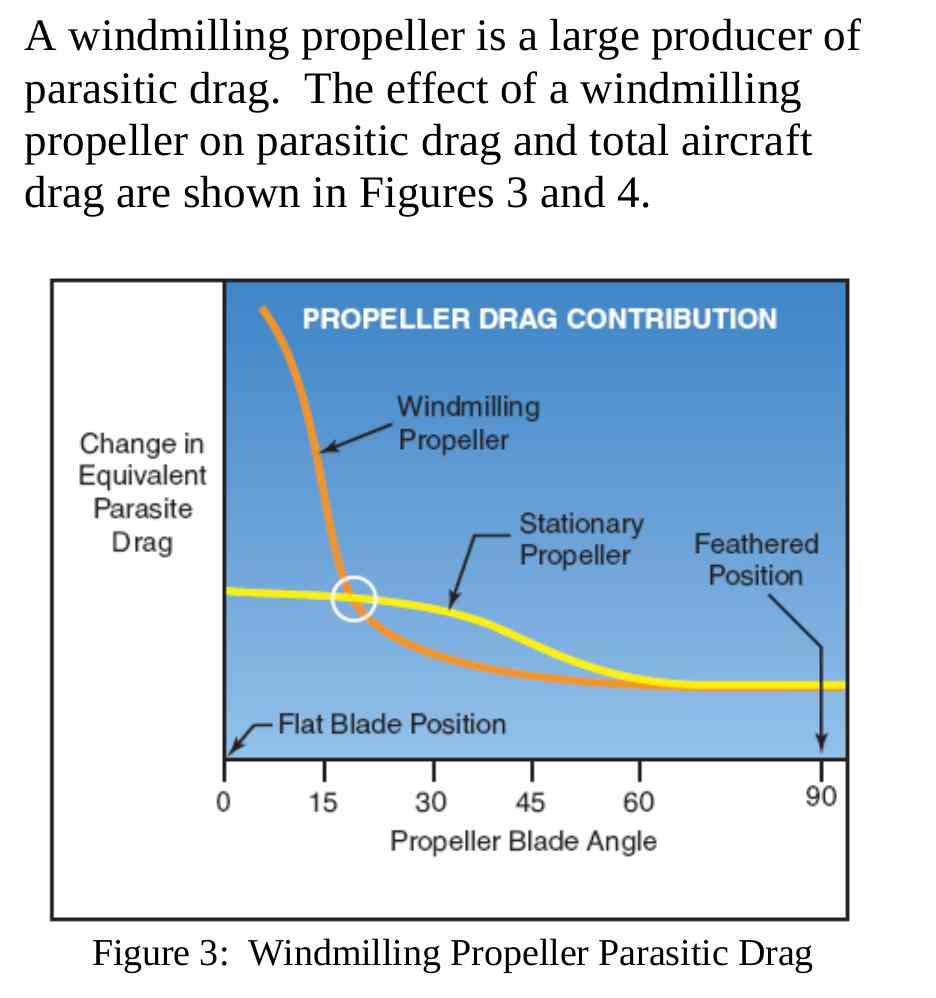
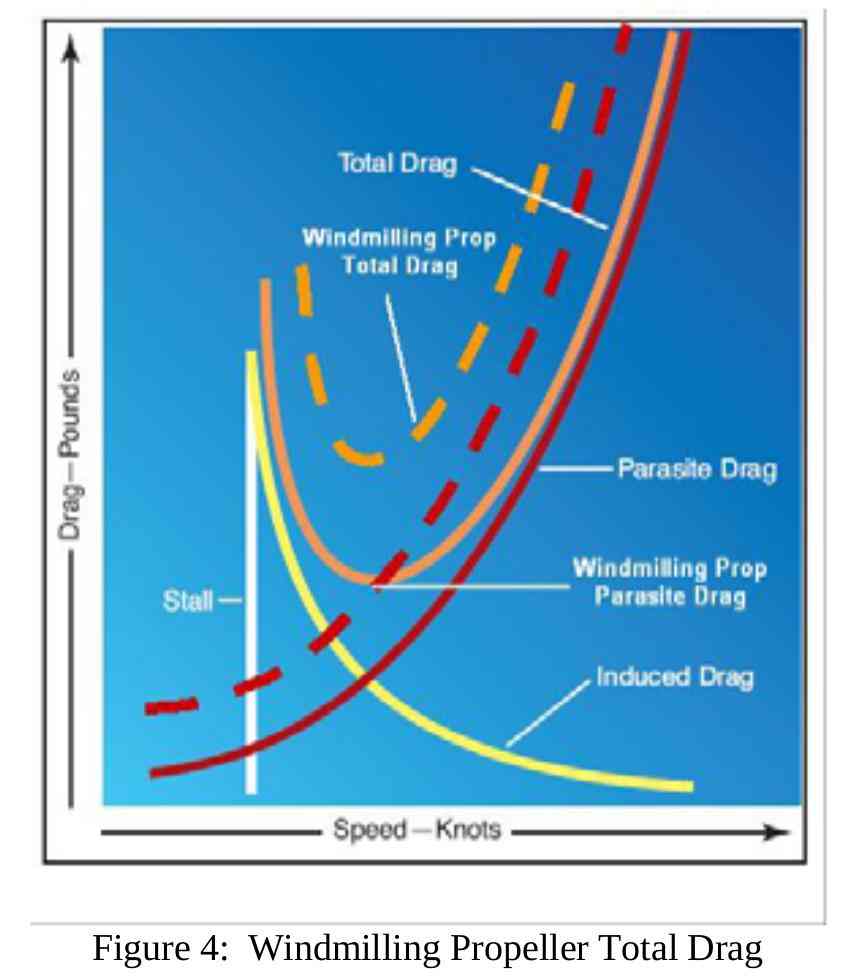
The down side would be prop wind milling which would increase the power off
stall speed. In fact that could have killed Bud if he did not realize it. It
was a low altitude stall spin crash. You must land faster with a wind
milling prop. If you do a wing over to turn around the prop might stop. Then
again if it did not stop you would lose a lot of altitude.
--------------------------------------------------------------
This last chart shows for certain pitch ranges the wind milling prop is less
drag than a fixed pitch prop. It may turn out to be that way if you have a
fixed pitch cruise or top speed prop.
I think one must test for this at altitude where is is possible to restart
the engine or make the runway regardless.
Since the prop must drive the gear box backwards wind milling may not occur
using Tracy's gear box.
Slipping is a similar high drag situation so by all means practice slipping
on final. IMHO I would never try to make a conventional approach with a dead
engine unless I was so far down wind and so low I had no other choice. In my
opinion slipping is under rated.
Paul Lamar
Hi Paul
Re the attachment of the spinning prop drag.
I think this backs up what I was saying about, the loss of a Europa/NSI when
the engine stopped the prop went into "free windmill" mode as the clutch was
not powered the prop was just spinning free worst case scenario.
That's exactly what the pilot reported, "like having a huge spinning drag
brake"
In a fixed prop mostly you have to dive a high speed to attempt an engine
re-start.
So most pilots would not appreciate the danger involved.
The drag of a stopped prop isn't anything like the drag driving the prop
plus the drag created by the prop spinning finds a point of equilibrium or
the sum of those two drag amounts combined.
Some of the lower cost wind generators work use tip stall drag to limit rpm
in high wind. Ugly noisy but cheap.
Any drive system(by accident or design) that could allow the prop to spin
free potentially a KILLER.
That's my understanding of the situation.
Kind regards
Clive
One really needs to know what the pitch was to draw any conclusions.
A windmilling prop can be lower drag under the right circumstances.
Paul Lamar
Peter Garrison recently did some tests on this, changing prop and throttle settings I believe.. Or
at least talked about it.
Matt-
Peter, can I have the publication date?
Paul Lamar
--
The Rotary Engine NewsLetter. Powered by Linux.
ACRE NL web site.
http://www.rotaryeng.net
Youtube key word PaulLamar2
Copyright 1998-2011 All world wide rights reserved.