I hitched a ride with Dave in his RX7 turbo II rotary powered RV6.
Here we are at 12,600 feet over the Sierra pass at 162 Kts or
183 MPH true airspeed.
Just cruising at only 5480 RPM. Rather quiet and very smooth with
head sets on. This is the same airplane that went 229 MPH
around the pylons at Reno a couple of days ago.
8 gallons an hour or 23 MPG.
The cowl flaps closed gave 3 or 4 Kts
at the expense of 5 or 6 degrees C higher oil temp.
From about 69 C to 74 C. Excellent trade off.
Don't know on the water temp change as that was not working
properly.
We stopped over night at Mammoth. Dave dropped me off in front
of my hangar door at SZP. Thanks for the ride Dave.
Paul Lamar
Dave,
What RPM were you running at the 229MPH speed? What is the ratio
of the borrowed PSRU? It looks like you may need a complete new
gear box. If so are you thinking of running the 2.85 unit?
Dale Davies
Hi Dale,
I was seeing max RPM of about 7000 to 7300 depending on g-load
and location on the course, and up to 7500 briefly coming down
the "chute." That still puts my tips in the low 900 fps range
which is about right for racing. I still have the 1B gear box.
Cant change because I built- in an engine off-set.
--
David Leonard
Turbo Rotary RV-6 N4VY
http://N4VY.RotaryRoster.net
http://RotaryRoster.net
Hi Dave,
I was just curious. That darn thinking thing again. You've heard
the song? Any way, a p-port Renesis with turbo would add a bunch
of power. Especially if you could run the engine a little faster.
Dale Davies
We have a problem before we can do that. Dave has about 250 HP
when he is running about 45 inches of Hg. With a p-port my guess
that would go to about 300 HP. Dave has done nothing on drag
reduction so far. I can get to 300 HP NA if I go up to a 3.17:1
and turn 8000 to 9000 RPM with a p-port. The red line on the RX8
engine is 9000 RPM.
Both Dave, I and others. RV tail flutter. We agree on this. To go
faster than 230 MPH we need to fix the tail first.
We spoke to an expert on this RV4 RV6 problem at Reno.
Consequently I am in the process of redesigning the vertical and rudder
in carbon fiber to make it stronger and stiffer without adding any
weight.
I spoke to the people in Oxnard today that built the Kis and a
lot of other aircraft like early Lancairs. They have an oven and
vac bag facilities. They agreed to do it. For some strange reason
you do not hear about flutter on composite airplanes. At least I
have no heard about it.
I also consulted with my carbon fiber expert Alex Kozlof this morning.
Alex and his son won the Little America cup race in a carbon cat Alex
designed.
Alex is also a distributor of uni carbon and a pilot. More on this
later.
Paul Lamar
Paul,
That picture of the mountains you show is that the pass
ahead? if so I would not like to be flying there with a bit of low
cloud, and was that at 12,000ft.?
lucky duck to get to fly there:-P
John Burey.
Yosemite pass is a bit north of where we went through. That is the
picture with
the clouds and big rock called El Capitan.
http://www.nature.nps.gov/air/WebCams/parks/yosecam/yoselargerimage.cfm
We went through Mammoth mountain pass at 12,500 feet and stayed there
as there is another 10,000 foot mountain range North of SZP. Here
is a google map. Besides that you go faster with a turbo and get
better MPG. BTW the turbo also climbs very well at 12,500 feet.
Paul Lamar
Hi Paul,
As you would know here in OZ. @ 12,500ft you are
already 5,500 ft ABOVE everything with rocks in it here. It's on my
bucket list to get to the Rockies. We have these here.
John Burey
"For some strange reason you do not hear about flutter on composite
airplanes"
Mmm, maybe. It depends on what types you look at. There are a number
of plastic sailplanes that have suffered flutter. As well, (and I
hate to even mention it), a couple of Rutan canard type airplanes have
experienced flutter. In the case of the Rutan airplanes, I believe
the common cause was overweight (and/or under balanced) control
surfaces (improper build).
One thing that plastic airplanes have going for them is that the skins
are usually thicker than they would be for a comparable metal
structure (I believe). This helps from a column/buckling/compression
rigidity standpoint (even if the material itself may be less rigid).
As well, in the case of the Rutan designs, the airfoil structures are
built on foam cores which means that oil canning is reduced compared
to metal.
All that said, both types of structures can be designed to avoid
flutter over a reasonable speed range. It's obviously critical that
they be built properly. And I don't think either has a significant
edge in terms of weight, at least not using materials and methods
available to the home builder.
Matt-
Well put Matt.
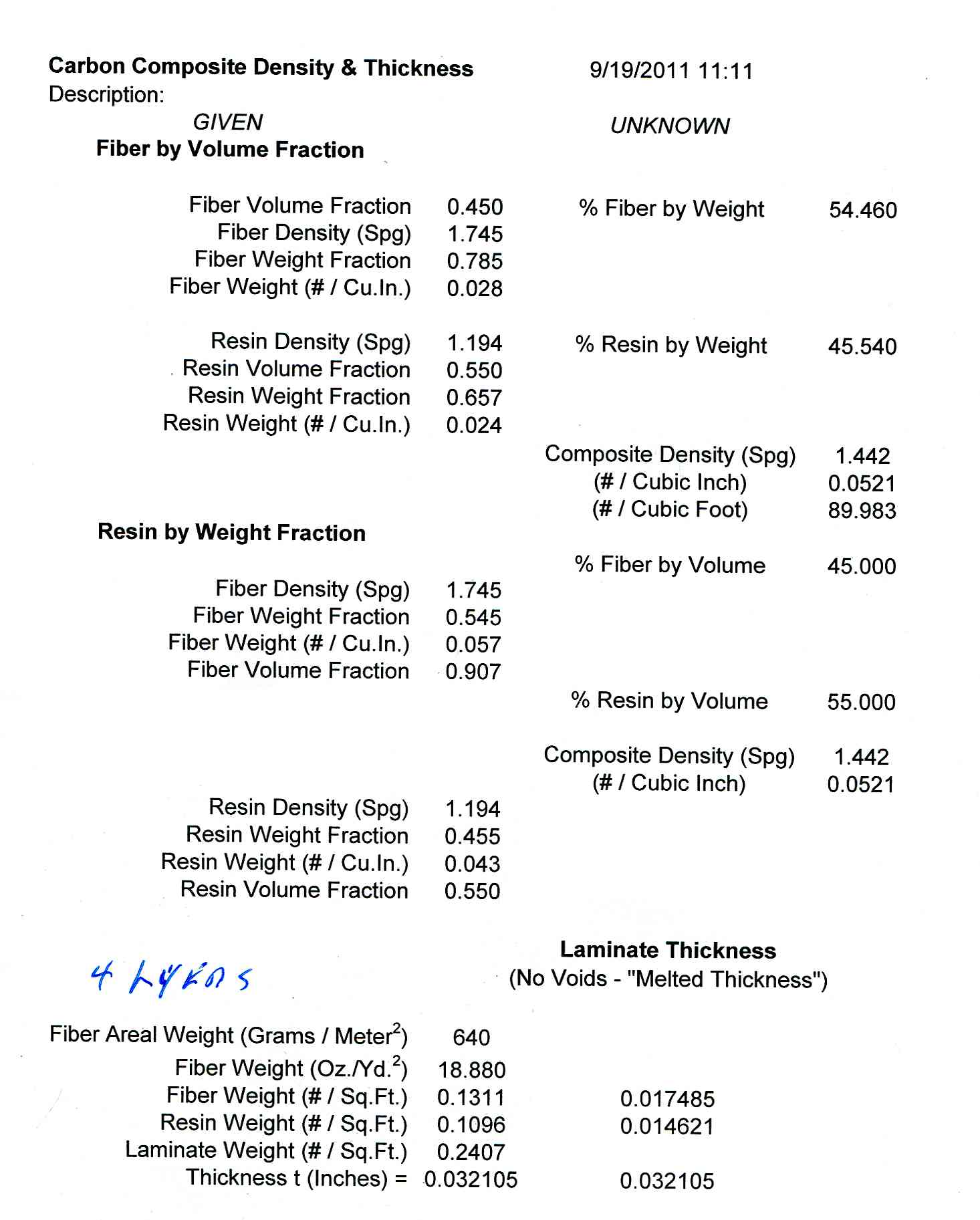
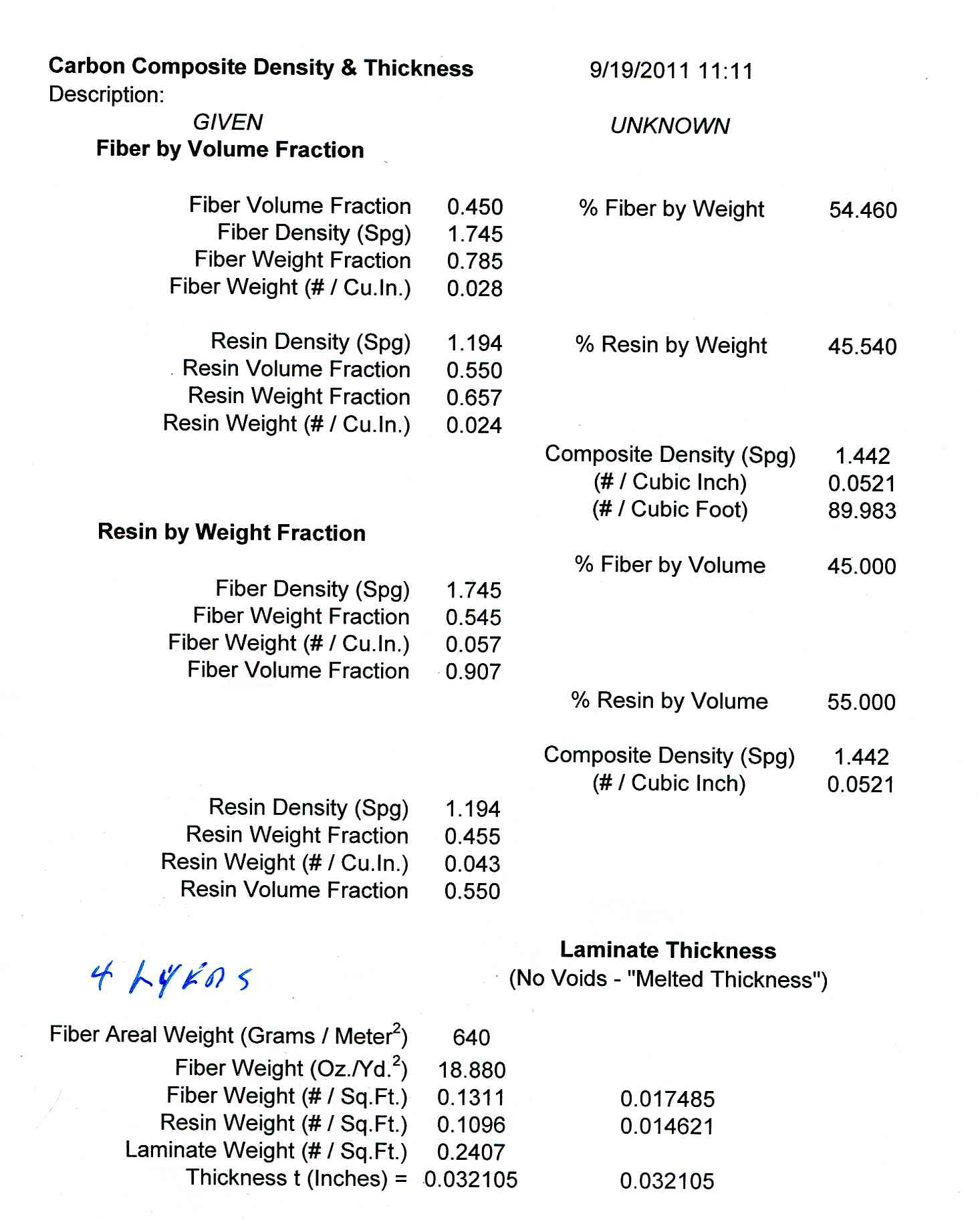
Vacuum bag is not all that hard to do. Here is a .032 carbon layup
that has significant advantages over .032 aluminum. Uni carbon
spar caps are a decided advantage.
There is a lot of evidence out there that the unbalanced aluminum vertical
tails on the RV4 and RV6 are marginal. I was considering redesigning them
in vacuum bagged carbon with balance weights. In the mean time I will
stick with going less than what Dave did at Reno. Namely 229 MPH.
Either that or I will buy a parachute :)
Paul Lamar
--
The Rotary Engine NewsLetter. Powered by Linux.
ACRE NL web site.
http://www.rotaryeng.net
Youtube key word PaulLamar2
Copyright 1998-2011 All world wide rights reserved.