Hi Paul,
I've finished my (13mm) thick butterfly throttles and I'm trying to decide if an
over the top variable induction pipe (runner) system will have any merit.
Near sealevel yes, but what about up high?
Does air pressure within the airbox affect the optimum length?
Doug in Japan
Frequency = speed-of-sound/wavelength
An alteration in either speed or wavelength will result in an alteration of the natural frequency.
You can calculate it from this chart.
Why 13 MM ?
Paul Lamar
Paul,
Thanks. I recently found out that the total volume of the air box and ducts,
filter etc. is important. Especially for a turbo charged engine. Too little
and the air resistance goes up so the engine is starved. Too much and the
response time is lowered, or the engine bogs. For aircraft I would imagine
it is better to err on the side of being to big.
Here is a handy calculator I discovered for the speed of sound calculations.
http://www.sengpielaudio.com/calculator-waves.htm For simpler
calculation based on temp. only try here.
http://www.sengpielaudio.com/calculator-speedsound.htm I used this to
determine that at cooler temperatures (up high) the tuned length
As for why the 13mm thick throttle, the short answer is that number is the
minimal thickness that would work without throttle plate interference. The
throttle plate as designed is actually slightly elliptical. Edges are
slightly beveled to reduce air resistance. I'll fine tune the shape once I
put it on the flow bench. Long answer: Having the throttle directly on the
housing and having the throttle plate swing down inside the inner sleeve is
about as close to the intake port as I could get it in the intake size I
wanted. I explored several variations of slide throttles but was unhappy
with the large amount of real estate it required.
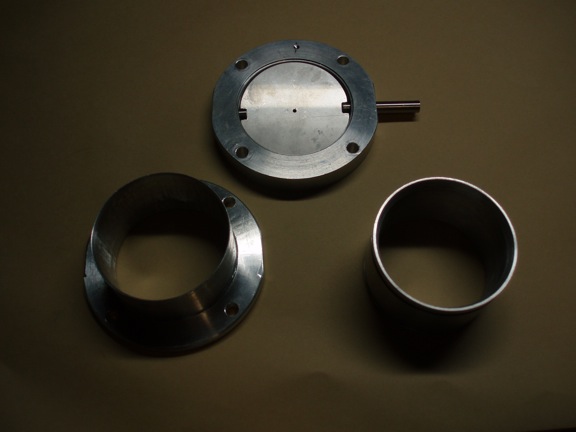
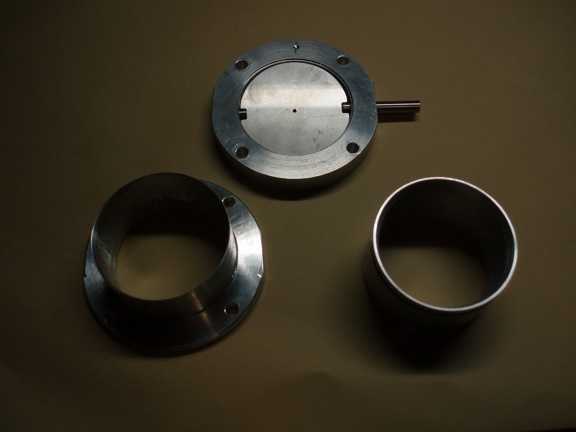
In the attached pictures: These pictures are taken before the parts where
polished, painted, and in the case of the throttle, welded. This throttle
shown goes on the PSRU side, the accessory side throttle is reversed. Thus a
coupler join the throttle shaft together over the center housing. You can
see that throttle plate when closed reaches a smidgen below the throttle
plate step bore. This bore interfaces with a protrusion on the runner collar
so the positioning is correct. (left of picture). Naturally gasket material
will be used. The collar will have the FRP runners bonded to it when I
figure out how to cast them accurately. Probably use the wash out internal
mold idea. The tube on the right is the double O-ring sleeve that fits
within the intake housing bore. Notice the taper on the top inside. This is
so the throttle plate clears the edges when it opens into the 2" ID sleeve.
The throttle and the intake runners are slightly larger in ID than the
intake sleeve. 53mm verses 51mm. This was done to compensate for the cross
sectional area loss the throttle plate creates when fully open. The throttle
plate support shafts were designed in a manner to minimize the cross
sectional area when open. The central hole will most likely be enlarged so
that the engine may idle from the air entering there. This idling hole may
be a bad idea as it isn't found in traditional plate throttles.
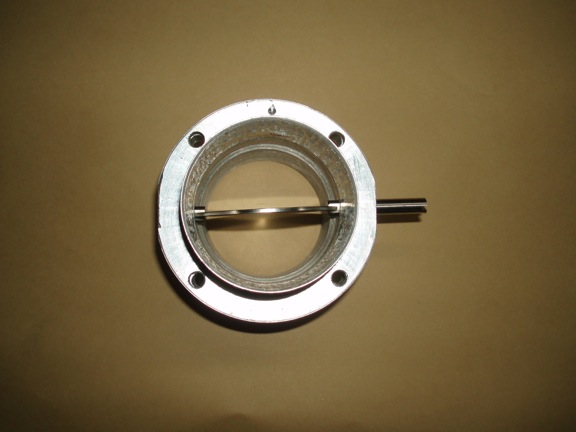
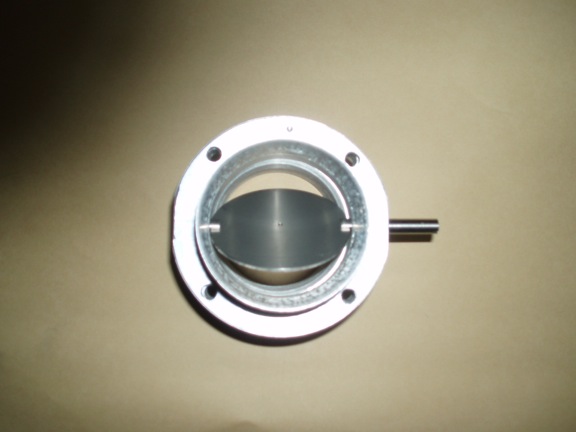
A construction challenge: The stainless shaft and throttle plate had to be
TIG welded in situ. With a jig and the skill of my friend's (small dextrous
hands), he was able to do a fine job. Bearings are a hard teflon material,
called BEAREE from NTN Bearing company. Other pictures show the throttle
plate in various positions. Four M5 size studs screwed and sealed into the
rotor housing retain the throttle, the insert sleeve as well as the intake
runners.
Doug in Japan
13 MM is over a half inch thick. Surely your butterfly is not 1/2 inch
thick.
When I gave a lecture at the World Motor Sports symposium in Oxford
to the top F1 race car engineers there was a guy from Porsche that
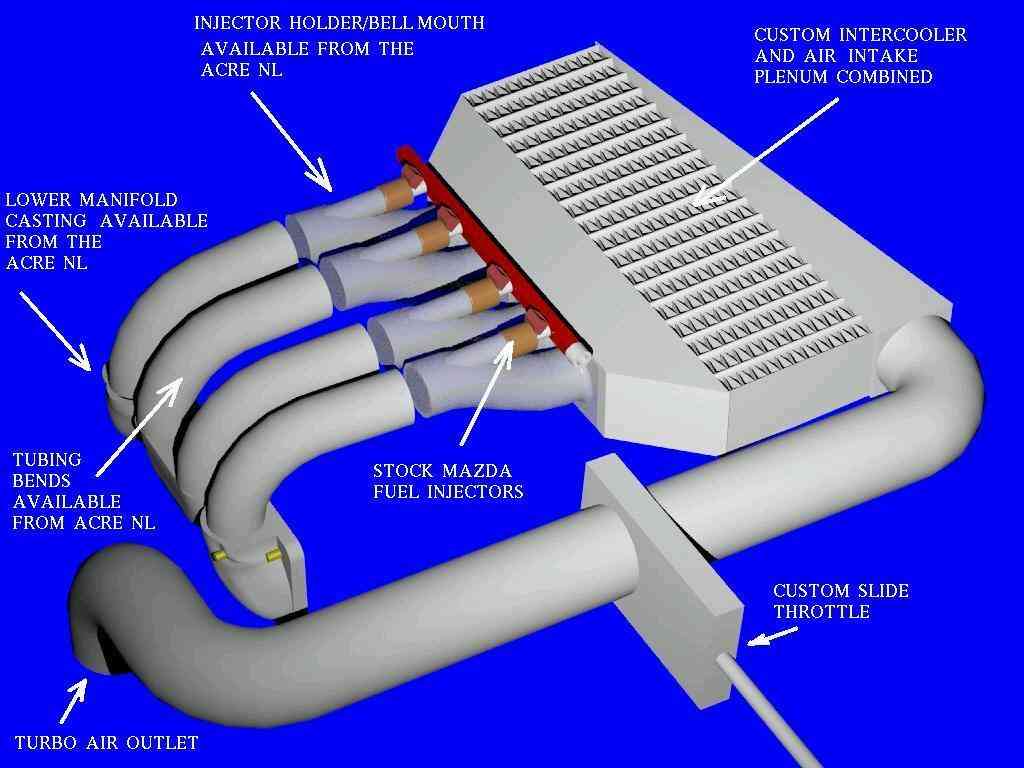
gave a lecture on butterfly valves among other things. Here are a couple
of pictures. I also have an animation but it is 4 meg. You should have
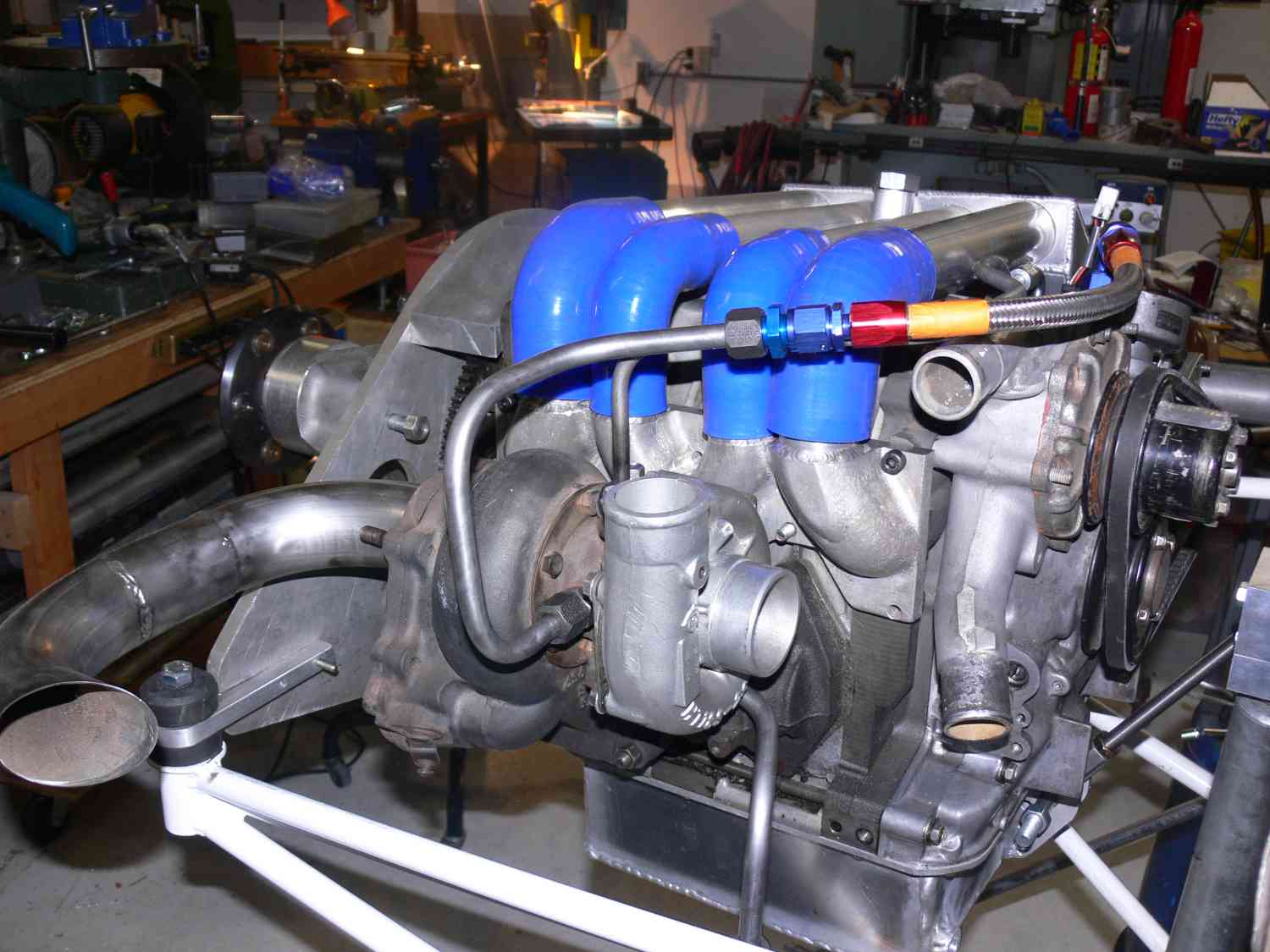
used our low cost and easy to make slide throttle. I just finished a turbo
engine with slide throttle for a guy in Saipan.
Every wart in the intake manifold comes right out of your pocket in precious
gasoline burn and range.
What were you thinking? :)
Paul Lamar
--
The Rotary Engine NewsLetter. Powered by Linux.
ACRE NL web site.
http://www.rotaryeng.net
Youtube key word PaulLamar2
Copyright 1998-2011 All world wide rights reserved.