http://www.aerocharger.com
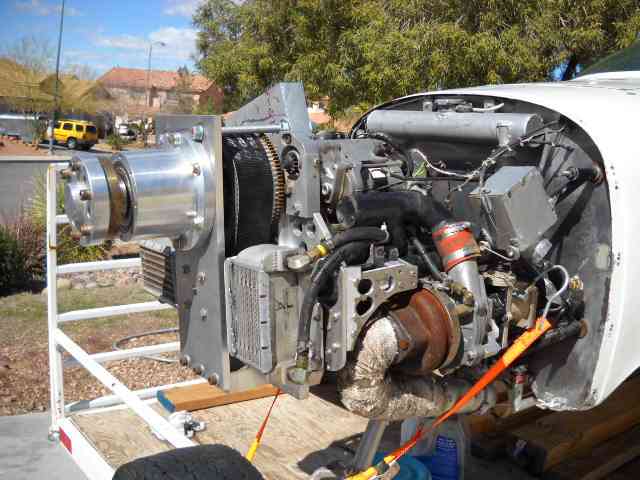
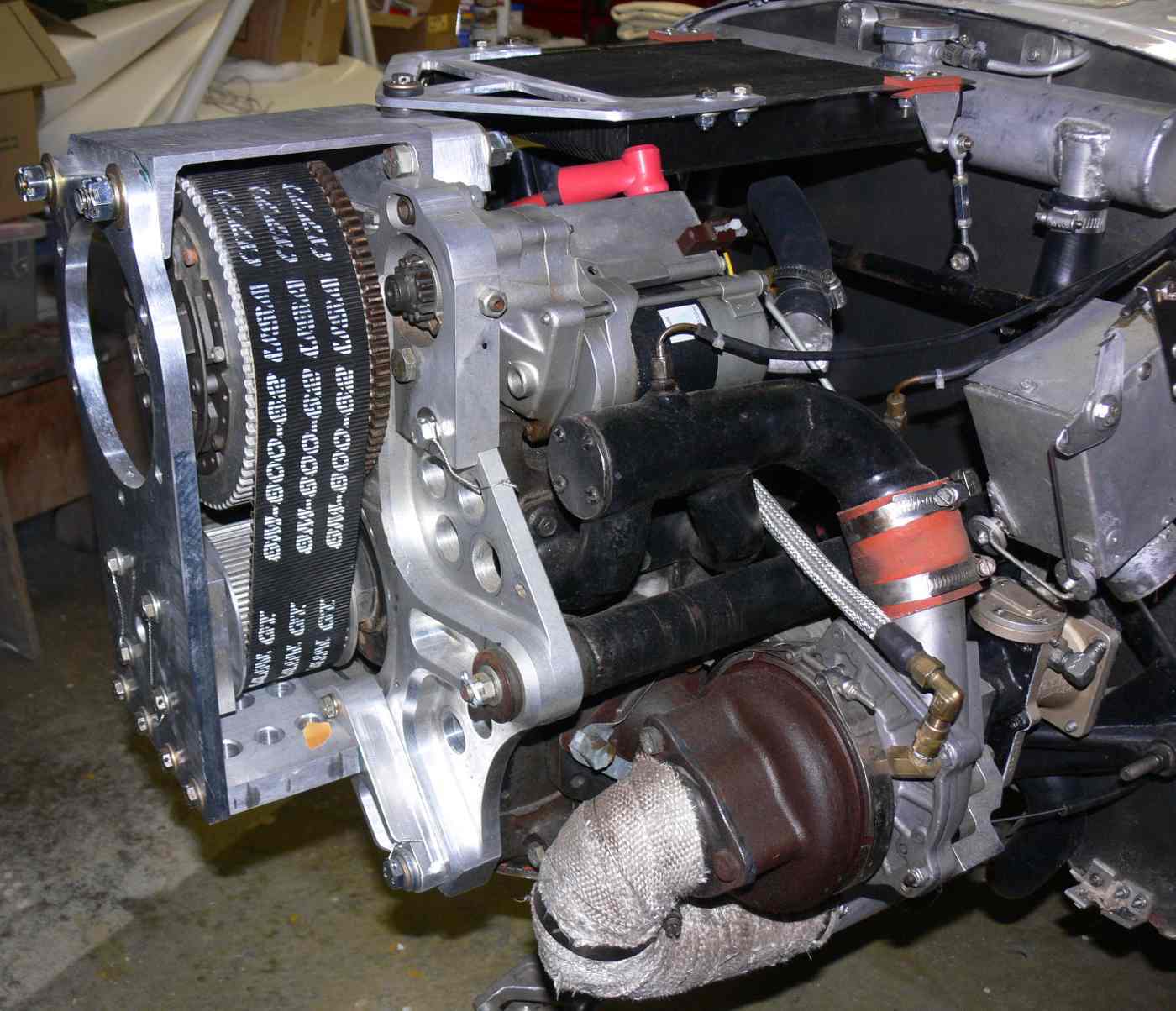
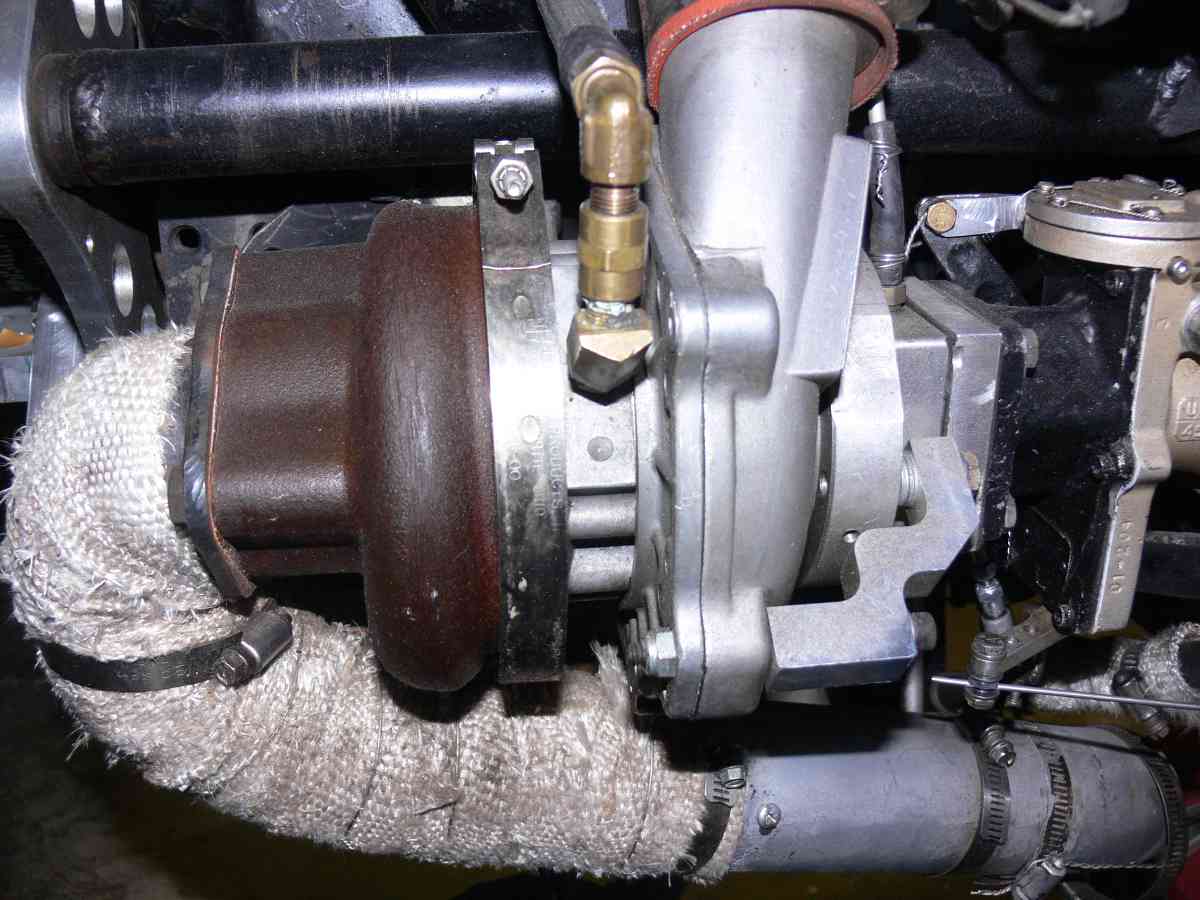
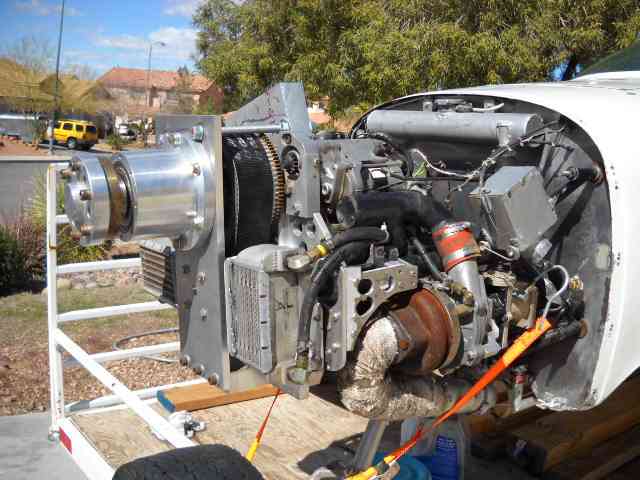
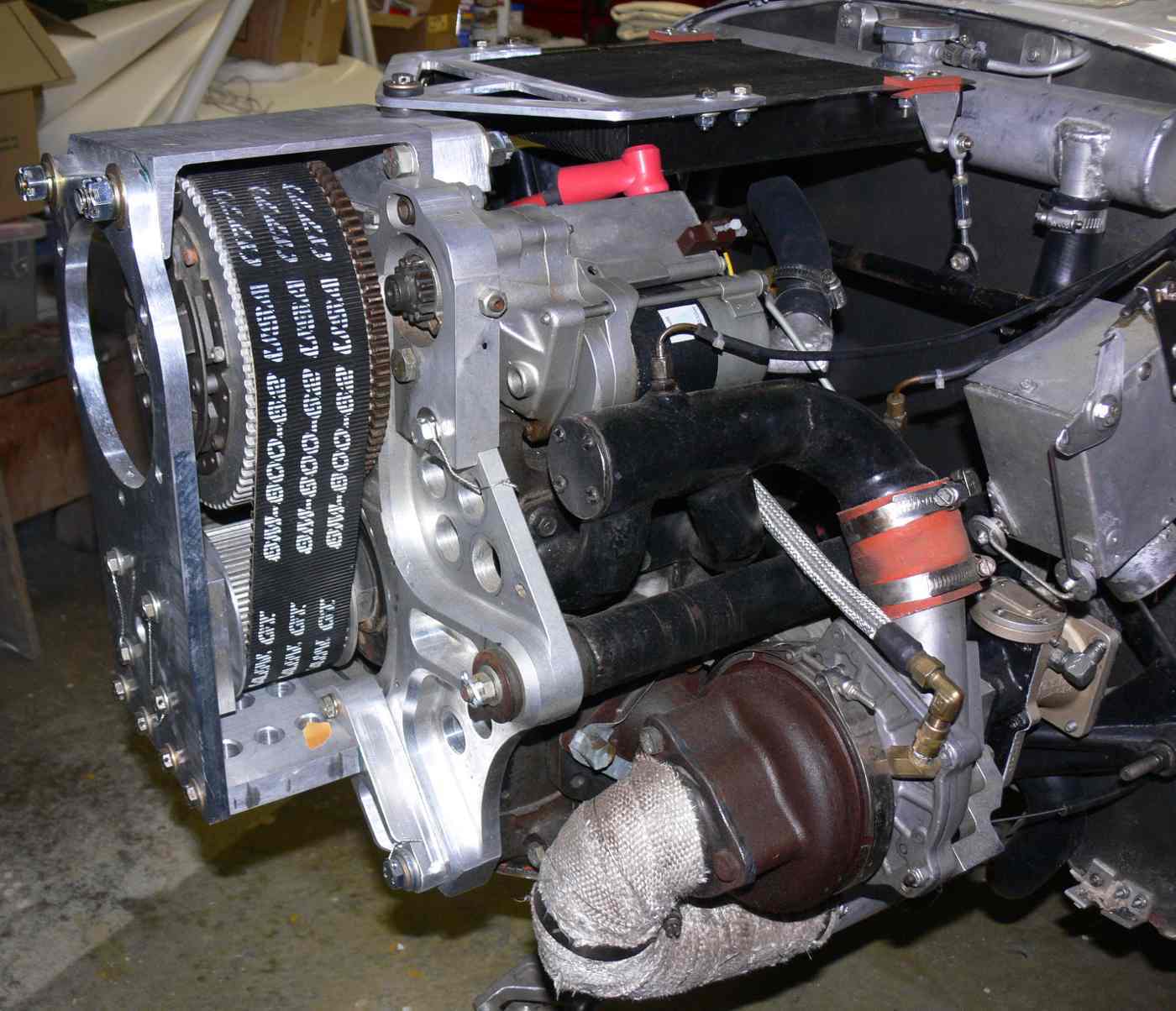
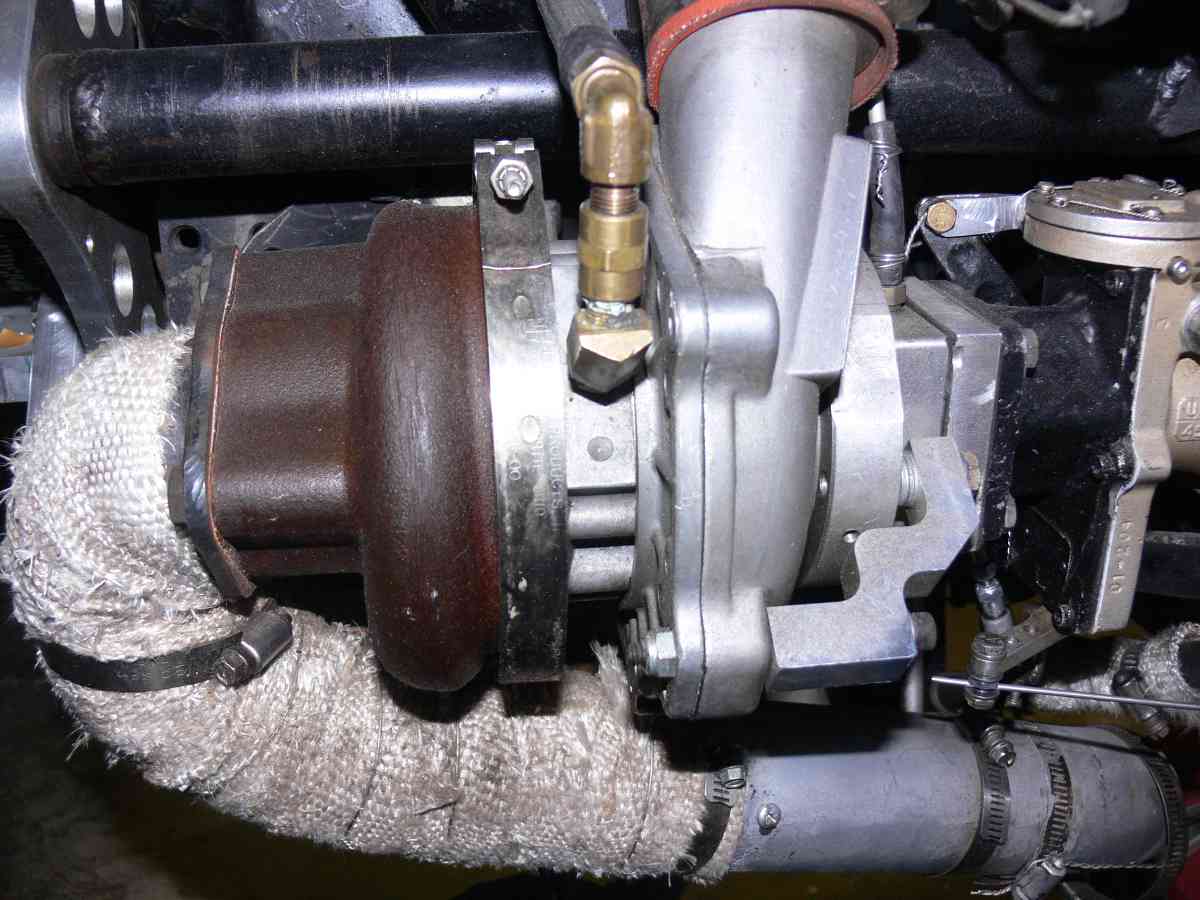
Ed Carver brought by his Aerocharger on a recent
visit to
the hangar.
Somehow I missed the fact all these years that is was a
variable
vane turbo. Apparently a well kept secret in the turbo
charger world.
How I missed this fact I will never know. Perhaps they have
good patents
and nobody wants to talk it up. If it works as claimed it
will put
all the other turbo guys out of biz.
This unit is ideal for turbo charging an aircraft
engine as you can slow the prop RPM with higher prop pitch
and boost the HP at that RPM with the variable vanes.
It is also ideal for turbo compound.
The convoluted design of the turbine housing leads to a
cooler exhaust
impinging on the vanes and the turbine wheel. The bearing
oil supply
is also self contained. No engine oil required. One could
probably use
turbine oil and have a separate oil cooler system if
necessary.
This is a very innovated unit indeed.
"VATN is a series of variable-vanes that optimize the flow
area of the
turbine
by adapting to the exhaust gases. By doing this, the
turbine wheel is able
to
operate at peak efficiency throughout a wide RPM range,
something that has
never been achieved before. This also eliminates the need
for a wastegate,
which conventional turbochargers rely upon to control
boost. Instead, the
vanes
automatically adjust the flow area and backpressure to
perfectly match the
torque requirements of the compressor wheel to produce the
desired boost.
Eliminating the need for a wastgate means eliminating extra
cost in your
turbo
system"
Paul Lamar
Hi Paul
I have been very interested in the bearing assembly and
lubrication setup
on the cool side.
Cheers
Steve Izett
Paul,
What series "Aerocharger" does Ed Carver have and what is
the compressor
trim.......Also does anyone know
if the "Aerocharger" turbine wheel and varible vane system
will live under
the
Rotary's hot (up to 1800 f) breath ?
Kelly Troyer
I'm hoping someone actually knows about the temp limits of
the vanes. The
whole aerocharger design has heat control in mind. The
turbine scroll has a
coating on the iron, or so it appears. The exhaust heat is
never focused on
one area as is the case in a regular turbo. The design
spreads the heat
around a far larger area and keeps the pressures much lower
at any given
point.
My intent in purchasing and using this is not to get high
boost, but simply
to maintain the minimum power necessary to stay at cruise
speed up to 17 to
18k feet, which should be much less than 150hp for a cozy
4. Because I am
using P ports, my base hp is near 250hp. I believe I have
read that there
are some cozy 4 flying with 150hp rated o-320s in them and
do quite well.
The point is, I don't really need 200+hp, and therefor, the
heat factor
will not be at max temp for long durations. I could never
use the max power
generated from my turbocharged p ported rotary; so I am
building for
efficiency, and aerocharger has some very favorable design
features.
a. No oil lines to feed it.
b. No waste gate.
c. No hot side shaft seals to blow, therefor, no oil loss.
d. Designed turbine speed gets the work done below 90krpm
e. High exhaust throughput (low restriction) when the vanes
are in the open
position.
f. Manual boost control by adjusting vane angle using the
control shaft.
g. Relatively simple exhaust tubing.
h. Can be mounted in many different positions.
Will the vanes hold up?
They probably will.
We shall test it at operating power to see.
I can hardly wait!
But that's my feeling about the whole project.
Really though, I can't tell if the thing will work for 5
min. until I try.
Regarding the question about which model I have?; "it's the
big one". They
sell two sizes, and set them up for different applications.
I hav'nt
measured the turbine size since last Jan. so I don't
remember which one I
have.
Ed Carver
Ed,
Did you purchase your turbo direct from "Aerocharger" and
if so did they
know it
was destined for use with a Rotary engine (no mention of
aircraft of
course) ?...........
In doing quick scan of their site I could find no
mention of any Rotary
conversions
using the "Aerocharger"......There was mention of Diesels
having used
variable
vane Turbo's but only in gas engines in the last few years
because of the
the extra
exhaust heat (200 f +) above a diesel.......Our Rotaries
then can produce
another
200 f (+ or -) above that.....Would be interesting to hear
what the
"Aerocharger"
have to say on this subject.....IMHO
Kelly Troyer
The exhaust temp on an RX8 side exhaust port engine is 200
F cooler.
Ed is using an RX8 engine as I recall.
Paul Lamar
Kelly,
Actually, if you look @ the military applications listed on
the aerocharger
site, they talk about their turbo's being used on rotary
powered UAV's
giving
them a 50% increase in power @ 2.5lbs of boost...
-Dan Gorsline
--
The aerocharger is very obviously designed to control heat
coming from the
hot gasses that pass through it. They want these things to
live long lives.
When you take one apart as I did, it's easy to see. The one
truly bizarre
element of it is how close the compressor is to the turbine
wheel. This
point alone helps cool the turbine, at the price of heating
the intake air.
I plan to inject fuel directly into the compressor inlet,
hoping to avoid
the use of an intercooler. The very rapid vaporization of
the fuel should
give the compressor a good chill. I'm also going to try to
keep the entire
intake system on the intake side of the engine, to avoid
long runs of tube
which will tend to bog the whole system down.
When I purchased this thing, I knew it may well melt, in
which case, I take
it to the rebuilder, and have the inconel turbine recast.
Then make some
solid inconel vanes to replace the originals. I won't be
out much if it
breaks.
On the other hand, when I test, it will be under MY
intended use loads. I
have no reason to find what it takes to fail it, but only
to know if it
will work for me. Given the thin material the vanes are
made from, I should
know what I want to know within an hour or so of a test
run.
And yes, the rx8 engine will get this unit.
Murry, I did'nt see ya at the last eaa meetn. Hopfully
next, we can grind
on this subject for a while.
There should not be any excess boost using this turbo in my
install. It is
purely for high altitude flight using the minimum power it
takes to
maintain cruise speed. What I think will happen is on take
off there will
be no boost, the vanes will be adjusted to prevent it. Then
as altitude
increases, vane angle is adjusted to increase turbine speed
thereby
maintaining the necessary intake pressure to hold minimum
required cruise
power at the chosen altitude.
Realistically idealistic?
Ed Carver
Ed , Paul and all,
I know that you do not see very many
Turbo systems injecting fuel directly
into the Turbo compressor inlet...........Is there a reason
for this ?...........Is there
a possibility of compressor blade erosion over the long
term ??...........
Kelly Troyer
If I was to "Hazard" a guess I would say safety is the reason.
Try and imaging what a back fire would be like into a fuel/air
charged intake manifold! Yikes.
Erik
A back fire is highly unlikely as it would have to flow
up stream against positive pressure. I have never heard
of a Merlin or Allison back fire through the compressor.
The term is frequently misused to describe explosions
in the exhaust manifold.
Paul Lamar
--
Hi, not all turbos have shaft seals that can handle vacuum, efi set ups
have the throttle on the discharge side of the compressor and often a blow
off or by pass valve for to dump pressure spikes on sudden throttle
closures. Some have better seals to keep the oil from getting sucked out
and the throttle can be used on either side of the compressor. Not sure
about the Aerocharger. The big engines often had carbs on the supercharger
inlet. The cooling from the evaporating fuel improved the supercharger
system efficiency and helped make the mixture more uniform in the complex
manifold. Some had the fuel dischage from the eye of the compressor. The
Merlin had flame traps, honeycomb inserts at the intake ports to stop
backfires from getting into the manifold. Not sure about other engines.
Turbo engines love water injection.
Murry
"Bearing Design & Lubrication
A unique self-contained oil system was also created for the Aerocharger®
which
lubricates the ball bearings in a fine mist of oil. Since the oiling
system is
separate from the engine, a proper lubricant can be used for the precision
ball
bearings instead of using oil formulated for engines. This differs from
conventional turbochargers that use a flooded bearing system which rely
upon
the engine?s lubrication system. By avoiding the use of a flooded design a
virtually frictionless, self-contained bearing lubrication system was
achieved."
"Conventional turbochargers use a flooded journal or ball type bearing
centered
between the turbine and compressor housings. This bearing assembly is
plumbed
into the engines lubrication system where hot motor oil is constantly
pumped
through it. In many cases, particularly production turbocharged engines,
this
bearing assembly has separate cavities for the engine?s coolant to flow
through
to aid in cooling the bearing as well. "
http://www.aerocharger.com/**technology.php#Bearing<
http://www.aerocharger.com/technology.php#Bearing
Ed
I have one other thought about fuel injection into the Aerocharger intake
chamber, I used to encounter what we termed "etching" on the impeller
caused by chemical and droplets hitting the vanes. Now this was in
oilfield applications, we ran a cyclone to separate liquids and gas from
the oil well production stream. The gas portion of that was compressed,
then flowed to storage tanks for treatment.
Our experience is that small droplets sometimes got into the compressor,
and struck the vanes causing etching, of coarse some amount of the damage
was due to corrosive chemicals in the gas production of a given oil well.
At the speeds the impeller will be spinning I think you can consider some
damage from your fuel injection as a given. Perhaps you can figure some
barrier/method that will divert the full impact of droplets from the
injectors. I make the assumption that not all of the injected fuel will be
vaporized, and hoping that the surface of the vanes are of a quality to
take the impact force.
GFCurtis Jr.
Randy Lewis has his carb bolted to the turbo intake.
Are you seeing any erosion Randy?
Paul Lamar
--
The Rotary Engine NewsLetter. Powered by Linux.
ACRE NL web site.
http://www.rotaryeng.net
Youtube key word PaulLamar2
Copyright 1998-2011 All world wide rights reserved.