Paul,
I have been thinking about your suggestion on using the MAF instead of
MAP as input for ECU. It just occur to me that may be a better ECU for
aviation use should have the following feature.
It seems that to be Aviation Friendly, it should support 50 degree
lean off peak, as well as self learning on amount of fuel to inject,
while not relying on oxygen sensor.
I think it can be done by first using the readings on MAF over the
entire range of RPM. This can tell us the volumetric efficiency of a
given engine setup. We then take advantage of a few known facts such
as engine capacity, etc. to get the proper fuel mixture.
Using Engine Temp, we can automatically tune to the correct air fuel
mixture
To be aviation friendly, it should have a lean button. A switch enable
or disable leaning. Of course, the computer will take the time and
lean it over a period of say, one minute?
A manual knob to override the automatic tuning, in case there is need
for something different.
We should still take reading from the MAP sensor, as a backup, in case
the MAF sensor gone bad.
The program can be fairly simple, and will not need human intervention
in creating fuel maps.
Would that be possible and desirable?
Henry Nee
Sounds like a full blown EFI. What prog language will you use?
If it is in asm I can help. I ain't doing C however :)
Use the Atmel chip as that seems to be very popular around the
world and I already have a development system.
Here is an OLED store in Hong Kong.
http://stores.ebay.com/WIDE-HK-Technology?_trksid=p4340.l2563
Bring some of these back with you. We can use something like this
for the instrument panel display.
When are you coming home?
Paul Lamar
Paul,
The highest resolution OLED module I can find with a quick search is
128 x 128 pixels at 1.5" x 1.5" What do you have in mind? I am worried
that it may be too small for a full blown Android application.
Also, Developing under Android has a memory size limit, as all the
programs runs in the DAVIK virtual machine (JAVA Like) and I think it
is limited to 4M of memory. What about Ubuntu Tablet version? It will
not have the memory size limit imposed by Android, and will not be
limited to JAVA programming.
regards,
Henry
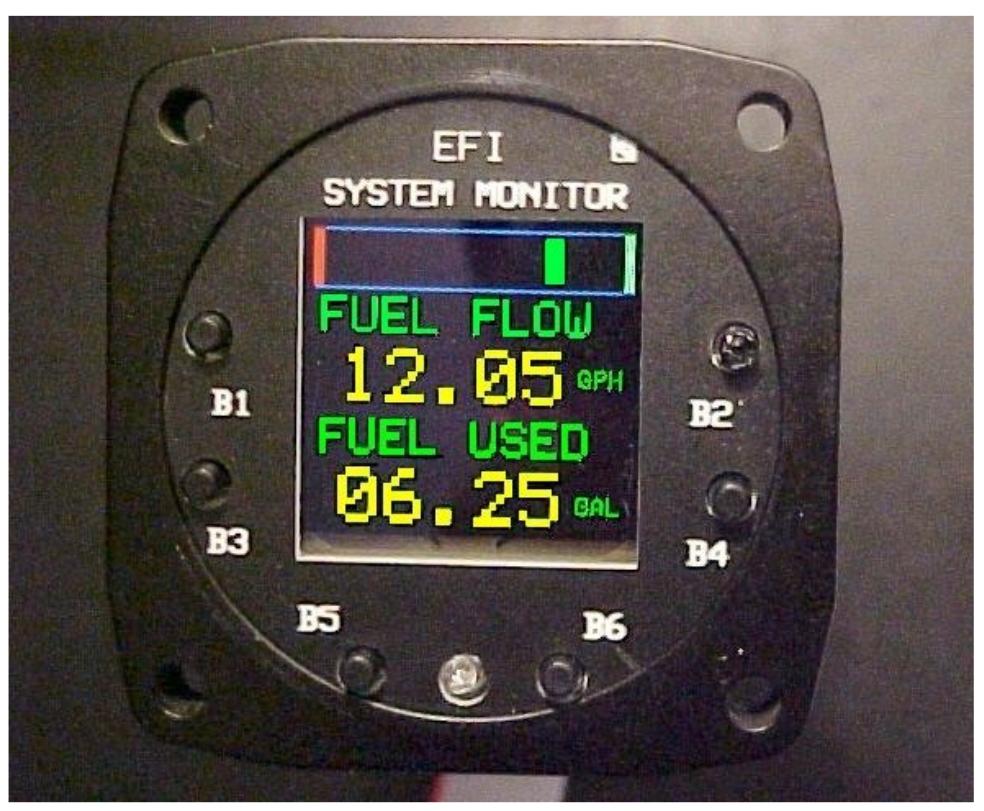
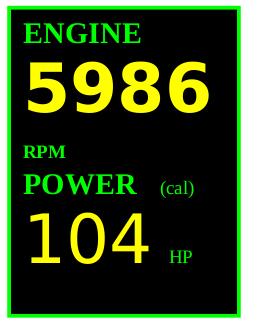
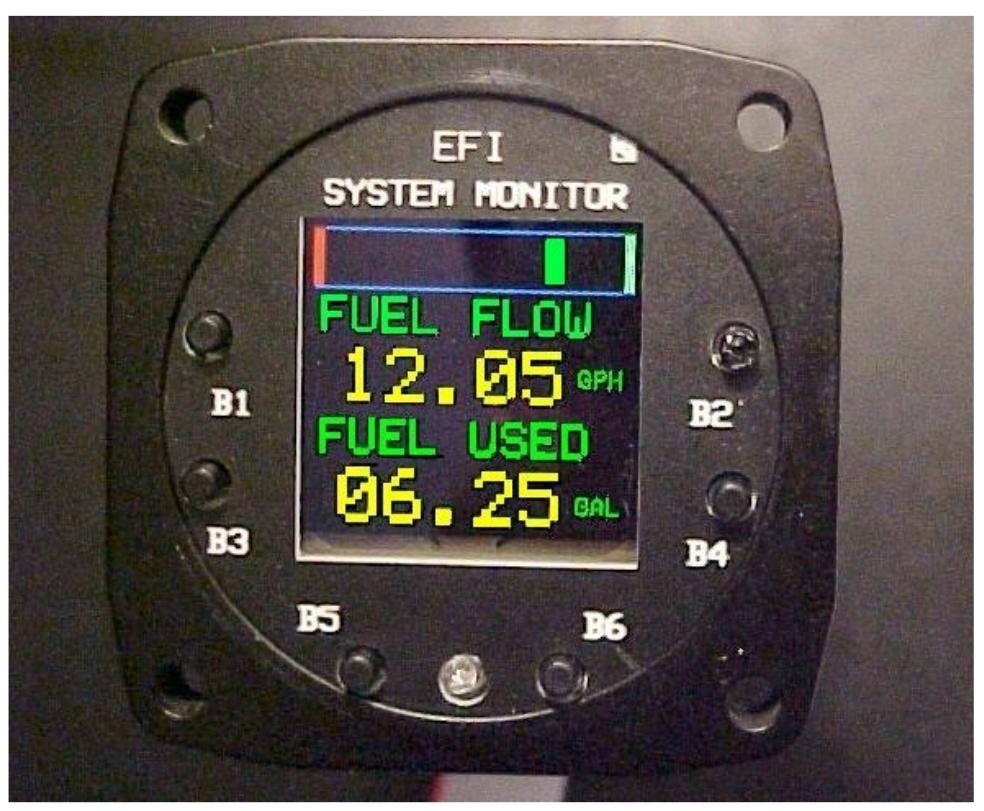
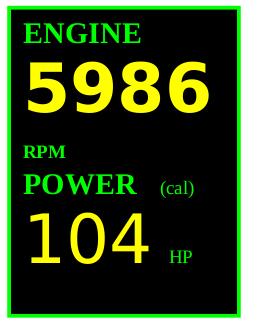
I was thinking something simple on the I-panel like fuel flow, MPG, tach,
manifold pressure .. stuff the EFI will have to know or will be easy to
calculate from stuff it knows.
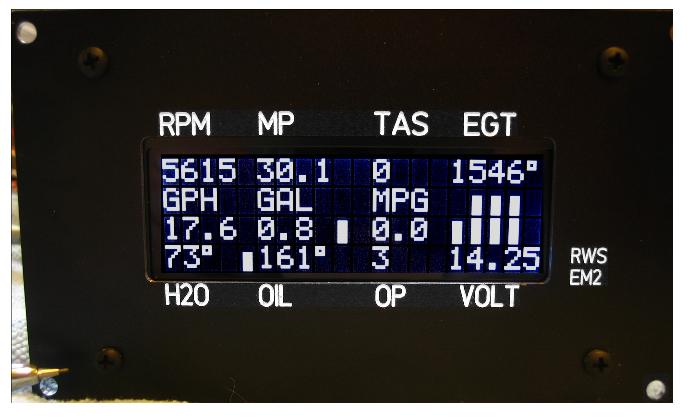
Like Ed Anderson's EFISM but not modal. I hate modes :)
Modes are OK for set up but not for flight display.
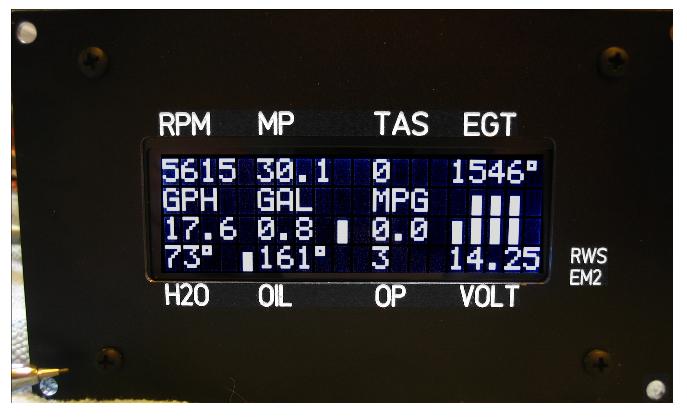
With a 10 pixel high character that is about 10 lines
by 20 characters per line. A lot easier to read than
Tracy's modal EM LCD with only 4 lines of 20 characters per screen.
The detailed and engine tuning stuff like mixture map should be saved
for the tablet.
The other thing is OLED's are so cheap and small we could use more
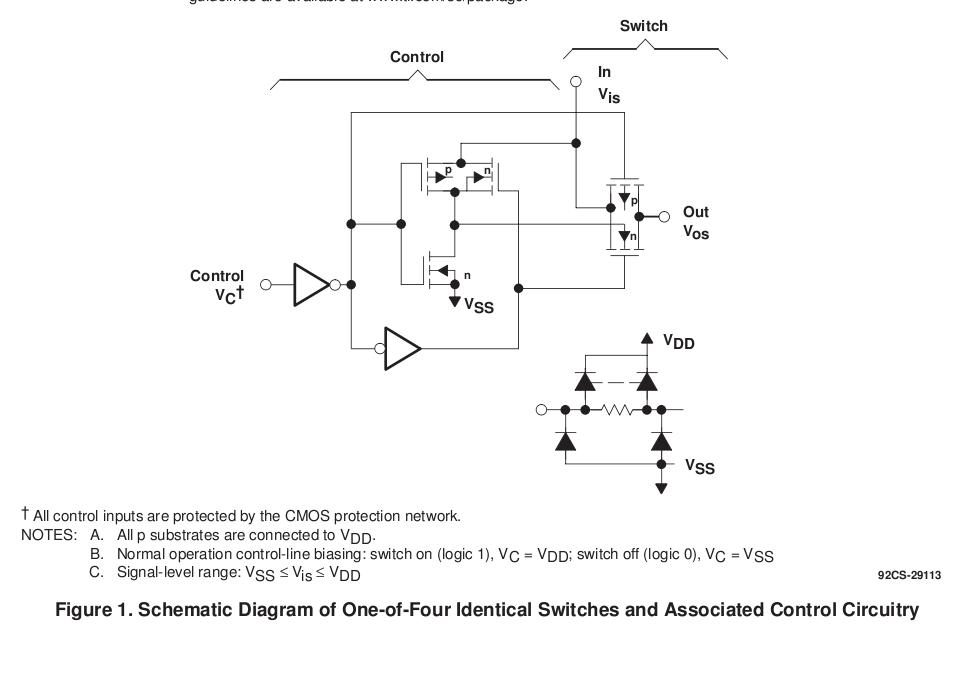
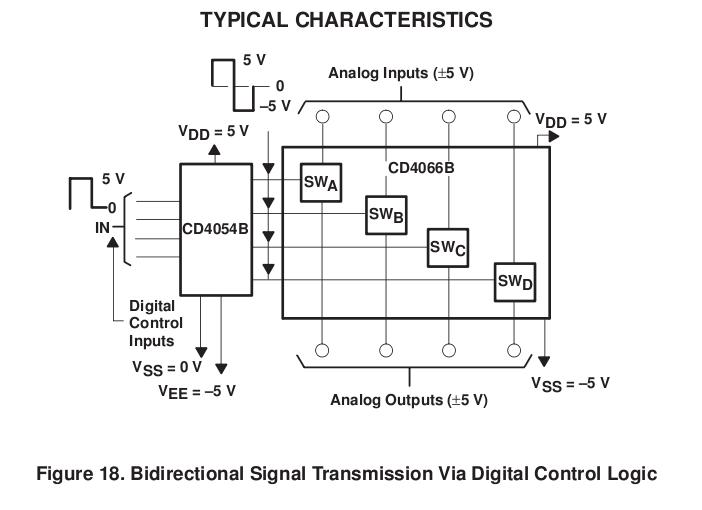
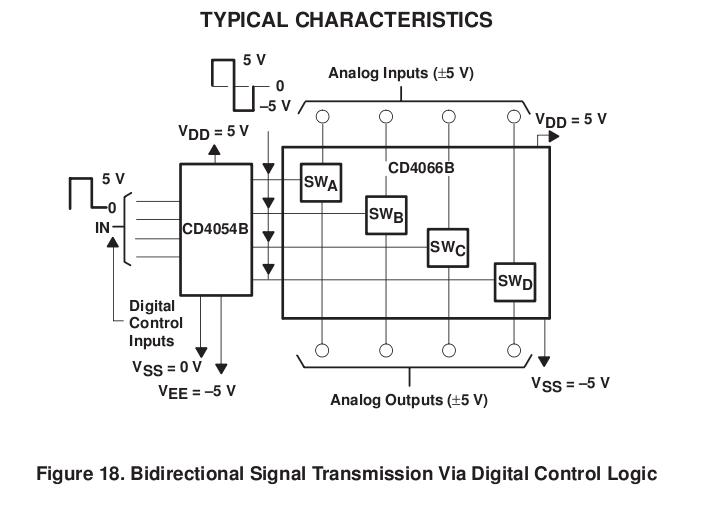
than one. A CMOS 4066 quad bilateral sw could be used to select one of four
serial interface OLED's and tablets. With the Atmel chip's dual serial ports that
would give one the choice of 8 OLED's. This could be a major advantage.
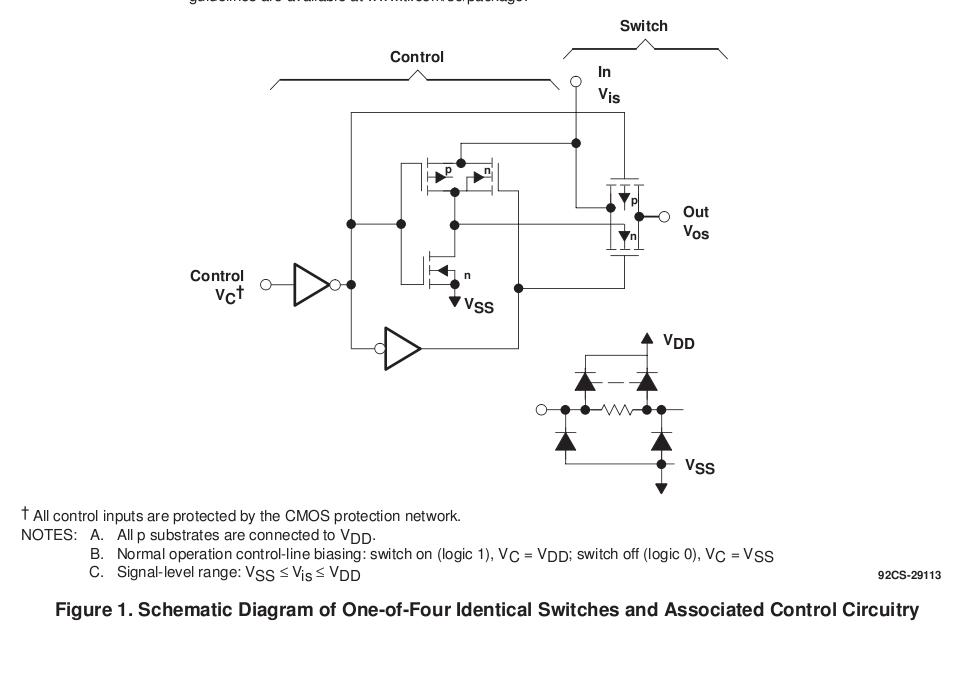
The CD4066B consists of four bilateral switches, each with independent
controls. Both the p and the n devices in a given switch are biased on or
off simultaneously by the control signal. As shown in Figure 1, the well of
the n-channel device on each switch is tied to either the input (when the
switch is on) or to VSS (when the switch is off).
The problem with UBUNTU OS on a tablet is it does not support the GPS or gyro
with an OS call. I could be wrong as it might be easy to add
those calls to UBUNTU.
The other thing about UBUNTU is all the really neat virtual reality flight software
like WingX does not run on UBUNTU. It requires droid HoneyComb.
Paul Lamar
--
The Rotary Engine NewsLetter. Powered by Linux.
ACRE NL web site.
http://www.rotaryeng.net
Youtube key word PaulLamar2
Copyright 1998-2011 All world wide rights reserved.