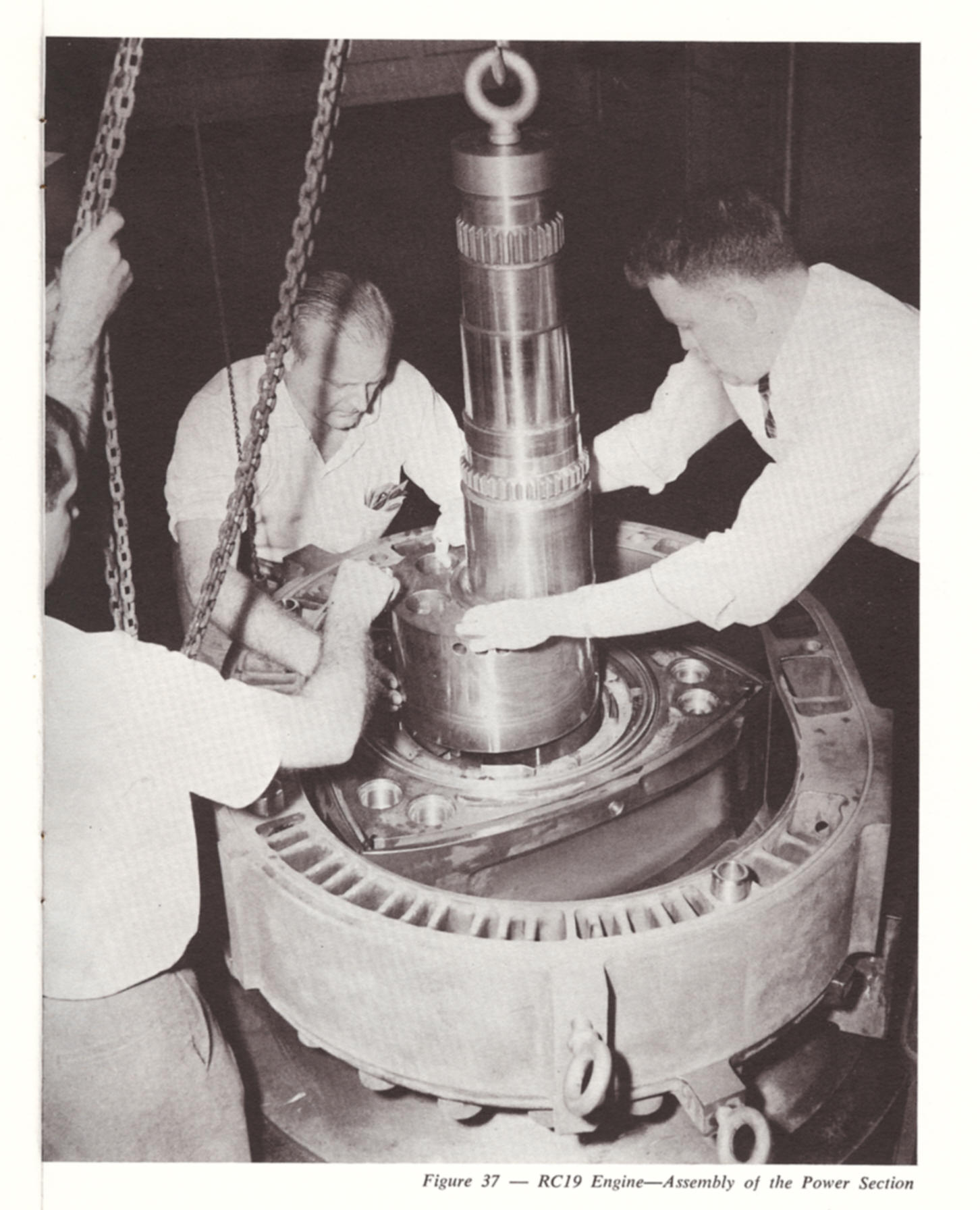
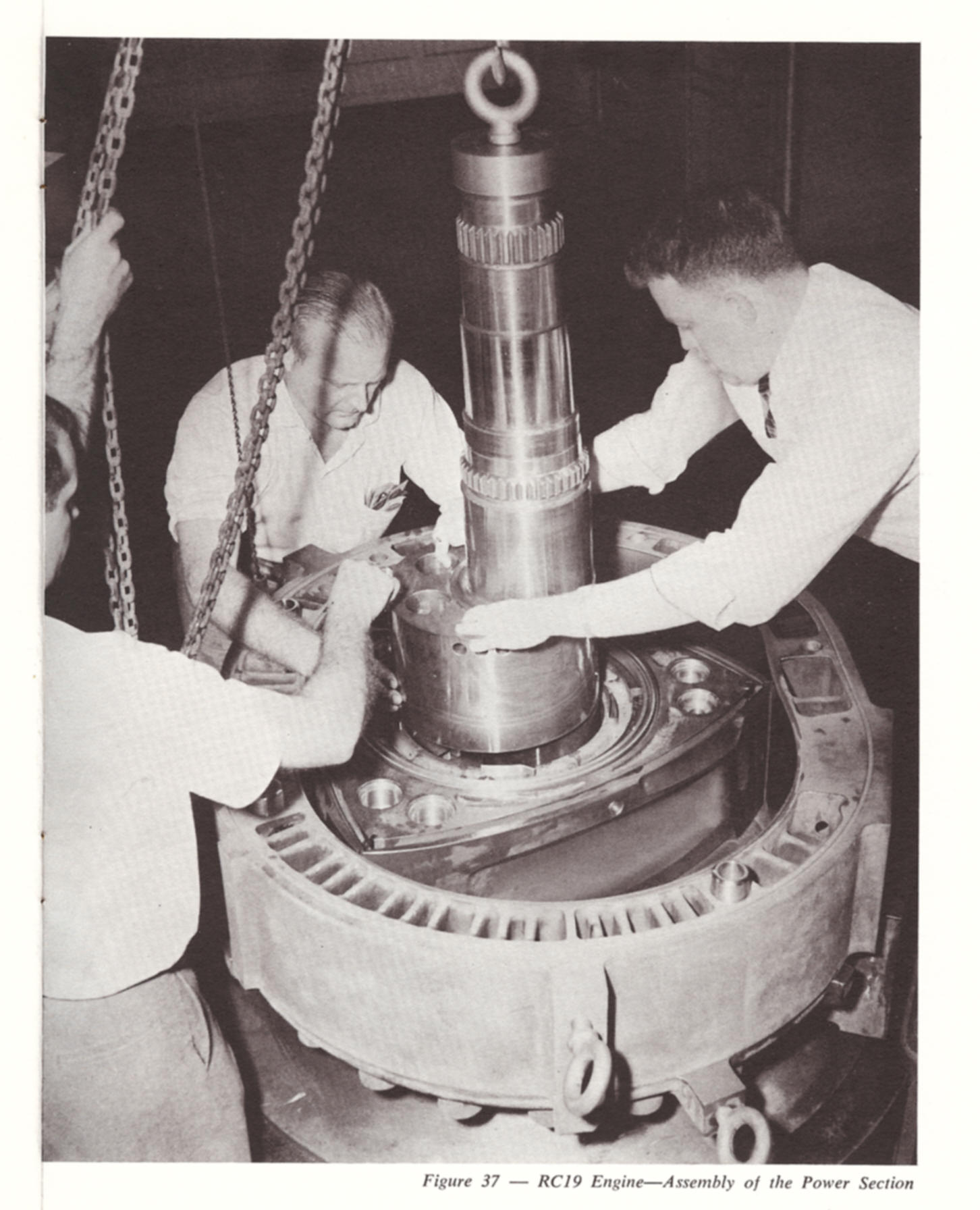
Question, can certified engines abandoned by failed manufacturers be built
new by another company if they follow the specifications of the original
manufacturer and still pass as Certified FAA under the original type
approved design ( weather home built kits or sold to general aviation
airframes ), has it ever been tested in law? Guessing more than one design
still has some commercial value even all these years later...
Kevin responded,
If I understand correctly, anyone can buy the type certificate, tooling etc
for certified aircraft and parts- however- they would have to go through
the certification process as a "facility" to get FAA-PMA certification.
This stands for FAA Parts Manufacturer Authority certification. Aviat
bought the type certificates for the Pitts planes and manufactures them-
but Aviat is already a certified manufacturer and has FAA-PMA
certification.
So I would say the answer is yes- if you have the time and $$ to make it
happen.
As far as the comment about replacing the engines on the Apache with rotary
engines- here is what I know. I have a Bellanca Viking with an IO 520D that
recently gave up 2 cylinders. Because of 2 ADs, it is not feasible to
rebuild this engine. So I have an excellent certified plane, and to get it
flying again will cost around $35,000.00. Because of 2 cylinders.
I contacted the local DAR and asked about non-certified engines. He said
that I can apply for a certificate to allow me to install non-certified
engines on my plane "for testing purposes only". Its called a test program
and begins with a long Program Letter outlining the procedures, equipment
and testing requirements. I would be limited to class C or below airspace,
to not more than 40 miles from the home airport, and the cert would be time
limited. Also, no passengers not "critical" to the flight. Meaning if I
need someone to monitor gauges, equipment etc they can go. Other than that
its solo. At the end of the Program, the engine is either certified or
comes off and the certified engine is put back on. Before the engine can
be certified, it has to go through its own certification process- including
PMA manufacturing certification for whoever makes it and all of its parts.
The DAR said is was easier and much cheaper to buy another plane. As far
as the rotary goes- I am building a Wheeler Express. He said that I could
install the rotary on the Viking under the Program, and get the bugs out of
it if I wanted to go through the process. Then the engine is fully tested
when I put it on my plane. However (that word again) this would not
alleviate the 40 hour requirement for the new plane since it is
experimental and will have an experimental engine and prop. Theoretically,
if one has the data plate and certification information for a plane, an A&P
can rebuild the plane. If it passes inspection by an IA, its airworthy.
So, without the data plate and certification information, its not a
certified plane anymore. I would think that a person could go to an
aircraft salvage yard, grab up a fuselage, wings and tail and put
together an "experimental" plane. You would have a lot of trouble with the
51% rule and it might be akin to suicide, but...........
Kevin Alderman
N4839V
Why I asked if a FAA Certified Engine can be manufactured under the
original qualification is that I remember searching for information about
the Wankel Engine years ago, and seeing a development program by
Curtis-Wright, if I remember manufacturer correctly. If Curtis-Wright had
a FAA Certificate for aviation production of the wankel engine, would it
not be commercially viable to make new production certified engines under
that certificate? Of coarse given you can obtain the rights from whom ever
holds Curtis-Wright's assets.
GFCurtis Jr.
I understand. I would assume that one could buy the Wright info and
licensing, and proceed through the certification of the engine. However,
all the info I can find says Wrights work was done in the late 50s. This
puts you where I am with my Continental IO520D. My engine was certified
sometime before it was installed in my Viking in 1968. To remain certified
it must comply with the
*original* type certificate. However, there have
been several ADs, 2 of which are causing me heartburn. One was on the
crankcase- I have replace the crankcase with one that has been STCd for my
engine. Apparently there have been issues with cracks in the series of
sand
cast crankcases like the one I have.
The next big issue is my non VAR crankshaft. I cant re-use it. So, I have
to use an STCd replacement at a cost of over $8,000.00
All of this to keep an engine designed, certified and built before I was
born flying. Bottom line for me is it will cost me over $30,000 to replace
my engine with an engine designed before I was born. I wont do that. There
is a reason that in 1968 cars rarely made it to 100,000 miles, and I drive
a truck with over 200,000 on it. My boat engines have over 8000 hours on
them. For those that dont know, boats are much like planes except my HP is
always at sea level. I get in, leave the dock and push the throttles to
1900 RPM and run out 1000 gallons of fuel before stopping. My generators
run at 1800 RPM under 80% load, and routinely go 20,000 hours before
replacement. Equipment built in 1968 doesnt normally do this.
If one were to buy all of Curtis Wrights rights, tooling, certifications
etc, you would be in effect buying world war two technology. Certification
of an aircraft engine means everything in it has been tested and
certified-
the alloys in the metals, the casting process (VAR in my crankshaft is a
manufacturing process, and the issue with my crankcase has been traced
back
to the sand casting instead of newer casting techniques), manufacturing,
milling techniques, etc. And like the hospital where my wife works-
average
of 6 patients and over 30 administrative staff the manufacturing plant
would be more of a library than a plant.
And dont forget the Product Liability Insurance and the legal fees. I read
a report about Cessna that stated that 1/3 of the cost of a new 172 was
directly related to Product Liability Insurance and legal costs. Thats
almost 100K per plane. Do you really want to jump into that world?
My personal opinion is this- we need a FWF progam for homebuilders. Some
of us enjoy taking all of this time and researching everything, some dont.
I have been to see Tracy and learned quite a bit. Tracy takes a much more
conservative approach than some others do. But in his case he can. His RV6
has a 3 rotor 20b in it, a simple intake, and other simple no frills
components that work well together. However, his installation requirements
differ from mine. His max T/O weight is less than my empty weight. I am
building a Wheeler Express- similar to a Lancair ES. I want performance
similar to my 300HP Viking, with a 13 gph fuel burn at 165 kts. My old
Viking can do it, this should as well. To avoid the product liability
issues, we may not supply complete packages, but an information package
based on known flying planes that can in effect say "this works" would be
helpful.
As a group, I see rotaries in RV4s, RV6s Lancairs, Velocities, seaplanes,
and others. As a group, we have some talented machinists, engineers and
Guru Paul, master of things rotary and Linux.
As a group, we have Tracy- a pioneer in this field with 2 working planes,
a proven PSRU, and a proven ECM.
We need to work together to come up with a sort of *standard *
installation. Before you attack me, I am aware that every plane is
different, however, from what I have seen so far the biggest issues facing
us deal with keeping the top under the cowl and cooling. The same issues
certified manufacturers face. And we are more than equipped to work those
issues out. Paul does an
excellent job of dealing with the height issues with his engine mount
drawings. One problem almost solved.
We as a group would be much farther along to apply our efforts to
combining our knowledge into an easy to access location for us as well as
others that are interested in alternative power for our aircraft. As it
is,
it seems that we all are working on "our planes" individually.
Individually
we are a drop, together we are an ocean. Lets act like a wave and all head
the same way.
And a thanks to Paul- after years of working only with Windows and
purposely avoiding Apple and their restrictions, I installed Linux Mint on
one of my computers, and Ubunto on one of the others. The learning curve
was not too steep, and I am learning more daily, and having fun exploring
the programming. I should have done this years ago. Now I will start
working on an interface with my Toshiba tablet for the plane.
Just my .02 worth.
Thanks again Paul- I learn from you and the group everyday.
Kevin Alderman
Kevin,
I guess that I need to cut to the end question here, my thought was that if
Curtis-Wright had a FAA Certified Rotary Engine, yes with old school
technology. That whom ever was bringing back the engine could apply for
changes in manufacture techniques/design, and FAA Certify the new
components.
And as you say Kevin engines now can be made better as per your statement
"If one were to buy all of Curtis Wrights rights, tooling, certifications
etc, you would be in effect buying world war two technology. Certification
of an aircraft engine means everything in it has been tested and
certified-the alloys in the metals, the casting process (VAR in my
crankshaft is a manufacturing process, and the issue with my crankcase has
been traced back to the sand casting instead of newer casting techniques),
manufacturing, milling techniques, etc."
What I was working up to Kevin is that having a U.S. based FAA Certified
Manufacturer of a Wankel Type Rotary Engine would benefit our efforts. I
fully see what Paul and others are doing here said by Kevin "as a group
would be much farther along to apply our efforts to combining our knowledge
into an easy to access location for us as well as others that are
interested in alternative power for our aircraft. As it is, it seems that
we all are working on "our planes" individually. Individually we are a
drop, together we are an ocean. Lets act like a wave and all head the same
way."
If I can bring in my experience years ago working for the first software
sales company, selling Micro-Computer software, Software Centre
International, we had the Apple II, Atari, Commodore Computer, IBM PC,
Macintosh, and various CP/M (lets not leave out Unix based ones) computers
to supply software too. Thus having a common operating system was the Holy
Grail of software users, followed by standard backplane/CPU card slots,
translate that to common dimensions for our various Wankel Rotary Engine
manufacturers.
I think that we could vastly help our goals here if Mistral, Mazada,
Curtis-Wright or whom ever had control of their rights, would create a
critical mass having common standards, as IBM PC's changed the
micro-computer industry with open architecture.
That opens the kit builder to using rotors from say Mistral, built lighter
than a Mazada rotor in his kit plane to achieve lighter overall
weight/durability, or say a output shaft from a Mazada 20B in a 3 rotor
Mistral, thus De-Certifying the engine in an experimental build. Each
manufacturer, and other after market manufacturers like Tracy's PRSU's,
contributing to a common dimensional standard, varying materials (testing
new technologies, methods, designs, equipment (i.e. aerocharger)), while
supporting a common platform.
My apologies to all if this topic has been posted in the past...
GFCurtis Jr.
As far as I know Curtis-Wright never certified an engine.
Don't bug me about where these engines are as I am sworn to secrecy.
Paul Lamar
Its interesting that this mockup is labeled as 2900 HP @ 3600 RPM with 5
rotors. Appx 600 hp from each rotor at only 3600 RPM. At this speed the
rotor speed is only 1200 RPM. I would expect a good service life from it.
Diesels usually have long lives because of the lubricity of the fuel, and
the slow speeds that they make. My truck makes 335 HP at 1700 RPM. Some of
the tug boats that I have been on make 3000 HP at 900 RPM. Yep, WOT is 900
RPM and 3000 HP. Not uncommon to go 20000 hours before any major anything.
Paul said not to bug him about the location, but I could swear that is his
RV in the background. Maybe someone close needs to check his
hangar............. He might be holding out on us. [?]
Kevin Alderman
These are BIG rotary engines but not as BIG as this one.
1500 HP per rotor as I recall.
Paul Lamar
--
The Rotary Engine NewsLetter. Powered by Linux.
ACRE NL web site.
http://www.rotaryeng.net
Youtube key word PaulLamar2
Copyright 1998-2011 All world wide rights reserved.