Paul:
Reading all your posts on EFI systems and GPS intefacing has kept me
thinking about what might be the best operating system to use if one
wanted to create an entire home-brewed glass-panel display.
I ran the idea past my wife's cousin, who is now retired from a
position
as a programmer for some Silicon Valley hardware developer. He
suggested a look at TCL (pronouced: Tickle)
He sparked my interest so I've been hacking around with it for the last
couple of day. The weather has been snowy/rainy and we occasionally
have up to 3 dogs and 8 grandchildren under 8 years of age ramming
around the house, so hiding in my office is often prudent behavior :)
I first explored methods using TCL GUI tools to draw the panel
instrument (which I've done with the vertical gauges on the bottom
of my
panel). I then decided that displaying images of real instruments was
a faster/prettier way to do it. I can now simulate the appearance of
most anything on the screen.
I now need to figure out how TCL can be used to read an external
data-source.
I will probably test it by having it read test-numbers from a simple
external data file, but according to claims from online sites, I should
be able to read data from most any data port as well. That is my next
project.
This is one of my most recent panel displays.
Robin Bergland
Robin,
This is very impressive and very nice appearance.
SUGGESTION: include an attitude indicator, and layout the "clocks"
in the
standard T layout.
Philippe CHENEVIER
Can TCL be used to program a Honeycomb tablet?
Tablets have build in gyro's.
Paul Lamar
I believe JAVA is the only programming language supported except
native mode. So basically no. But we can use TCL with Ubuntu or Linux.
Henry
Unfortunately the notebooks that support Linux do not have build in GPS
or gyro's. The GPS is easy to fix as there are several USB GPS's. I have
it working
in Ubuntu 10.04 but the gyro is more of a problem.
There must be merge bewtween Android Honeycomb and Linux sometime soon.
"A microelectromechanical system (MEMS) is an embedded system that
integrates
electronic and mechanical components at a very small scale. A basic
MEMS
device
consists of an ASIC and a micro-machined silicon sensor. The AGD1 2022
FP6AQ chip
found in the iPhone 4 is a MEMS gyroscope designed by
STMicroelectronics."
Apparently these come in two version. One is designed to be embedded
into
the memory
map of a computer and the O.S. (Android Honeycomb) must be written to
access it... I think.
My guess Android Honeycomb does this as does the I-pad.
The second one is a standalone 3 axis analog output probably used in toy
helicopters.
Here is a pdf. The AVRXplain $30 PC board could be used to convert these
three analog outputs
to a USB signal.... Perhaps..... If we are lucky. See gyro the data
sheet
pdf.
BTW there could be a market for a stand alone attitude gyro using
this PC
board and a gyro
chip and an OLED display. Piece of cake after you learn AVR asm
language.
Cost would be well under $100 while stand alone electro mechanical
gyro's
are $1000 to $3000.
Paul Lamar
You could be on to something with the small gyro- I cant believe I didnt
think of it. My model helicopter has a single axis gyro for yaw. My first
one was a real spinning gyro, the second iteration is a little more
sophisticated. It uses a fiber optic cable wrapped around a tube oriented
in the direction of the axis. The chip reads the "red shift" of the light
frequency to know when the helo is rotating around its rotor.
There should be no reason this $100 component cant be used (or 3 of them)
in an A/C to provide real time gyroscopic input to the control or
monitoring unit. The unit on my toy helo uses a simple 3 prong plug- 7.2
volt +, 7.2 volt - and a signal out. The signal out increases or
decreases
in voltage depending on which way I forgot to add rudder when I am
flying.
Kevin Alderman
Got any references for that fiber optic cable wrapped around a tube?
I am ignorant of that device.
The solid state attitude gyro uses the microcomputer to integrate a rate
gyro such as a MEMS device. About ten years ago, I as I recall, Goodyear
had a both at OSH with a demo unit. At first I was impressed. Then I
picked
it up and shook it. It lost horizontal reference. The engineer in the
booth was
a bit upset that I did that. He claimed one did not see that level of
turbulence in
a real aircraft.
IMHO combining the GPS with the rate gyro info can produce a good
attitude
gyro and is not out of the question for an experimenter on here (once one
learns AVR asm :)) to build using a cheap $30 microcomputer board
with A to D's.
Assuming for the moment the throttle is fixed and the
GPS speed is increasing the aircraft is diving. If the GPS is telling you
there is a heading change and the readings for the yaw rate gyro and
roll rate
gyro are significant you know the roll angle assuming a coordinated turn.
One can then get data from the ball in a turn and bank in an
uncoordinated
turn. If the GPS says there is no speed change and and no turn you are
obviously
flying straight and level. Other parameters that could be monitored is
the manifold
pressure and RPM to detect a change in power.
The basic idea here is take data in from multiple sensors (not just
the rate
gyro's) and use logic and reason to determine what the pitch and roll
angles are.
The classic mechanical attitude gyro uses only one sensor, namely the
spinning flywheel.
Paul Lamar
Paul,
I know very little about the technicality of your project but I read it.
I have an Ipad and I downloaded an application called Spyglass, it's a
gyro that gives you heading and attitude and seems to take accelerations
forces into account. Might be worthwhile to have a look at it.
Raymond Lambert
Yes there is some good software for moving maps for both the Mac and
Android tablets.
Check out WingX on the Mac tablet. WingX combines attitude information
with moving
map for a virtual reality experience or "Synthetic Vision"
http://www.hiltonsoftware.com/
http://www.youtube.com/watch?v=bP9AqNnyxKE
http://www.youtube.com/watch?v=mIMSFOwXhYA
http://www.youtube.com/watch?v=CkZIx1659L8
What most people on this thread should be talking about is engine
monitoring for the tablets.
This will take an external single chip board like the $30 AVRXplain to
convert the output from the sensors and send it to the tablet by way of
the USB interface.
Paul Lamar
Paul, was it difficult to get Linux running on your [Android Honeycomb
tablet] epad?
Kevin Alderman
No I did not try. Henry Nee (as I recall) told me it was not possible.
Linux does not support GPS or gyro's directly anyway. Android and Mac
O.S.s do so that makes sense.
If you wish to do that you will need a USB GPS and USB gyro.
Linux will probably run on an Asus EeePC net book which is cheaper
($259)than
a ($400) 10" tablet anyway. It runs on my Asus EeePC 1000. It also has 3
USB ports while the best of the 10" tablets only have 2.
To use it in an aircraft you can probably disconnect
the screen from the key board or just get a small external monitor.
Both screens work when running Ubuntu 10.04. My external USB GPS
receiver is working on the netbook.
Of course it is much easier
to program as there are half a dozen different free programming languages
available for Linux Ubuntu 10.04 while the tablet can only be programed in Java
as far as I know.
------------------------------**---------------------
CDW
ASUS Eee PC 1001PXD Seashell - Atom N455 1.66 GHz - 10.1" TFT
Atom N455 / 1.66 GHz - RAM 1 GB - HDD 250 GB - GMA 3150 - WLAN :
802.11b/g/n
Windows 7 Starter - 10.1" Widescreen LED backlight TFT 1024 x 600 ( WSVGA
)
camera - black with Unlimited ASUS WebStorage (60 days trial)
MFG #: 1001PXD-EU17-BK | CDW #: 2312231
Availability
In stock and ready for shipment. Ships same day if ordered before 4pm CT.
$259.99
------------------------------**---------
Henry tells me the HD in the Asus net book can be replaced with a solid
state version. HD's don't like high altitude as the head "flies" over the disk.
At a given RPM the head might crash due to lower air density.
My Asus EeePC 1000 already has a 40 GB solid state drive and last time I
checked it was $720. 8 hours of battery time. I bought it several years ago and it
was nowhere near
that expensive then. Believe it or not the price is going up on the solid
state drive version :)
Paul Lamar
On the android app store there is an app for "rooted" android devices that
lets you dual boot with linux.
I have a Toshiba Thrive, android 3.2. I am planning to root it and dual
boot the linux to it and see what I can make it do.
The ultimate plan is this- Use one of these or similar to monitor the
engine, electrical, etc. and the other as gps. Both will be programmed
exactly the same. There are several promising GPS programs for the Android,
and either a Java or C program for the linux system and we are in business.
I would likely use a dedicated unit for the engine PCM, with a backup for
this as well. For the moment I have looked into Tracys PCM, but that may
change before I get to the end.
I have (2) 12 cylinder diesels in our boat, and the first test will be to
assemble a system to monitor these. Currently the boat engines have all
mechanical gauges, so comparison should be easy.
As far as the plane, I am big on redundancy, so if both are dual boot and
one fails, no problem. 2 tablets, 2 OS's, and complete redundancy in the
system.
Thats the plan anyway.
Kevin Alderman
That sounds cool. Let me know if that works. I'll do it to the wife's
Asus Transformer :)
Paul Lamar
I just did the second iteration on Tracy's PCM module.
I did not like the DB15 connection so I used these.
DB sub min's are too hard to solder IMHO.
These screw downs are very robust indeed.
The same connectors are used on the AV8 I have.
I don't have the actual PC boards yet but here is a screen capture.
It is about one inch high and 2 inches wide. Not enough room
on the RV4 panel for Tracy's stock PCM so I did this one.
Also the thumb wheel switch is larger and ten times easier
to read IMHO :).
The pots and toggle switches can be located anywhere on the panel.
Paul Lamar
Paul,
I am back from a trip to remote areas in China. I like to point out that
Linux is underneath Android, so it is possible to run Linux on any Honeycomb
hardware. Problem is we need BSP info which is not readily available.
However, IMHO folks at Ununtu has a version for Tablet so that may be worth
exploring. We can combine TCL with Honeycomb hardware for a glass panel.
Henry Nee
Welcome home Henry.
What is BSP info?
Paul Lamar
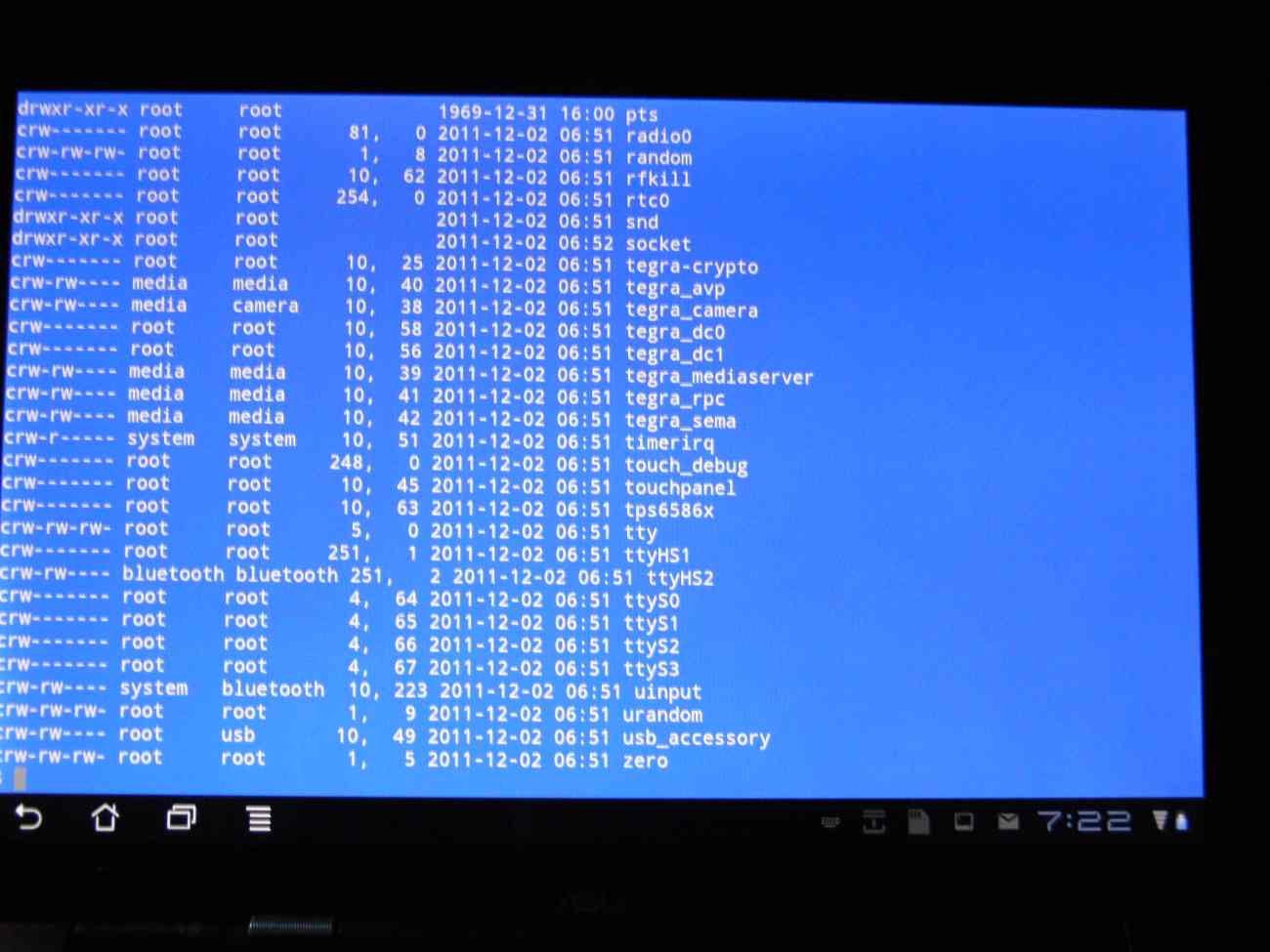
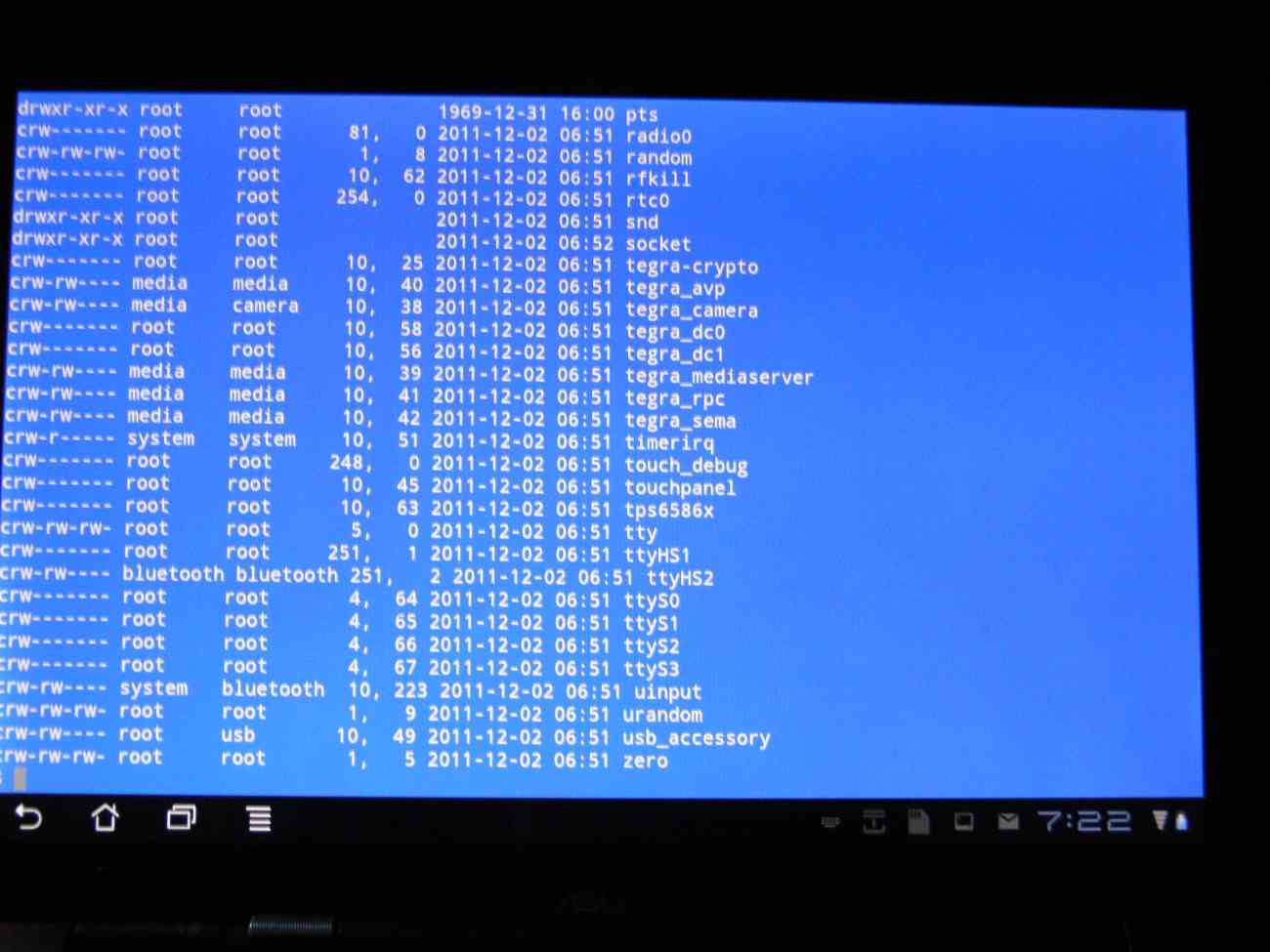
I think we need additional clarification on the Android tablet O.S.
I found a terminal program similar to the terminal
program running on Ubuntu 10.04.
I does appear to be a Linux command line running in a window.
On Unbuntu I can run a command line program called joe in a terminal
window. It is an old DOS Word Star clone.
http://joe-editor.sourceforge.net/
My guess is if you have a command line program
written in TCL it should run on an Android tablet in the command
line window. I noticed there are additional sub directories in Android
that are not in Ubuntu Linux. What they contain at this point I have no
real idea. I suspect they have something to due with the additional
hard ware the tablets have over a desk top PC running Linux.
Here are some jpgs of the tablet screen in command line mode.
Some have the tegra name.
http://www.nvidia.com/object/tegra.html
If somebody can get this to work.... 2 Android tablets, one running
an engine monitor and the other running synthetic vision (wingX) would
be a revolution in low cost cockpit instrumentation.
Paul Lamar
The Rotary Engine NewsLetter. Powered by Linux.
ACRE NL web site.
http://www.rotaryeng.net
Youtube key word PaulLamar2
Copyright 1998-2011 All world wide rights reserved.