I am about to begin drilling P ports. Based on the dimensions given on
your
main site, it appears the ports have an angle of approx. 5.5*, sloping
down
into the housing. Is that how it is being done? It appears from some of
the
photos, that the holes are perpendicular to the vertical machined surface
of that side of the housing.
Most of the photos of aftermarket p ports show them at a considerably
steeper angle, and that after having had the ports threaded into the
housing.
Is there any reason I should not use the 5.5 degree shown on the drawing?
Ed Carver
We are not bothering with that. We are getting plenty of power going
straight
in. So far 250 HP is destroying stock flex plates left and right :)
IMHO straight in is best as the air must turn up as the rotor moves away
from the port.
IMHO angeling it down is not the way to go.
However the racers have to get the last HP so it may or may not work for
them.
Dave Leonard bought this really expensive and heavy flywheel to run Reno
and then spent more bucks to have it machined to fit Tracy's damper.
As I recall it was seven pounds without Tracy's damper. We don't need
the clutch surface area.
Went 229 MPH in qualifying so he must have had at least 250 HP.
Paul Lamar
Paul,
I bored my p-ports straight in. That eased the design & fabrication of
the
intake, helping to keep things neat and compact.
Mark S.
Alright, straight is it. Now, do I follow the 8.55" dimension shown for
the center intersection point on the liner?, or use the higher dimension of
8.7"? Or again, the 8.6" dimension?
Ed Carver
I think we used 8.64 :) Your splitting hairs here :)
Anywhere in that range is fine.
Paul Lamar
It appears from photos of various p port installations that any coolant
that may have originally passed through that area is nearly completely
blocked. Aside from a little leakage around the tube, how much coolant is
needed to move around there if any?
Ed Carver
None. That is the cold side of the engine. The reason there are coolant passages
is an attempt to heat that side of the engine so the banana effect is reduced.
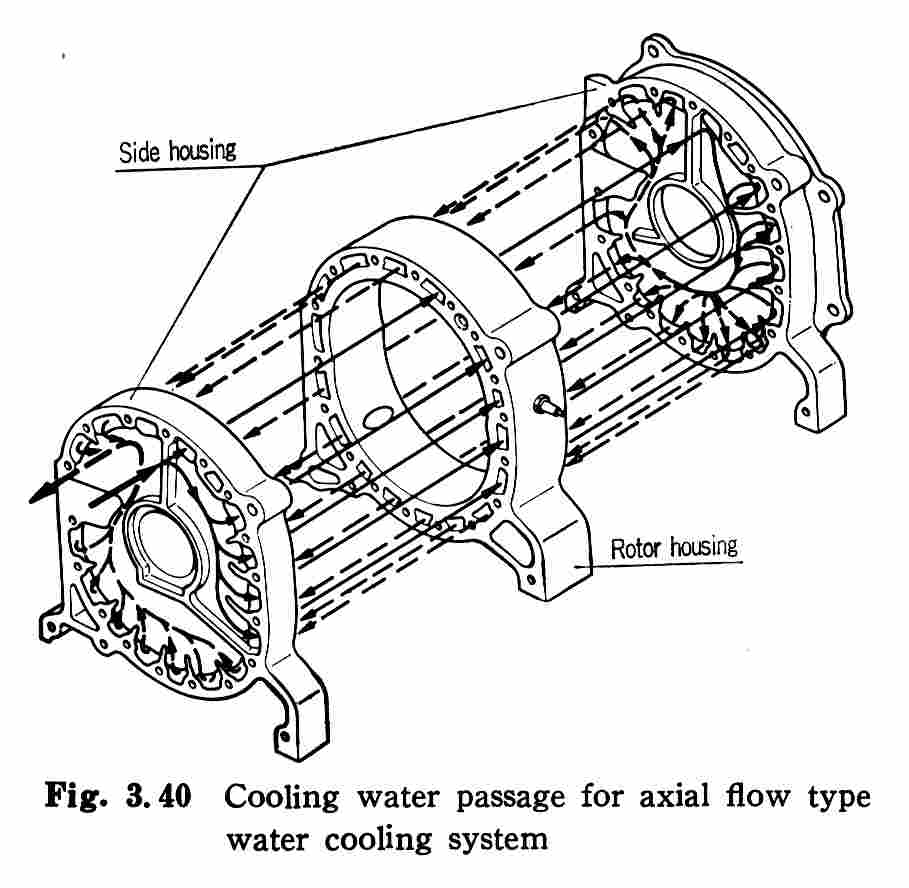
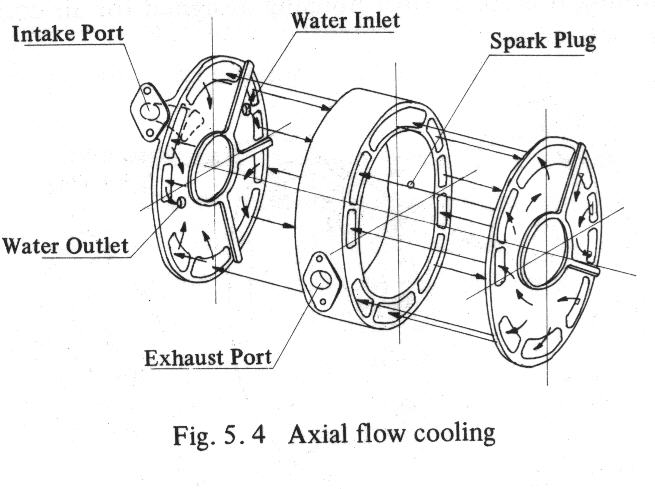
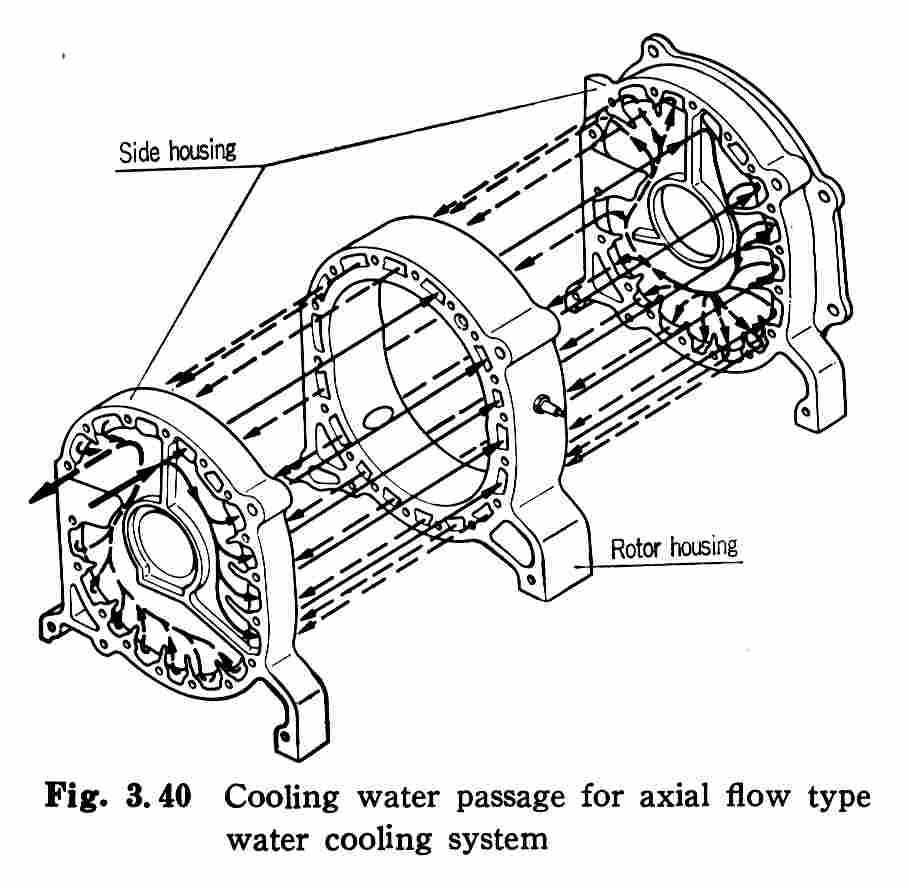
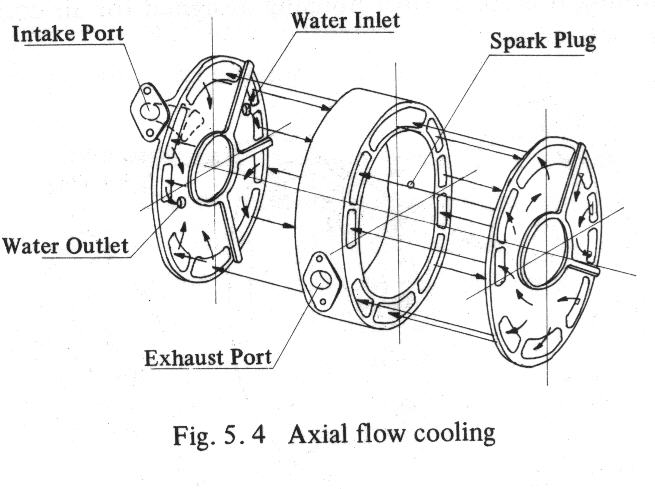
"Figs. 3.39 and 3.40 show the cooling water passages within the housing of
the circumferential and axial flow water cooling systems for the housing,
respectively.
In the circumferential flow type, the cooling water runs independently of
each housing, being capable of reducing the temperature difference between
the housings and suitable for multi-rotor engines such as 4-rotors, etc.
However, manufacture of the rotor housing is made difficult due to its
closed passage of cooling water. Therefore, in general, the axial type is
used for automobile engines.
The vicinity of the spark plug hole exposed to heavy heat load js provided
with ribs and fins effectively arranged for increasing its radiating area.
Higher flow speed of the cooling water also raises cooling efficiency. The
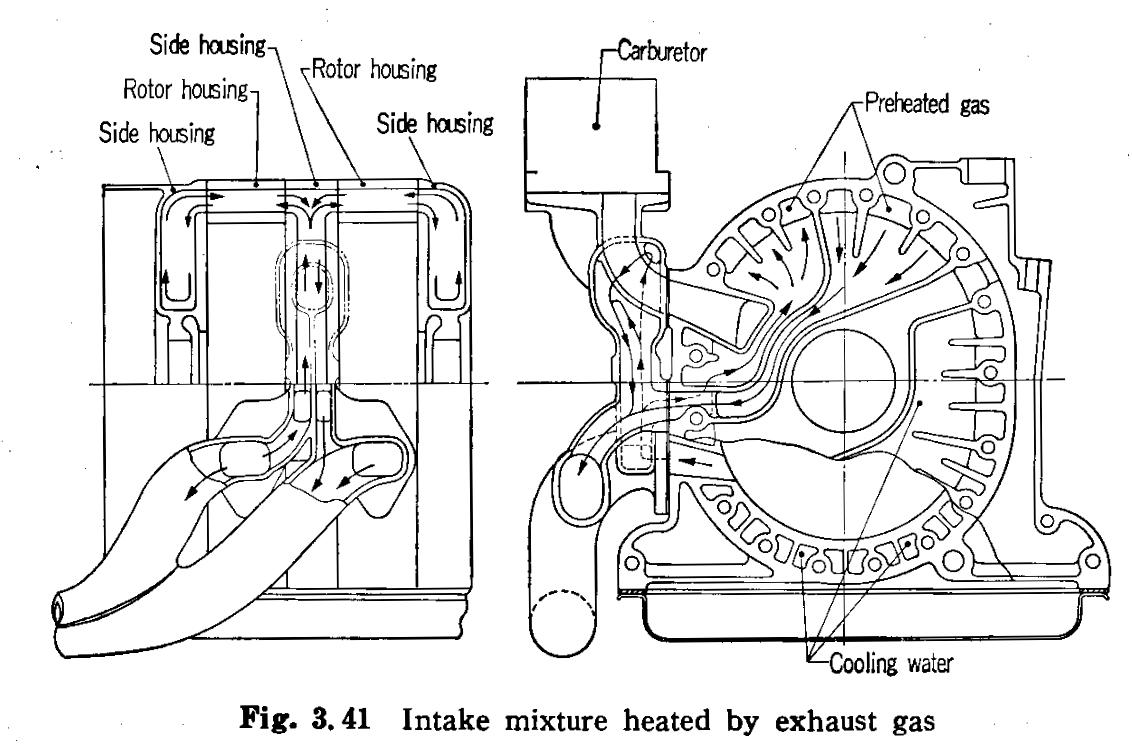
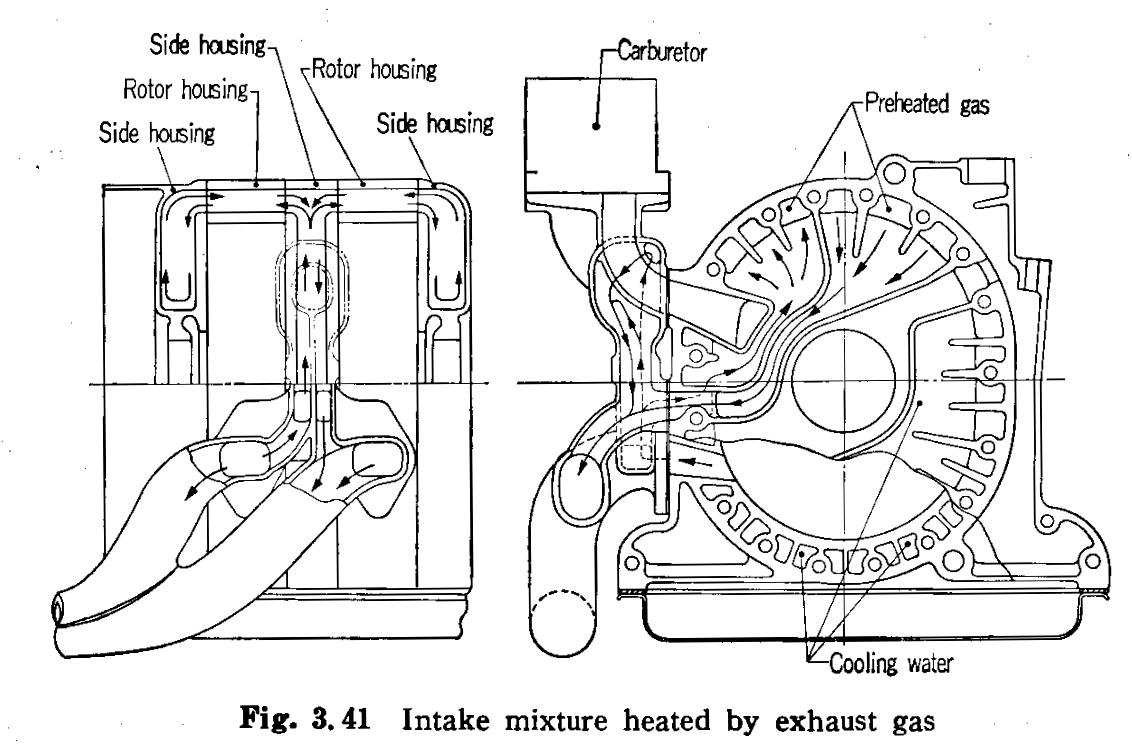
low temperature area in the vicinity of the intake port is rather heated by
the cooling water, instead.
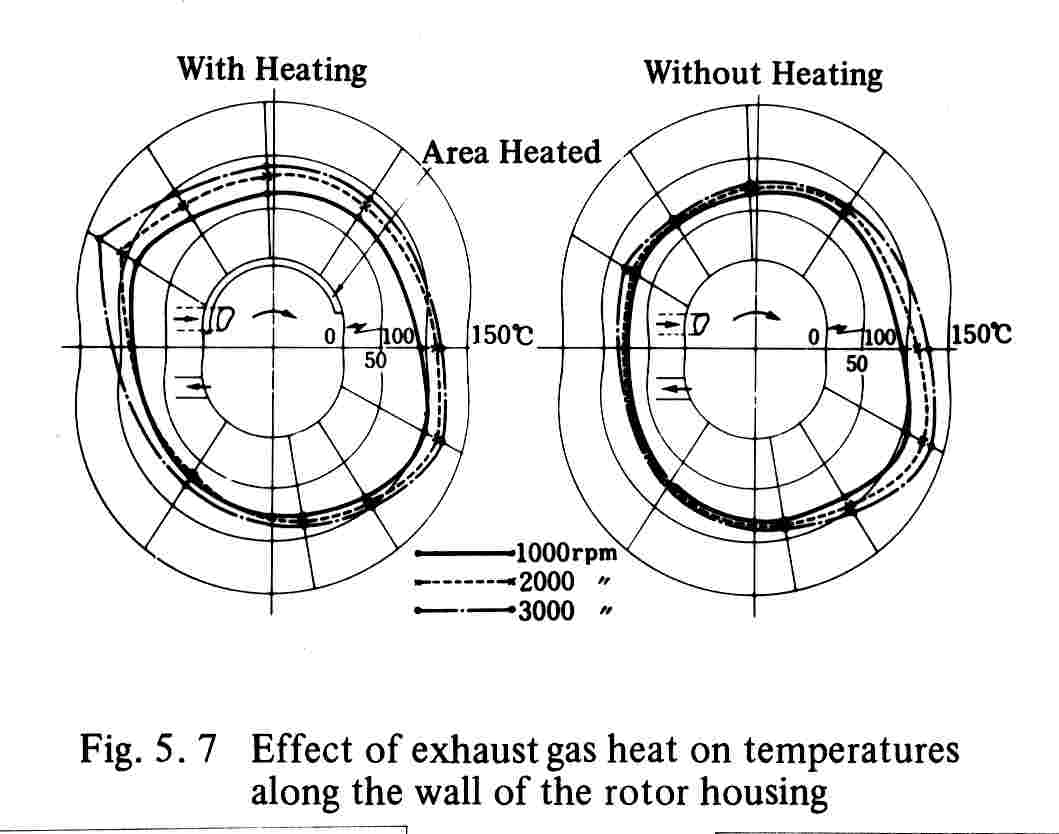
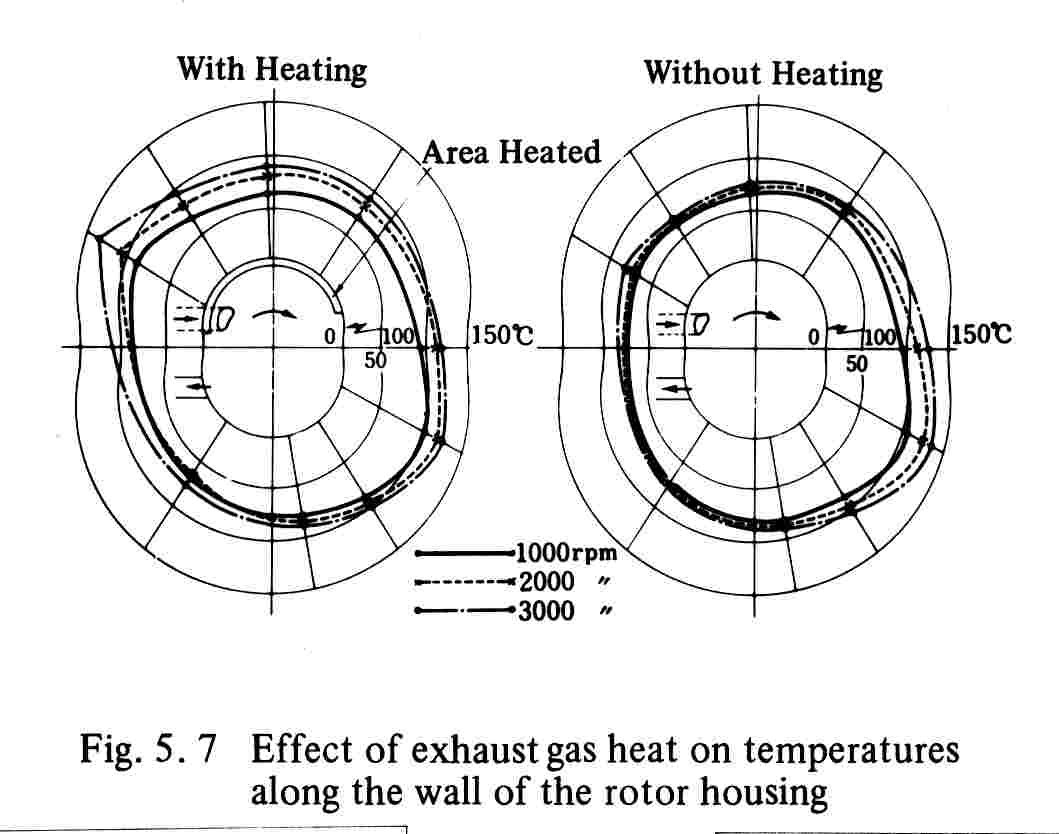
Thus, the wall temperature can be averaged over the housing and, at the same
time, the mixture is preheated to increase vaporization and atomization.
To raise such effects, high temperature exhaust gas may be further led to
the low temperature area of the housing."
I highly recommend downloading the Ken Yamamoto book Rotary engine from
this site.
http://foxed.ca/index.php?page=rx7manual
Paul Lamar.
--
The Rotary Engine NewsLetter. Powered by Linux.
ACRE NL web site.
http://www.rotaryeng.net
Youtube key word PaulLamar2
Copyright 1998-2011 All world wide rights reserved.
reducing the temperature difference between the housings and suitable for multi-rotor engines such as 4-rotors, etc. However, manufacture of the rotor housjng is made difficult due to its closed passage of cooling water. Therefore, in general, the axial type is used for automobile engInes.
The vicinity of the spark plug hole exposed to heavy heat load js provided with ribs and fins effectively arranged for increasing its radiating area. Higher flow speed of the cooling water also raises cooling efficiency. The low temperature area in the vicinity of the intake port is rather heated by the cooling water, instead.
Thus, the wall temperature can be averaged over the housing and, at the same time, the mixture is preheated to increase vaporization and atomization.
To raise such effects, high temperature exhaust gas may be further led to the low temperature area of the housjng.
�
Figs. 3.39 and 3.40 show the cooling water passages within the housing of the circumferential and axial flow water cooling systems for the housing, respectively.
In the circumferential flow type, the cooling water runs independently of each housing, being capable of
Figs. 3.39 and 3.40 show the cooling water passages within the housing of the circumferential and axial flow water cooling systems for the housing, respectively.
In the circumferential flow type, the cooling water runs independently of each housing, being capable of