Paul:
Just a general question here about the weight advantage of using
aluminum over steel in the various implementations of rotary engine
technology.
It seems to be a foregone conclusion that all prototype add-ons for
engines are to be made of aluminum (mounts, adapters, housings, and the
new large-diameter PSRU shaft). I sometime wonder whether the cost of
materials, exotic welding requirements, specialized tooling, etc.
required for making prototypes from aluminum is really worth the effort.
How much weight is really saved by using aluminum when one is required
to upscale the geometry of all components to get the required strength
from aluminum as apposed to steel?
I realize that finding the expertise and technology to develop
prototypes from aluminum in southern California is much easier that
where I live. As a high school kid I would melt down smashed up
vacuum-cleaners and such in our home's coal-fired furnace to make my own
simple aluminum castings. And that, I am afraid, is still my best local
source of foundry expertise and metallurgical resources. I can however
make/have-made most anything I need from steel by any number of local
companies.
Remember here ... I am questioning/talking mostly about using aluminum
instead of steel when building one-of-a-kind creations and
proof-of-concept projects. Is it worth it?
R. Berglund
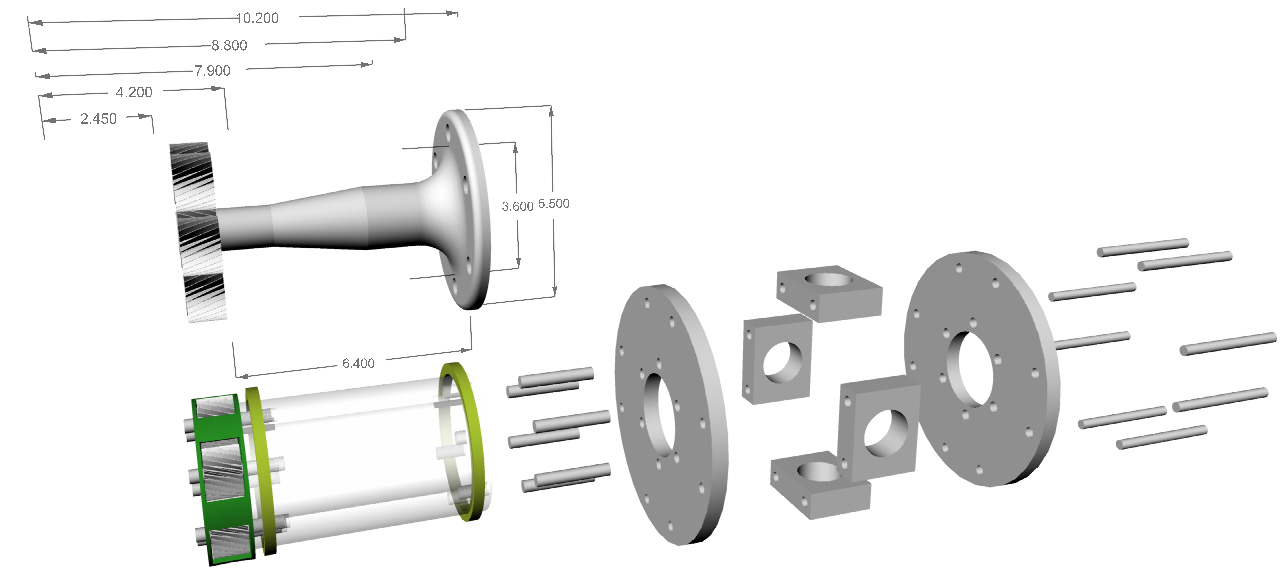
It is too hard to generalize like that. Take our new prop shaft for
example. The cost of a custom steel forging and machining the forging
out of steel is out of sight. A large dimeter machined billet aluminum
prop shaft is only made possible by a major breakthrough in thin section
bearings. Namely silicon nitride balls. The torsional and bending
strength of any shaft goes up with the diameter to at least the cube if
not the fourth power so it makes sense to make the prop shaft as large
in diameter as possible. The stress on the material plummets for a
given torque and bending load if the shaft is made larger.
The drawback to that, before high speed lite weight thin section
bearings, was the size and weight of old conventional steel ball
bearings. Tracy's front PSRU bearing alone weighs 3 pounds.
That also makes using lower strength, lighter weight aluminum shafts
possible while keeping the weight down. The same design in steel would
weigh three times as much. One must always keep the big picture in mind.
IMHO these ceramic thin section bearings are going to cause a revolution
in rotating machinery design. Already electric cars are being designed
with larger diameter axles with internal electric motors and planetary
gear boxes. Not practical before thin section hybrid ceramic bearings.
I would not be a bit surprised if Formula 1 racing cars were already
using large diameter axles with thin section ceramic bearings.
Paul Lamar
The Rotary Engine News Letter. Powered by Linux.
ACRE NL web site.
http://www.rotaryeng.net
You Tube key word PaulLamar2
Copyright 1998-2012 All world wide rights reserved.