Hi  Paul.

   1)  Aside  from   perceived  poor  fuel  economy  of  rotary
  engines, what  are  its  disadvantages ?

   2)  You  advised  carbs  and  magnetos.    Why  are  they  not  discussed
   here?
   Are  they  not  suitable  for  rotaries ?   If  suitable,   Let's
 have  more  discussions.

   3)  Can  there  be  carb  icing  in  tropical  countries  below  3,
 000 feet ?

   Best regards.
   Ben

   Fuel economy is only 5% higher than an aircraft piston engine.
 This is more than made  up for by the 25% lower cost of auto gas.

   Magnetos are suitable. They will work fine.  They are just too costly.
  $2000 each new
   and $400 to $800 re manufactured plus cores. People don't want to
 pay as much for two  aircraft magnetos as they pay for the rest of
 the engine. In some case much more than  they payed for the engine.
 RX8 ignition coils are $25 each for a total of $100. One  coil per plug.

   However if I were certifying a rotary I would use aircraft magnetos
   and an aircraft carb. The FAA is much more comfortable with that they
  they are with
   EFI and electronic ignition. In that case the rotary engine would pass
  certification
   in a heart beat.

   The best carb (cost verses power) to use is a two barrel 500 CFM Holley
  with a
   leaning kit.

   The FAA will not sign off on your carb engine unless it has carb heat.

   Paul Lamar

  Thanks  Paul.

  I'm  glad  there  is  someone  like  you  who
  has  the  knowledge  and  patience  to  answer
  our  questions.

  Can  there  be  carb  icing  in  tropical  countries  at  an
 altitude  up  to 4,000 feet ?

   Best regards.
   Ben

  At the higher altitudes for sure. The evaporation of the fuel in
 the carb venturi causes a cooling effect.

  Paul Lamar

 Paul,
 My Continental IO 520D has fuel injection- but it is a very basic system
 indeed. One inj per cyl, a regulator, and a mechanical "TPS". It
 looks like it all related back to the manual leaning valve and quite
 possibly the manifold pressure. This system seems remarkably like
 the old FI on the corvettes in the early 60s. Regulators and manual
 flow metering.

 Why would this be a difficult system for the rotary? Before I sell my
 Connie, I might inventory the system and see about maybe a prototype.

 Kevin Alderman

 http://www.vette-vues.com/parts_for_sale.html

 Early Power Sport used mech fuel injection.
 It is still sold for aircraft.
 http://www.airflowperformance.com/html/site_html.html

 Paul Lamar


  These early Rochester FI systems were not received well due to a couple of
things. The dual quad made more power the next year and the injection was very
sensitive to atmospheric conditions. It required almost daily tuning unless
someone really knowledgeable worked on it.
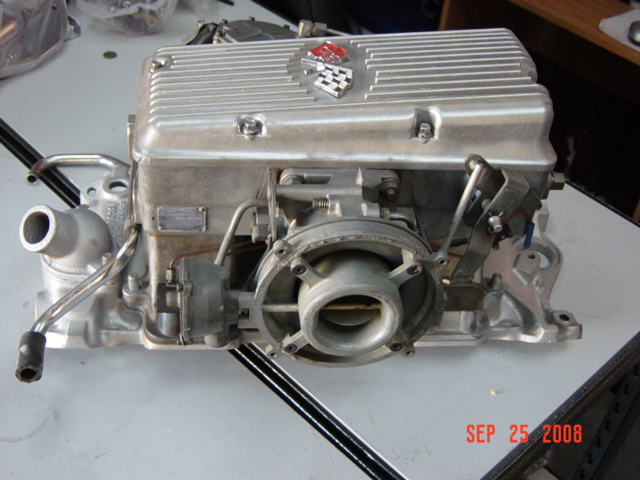
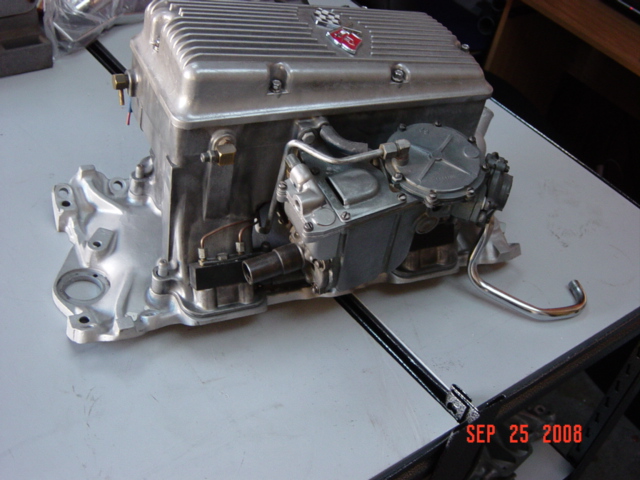
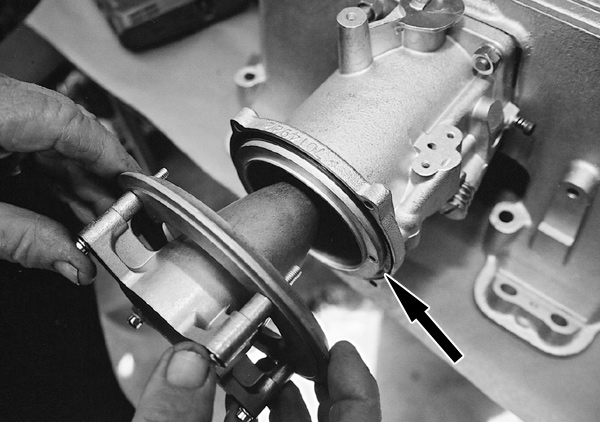
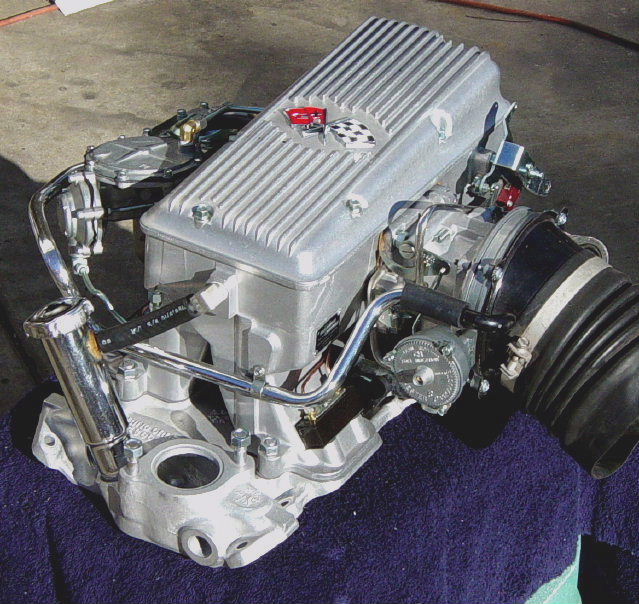
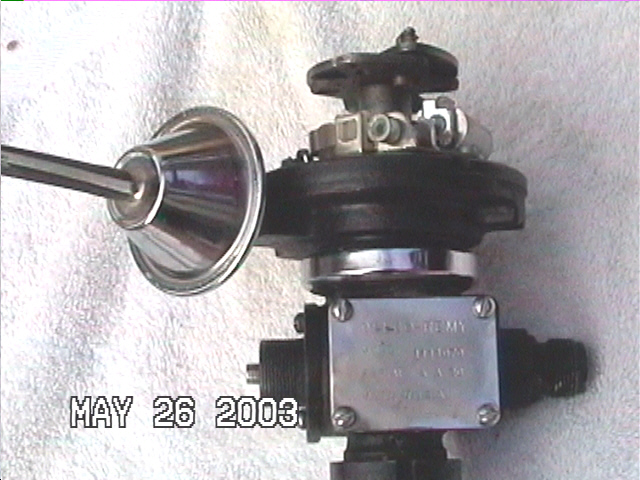
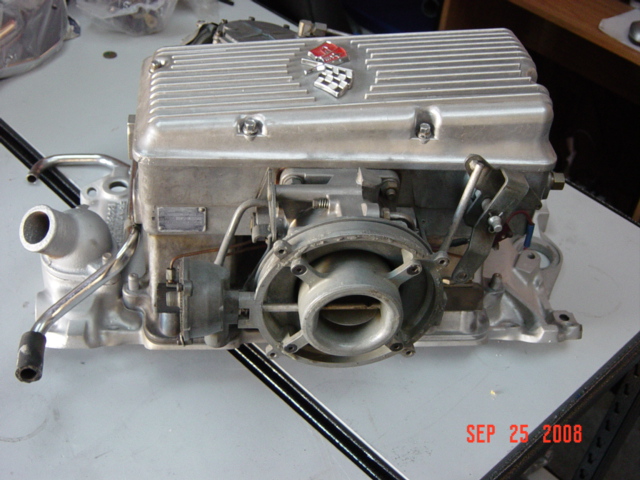
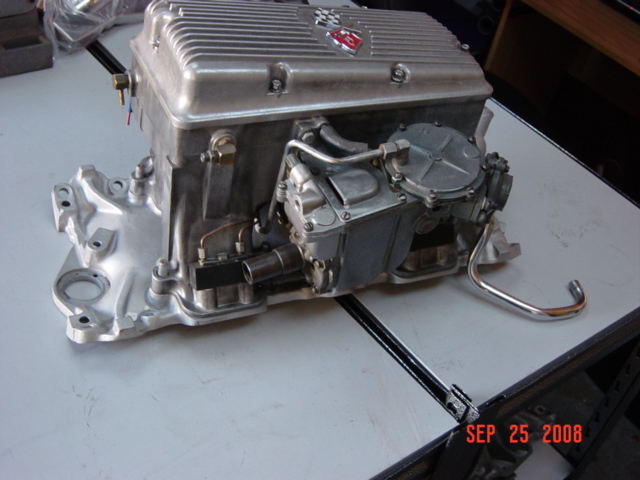
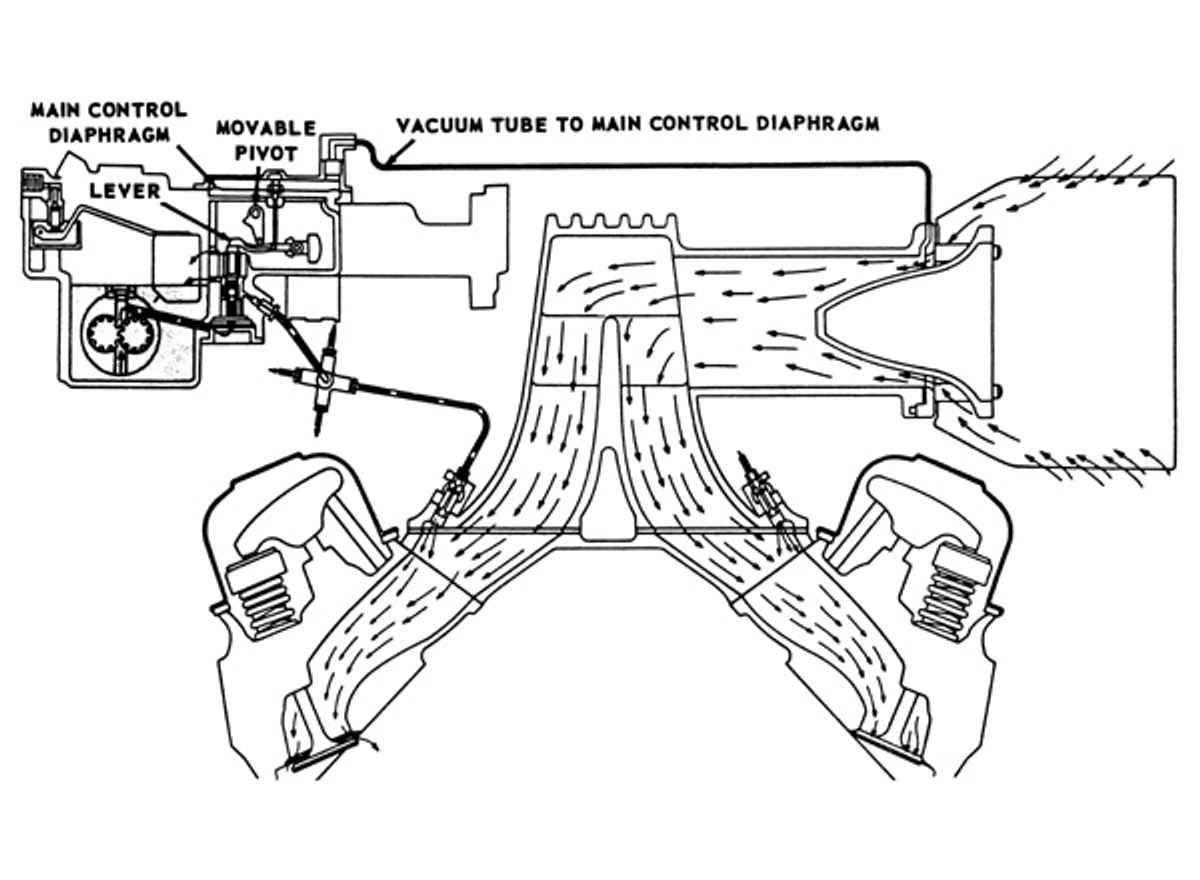
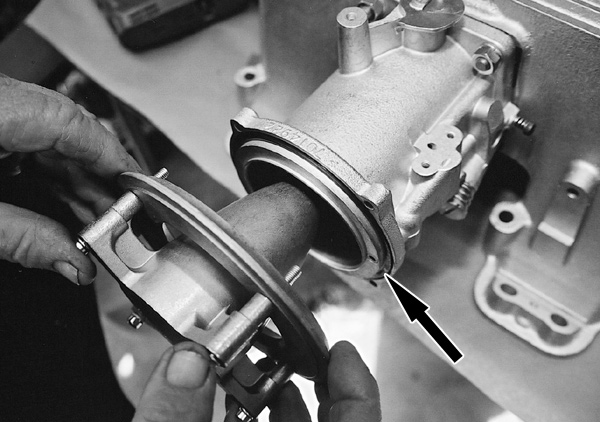
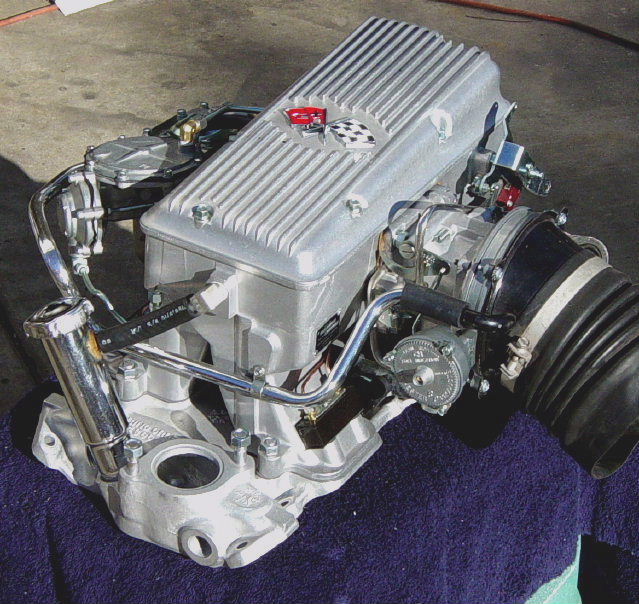
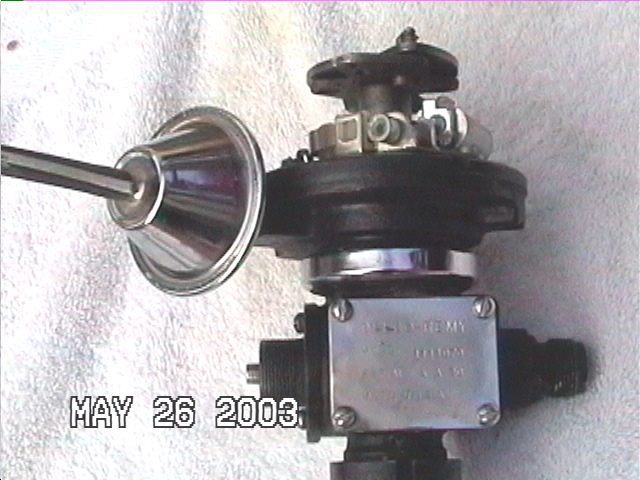
  Att 1.  The "throttle" in the center is not the throttle. It is the choke
plate.  The throttle can be more easily seen in Att 4.
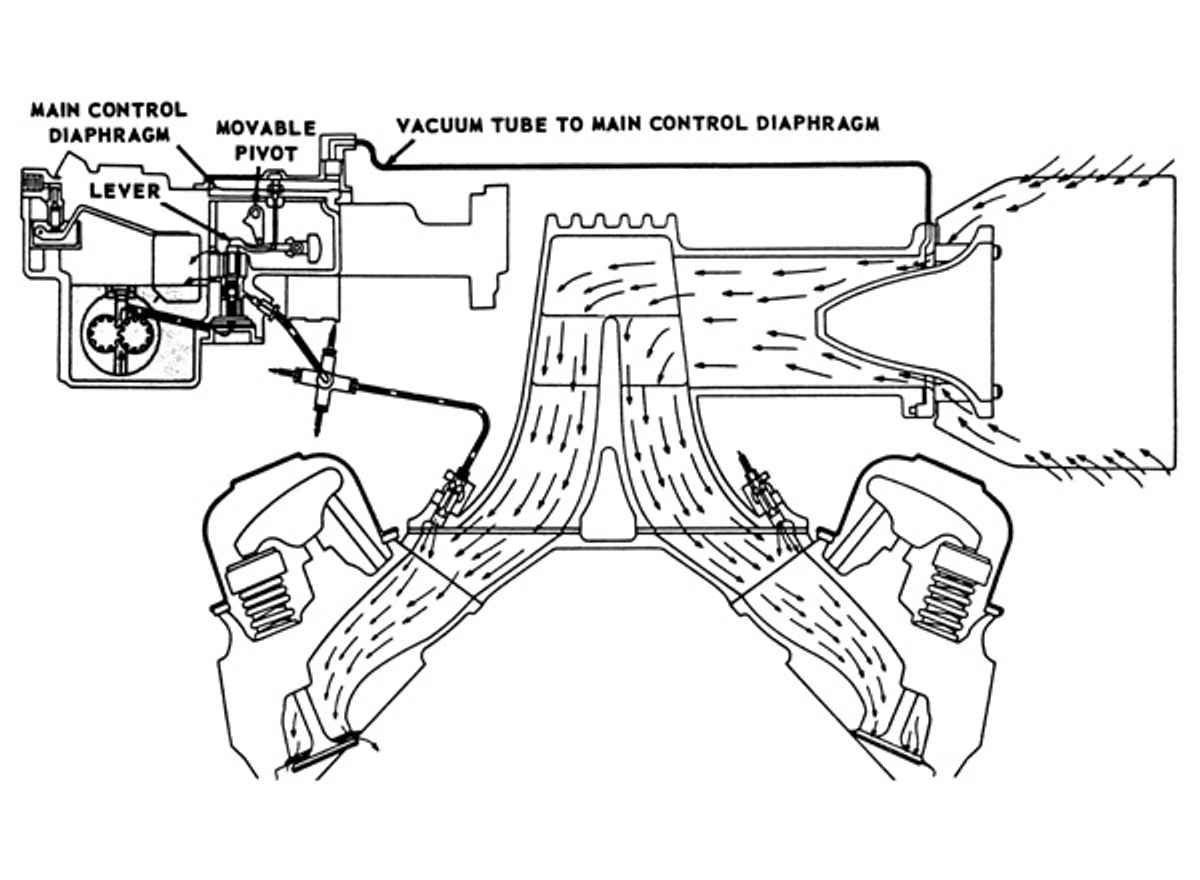
  This works similar to the Bosch/Volkswagon FI and the Mazda MCES systems,
that use a special volute and flapper to measure air flow. The Rochester used
the cone in the intake to create a pressure drop like a venturi. This was fed
over to the diaphragm to lift the metering "rod" to add fuel. At idle there
would be no "vacuum" on the sensing line. As the throttle is depressed, the
air flow causes a vacuum at the venturi and lifts the diaphragm. Different air
densities and humidity affected the fuel required which was not well
compensated for. The Mazda MCES works fairly well as the sensor is a form of
mass flow and is compensated with the computer. The Bosch also works as a
basic mass meter, but did not have a computer (Rabbit system. different from
K-jetronic).
  Any AC system will have compensation for atmospheric condition as a
requirement for altitude changes.

Dale Davies


--
The Rotary Engine News Letter. Powered by Linux.
ACRE NL web site. http://www.rotaryeng.net
You Tube key word PaulLamar2
Copyright 1998-2012 All world wide rights reserved.