The alternator checked out OK. The last flight I flew I left both the fuel pumps on
the whole flight. Usually, I only use both when on take off and landing. Maybe the
current draw was too much for the 40 amp alternator. The guy at the alternator shop
said that at and above 2/3 the rated current, the voltage starts to drop off. Hmm. I
have two of the fuel pumps that Tracy sells, I don't know what the current draw on
them is, a dynon D10- 1 amp aproximately, Xcom radio- . 5 amp, Terra transponder- .75
amps, EC2 and EM2- ? amps, 4 LS1 coils- ? amps and two 18 AH saturated mat batteries.
Maybe time to do a current check on the batteries and trade one out for a new one. I
have a new one, the old ones are coming up to two years old. I have them on a float
charger anytime I'm not running the engine.  Any thoughts?

Brian Trubee

You need an ammeter.

Paul Lamar

  Brian,
              In my opnion you do not need a ammeter as only more
weight! The voltmeter will tell you what state your battery is, you do
not really need to know what the alternator is putting out. If the
voltage is going down and the alt is OK then you alt is not up to the
job! as dale? said put a clamp-on the alternator output and turn
EVERYTHING on and watch the voltmeter and if the draw is more than say
30 amps get a bigger alternator or ditch some of the load.
              John Burey

Get realistic John. The weight is ounces. You cannot have too much
information. An ammeter gives an instant early warning of what can happen.
If suddenly the ammeter shows a discharge the EFI and electronic ignition engine is
going to stop sooner or later. You can then turn off non essential  electric devices
to give you more time to land. You will instantly know if you have solved the
problem. You can't just pull over to the side of road and stop.

Paul Lamar


You get the same info more easily with a voltmeter Paul. And, it's easy to set up a
low voltage warning.  If the alternator isn't keeping up, the bus voltage will be
low. It's easy to figure out.  You don't always need "more information" when you're
trying to fly the airplane.


Matt-


There is a delay with a voltmeter. No delay with an ammeter. Some times you need a
warning. A C182 will fly with a completely dead battery. The cost is next to nothing
and there is no down side to an ammeter. If you are having  trouble flying the
airplane you already have an emergency.

Paul Lamar
Went out again today for .8 hours. The batteries were showing 12.5 volts and turned
everything on for a minute and the voltage stayed pretty much the same- down .1 volt
after a minute. So, I went out, started it up, voltage was 13.6-13.7  for the next 15
minutes of warm up, taxi and wait for wake turbulence to subside from the 787 that
landed. Voltage still 13.6  until about 1500 feet and leaving the area, then it was a
steady 12.8 and after -8 hours I landed with the voltage at 12.4 -12.5 at shut down.
I think an ammeter is going to be a father's day gift to myself.

      Paul, you say ammeters are cheap- how cheap? I'm looking at automotive ones
with a 100 amp shunt and I don't see anywhere that I can get all set up for less than
$200. Do you have a line on anything cheaper? I'm going to put it on the ground to
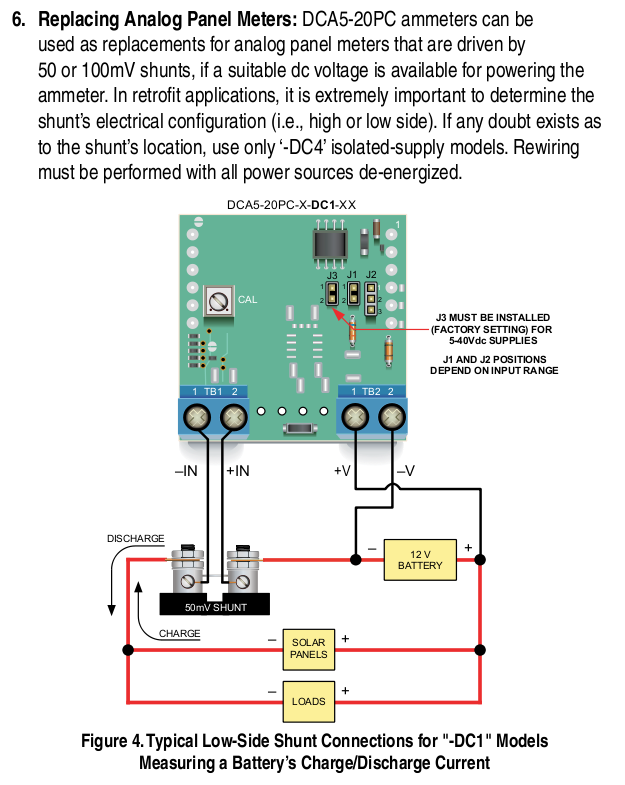
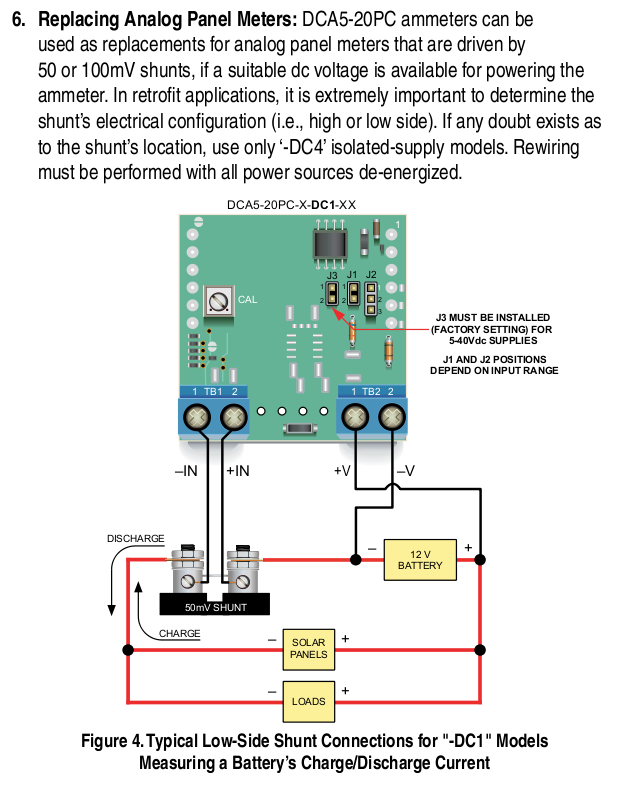
negative side of the battery as recommended by Bob Knuckolls.

Brian Trubee

$50.

Here is a cool digital ammeter for $50 that will do just about anything.

 http://www.digikey.com/product-detail/en/DCA5-20PC-1-DC1-RL-C/811-1088-ND/1926131


Paul Lamar
--
The Rotary Engine News Letter. Powered by Linux.
ACRE NL web site. http://www.rotaryeng.net
You Tube key word PaulLamar2
Copyright 1998-2012 All world wide rights reserved.