I happens to have a lot of faith in GM engines. They , like everything
 else, are not perfect. Chevy had camshaft problems in the distance
 past,and the timing chain is the first thing you dump when you hop up
 the engines, gears are much more reliable.However it is the Chryslers
 that like to jump teeth with their plastic gears etc. Fords had problems
 in their V8's a decade ago with too few threads holding the spark
 plugs.Aircraft engines are made with the finest steel and techniques
 available...................in the 1940's!! If I have such a high
 opinion of the word "certified" I would not be looking at alternate
 engines.They published my letter in the latest Flying mag. on that
subject.
 Another reason for the nickel content is for a bit better corrosion
 resistance, which a/c have more than many cars. The nickel content also
 add some toughness, but I don't think they have any where near as much
 as in amour plating.

 Auto engines had incremental improvements  through the years, while
 aircraft engines are at a stand still, and still have lead in the gas.
 The auto industry, easily 100 times the size, within a time span of 3
 years, had the lead removed starting in 1975?Basically with hardened
 valve seats and to get the necessary octane with more refining without
 the lead. Now they use ethanol.They had incentive from governments,
 especially Calif.

 A 400 HP engine only use a small fraction on the highway, that is no
 indication of the engine's toughness. A Chevy small block 350 cubic inch
 can easily put out twice that or even more in dragster applications
 where the engine life is 1 mile.

 I heard of how they pushed these engines during endurance testings, some
 with pictures of the turbo glowing red hot.So a race modified 400 HP
 Chevy LS engine at 350 HP cruise would easily outlast the standard 2000
 hr. TBO , the TBO times could rival that of a PT-6! I think the % of
 certified engines that made it to TBO is around 5% or less.
 But the piston engine do have several inherit disadvantages, compare
 with rotary and turbines, more part count, liquid cooling, and the re
 drive, one more thing to go wrong.

 The re drive  I think is only troublesome for the smaller HP
 applications, where there are more space, weight  and budget
 constraints. Even Rotex, with their engineer resources available to
 them, had their shares of AD's.By the time you get to 300 HP,  I don't
 hear as much complaints.All turbines have re drives, for prop, fan or
 accessories, yet the PT-6 have a reputation for reliability.
 One thing the Viking engines(and Rotex) taught me, they use Evans
 coolant. This stuff boil at 375F, a significant margin in borderline
 detonation cases in boosted engines. That means I only need a minimal
 amount of pressure (0-5 Psi?) to aid circulation and to forget the
 pressure for raising the boiling point.That increase reliability. The
 engine may run a bit hotter.
 Tony Lam

 A race modified  V8 is lucky to last a 24 hour race.
 It took GM several years on a Le Mans programed dyno to get a Chevy V8 to
 last 24 hours. We had to back off on the sprint car power red line. As it
was, GM
 used all aircraft qulity parts. The engines were then worth over $100,000
in today's
 dollar. The fundamental problem is inadequate bore spacing and the V8
configuration,


 http://www.rotaryeng.net/DS-smith-art.pdf

 Smithsonian Air & Space magazine article "Power Struggle" by Don
 Sherman, January 1997, page 72. Excellent ten page  article (with
 many pictures) about auto engines in airplanes. A brief history of
 all auto engines in airplanes and a more detailed history of the
 twenty year, twenty million dollar  development of the Chevy V8
 based, all aluminum Orenda liquid cooled aircraft engine. At this
 time (Jan 1997) and well after the article was written the engine
 failed its FAA 150 hour full power certification test due to a
 crankshaft problem after 20 years of very expensive development.
 It was finally certified in 1998 by Transport Canada.

 Extensive changes have been made to the basic Chevy big block engine
 including a parallel cooling system with dual coolant pumps as
 opposed to the serial cooling system with single pump as typically
 found in automotive engines. Parallel cooling systems were
 considered to be essential in the 1920's on liquid cooled aircraft
 engines.

 Engine length is almost everything to a car designer. Engine cooling
 compromises are made by simezing the cylinder walls in automotive
 engines. Crankshaft life at high continuous power is compromised by
 shortening the length, leaving too little room for adequate size
 journal fillet radii. In my opinion this engine will not be
 successful until it is re-designed from a clean sheet of paper to be
 a real aircraft engine. If that happens they might as well go to a
 horizontal opposed configuration for lighter weight.

 Orenda is now in the process of moving the project to Nova Scotia
 and injecting another 32 million dollars of mostly Canadian
 government money. They are also attempting to market the engine to
 the homebuilt market. I don't expect many takers at over $100K per engine.

 Recently Lancair gave up after spending a lot of money installing
 the engine in a special airplane called the Lancair Tigress.
 The engine and the Tigress were donated to the EAA museum as
 a tax write off.

 The Orenda company is now bankrupt.

 http://www.rotaryeng.net/DS-smith-art.pdf

 Paul Lamar


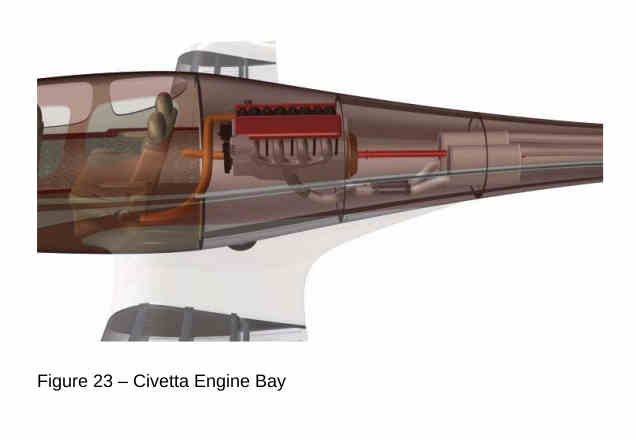
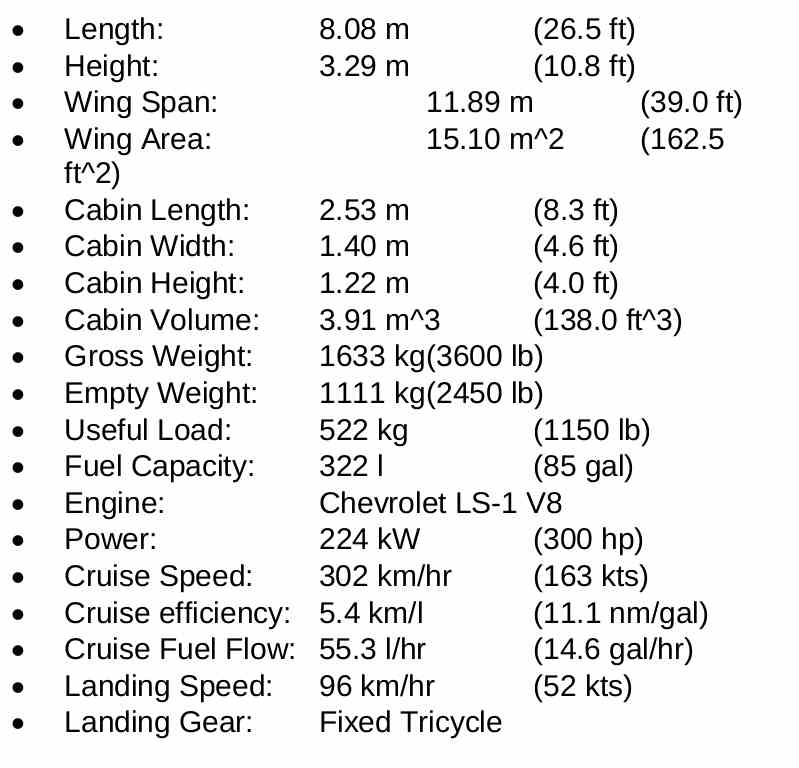
A few years back, NASA had an LS 1 engine put through  FAA aicraft engine
certification testing.  With only minor problems, it passed.   They were
operating at a low power of about 280 hp max at 4000rpm if I recall, as
they intended it to direct shaft drive a ducted prop; no gearing.  When
they told the GM engineers of the details of the certification test, they
laughed.  "We torture them alot harded than that."  Many current auto
engines could be developed into satisfactory engines for experimental
aircraft.   I agree that the rotary is the best choice in most cases.


Murry I Rozansky

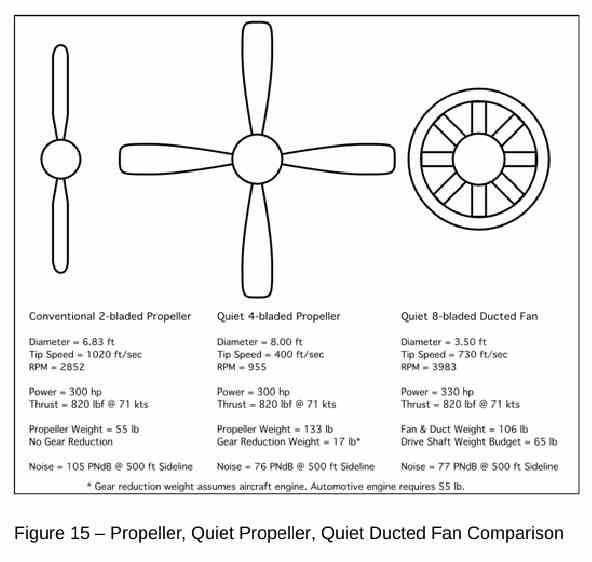
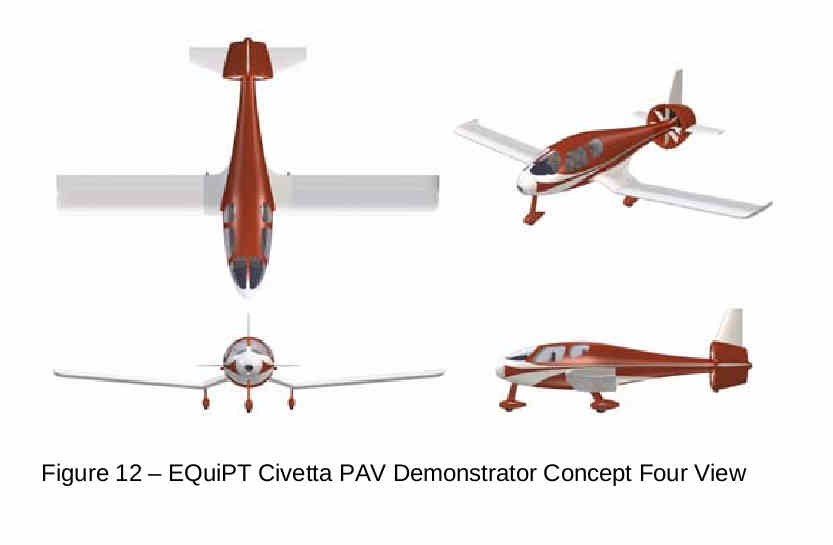
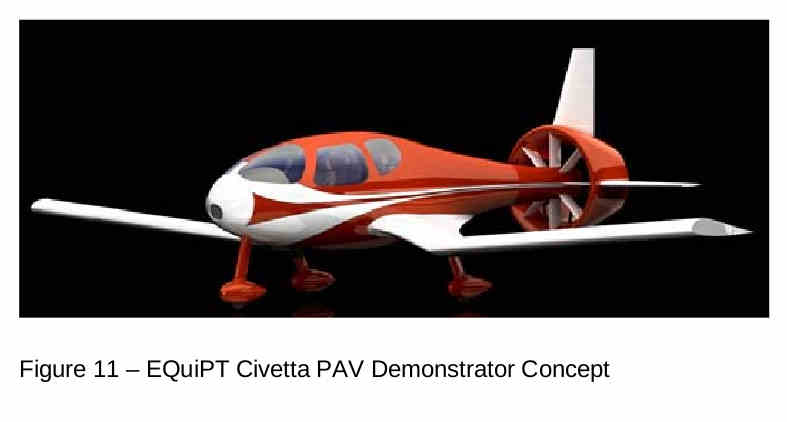
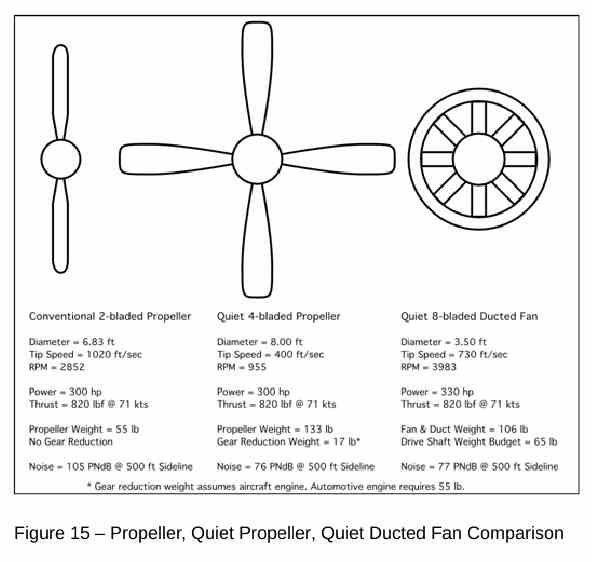
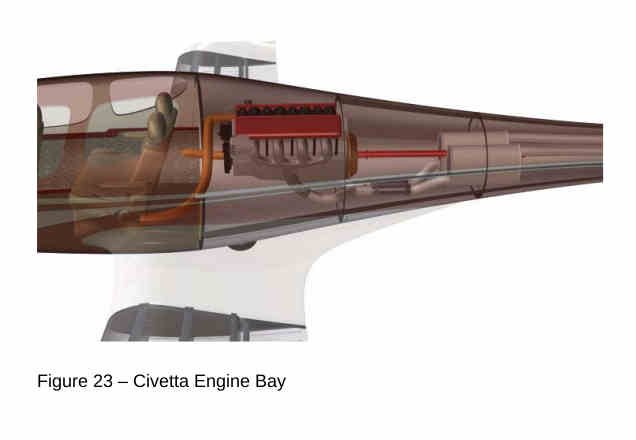
I remember that project. It never got off the ground let alone a prototype. All a
paper study. NASA proposed a ducted fan pusher powered by a Corvette engine at OSH in
2004-2006. The people they had on that project were idiots led by Mark D. Moore. Mark
Moore did not even have a pilots license at the time.  Ducted fans don't work in that
power/speed range. The duct itself creates a lot of drag. Don't get me started on
ducted fans :) Surprisingly and ironically  Francesco Iannetti, developer of the
ceramic apex seals for the rotary, did the dyno test of the LS1 V8 in 2003.

The whole project was a typical federal government gross waste of money.
No results. No hardware. No airplane. No flight. The program was an out and out failure.
-----------------------------------------------------------------------
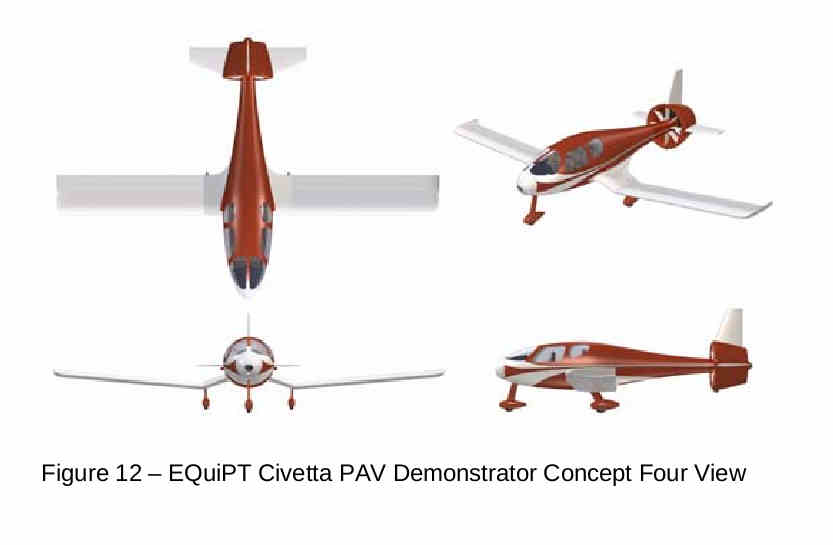
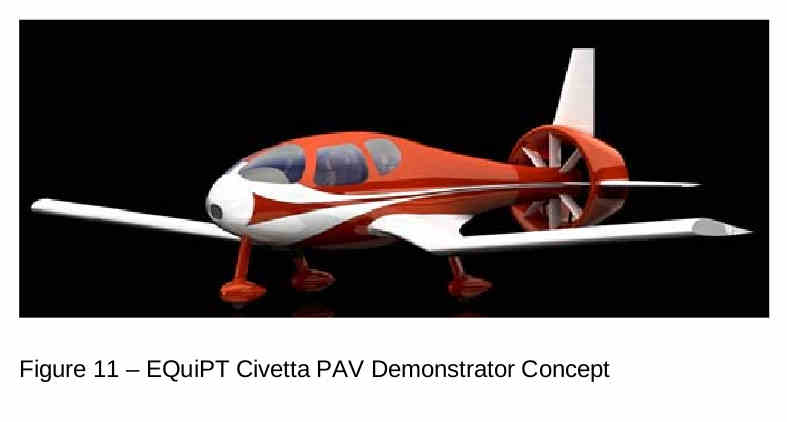
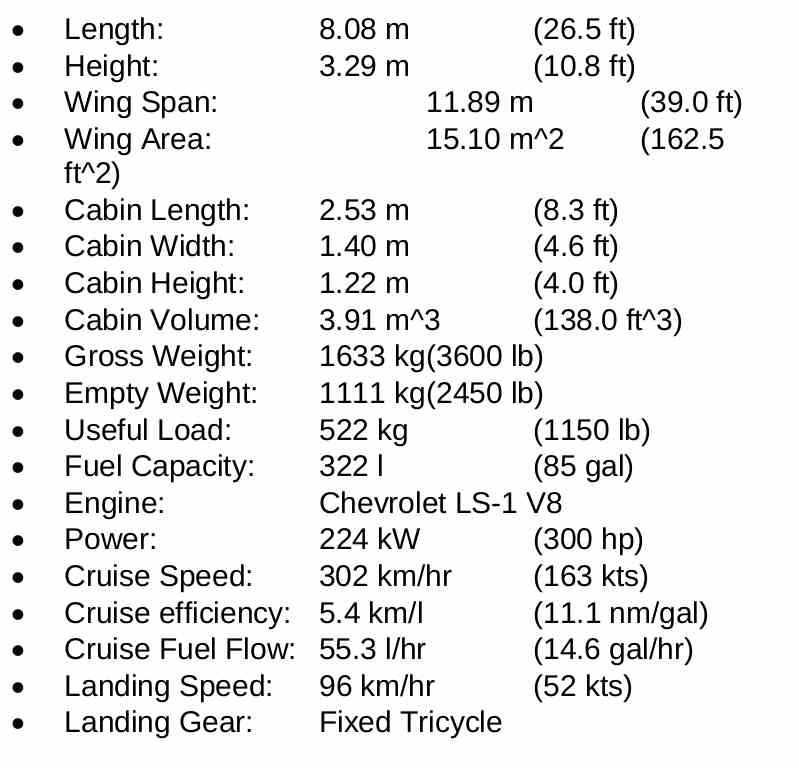
 Next Generation NASA GA Advanced Concept

Quote the NASA pdf on that project:

"Historically,
most automotive engine conversions to aircraft use have
been failures. The basic reason appears to be that the
developers try to get aircraft engine performance out of
an engine that is at a fundamental disadvantage
because it has not been designed with similar
compromises. For example, liquid cooling is heavier
than air cooling, particularly when the whole system is
taken into account. This doesn’t mean that there aren’t
advantages to liquid cooling that may make it attractive,
but to expect the liquid cooled engine to have the same
power to weight ratio is unreasonable. The temptation to
“hop up” the automotive engine to get a comparable
power to weight ratio is difficult to resist, and usually
results in a series of escalating decisions that both raise
the cost of the engine and lower the reliability. It is just
not possible to get aircraft engine performance and low
cost out of an automotive engine at the same time.
There have been four certified aircraft engines that have
started as automotive engines. They are the Orenda
OE-600, the Porsche PFM, the Toyota FV4000, and the
Thielert Centurion 1.7. Of these, only the Thielert is
currently being installed by an OEM on new airframes."

"The Porsche PFM is a typical example of what happens
when an automotive engine is retrofitted onto an
airframe designed for an aircraft engine. Even after
replacing most of the components for enhanced
durability at high power levels, the engine added 91 kg
(200 lb) to the empty weight, 13 kW (17 hp) to the
power, $100,000 to the price and actually dropped top
speed by 9 km (5 kts). It is no wonder that it sold poorly
and that Porsche is buying back the engines to destroy
them to reduce liability exposure"

"The key to getting the cost benefit of an automotive
engine is to leave it as much of an automotive engine as
possible, and design an airframe to work well with it.
Because of previous experiences, there is a general
belief that the automotive engine can’t operate at the
high power duty cycles that the aircraft engine does,
which is true if maintaining the same power to weight
ratio is important. If it is not important, then the engine
can be de-rated to a point that it will function just as well
as the aircraft engine, albeit at a heavier weight. To
prove this, Iannetti ran his preferred Chevrolet LS-1
Corvette engine in a dynamometer, simulating the
Federal Aviation Administration’s (FAA’s) 150-hour FAR
part 33.49b engine endurance test [27] (Figure 33).
While the test did not simulate the vibratory
characteristics of the long shaft and Q-fan, it did show
that the engine was easily capable of passing the same
test that all piston aircraft engines must pass from a duty
cycle perspective."
-------------------------------------------------------------------

280/400 is 70% max power to begin with. So it made 70% power for several
5 minute periods. Then it ran the rest of the test at 196 HP or 50% power.
Max HP occurs at 5500 RPM or above.

That is known as de-rating. Any auto eninge will pass the FAA test
if you de-rate it enough. Passing the test is not enough.  The FAA then grants a TBO.
The Orenda engine was granted only a 1200 hour TBO.


The bare aluminum LS1 engine is 400 pounds.
To that you need to add a gear box which for a typical V8 would weigh
80 to 100 pounds. The Orenda firewall forward came out to 1000 pounds.
Typical LS1 firewall forward are 500 to 600 pounds.

Paul Lamar
--
The Rotary Engine News Letter. Powered by Linux.
ACRE NL web site. http://www.rotaryeng.net
You Tube key word PaulLamar2
Copyright 1998-2012 All world wide rights reserved.