I hope you had the p-port installed. If not I hope your are using a turbo
  charger.
  A Wheeler Express is going to need 250 HP.

  Paul Lamar


  It is a P-port, and I am going to use the turbo. It may work out that I
 fly my 40 hours off, dont like the 13b p-port and go with a 20b turbo. It
 looks like the biggest issue then would be W/B. I have that figured out
 too- a pair of battery wires are run to the rear baggage compartment from
 the attachments in the inside of the FW. Right now they are just laying
 there, but if I decide to change out for the 20B the math indicates that I
 will need to move my battery aft. Shouldn't take more than an hour or so
 more than replacing a battery.

 I have talked to several people with wheelers both by phone and internet,
 and it seems that an IO 360 (210hp) gives a cruise within 5 knots of an
 IO540, but with a longer takeoff roll and slightly less climb. However, the
 360 burns 15% less fuel. The 540s seem to burn around 13 to 14 GPH at 160
 knots, and the 360s are reported at closer to 10 to 11 at 155. Much of my
 flying is to the Bahamas, where there are many airports, and few places to
 get fuel. Fuel burn is a big issue. Also, their mogas is brought in by
 tanker in much smaller quantities than here, and contamination is also an
 issue. My plane holds 80 gallons, and I need to make the best use of it.

 There is a video online of a Wheeler in testing for vortex generators. This
 plane reportedly has the IO 320 rated at 200 hp. He reports flights at 150
 knots cruise on 10 gph in the video.

 Attached is a page from the POH and builders manual giving the limitations
 on the engine as designed. My plan was for 300 hp at T/O and maintain 250
 in cruise. I plan to fly it just like the Viking- 7500 RPM and 300 HP for 5
 mins takeoff, 6000 RPM cruise.  My viking had an IO520D 300 HP N/A. The 300
 on T/O was nice, and she cruised at 23 squared at 160 knots. Her empty
 weight should be 300 lbs more than the Wheeler (2300 was the Viking EW).
 Every Wheeler builder that I have talked to so far came in under 2000 lbs
 with a nice plane. That is my goal.

 One of my bigger issues at the moment is the thrust line- as designed the
 thrust line puts the engine about 1 inch below the cowl which precludes the
 installation of intake runners over the top like most of you do. I have a
 little bit of a reservation with lowering the thrust line 3 inches to make
 it work with the runners on top. I am thinking that I will need to run the
 intake runners around the firewall side, or do it like Tracy and place a
 plenum on the intake side and not use the runners at all. It looks like
 option 2 is the most likely at this point. I know that the runners are
 important N/A, but I think the positive pressure from the turbo would
 offset most of the tuning issues with the intake runners.

 Kevin Alderman


 It all depended on BSFC, altitude  and air speed. The lower the airspeed
 the lower
 the HP and maybe the fuel burn depending on the BSFC at that engine RPM
 and throttle
 opening. Down to a point. That point is maximum rate of climb speed Vy.
 I think it is about 104 Kts for the Wheeler.

 BSFC is pounds of fuel burned per HP generated.

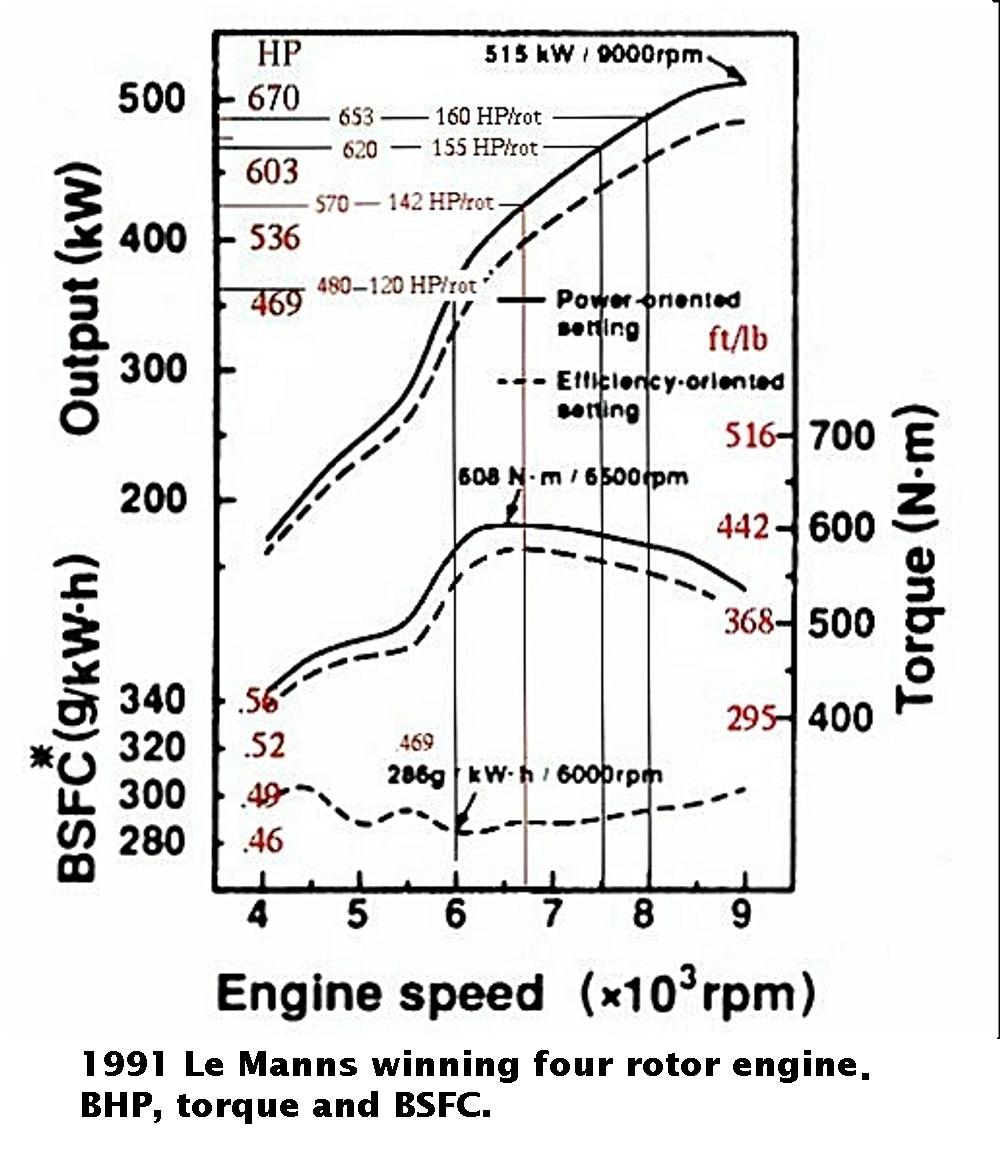
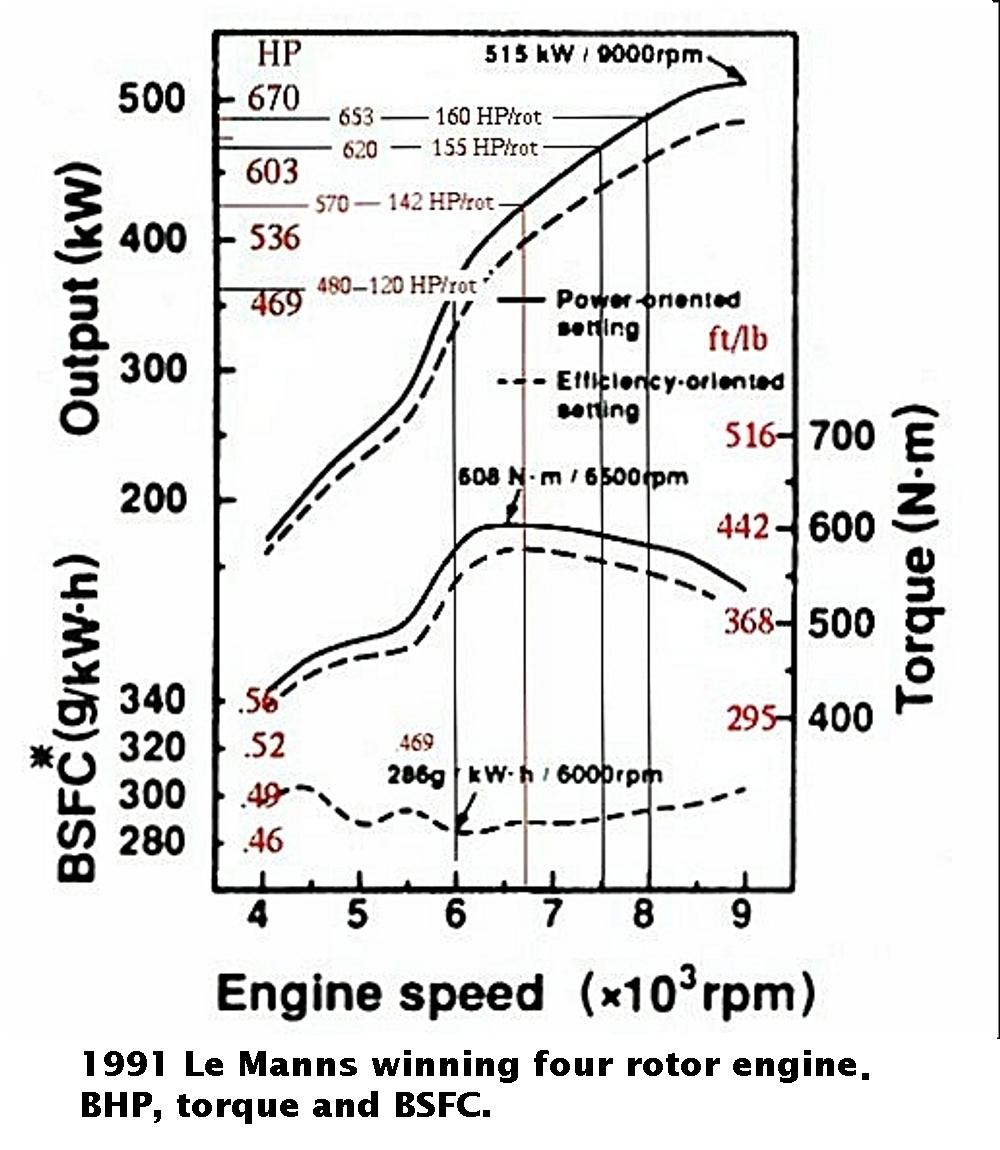
 Take this chart for example. This BSFC turbo 2 rotor has a best BSFC at
 4000 RPM and
 105 HP.  Assume the turbo 3 rotor is 150 HP under the same conditions.
 These BSFC
 numbers are hard to come by so it is best to have a torque meter in your
 gearbox.

 Point 46 is excellent for a rotary.

 Now how can you slow the airplane and set the power to get minimum HP
 requirements?

 Your target is best BSFC at 4000 RPM so you need a variable pitch prop.
 Increase the
 pitch unill the RPM comes down where you want it while the throttle is WOT.
 It may be a different number for a turbo p-port.

 It is going to take a lot of experiments on your part with a GPS to
 discover the best
 MPG.

 This a long and complicated subject. I highly recommend getting Donald
 Crawford's
 book on the subject. A PRACTICAL GUIDE to AIRPLANE PERFORMANCE and DESIGN.

 310 375 9227. Ask for his help. Tell him I sent you.

 Paul Lamar

normal asperated 0-360 at 75 % power burns 10 gal/hour. the 0-540 at 65 %
power burns about 12.5 gal per hour. it burns 14 gal/hour at 75 % power. i
still have the rotary eng and new gear box for sale in middle Georgia. eng
was rebuilt by Bruce turintine. i may not have spelled his name correct.
my phone # 478-922-1428   cell is 478-335-6835.

tom kimsey a&p ,atp, cfi...

Lets look at the Lyc O-360 first.
Given 75% of 180 HP that is 135 HP. Given 10 gallons an hour at 6.25 pounds per
gallon that is 62.5 pounds of fuel per hour. That translates to a BSFC of
62.5/ 135 or .46 BSFC. A p-port rotary is .47 NA or .46 turbo.

The Lyc O-540 is 260 HP so 75% power is 195 HP.
14 gallons an hour is 87.5 pounds per hour. That is a BSFC of 87.5/195 or .45 BSFC.
Slightly less than a 3 rotor at .47 NA.

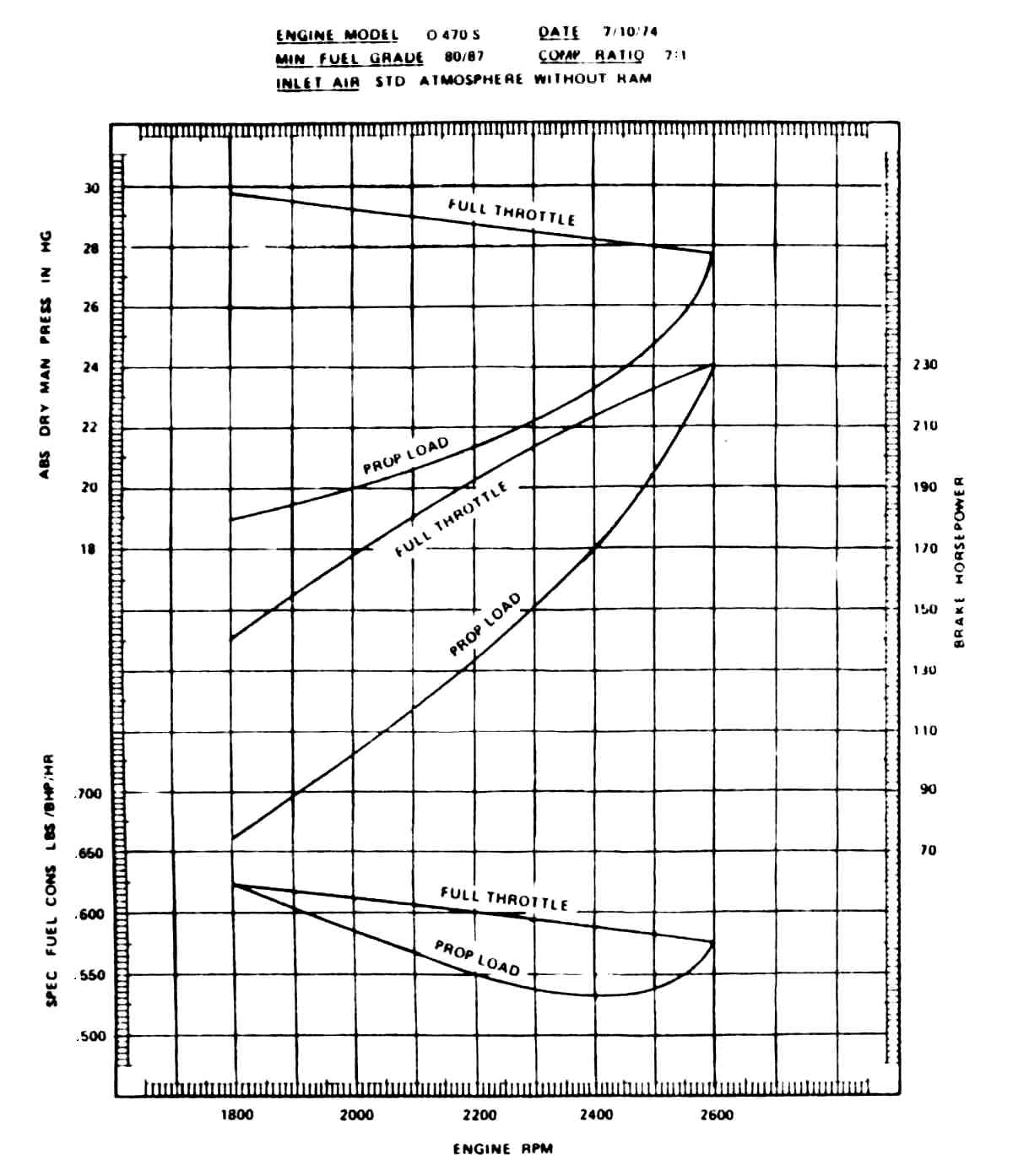
My Cont. O-470 in my C182 BSFC is .52.

Here are charts for a p-port 4 rotor NA and a Cont. O-470 NA.

To get a more exact measurement of BSFC the temperature of the gasoline must be
known. Colder gasoline is heavier per gallon at altitude. That is why BSFC is used
instead of gallons per hour when rating engines on fuel burn.

Tom, What is the gear ratio in that gear box you have?

Paul Lamar
--
The Rotary Engine News Letter. Powered by Linux.
ACRE NL web site. http://www.rotaryeng.net
You Tube key word PaulLamar2
Copyright 1998-2012 All world wide rights reserved.