Kevin, your experiments with the 2nd gen igniter gave me another idea to
  try
  for a cheap CD system. The 2nd gen lower mag sensor puts out 12 trigger
  pulse per rev.

  Feed that to a FET that turns on and off the primary of a pulse
  transformer.
  At 400 RPM that is 80 PPS. A simple circuit can double that to 160 PPS.
  at 8000 RPM it is 266 PPS.

  A common low cost ($30) 220 V  60 cycle control transformer is CT 24 volt
  to 220
  volt. Use the 12V half to jack  the voltage from 12 Volt square wave to
  220 volts AC.
  With a full bridge rectifier  or voltage doubler circuit you might get
  near 400 volts
  DC. Use that to charge the CD capacitor.

  The old Heath Kit CD ignition  used a control transformer and a
 mechanical
  vibrator
  to generate the high voltage back in the late 50's and early 60's.

  You can find a manual on ebay. Heathkit Manual Capacitive Discharge
  Ignition

  If you want a cheap pulse transformer they can be had from salvaged PC
  power
  supplies. It takes a lot of fooling with them to find the windings that
  work.

  A CD systems trigger with no delay.

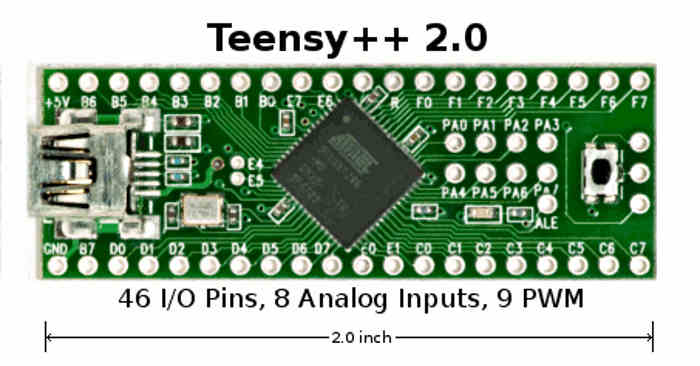
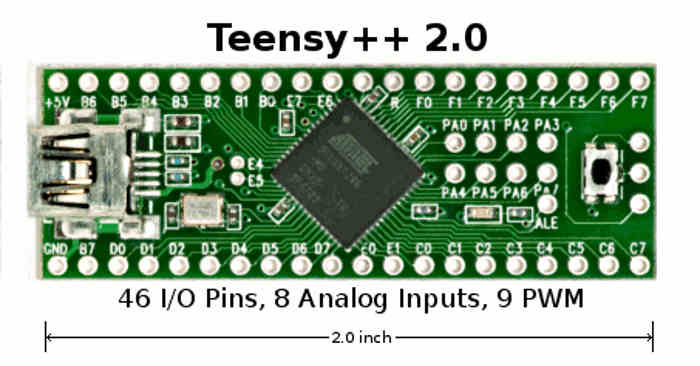
  BTW with AVR development board are you using?


  Paul Lamar


  -------------------------------------------------------

  I just had a better idea.

  Use an ABS sensor on the flywheel teeth and get a much higher frequency.
  4000 pps at 400 RPM and 8.3 Khz at 8000 RPM. Now we are in the range of
  switching
  power supplies found in PC. Much smaller transformers.

  No 2nd gen CAS needed. Will work with any rotary  12A to RX8 that uses a
  starter.

  Here are some typical PC power supply transformers and CD caps.

  Paul Lamar

  I was fooling with a transformer out of a PC power supply. I found a
  couple of
  windings  that seemed to work. 10 volts in pp gave 100 volt out pp.
  This was at 20 Khz but it worked over a wide freq range.

  Remove the primary, use larger wire and cut the number of windings by
  about 1.3rd.

  Paul Lamar


  I think I  found a source for transformers. If the price is right I will
  get some and
  build some CD's. These are so cheap we can use one per plug. I'll donate
 a
  set if you
  are willing to test them. You must be in the U.S. so I can get there to
  witness the test.

  Kevin, if you don't get yours to work I will be in Florida about Oct 1st.
  I might
  have them done by then. Those 2nd gen Mazda coils make great CD coils
 when
  removed
  from the igniter's.

  In the past I tried to build CD systems but with out good results. I
  thought the HV
  had to regulated. That was the main problem. I now realize that is not
  neccessary as
  the outboard type are not regulated. Nor was the Heathkit for that
 matter.
  In other
  words it is open loop. Here is an open loop CD system using a 555
  oscillator at 68 Khz.

  Paul Lamar

  I am not sure I will be done by Oct 1, but I work every time I get a
 chance. I have read the discussions about the CD ignition and although it
 looks good on paper, I am skeptical. I am a boater (USCG Licensed Captain)
 and have spent lots of time on the water in everything from small
 outboards
 to big tug boats and commercial vessels- My experience tells me that 1.
 The
 only  boats that have left me limping home are outboards, and 2.
 especially
 before the past 5 years or so ago more often than not due to a bad power
 pack that controls the ignition. While the reliability of outboards has
 increased substantially in the past few years, I still do not trust it on
 an airplane. I remember a particular boat that we had- a 2006 model 35
 foot
 center console with 3 outboards. I seldom ran out a tank of fuel that we
 didn't come back with one engine kicked up and not running. We had 3
 engines, and most of the time only were able to use 2 of them.

 More recently, for outboards we have a 150 Yamaha 4 stroke EFI, and a
 Mercury 25 four stroke EFI. Both have suffered fuel problems, electrical
 issues, and the Merc- only 3 years old- needs both electrical work and EFI
 work to even run again.

 On the rotary, I am encouraged by my weekend experiments- with redundancy
 and simplicity in mind, here is what I am planning:

 I will initially use an Arduino Pro Mini (Atmega 328 clocked at 20 mhz at
 5.5 volts) with a program just to fire the coils through a Darlington or
 MOSFET transistor.  A wasted spark setup would be easiest, but a coil
 firing twice as many times as it should will generate excess heat, and
 will
 shorten the available charge time by half. My tests for this part will be
 completed using carbs from a local outboard repair shop- again simplicity.
 I am not looking for power yet, just the ability to test the engine at a
 variety of RPM settings and put a few hours on it. The Arduino has 14 I/O
 ports some analog and some digital. I can use the outputs to record RPM
 and
 other variables. I also have a similar Arduino already set up as a
 datalogger. Right now it records movement, temps, etc, but I plan to
 modify
 it with different sensors to record the engine parameters. This unit will
 likely be a permanent part of the plane.

 http://arduino.cc/en/Main/ArduinoBoardUno
 These boards are manufactured by lots of different people now, and the
 ones
 I have have interchangeable crystal oscillators. Clock speed now is 16mhz
 at 5v, 20 at 5.5v. I think this will work especially for testing, but if I
 need to push it up I will.

 Back to the ignition- assuming satisfactory results, the final design is
 anticipated to consist of twin ignition computers in separate cases
 connected in an A/B configuration.  I used the attached schematic as a
 base, with a few changes- I removed the switch shown. In its place I
 connected one of the leads of the CAS to the Base of the Tx. I connected
 the other to a common ground. I connected the common ground to the frame
 of
 the coil. I fed 12v to the tan wire, and the trigger to the red wire. Just
 for this test, I didnt use any resistors or diodes, capacitors, etc. I
 just
 wanted to see if it would work. The final circuit will have a few more
 components I am sure. And, I used the Darlington Tx because that is what
 is
 what I had in the goody box.

 That is the update for the moment-

 Kevin Alderman

 I assume the  Arduino is programed in C. Strange for a boat captain to be
 proficient
 in C. :) I will spend two months in Orlando and take a few days off to
 visit the keys
 anyway. I think I have been on your island and seen your house at the
 airport.

 I have a real old friend that lives in south Florida by the name of Dave
 Smith.
 He is also a licensed boat captain and a road racer. I think he still
 runs an RX7.

 BTW look at FET's instead of darlingtons. They have much lower on
 resistance and
 therefor generate less heat which translates to more reliable.
 Darlingtons are old
 school :)

 Paul Lamar


 Thanks Paul;
 I would have used FETs, but I didn't have any in the goody box. My
 intention this weekend was to just see if I could get the coils to fire.
 Now that phase 1 testing is complete, we move on to phase 2.

 As far as proficient in C, that might be a bit of a stretch. I am 45,
 straight out of high school I started an electronics engineering course. My
 last semester the class canceled due to lack of interest- took 10 to keep
 the course we only had 8 left. It was at this point that I started business
 as a Contractor eventually having 74 employees and many headaches. Over the
 years I would go back to the local community college for courses here and
 there- programming, physics, lots of calculus, etc. Always learning. As you
 know after all of your years, it is mostly how your brain works, not what
 stuff you memorized along the way. So, I find a problem, learn as much as I
 can about it, and then proceed to solve it one step at a time.

 For the beacon on the plane I made a 555 timer connected to two red LEDs,
 one on top and one underneath. Works well and I am positive it will meet
 the lumen requirement, BUT, I plan to make a step up circuit to boost the
 voltage to 36v to make them really bright. I took apart a power supply and
 a couple of amplified car stereo units, so now my goody box has more stuff
 in it.

 Kevin Alderman


Check this out- one made to communicate with Android!
 http://www.mouser.com/arduinoandroid/
Might make it easier to output the display info to an android on the panel-
Yippee, I get another project to test out!

Kevin Alderman

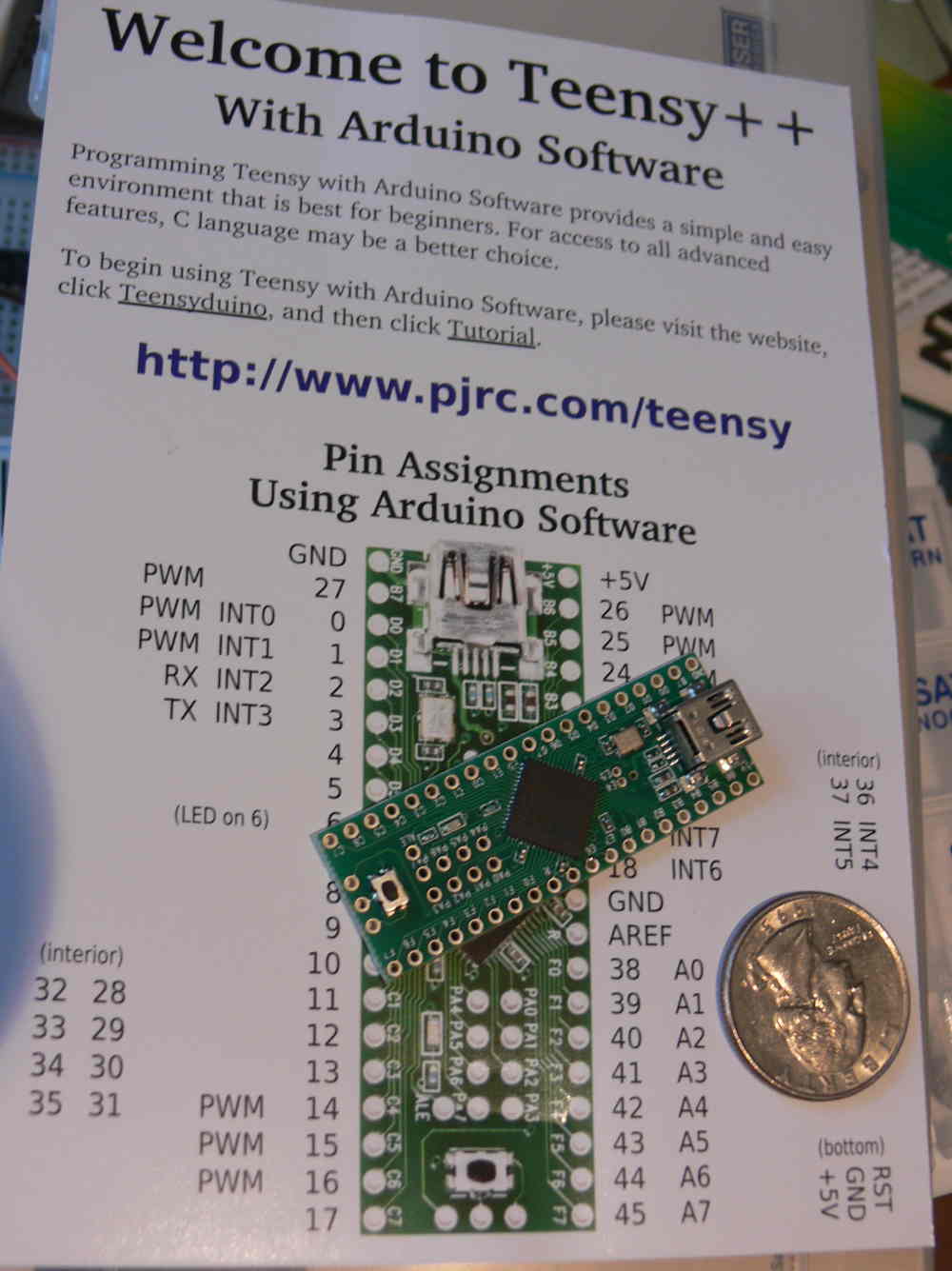
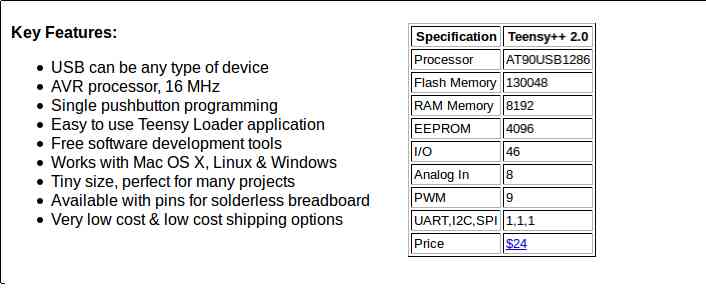
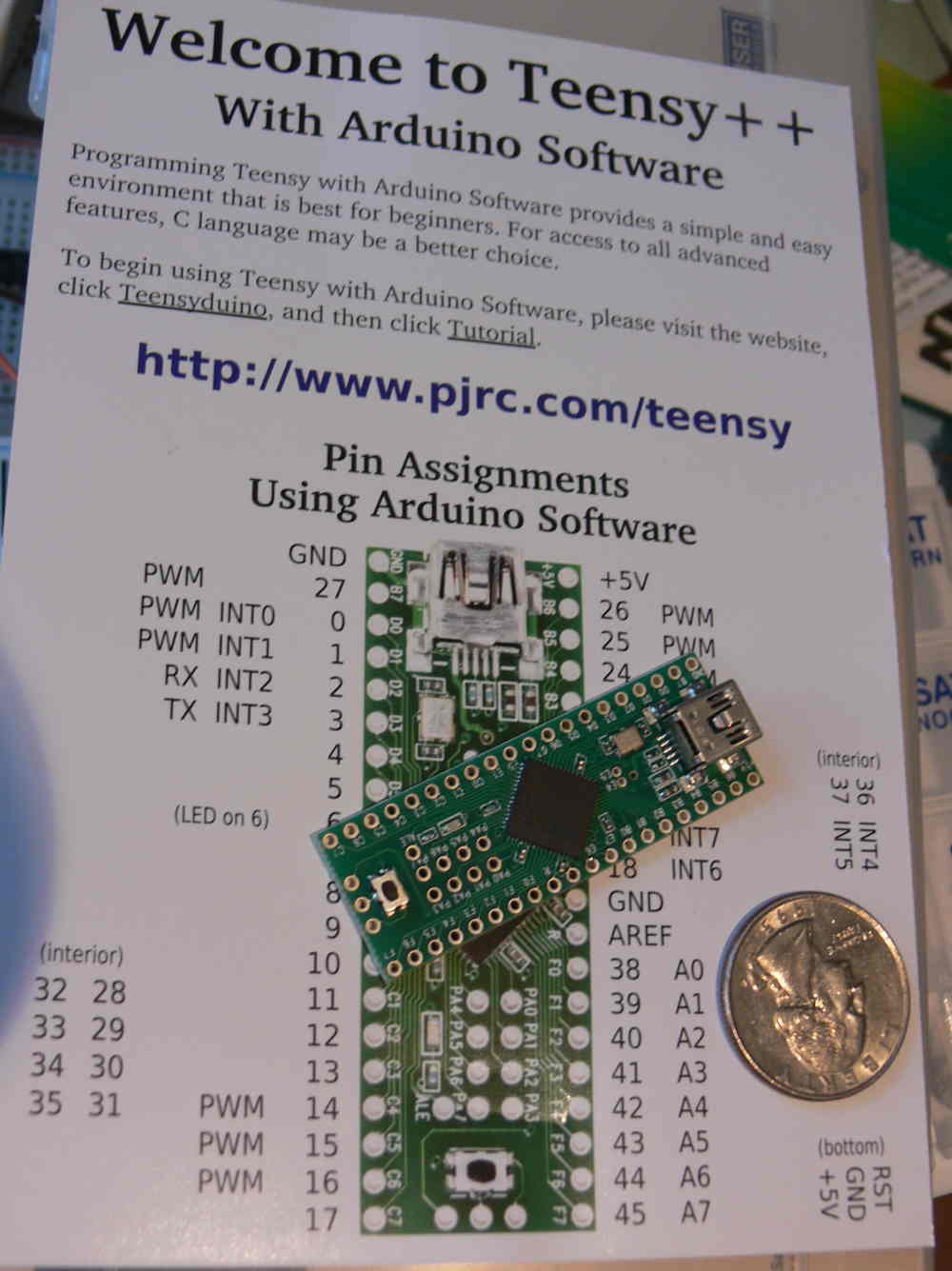
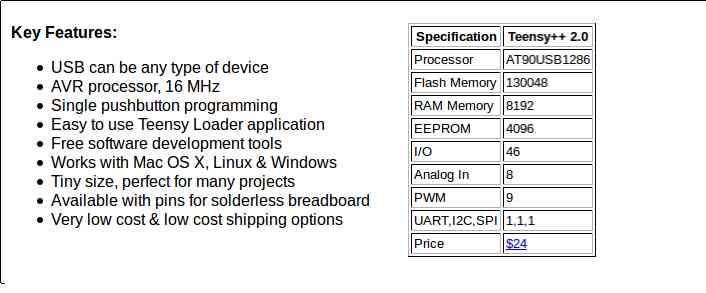
Kevin, this can be programed with arduino software. $27. If I don't use it I will
send it to you.

Paul Lamar

--
The Rotary Engine News Letter. Powered by Linux.
ACRE NL web site. http://www.rotaryeng.net
You Tube key word PaulLamar2
Copyright 1998-2012 All world wide rights reserved.