Paul,

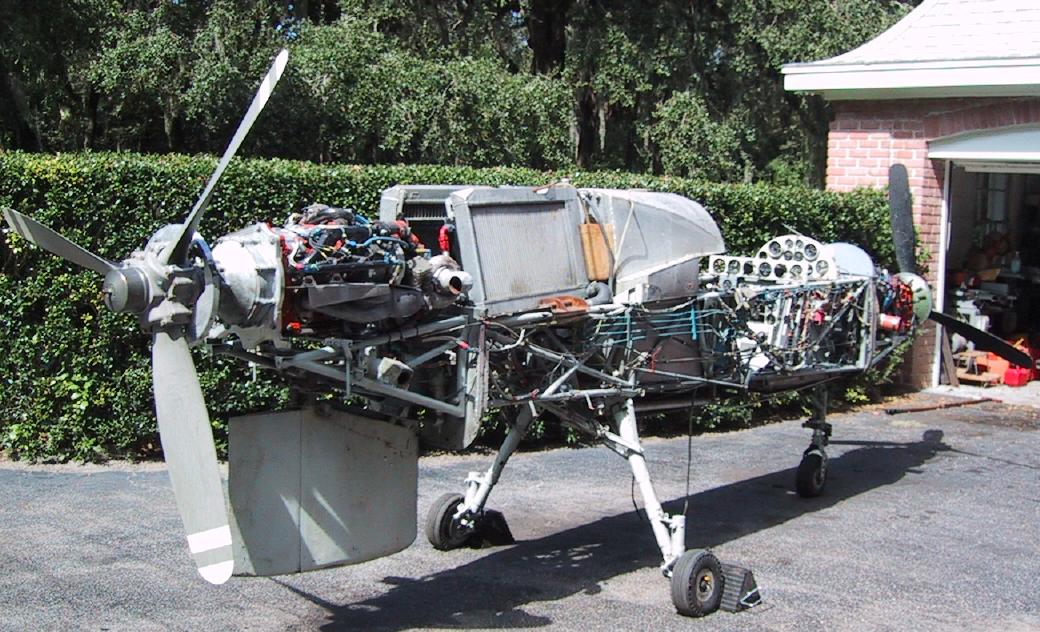
 Years ago there were two brothers from Venezuela with a Cozy powered by
     two
 Suzuki Swift engines that were Siamesed together.  They didn't share
  the
 same prop, but instead used two counter-rotating props.  The prop
  shafts
 shared the same centerline.  In cruise, they could shut down one engine
     and
 greatly reduce the fuel burn.  I don't see why this idea couldn't be
 applied to the rotary using two 13b engines.  It would require the use
  of
 belt drives.  I believe Wankel GMBH developed one along these lines
  they
 called the Wankel Twin-pack.  (discussed in your YouTube video)  I
  always
 thought that would make a great package for a larger plane if someone
 wanted to spend the time and money to work out all the details.

 Mark


     I've been tossing this idea around in my head, and I really like it.
     (This is why I was asking about reverse rotation and 3d models a few
     days ago).  It seems so neat to be able to have an almost completely
     independent twin setup in a single engine sized package.  The only
     interlink really is the sharing of the engine mount and perhaps some
     bearings in the prop shafts.  Both of those can be designed to a very
     low failure rate.

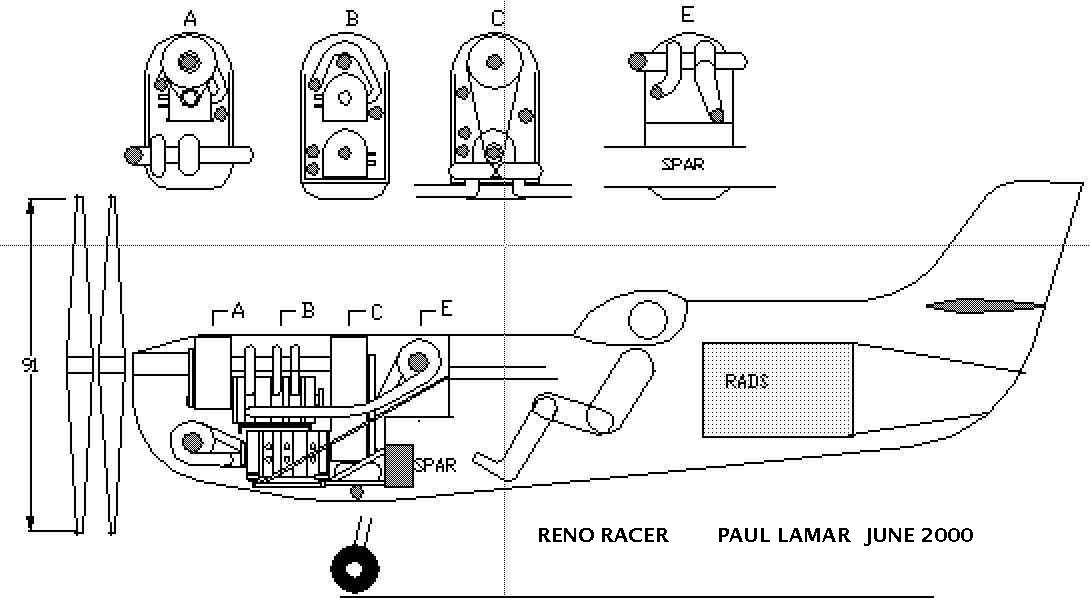
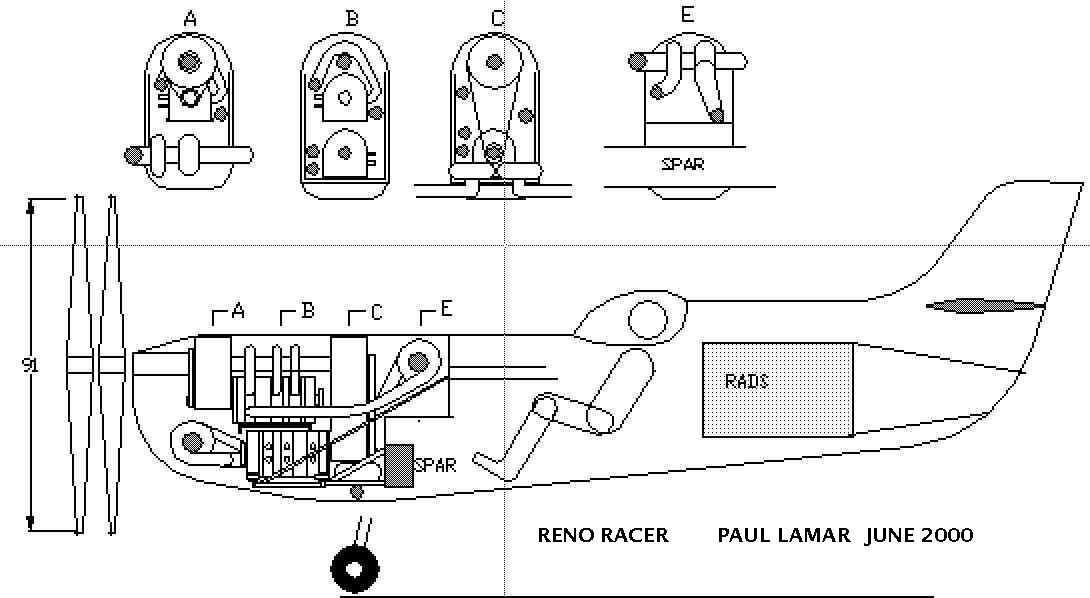
     I've roughly sketched out a few things, and it seems to me that the
     best way to go about it would be to face one engine forward, and the
     other backwards.  The backwards engine would drive a countershaft off
     the similar to some supercharger setups except off the flywheel side,
     and the forward facing engine could drive the external co-axial shaft.
 I think Mark was right that a belt drive setup would be best.  This
     setup has a couple of benefits over facing both engines the same way.
     First is that you can have the plugs all facing inwards and the
     exhaust and intake facing outwards.  This will make mounting of coil
     packs a bit easier, and will prevent exhaust from one engine heating
     the other up.  The intakes could possibly share a common filter and/or
     plenum depending on how you set them up.  Depending on the mounting
     setup, you may be able to keep the engines a little closer together.
     The countershaft could also provide a great moment arm to resist the
     bending moment from the props

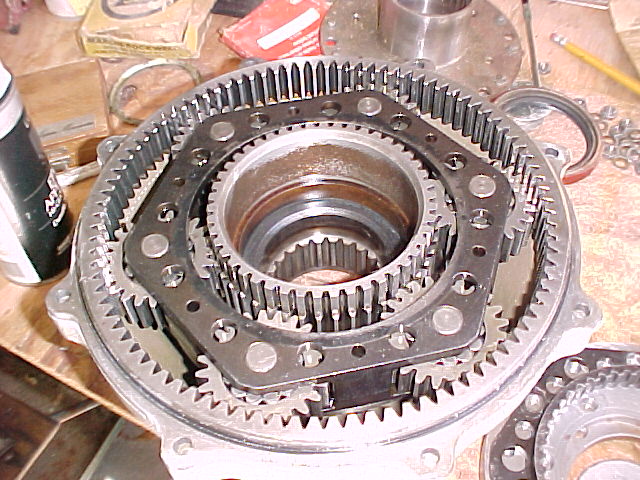
     If one did want to keep both engines pointing the same direction, a
     gearbox type setup with a reverse idler would certainly work.  I think
     it would be more expensive to do that way, and possibly a little
     heavier as well.  You'd have to worry with oiling too.

     Anyone have any thoughts?


     Josh


    Are you talking about twin engines driving a single prop, or a twin
 setup
    with independent engines, props, etc?

    Kevin Alderman


   I'm talking about twins driving separate contra-rotating props.
   Basically everything would be independent. It's all the advantages of
   a twin in with single engine drag, no yaw on engine out, and no torque
   steering on the ground... like the Cessna 337 except both engines and
   props are at the same location.

   Joshua Jacobs

   Hi Josh
    I also like the Idea of having 2 independent drive engines
  and being able to shut one down for cruise economy. If you use 2
  contra-rotating props one driven by each engine, what will be the
  effect of shutting one down ( drag and interference of the running
  prop). This will also require purchasing 2 props but the belt drive
  will also work as a psru. have a look at this system
  http://ezycopter.powweb.com/cds.htm it is for a helo but you get the
  idea, may fit with 2x single rotor engines and also works as a psru.
    Or you could use 2 single rotor engines inline with
  coaxial output  to a single prop with a disengaging coupler for one of
  the engines. I think I saw that somewhere in the newsletter, using a
  tc on the single rotor, similar to this
  http://www.rotaryeng.net/RX8-TC-eng3.html , just can't find it right
  now.
   Graeme Riley


 Bell helicopter came out with the twin pack long ago. It uses twin engines
 driving a common transmission through overrun clutches. I like the
 redundancy of the twins, but the dual props would add a lot of complexity.
 I think a simpler solution is twin engines input to a common psru, with a
 controllable pitch prop.

 Kevin Alderman


 I like the idea that you guys are tossing around, but without the contra
 rotating
 prop. Contra props are extremely noisy, and a bit problematic, the Rusky's
 had one in
 a long range bomber, apparently you could hear it coming from the next
 country.
                 Chris in NZ.

 While I can't speak to the noise problem, I believe it would be
minimal compared to our engine muffling requirements. The cozy spoken of
was a very interesting design. One engine faced forward, one backward. The
effect was to create a V8 with 2 crankshafts, the engines had an end plate
on both ends that fastened the engines together. There were bearings for
the prop shafts in about what would be the camshaft location of a
conventional pushrod V8. There were sealed bearings supporting a solid
shaft in the center with a hollow shaft with bearings that supported both
shafts on the outside. The only thing I would have wondered about was if
the inside bearings were supported inside the hollow shaft they would see
double the surface speed. they could have avoided that with two full length
shafts with independent sets of bearings. It was a very interesting set up.
And the brothers thought enough of it to fly all the way to Oshkosh. They
used multiple sets of v-belts for both drive and reduction, like one of the
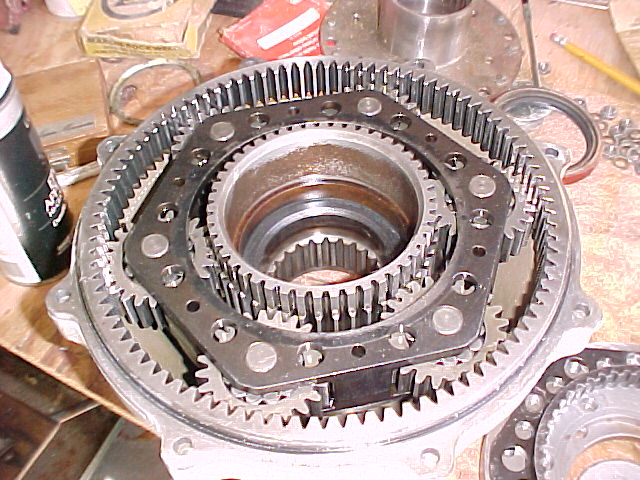
Rotorway helecopters, oil pressure hydraulic belt tensioner. A rotary
version would need a gear reduction on both ends as the pulleys for a 3:1
reduction would be hard to make and huge. The small pulley would need to be
around 6 inch minimum diameter. I wonder if it is still flying, It was a
very neat job.
Bill  Jepson


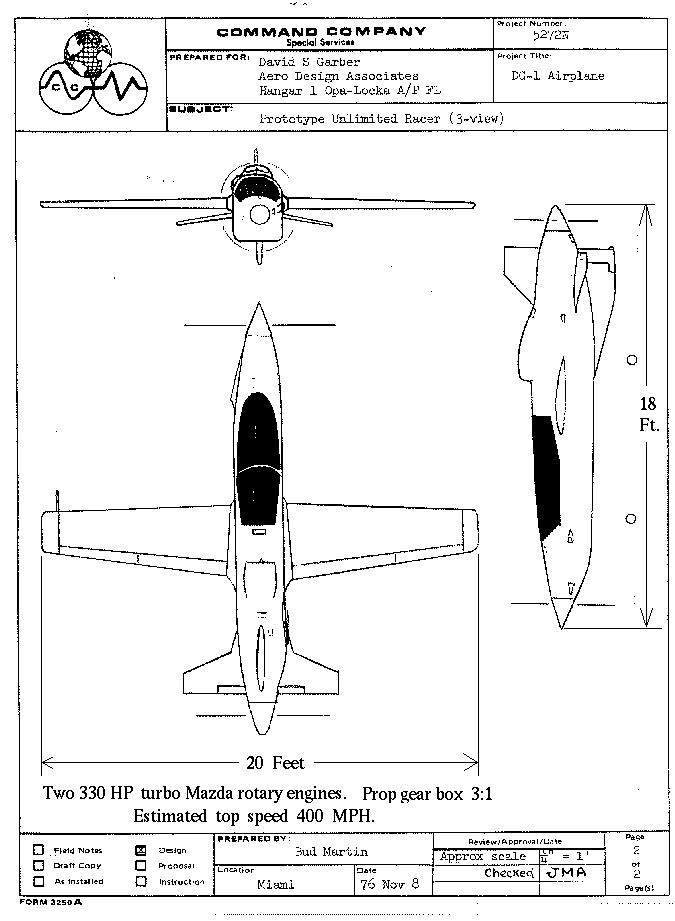
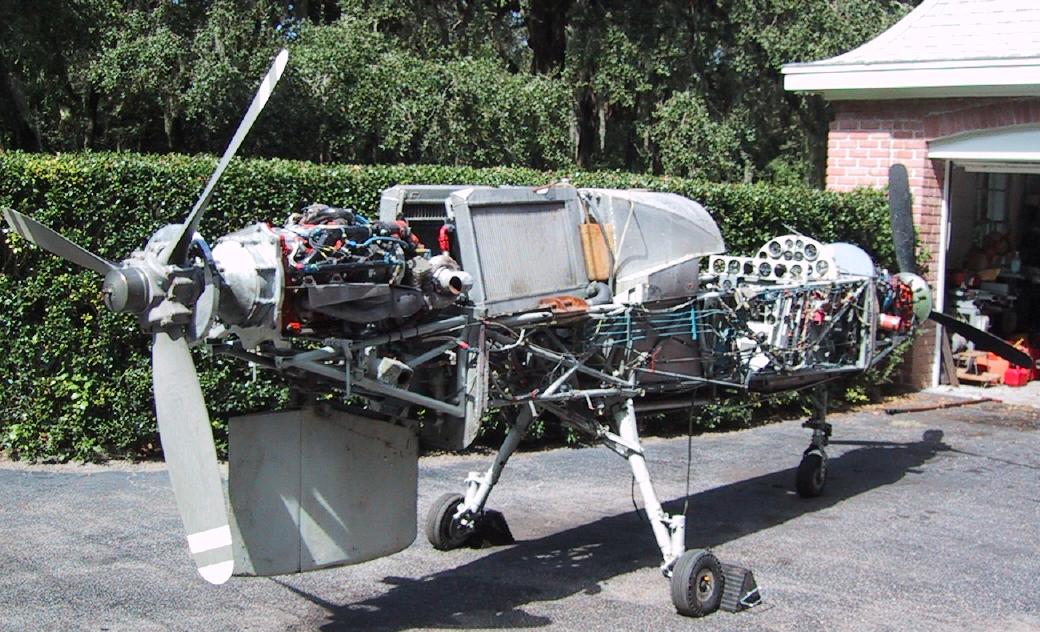
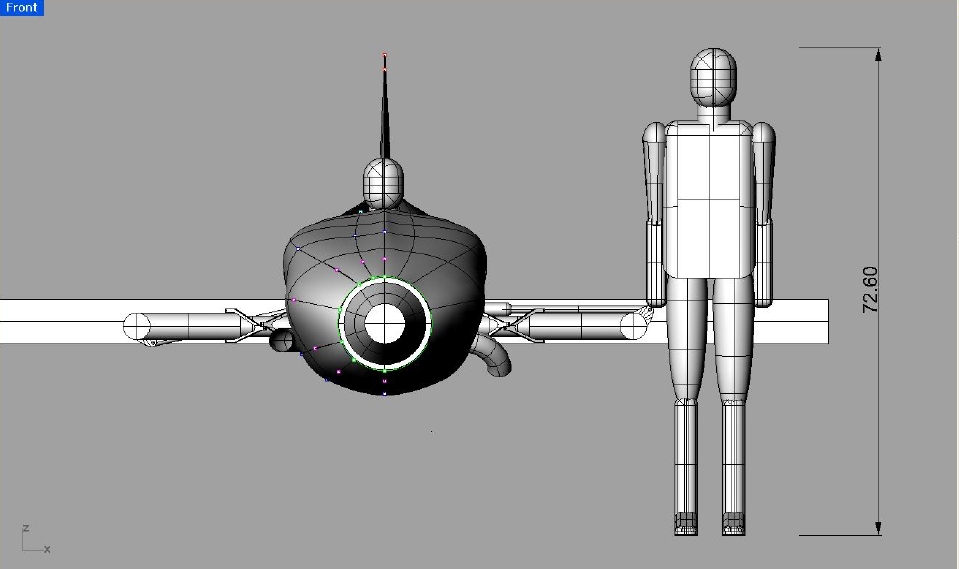
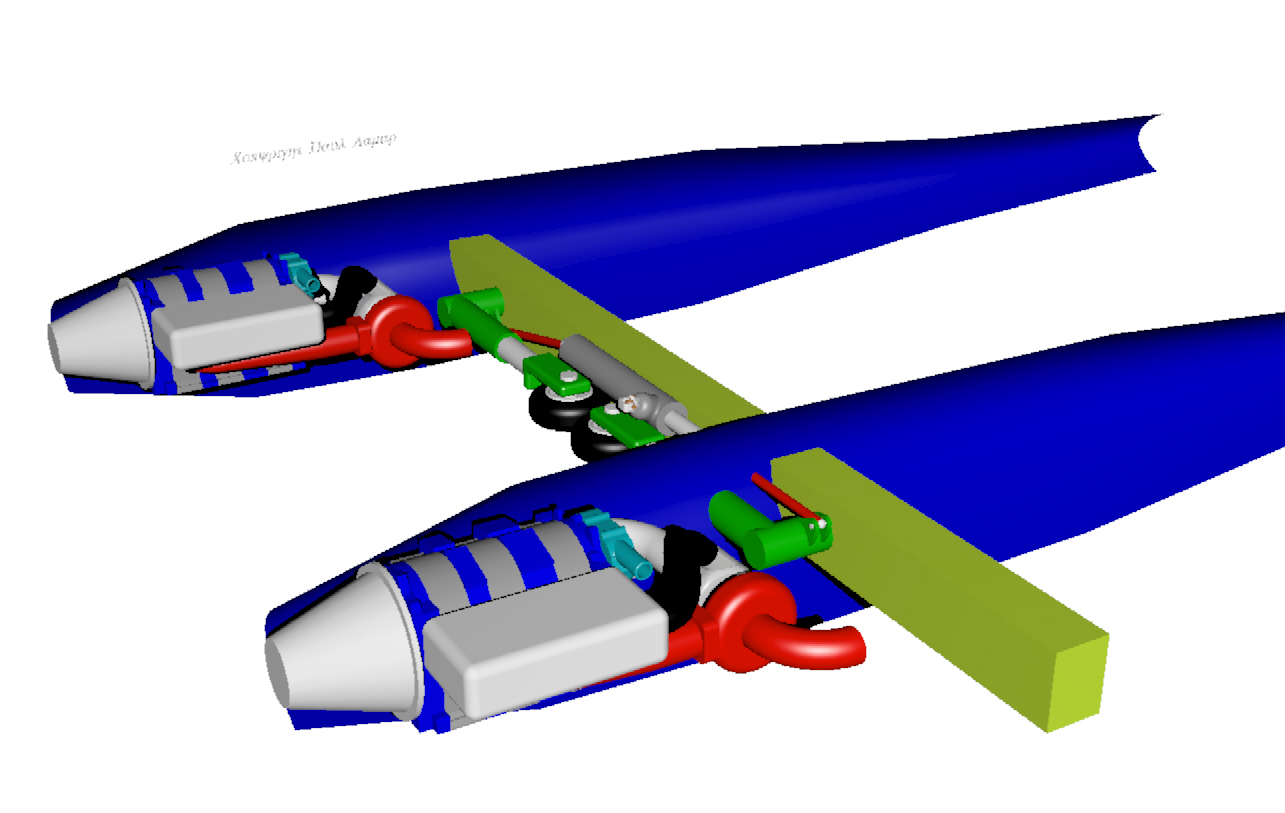
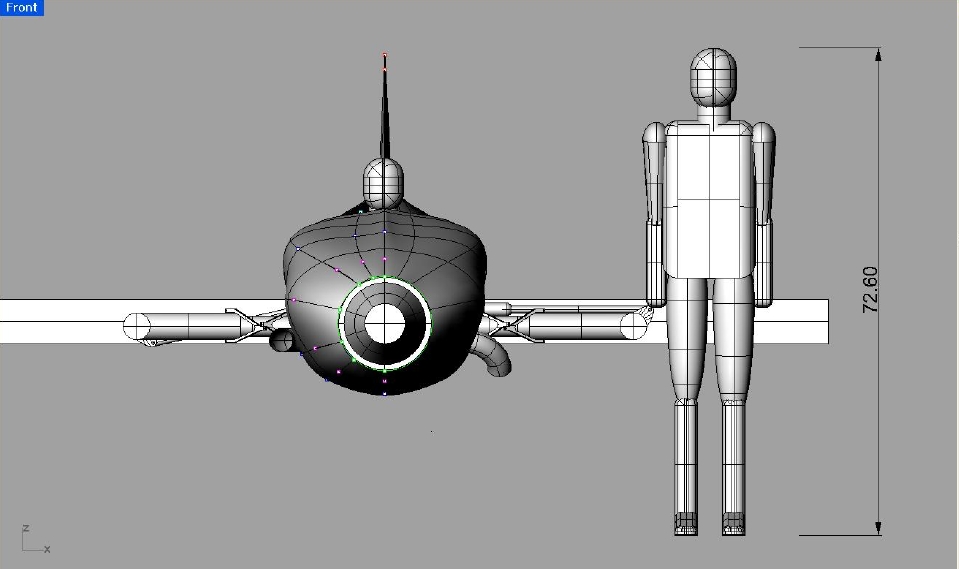
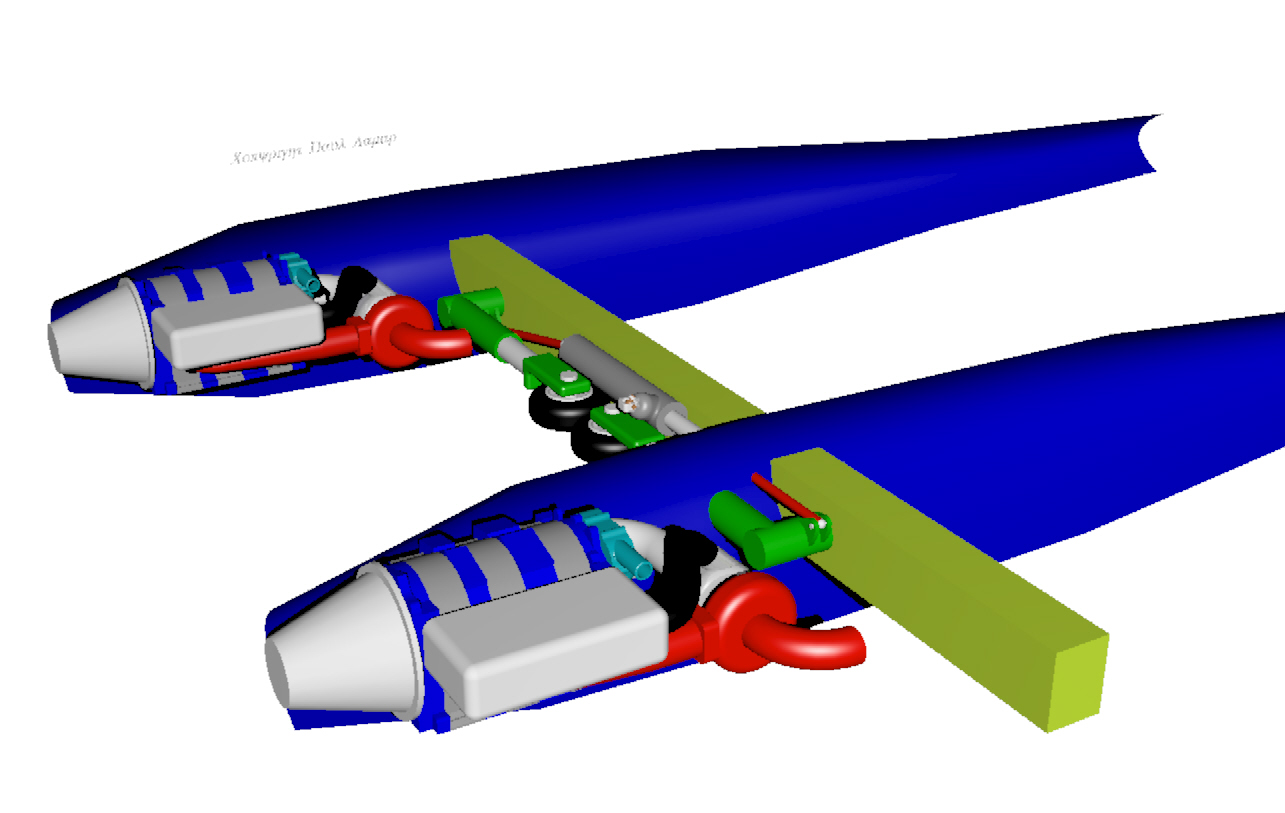
I did a 3D or two on the subject.
RX8 electric power steering rack landing gear retraction mechanism.

Paul Lamar


--
The Rotary Engine News Letter. Powered by Linux.
ACRE NL web site. http://www.rotaryeng.net
You Tube key word PaulLamar2
Copyright 1998-2012 All world wide rights reserved.