Sent from my Verizon Wireless Droid

-----Original message-----
From: rotaryeng <rotaryeng@earthlink.net>
To: AAAA Put this in the To box <rotaryeng@earthlink.net>
Sent: Fri, Aug 31, 2012 17:26:19 GMT+00:00
Subject: Recent flight from Everett to Medford / question for Mark mufflers


  Brian,

  You stated "...my EGT temps- they show up to 2000 at times- and above
  1800 most of the time in cruise."  I too experienced very high EGT's
  in excess of 1800* when I was using a muffler that was too
  restrictive.  Also, power was way down, but it was quiet.  ;-)  The
  high temps ended up damaging the o-rings and I had to rebuild the
  engine.  Since replacing the muffler the egt's have dropped down to
  1600 - 1650* range and power is much improved.  I suggest you examine
  and modify or replace your current muffler.

  Mark


 The fuel flow seems correct, and coolant temps seem correct for the  speed,
 and HP, so mixture is close. The EGTs are way too high, probably back
 pressure and perhaps too large a header diameter. And the probes are a bit
 close
  in. About 3 inches is the compromise between accurate reporting and long
 life.  Each header pipe should be exactly the same length to the collector.
 Put a shop  vac hose down each pipe as you build up the system and mark the
 length with  tape. Make the second pipe the same length. Shallow angle into
 the collector.  Collector about 4 diameters long. Long collector broader HP
 range. Short  collector higher peak HP but very short range. Header tube ID
 to match the  exhaust liner ID as close as possible. You want high velocity
 right into the  collector. Header length in any multipal of 11" to 12" to
 the
 collector. If  the muffler is close to the collector that is the end of
 tuning. And best to  have a see through muffler.

 The other problem is the 13BREW irons are from a twin turbo engine
 and have huge port runners. You want the highest possible velocity at the
 port face on the iron. That requires small runners in the manifold and
 irons.  Some builders do use turbo irons for NA road race engines, but
 those guys
 shift  well above 10,000 RPM. That is because of the big runners that still
 flow well  at those RPM. Those engines have no bottom end power and not
 much mid range.

 Dave Lemon blends 2 of the 3 runners and ports in a 6 port iron to make
 his E production engines. This is the same idea as the turbo irons but
  with
 more material to play with. He shifts above 10,000 RPM with a really big
 street port.

 Read this: _http://mototuneusa.com/thanx.htm_
 (http://mototuneusa.com/thanx.htm)  Look  at "High velocity porting"

 So the selection of turbo irons for an NA engine is an error in my opinion.
  Daryl Drummond uses the stock intake manifold gasket on 250 HP 12A GT-3
 engines.  So the runners are amazingly small. (High velocity)

 The Pport gets back runner velocity with very early opening of the intake
 port. Lots of overlap and late closing of the intake port.

 The bridge port opens even earlier than a Pport, plus you control where it
 closes by moving the closing line at the top of the port. I think you are
 stuck  so long as the turbo irons are installed, unless you add a turbo,
 which ends  most of the muffling problems.

 Rather than bridge port the irons, I would swap them for non turbo irons or
  add the turbo. Get on the "Nopistons" list and look at the swap and sale
 items.

 Lynn E. Hanover

  The best muffler for a rotary is 3 to 8 feet long about 4 to 5
 inches in diameter.  That gives the lowest aero drag for a given
 silencing.  Lowest frontal area.  Mufflers work by the exhaust
 gases rubbing on the metal surface losing kinetic energy to skin
 friction and losing heat to the metal surfaces.  The cooler the
 gases in a pipe the lower the gas speed.  When high speed gas
 exits a pipe there is a sudden expansion that causes the noise.

 The idea here is to cool the gases before they get to the end of
 the inner pipe.  The inner tube is best done in .045 Inconnel
 but there is a trade off with thickness.  If you make the inner
 tube 2 inches in diameter and use 321 SS make it .065 thick with
 a bunch of holes drilled in it.  The outer tube can be .030"
 thick 321 SS as it will always run cooler.  Also make the front
 of the muffler look like this.  Don't drill any holes for the
 first 8 to 10 inches.  The slip stream will blow cooling air
 down between the coaxial tubes.  At the back end make the inner
 tube 6 inches shorter than the outer tube.  That will act as an
 ejector to draw cooling air between the two tubes.  Patent
 applied for:)

  A 2 inch diameter SS tube .065 thick 72 inches long will weigh about 8.8
  pounds.

  A 4 inch diameter SS tube .030 thick 72 inches long will weigh about 7.50
  pounds.

  Here is a dwg.

  A 2.5 inch inner tube and a 5 and 1/2 inch outer tube may give a little
  less back
  pressure for a weight trade off.

  Paul Lamar

    Mark ,
    From what you say and from the performance of my plane, I'm
  starting to think that the Hushpower muffler is causing too much
  back pressure and that would explain the anemic performance and
  high EGTs. What type of o-rings were you using and do you think
  that the high EGTs caused O-ring failure and how so?

    Right now I'm thinking of how I can replace the Hushpower with
  the design that Paul just put forth. Its a bit tricky hanging
  that stuff on an RV-4 and working it around the heat exchanger
  and scoop.


    Brian Trubee

  It might be melting inside.

  Here is what Mike Wills did on the RV4 although the front of the muffler
  outer tube
  is not open for cooling air. This is what gave me the idea for the coaxial
  muffler in
  the first place.

  The subtle point is; cooling the inner tube saves weight as there is a
  high temp
  metal durability trade off with weight.

  For an example Perry Mick has been running an early cast iron thermal
  reactor for
  years. They are very durable but they are heavy.

  For anther example Ed Anderson runs SS pipe hand rail with an .109" thick
    wall and
  it hardly discolors. However you don't need a motor mount as the engine
  can be
  cantilevered off the fuse with the exhaust tubes :)

  Paul Lamar

  Brian,

  I was running TES o-rings inner and outer.  The high EGT's exceeded the
  temp limit of the o-ring, allowing it to ooze out between the mating
  surfaces.  I switched to the SS handrail exhaust with a DNA muffler (no
  longer available) and haven't had any more problems, although the DNA
  muffler is not much of a muffler (pretty loud).  People comment they can
  hear me before they can see me.  I wear a Lightspeed Zulu headset.

  Mark

  Got an pictures of those O-rings? Are you sure about the section size?
  Heated silicone can crack cast iron if there is not enough room to expand.

  http://www.rbwagner.com/pages/Rbwagner.html

  Paul Lamar

  Mark,

  What kind of muffler were you using that caused all the back pressure?

  Brian Trubee

  Oh, and also, when you changed the muffler, what kind of performance gains
  did you get?

  Brian Trubee


  Brian,

 I saw a big improvement, especially at WOT.  Climb rate improved, top speed
 improved, and EGT's dropped significantly.

 Paul,

 Attached is a picture of the exhaust I'm running now, except for the
 downpipe section has been replaced with a DNA muffler.  Sorry, its the best
 picture I could find of the exhaust.  I heard they quit making the DNA
 muffler.

 Mark

 I see very little advantage. It looks trick and different and that some
 times sells :)

 For the new guys this is Mark's old engine non p-ported.

 As Lynn says you need a "see through muffler". :)

 Paul Lamar

 Paul,

All I can say is the performance was significantly improved from the
tangential design.  Maybe when I run out of other things to do I'll build
one of your design and hang it under the fuse and see if it performs any
better.  On a side note, it sure would be nice to have a dyno to use to
test our theories.

Mark

If you have the room under the cowl you can use one of these tuned versions.

If you go with an 8 inch can and 6 inch tube cl radii then overall will be
12 inches.
You should have room for that in a 48 inch cowl.

You will get max HP at 7500 RPM and good BSFC from 5000 to 7000 RPM with the
magic 32
inch runner length all in theory.

You can fine tune it be moving it in and out relative to the engine by an
inch or two.

If square tubes are used any cl radii is possible because it is made from
flat sheet.
No bends are required and it is easy to fab.

Paul Lamar

Paul,

Could you use that innovative mind and out of the box thinking to build a
dyno?

Van

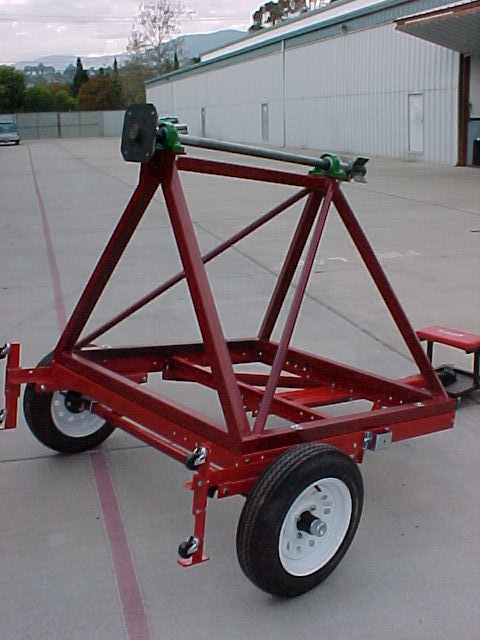
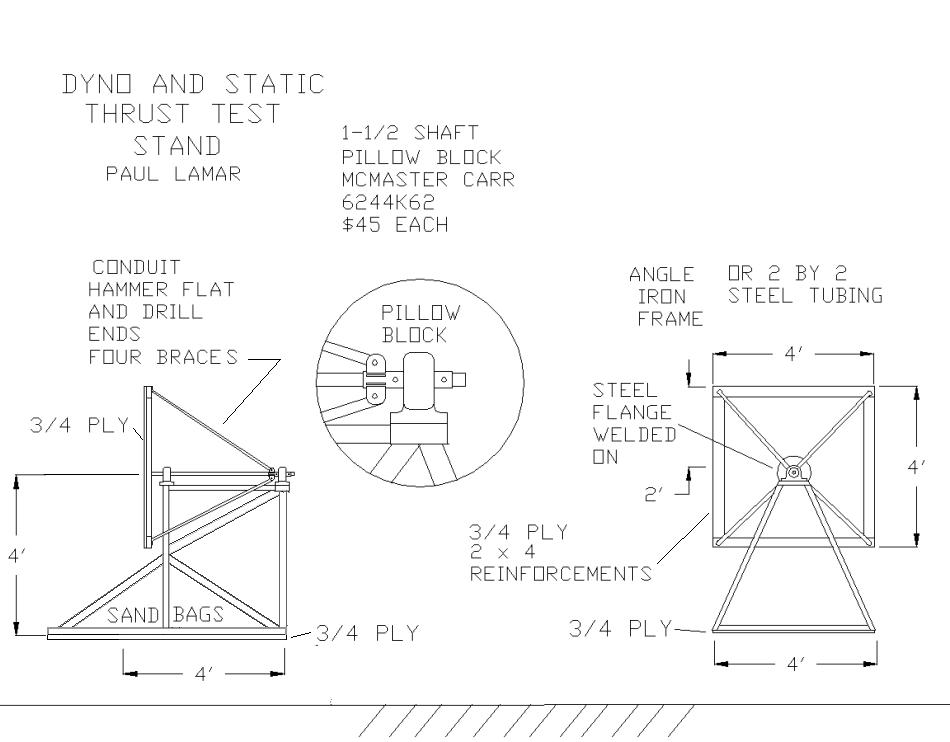
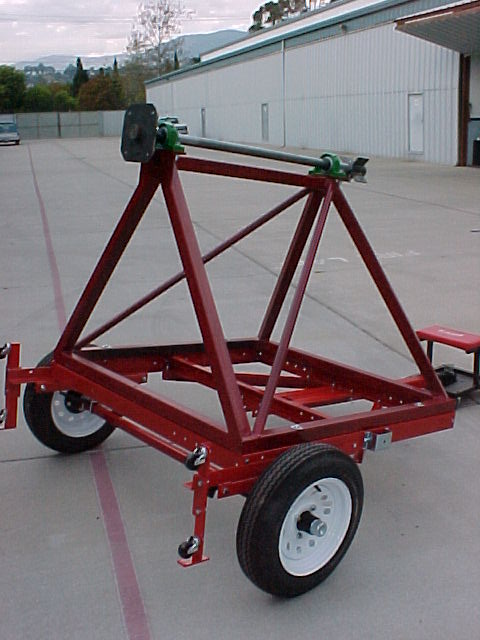
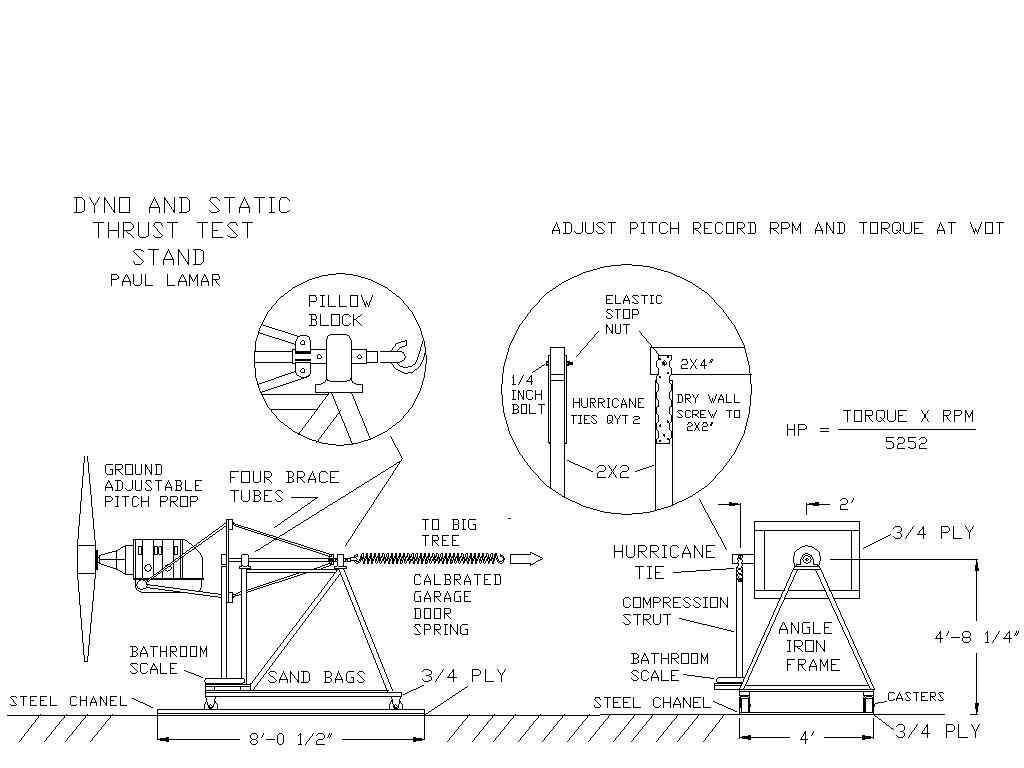
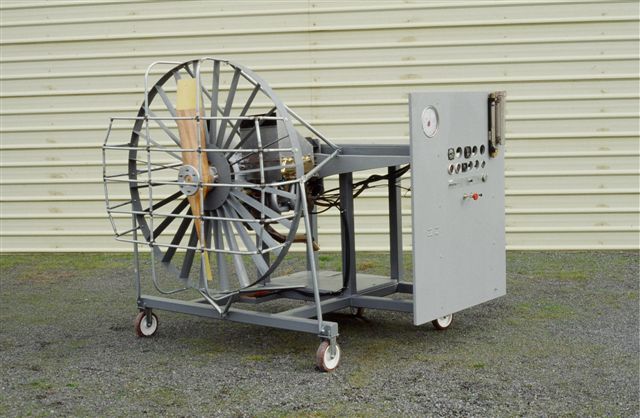
I did and built one. I donated to the Van Nuys chapter of the EAA. Contact Murry
Murry I Rozansky <mirco@jps.net>

Paul Lamar

--
The Rotary Engine News Letter. Powered by Linux.
ACRE NL web site. http://www.rotaryeng.net
You Tube key word PaulLamar2
Copyright 1998-2012 All world wide rights reserved.







.jpg)