Hi Paul,

  To recap where the design is, you developed a board that
contains the analog tach circuit, processor and communication to
a tablet or PC. What will you use to gather sensor data ie, A to
D converter?  You mentioned 8 channels, I saw an A to D on one
of the web sites that uses the SPI bus to talk to the
AT89C5131.

 The analog tach circuit; does this mean that the system can
utilize a 2 tooth wheel on the E-shaft for ignition and
triggering the analog tach?  I realize most builders will use
the 2nd gen CAS, 2 separate wheels, but I cannot due to space
constraints.

 The chip that you have chosen for the processor is the
AT89C5131 which is a version of the 80C51.  You have provided
some links to various companies that have the instruction set
and data sheets on their sites.  I believe the best thing for me
to do is familiarize myself with the instruction set.  Do you
have any advice for preparing to build the system?  Such as
obtaining a demo or trainer board?  It has been a while since I
have done any programing and I would like to start again and
want to learn more.  There seems to be a lot of different ways
to program the micro controller which adds to the confusion.
Which compiler? What software?  Programmer?

 I have the MAF sensor mounted to the plenum and I am in the
process of sealing it up.  It is  removable.

 Thanks for any help


 Joe Berki
 Limo EZ
 P Port

I am still thinking about the type of CAS to use. I'll probably go with hall effect
sensors. One per rotor. They work fine for Klaus (Light Speed Engineering) on piston
engines  and he has been using them for years.

The analog tach circuit works off one pulse per revolution of the e-shaft.

Yes I am about to switch to the AT89C5131 52 pin PLCC. It only takes six clock cycles
to do one instruction as opposed to 12 for the old AT89S8253 and the crystal is 32
MHz rather than only 10 Mhz. Therefor it is about 6 times faster. One instruction in
.33 micro seconds. Or 5.3 million instructions per second.

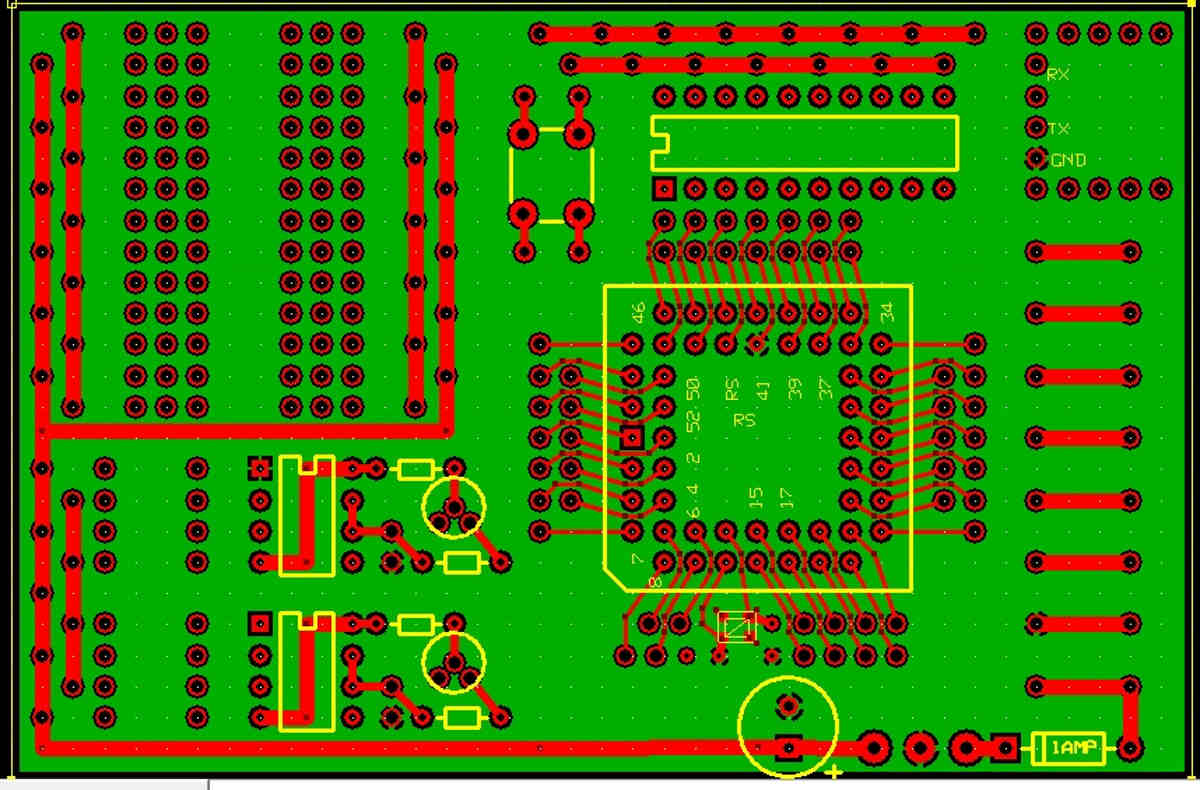
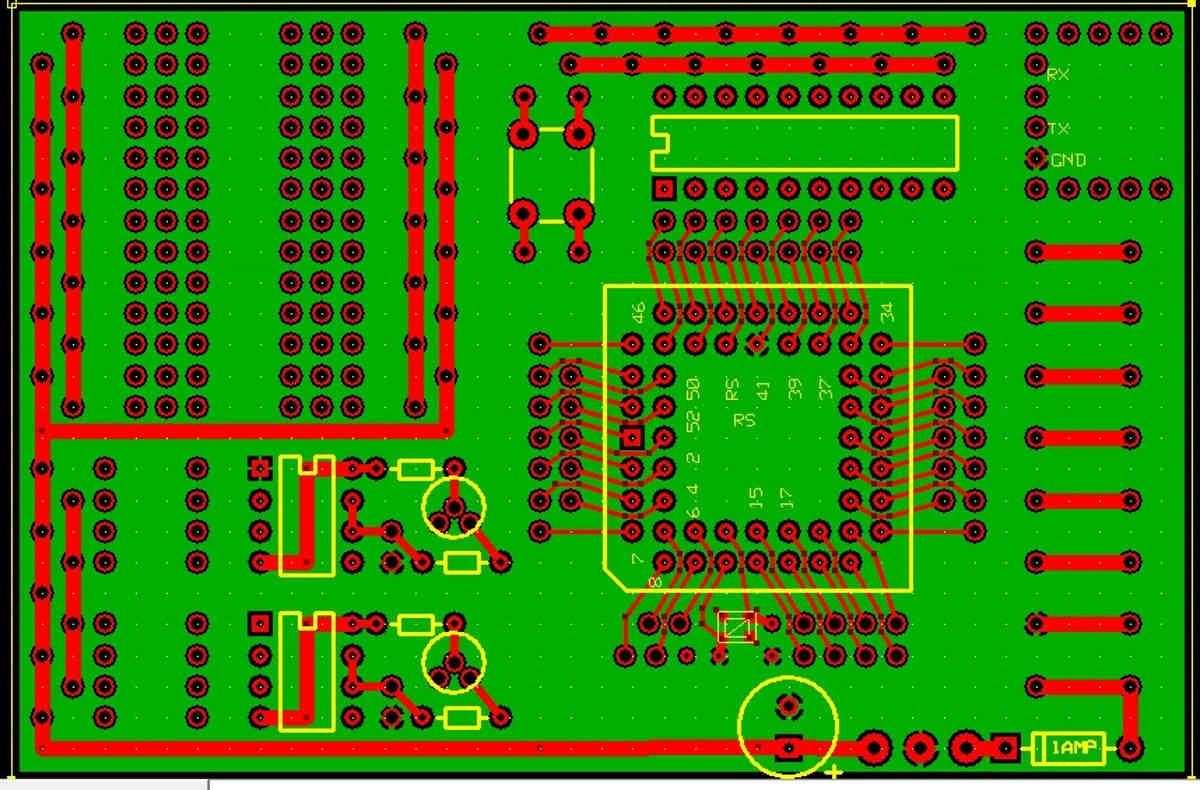
Here is a picture of the AT89C5131 proto board. Send me $75 cash and I will send you
one with a 52 pin PLCC, power supply and crystal soldered on. BTW the AT89C5131
processor cost about $8 dollars and it is not included on the board. You will need a
programmer and the only one I have found so far for the 52 pin PLCC version is one
from Atmel themselves for $167 DigiKey. As far as I can tell Mikro does not make one.

I only have three so you are lucky as no more are available right now. If I get a lot
of interest in this board I can get some more etched. It will eventually evolves into
a full blown EFI board. Here is a movie of the blink program running on the old
AT89S8253 board just to prove I can design computer boards:) Blink turns the ports on
and off at a 1 second rate.

Paul Lamar

--
The Rotary Engine News Letter. Powered by Linux.
ACRE NL web site. http://www.rotaryeng.net
You Tube key word PaulLamar2
Copyright 1998-2012 All world wide rights reserved.