Second picture
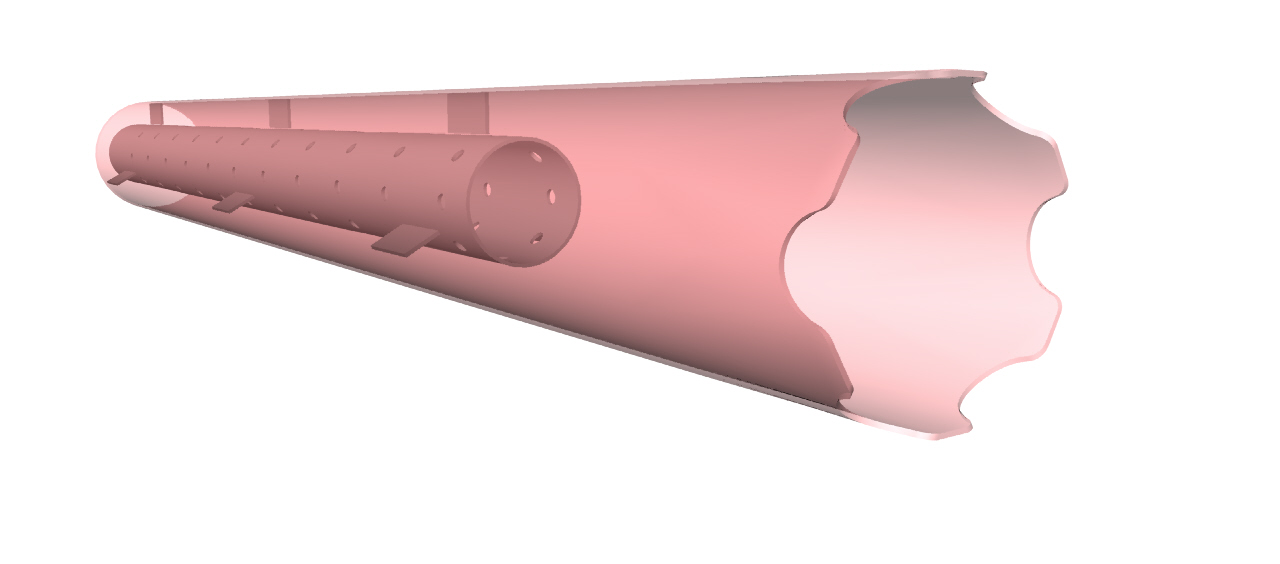
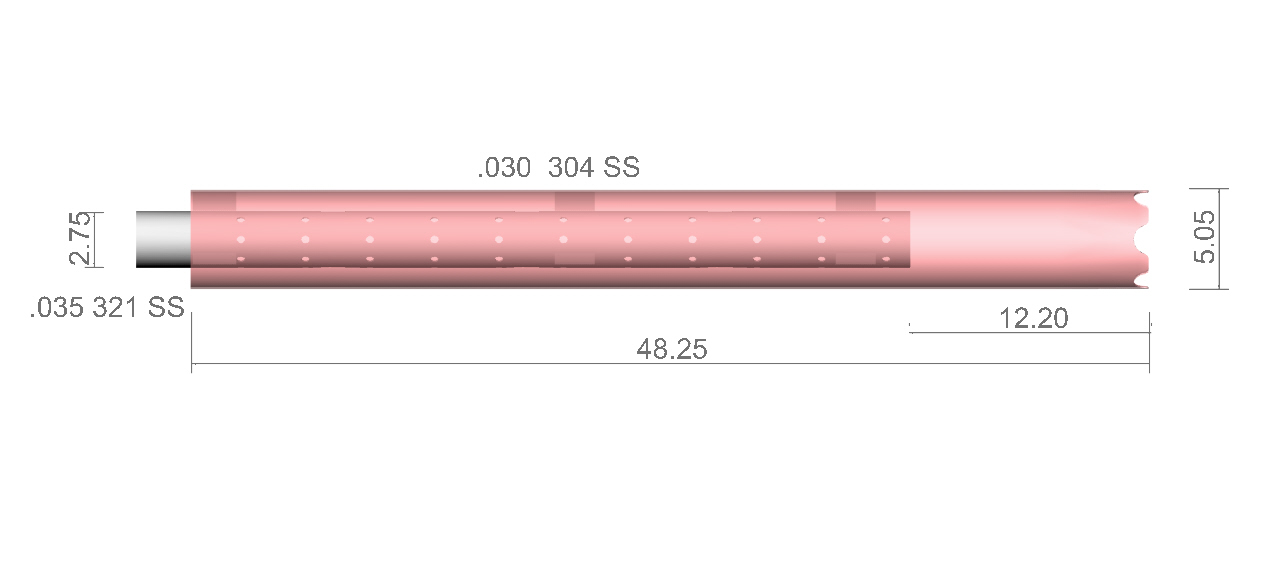
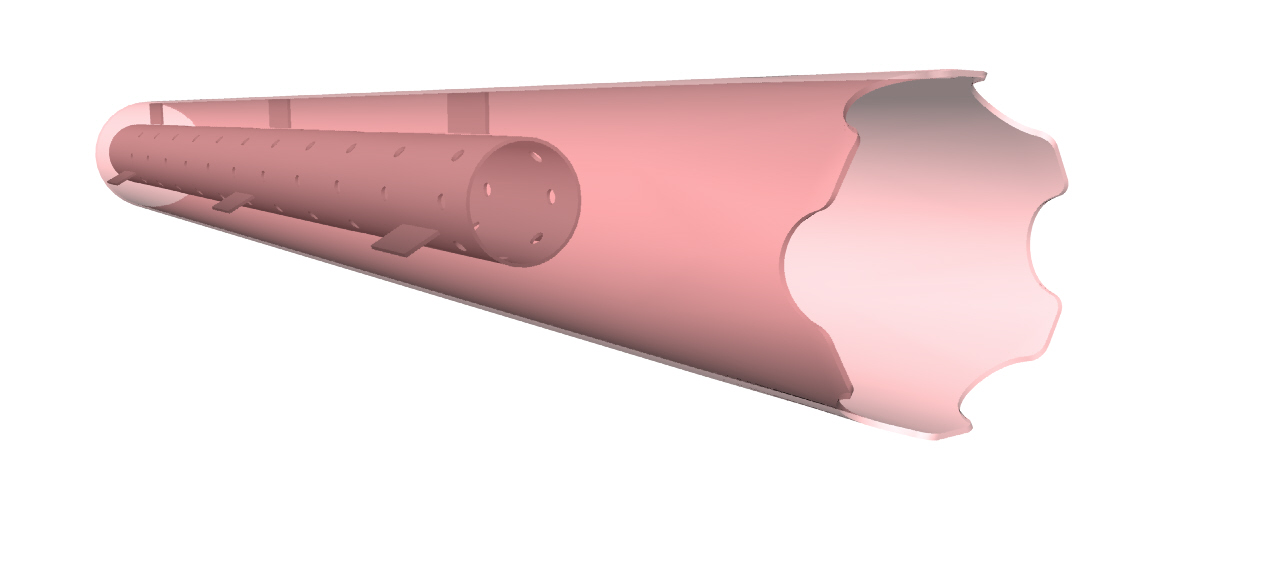
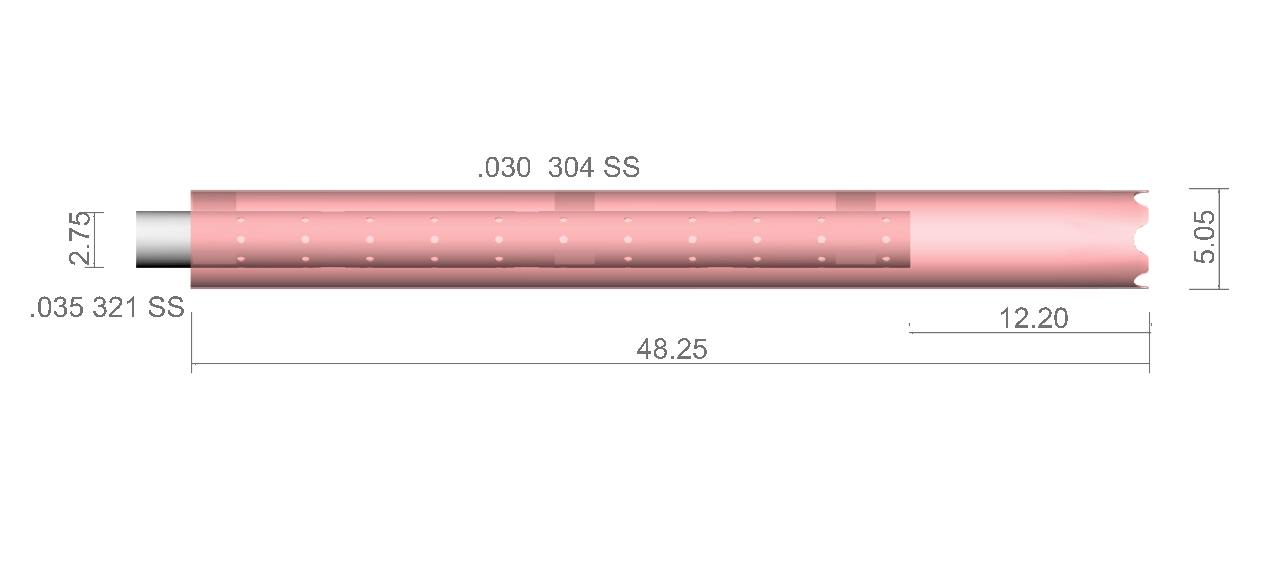
    My new coax muffler.

    Brian

    Looks like the holes in the inner pipe need to be larger
    towards the aft end.

    Paul Lamar

    It's a little too late for that, I already welded the assembly together.
    But, I did pinch in the exit end slightly to increase the pressure
  toward  the exit end of the pipe- it's not a huge obstruction, but
  enough to have  an effect,I hope.

    Brian Trubee

  You say you pinched the exit to increase the pressure towards
  the end of the pipe. Now,  I'm not an expert but I'm pretty
  sure that pressure decreases in a venturi, so you would be
  lowering the pressure. I can't see the pictures though so
  I'm not entirely sure.

  Wesley B.

  That is true but take it to the logical conclusion or limit.
  What happens if the inner pipe is completely blocked off?
  Obviously the pressure in the inner pipe gets higher. That
  is why they call it exhaust back pressure.

  When does the pressure change from lower to higher?

  The answer is the pressure in  the pipe is higher than
  the outside pressure to begin with.

  The venturi principle assumes the pressure inside and outside
  the pipe are the same to begin with.

  Paul Lamar


  The "pinch" will cause a flow restriction at that point. That will
 cause the
 upstream pressure to increase. The flow velocity across the pinch area will
 then increase, at that point. If you measure the pressure with a mercury
 manometer or gauges above, at the smallest diameter and down stream you
 will
 note the pressure differences. If you have a length of pipe the same
 diameter
 as the initial pipe down stream of the pinch or venturi, the pressure will
 return to close to the upstream pressure. This is Bernoulli's law. When the
 gas or liquid gets to the end of the pipe as in exhaust, it will resume
 to be
 at atmospheric pressure as it is no longer contained. The fluid inside the
 pipe has friction with the inside of the pipe which resists flow. This
 causes
 a back pressure even in a pipe without a venturi, if the pipe is long
 enough.
 There are headers that use a venturi just downstream of the collector to
 increase the power.
  Pipelines require compressor stations every 100 miles due to the friction
 with the pipe or the flow would stop.

 Dale Davies

 I went up to Brian's hangar at Boeing Field and Brian ran the engine with
 the new muffler. The installation is not finished yet.

 The sheet metal panel shown here will be removed to get
 more slip stream air to the outer pipe. This whole area
 of the cowl/cooling-scoop will be redesigned.

 However I was pleasantly surprised with the results.
 It was about the same nose level as other rotary installations
 but the tone was much improved. The note was much lower.

 It has to due with the fact that the inner pipe stops 12 inches
 in from the end of the large diameter outer pipe.
 The over all length was 51 inches.

 It is also working as an ejector or thrust augmenter. I checked that by
 placing my hand behind the large pipe. In theory this muffler has no back
 pressure and may in fact reduce the back pressure on the engine. IMHO a
 minor break through in rotary mufflers over all.

 It will get better as improvements are made. One thing
 Brian will try is scallops on both pipes like a 787 engine.

 More pictures and movie's when I get back home in a couple
 of days.  Also I will attempt a audio spectral analysis
 comparison.


 Paul Lamar

Very similar to what effect i was looking for, namely to get the exhaust to
pull air through the heat exchangers on the ground, and make it do some
useful work. Thanks Brian, i think i'll do something very similar, keep it
coming,

Alex

It is a combo muffler and ejector.

Paul Lamar

This clip is of Brian Trubee RV4 with a coax muffler.
IMHO it is less annoying :)

For comparison here is an assortment of rotaries.
Mike W. NA 2 rotor, Dave L. 13B turbo,  Al G. NA 3 rotor.

Borrego Springs rotary flyin
http://www.youtube.com/watch?v=dibuqenWcOk

RX8 P-port on the dyno.
How to build a P-port
http://www.youtube.com/watch?v=NKJ00JsnS8A


Paul Lamar

Agreed, the new muffler sound is much more appealing. Will incorporate that design as
a second stage. Should end up being very tolerable, square tube spiral/can up front,
long eductor on the bottom.
C. Smith

Here is what we mean about scallops.
The main reason for the improved sound is the larger dia of the outer pipe.
A lot of the fast and furious crowd here in socal put large diameter tips
on their Honda  mufflers to get the lower notes.

Paul Lamar


--
The Rotary Engine News Letter. Powered by Linux.
ACRE NL web site. http://www.rotaryeng.net
You Tube key word PaulLamar2
Copyright 1998-2012 All world wide rights reserved.