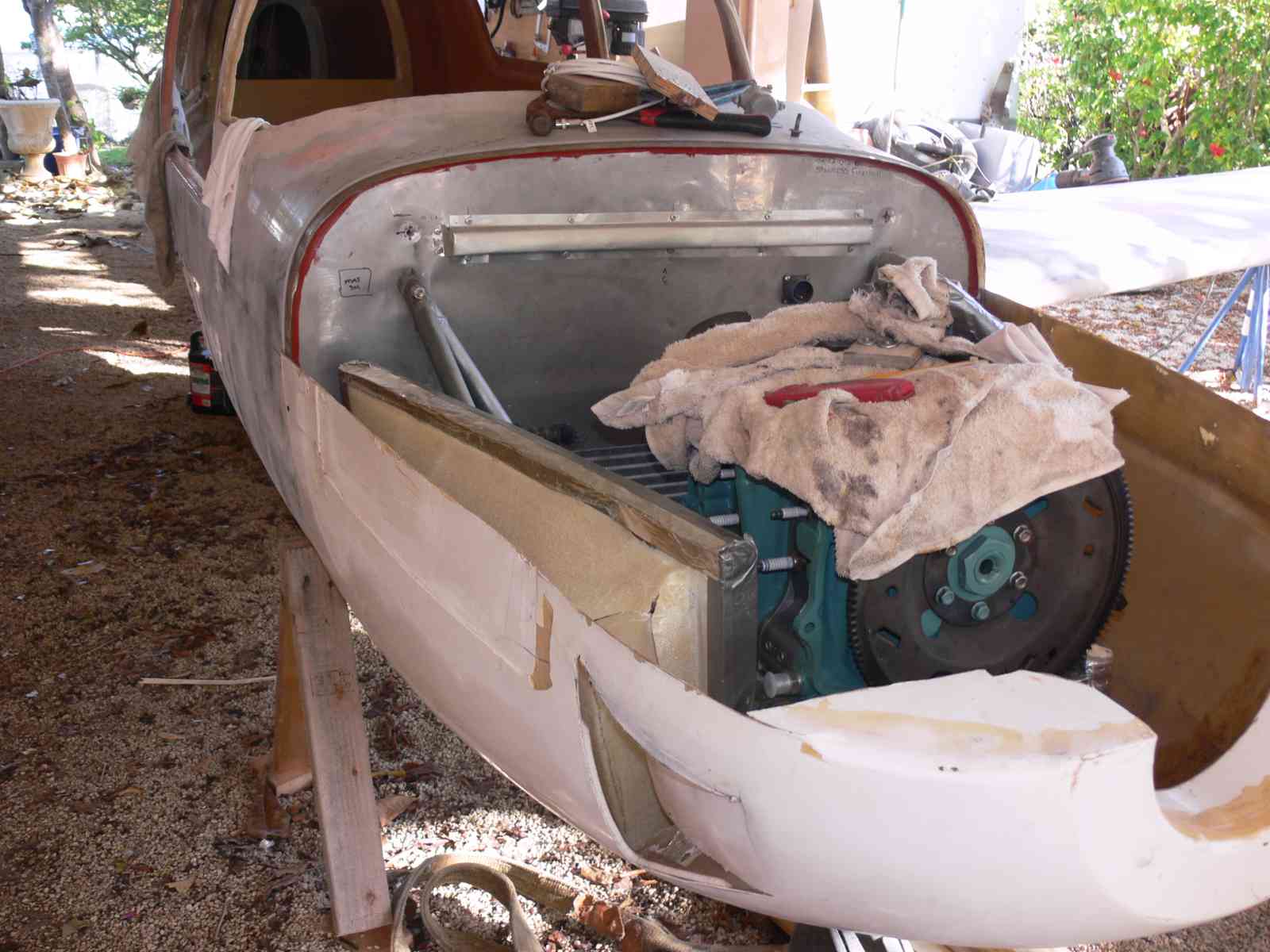
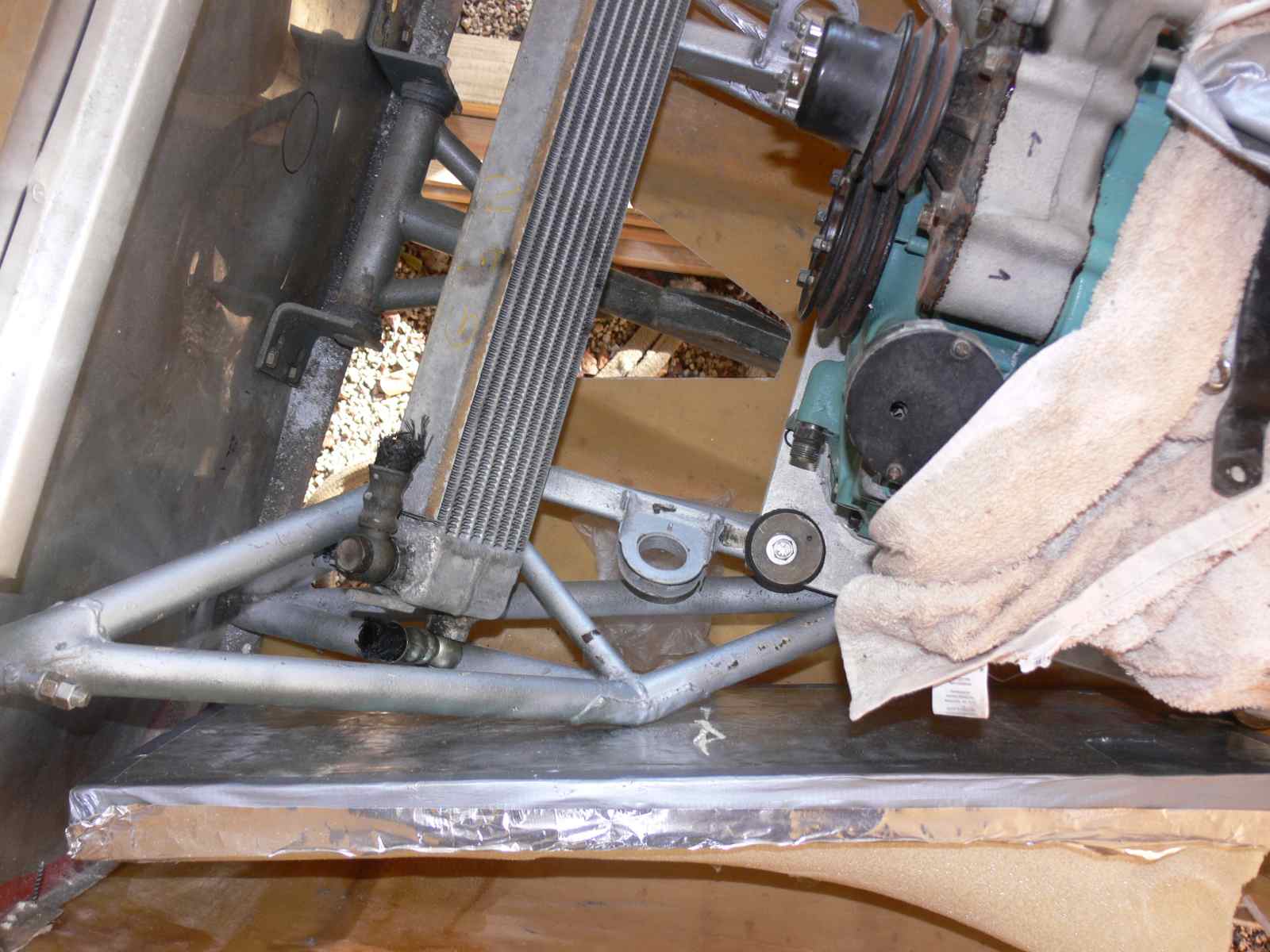
In my plane the largest radiator I could fit under the cowl and not under
the engine was an MR2 radiator. Its core size is 26 x 12. What radiators
are the high HP p port guys using? Primarily I would be looking for
size,material and number of cores. If you used a remote fill
container with
the radiator cap, did you buy it or make it?
Aluminum welding isn't easy to learn and even more difficult to have the
equipment to do it in some places, so an off the shelf version would be
nice. However, if you cant get one find a way to make it. That requires
dimensions. Next time you are in the hangar, take a pic of the cooling
system and send it over. Notes help, and a measuring tape in the
picture is
worth its weight in gold. KA The ideal core is out of a Dodge pickup.
Probably overkill. With our asymmetric motor mount and motor plate
the rad
core will fit vertically on the plug side of the engine. The turbo will
also fit with the asymmetric motor mount.
KA
I don't recommends using the stock Cont. mount. The motor mount is the
last
thing to be designed. First one fits all the major components. Then
one
builds the mount around them. A good 3D program like Rhino is
essential.
The stock cowl shown will work fine, No room under the engine with a
nose
gear for the rad core. Several airplanes are flying with this
arrangement.
Nothing new here.
I still need the dims on the firewall hard points to finish this.. A
stock
Corvette pressure can works well.
http://tinyurl.com/d6p3s9p Paul
Lamar I
will confirm the dims of the mounting points today after the sun comes
up.
The stock Cont mount has a few more bars than some of the other
mounts, but
the only ones that are in the way are the ones for the retractable
nose gear
brackets. I am holding out hope that I will be able to make the
retracts
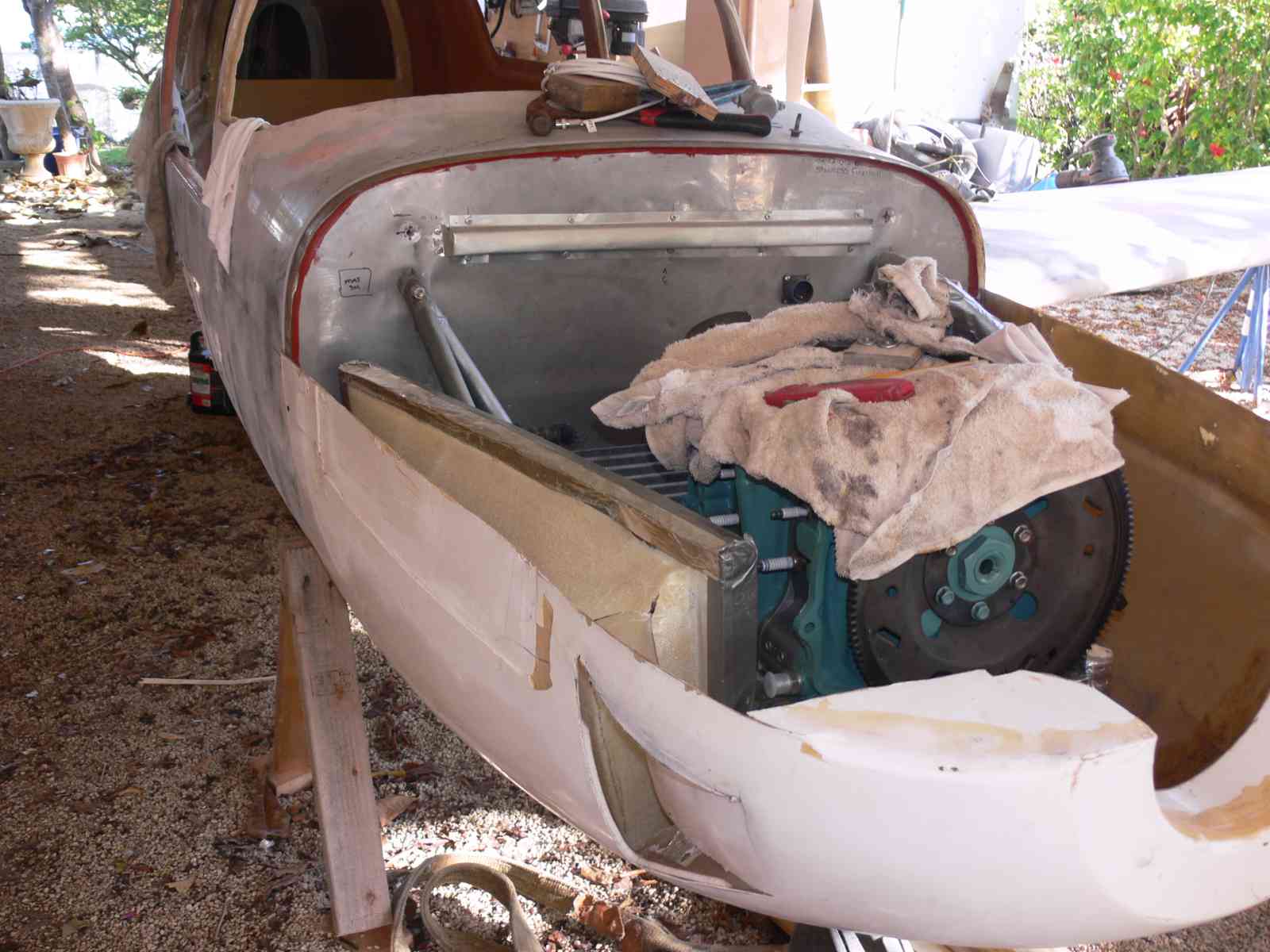
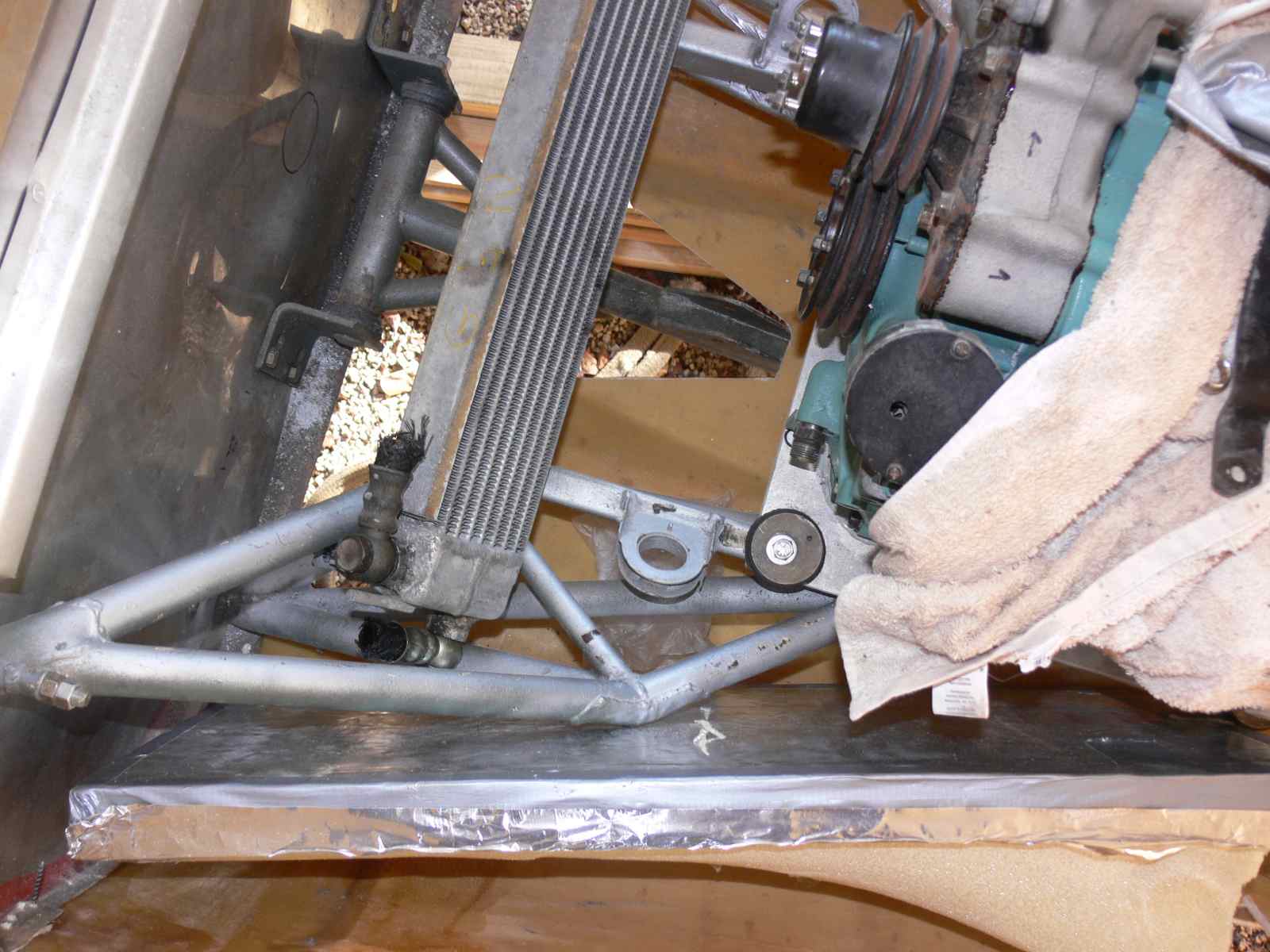
work at some point. Now that I have the radiator mock up in the cowl,
the
tubes aren't in the way much at all.
I cant get a Dodge truck radiator in the cowling- 14 inches high is about
the max and be able to close the hood. The MR2 rad gives me a few inches
either end, and room above and below tor get my hands around it.
KA
All rads are aluminium now a days. Back about 5 years ago everybody had
cooling problems before we got a handle on it. It takes about 600 cubic
inches of rad to cool a 200 HP rotary. For a 250 HP turbo it takes about
750. That is for a 3 inch thick rads. Knock off 25% for a 1 inch thick
rad.
BTW Here is a simple way of looking at cooling drag as it affects rad
thickness. Lets say we have a 1 square foot cooling scoop. If the scoop
was completely blocked the drag would be full dynamic pressure. Dynamic
pressure at 200 MPH is 100 pounds per square foot. 200 MPH is about 300
feet per second.
Therefore the HP consumed is 300 x 100 or 30,000 pound foot per
second. 550
pound foot per second is one HP so our blocked scoop is consuming 54
HP. If
the scoop was totally open and the air went straight through with no
restriction the drag and HP consumed would be near zero. Only a little
bit from skin friction. Thinner rads have less restriction but more
frontal
area for the same volume. The job of the diffusers is to increase the
area
of the duct. If you increase the area of a duct the air velocity is
reduced
but the volume of the air passing through is the same. Since drag is air
velocity squared.....By now you can see where I am going with this.
This is why Kays & London wrote: "the use of highly compact [efficient]
surface geometries is that the resulting core shapes are characterized
by large flow frontal
area and short flow lengths for the gas-flow
path".
-------------------------------------------------------------------
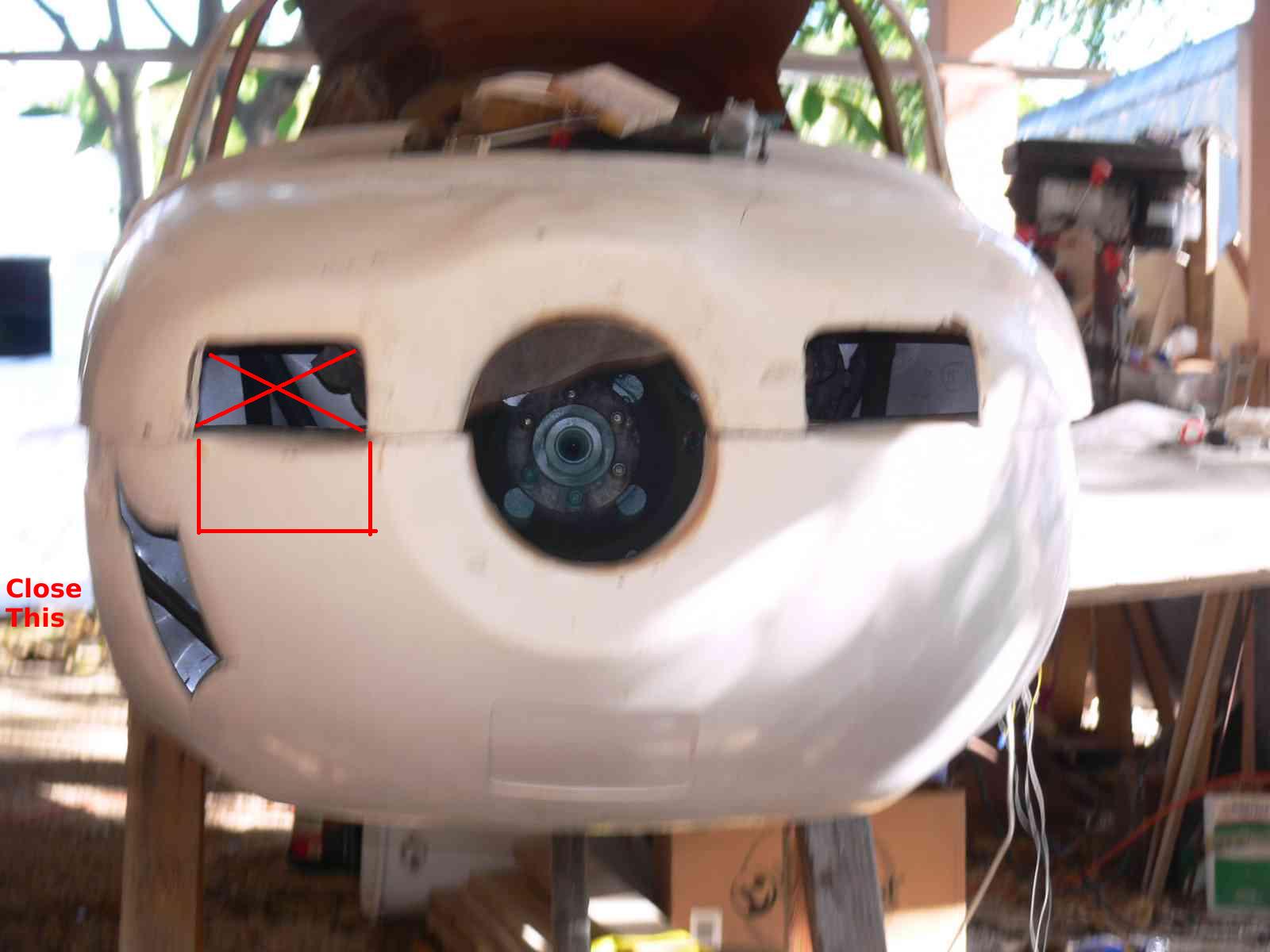
Close the NACA scoop. NACA scoops don't work when feeding restricted
ducts. The air merely bypasses the opening due to positive pressure in
the duct.
Ideally you want the nose scoop half way down the rad. Moving it down
from where it is. Nose scoops are best as they see full dynamic pressure.
Here is a pictures of the MR2 rad mock-up sitting in the cowl.
The rad can be 4 or 5 inches higher. Every little bit helps.
The motor mount is workable but the aluminium plate between the pan and
the block will flex causing oil leaks. Making it thicker will help.
The rad comes close but the mm tubes do not significantly block the flow.
I don't think the stock RX7 oil cooler is going to work with a turbo.
Your on the right track with the diffuser for the rad.
Paul Lamar
--
The Rotary Engine News Letter. Powered by Linux.
ACRE NL web site.
http://www.rotaryeng.net
You Tube key word PaulLamar2
Copyright 1998-2012 All world wide rights reserved.