http://www.lanasta.com/Shop/__product/142/the-bugatti-100p-__record-plane.html
Jim Rudholm
The drive shaft would have been a real problem as it was in the P39
originally until Alison and Bell worked out a solution.
------------------------------__-----------------------------
Another fatal flaw is the swept forward wing box spar.
This puts a torsional load on the spar carry through
that will cause the wing to flex in a vary unstable
manor. Particularly if the carry through is made from something
other than carbon fiber. A wood spar would be fatal as
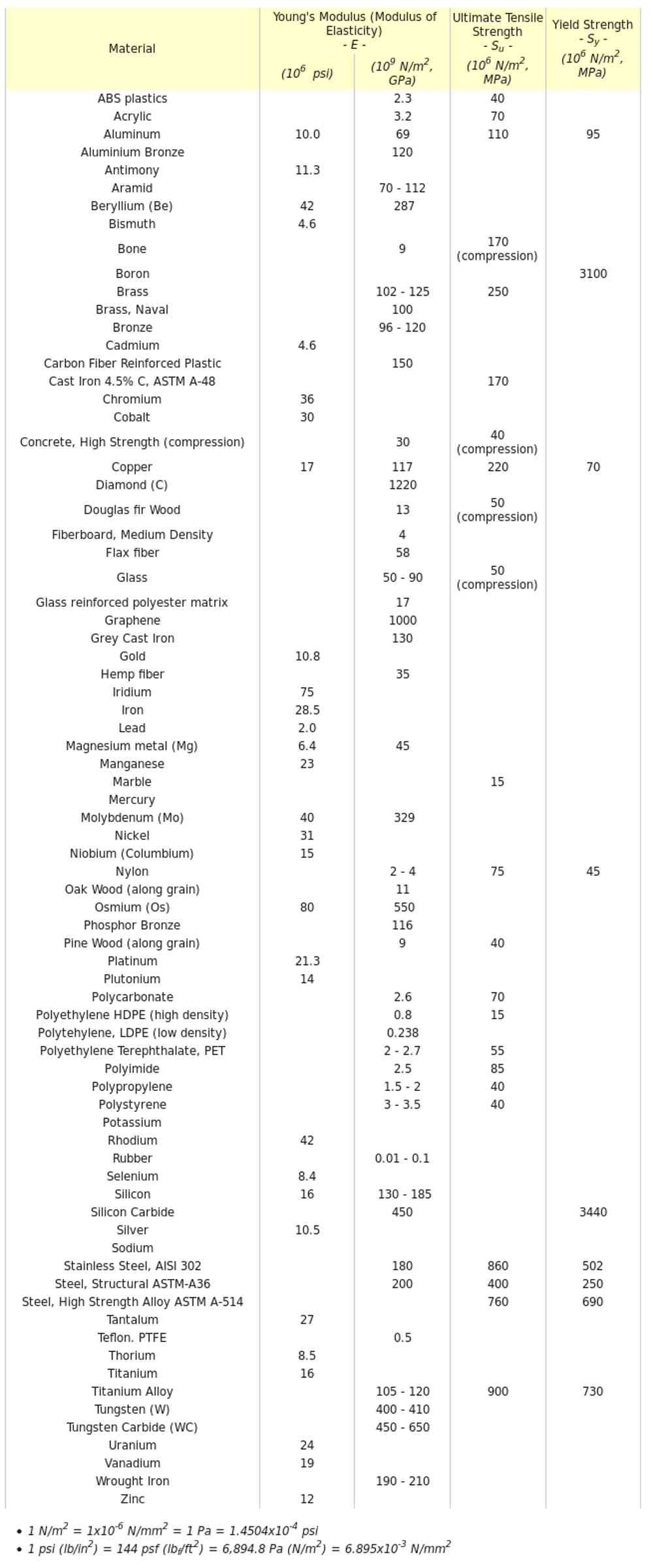
wood has very low modulus of elasticity.
The tip of the wing will tend to increase in angle of attack
at high lift coefficients setting up a torsional flutter mode.
I also see no means of cooling the engine.
Paul Lamar
Paul,
The heat exchangers are in the tail forward of the empennage. The inlets
are in the leading edges of the v-tail and the outlets are in the aft wing
root fairing. The way they made the forward swept wing work on the X-29 is
they tailored the layup of the graphite so when the wing was loaded, the
wing would twist the other way. I don't know if they thought of that but
that isn't a lot of forward sweep. The FW-190 effectively has a forward
swept spar to make room for the landing gear without the cranked leading
edge like the P-51 had.
Steve Brazil
So long as the spar was centered over, or a bit ahead of the average
center of pressure for the airfoil at each station, the designer could
have the wing torsion in either direction he
might choose, or not at all.
This is a stunning design by today's standards let alone 1937.
Lynn E. Hanover
It is the carry through torque box that is the main problem.
The center of pressure lies along a line at the 1/4 cord point more or less.
If if the point of the average lift is ahead of a center line passing
through the carry through torque box the torque box will twist allowing the
angle of attack to increase with lift load. The wing goes up at first.
A combination of the spar bending and the torque box twisting.
As the angle of attack increases the outer sections
stall and the mass of the wing is forced down by the carry through
box. The wing object has mass. Objects in motion tend to stay in motion
until acted upon by an outside force.
Now the angle of attack increases in the negative direction and the
tip is forced down aerodynamically until a stall happens in
that direction. The wing goes back up.
The cycle repeats over and over again while
the amplitude of the deflection increases until catastrophic
failure occurs. This is intrinsically a classic resonant condition.
The carry through torque box is the torsion spring and the wing
is the resonant mass.
The Tacoma Narrows bridge failure is a good example.
http://www.youtube.com/watch?__v=j-zczJXSxnw <http://www.youtube.com/watch?v=j-zczJXSxnw>
Here is actual wing flutter.
http://www.youtube.com/watch?__v=aZQlmxrmjXQ <http://www.youtube.com/watch?v=aZQlmxrmjXQ>
http://www.youtube.com/watch?__v=kQI3AWpTWhM <http://www.youtube.com/watch?v=kQI3AWpTWhM>
This swept back wing is twisting in the right direction.
http://www.youtube.com/watch?__v=fa-MD773ZAQ <http://www.youtube.com/watch?v=fa-MD773ZAQ>
http://www.airspacemag.com/__video/Wing-Flutter-on-a-747.__html
<http://www.airspacemag.com/video/Wing-Flutter-on-a-747.html>
Paul Lamar
Paul, your absolutely right on the overall sense but IIRC a forward swept
wing is ok w/ a typical internal structure up to 5 or 7 deg of
forward sweep, after
that thinks get exponetially more difficult to keep in one pc. Todays high
performance composites handle it easily and the plywood laminations of
the Bugatti probably would have helped. The bigger concern w/ this
design for me is the 'tail volume'. Just eye-balling it but w/ that long nose
and forward swept wings I think the tail is about 50% too small [even w/
the 'Y' config]. That long needle nose looks to be very destabilizing
when coupled w/ the forward swept wing which yields some pro-verse
[or is it advse?] yaw.
I believe there was a forward swept design outta Europe a number of
years ago [a GA plane similar to a cherokee sometime in the 70/80's]
and they had no adverse yaw issues up to 5deg forward [all IIRC].
However couple the two together [nose and forward wings] and it HAS
to require more tail volume for control. I believe most RC types of this
design have 'over scale' feathers but that isn't entirely a 100% direct
correlation to fullsize.
Fwiw
Jarrett Johnson
As long as we are just speculating about the Bugatti !00 I would like to
defend the long dead designer. Firstly this wing is a highly tapered of
very low aspect ratio which provides a spar at the root end much more
massive than a Hershey bar Vans wing of the same area. The likelihood of
deforming such a massive spar would seem remote. Secondly, the videos of
wing flutter appear to me to be control surface flutter loading and
unloading the wing through those stations creating bending rather than
twisting of the wing..
The aircraft looks to be operating in level flight so the airfoil is near 2
degrees angle of attack. Very few airfoils stall below 11 degrees and many
are still producing lift at 16 degrees AOA.
If this video was wing twist we would be seeing 22 degrees of wing twist
cycles positive to negative. On the other hand, the V-tail leading edge
cooling air intakes are a bit odd. Ducting the air through the air frame
would appear high in drag counts. Also the area of the intakes seems large
compared to today's standards. What area would be appropriate for 700 HP?
george grimes
It is true that aileron control surface deflection can cause a wing to twist.
You can definitely see the wing twisting in these vidios.
http://www.youtube.com/watch?v=jW8I2hX4GSs
http://www.youtube.com/watch?v=fa-MD773ZAQ
http://www.youtube.com/watch?v=aZQlmxrmjXQ
http://www.airspacemag.com/video/Wing-Flutter-on-a-747.html
Wings are usually weaker in torsion than in bending.
The lift is at the 1/4 cord point while the center of twist is mostly
near the 1/2 cord point unless the structure is specifically designed
designed to move it forward with a D box wing spar. I see no
signs of that in the Bugatti. Van's wings however always have
a D box spar in effect as the wing leading edge .032" skin provides
that feature. The Van's "spar" itself has little stiffness in torsion.
To do that in plywood would mean the ply on the Bugatti wing leading
edge would have to be .169" thick. Aluminum is 7 times stiffer than wood.
Carbon fiber is 12 times stiffer than wood.
BTW I don't agree with the very low aspect ratio on the Bugatti wing.
http://en.wikipedia.org/wiki/Aspect_ratio_%28wing%29
"For most wings the length of the chord is not a constant but varies along
the wing, so the aspect ratio AR is defined as the square of the wingspan b
divided by the area S of the wing planform."
AR = b^2 \over S
I would say it is near average for a piston powered plane.
Maybe near a Van's RV AR :).
Paul Lamar
The Rotary Engine News Letter. Powered by Linux.
ACRE NL web site.
http://www.rotaryeng.net
You Tube key word PaulLamar2
Copyright 1998-2012 All world wide rights reserved.