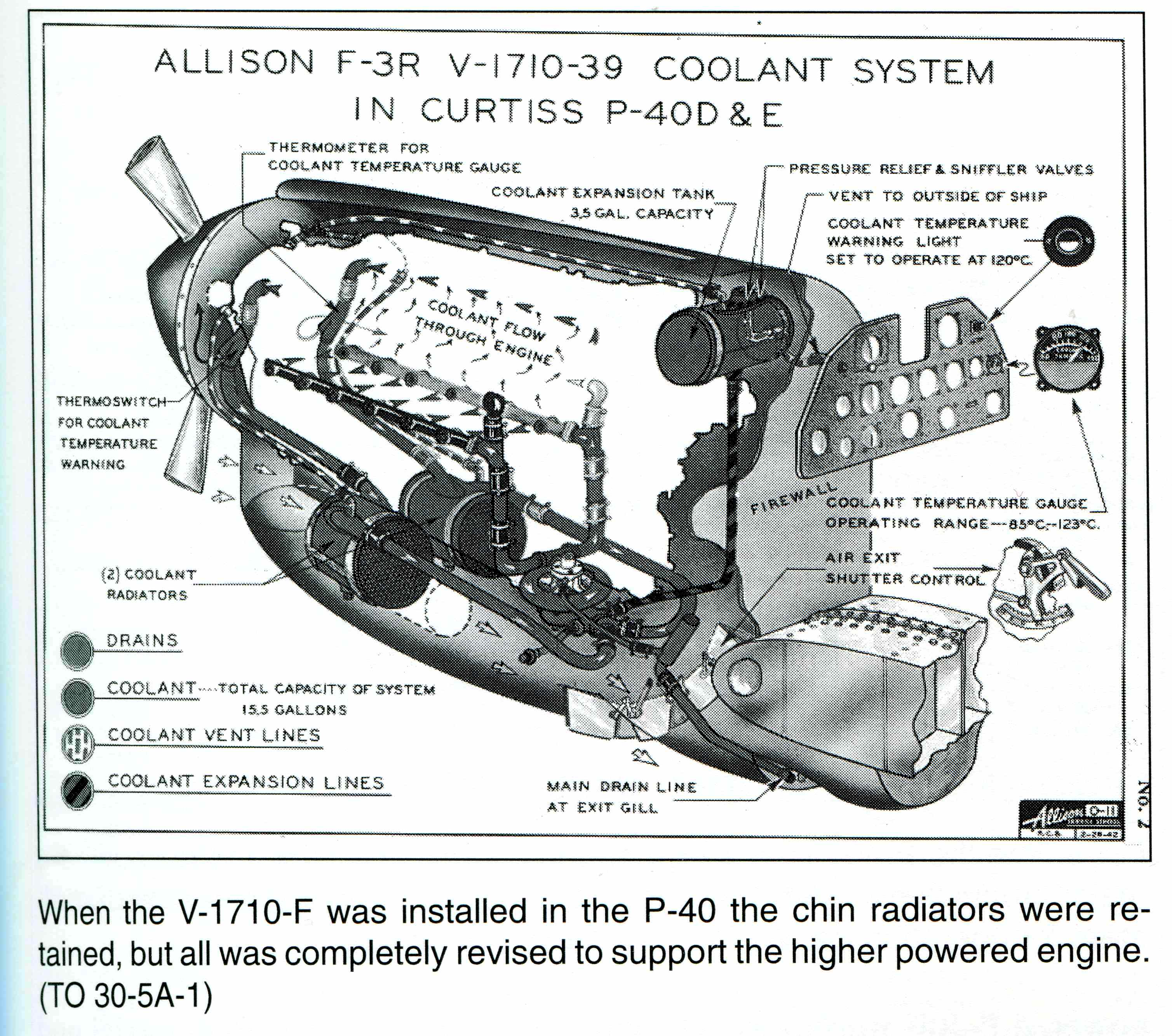
More stuff from V's for Victory.
I blew them up from the book to make them easier to read.
What they did not realize in those days was the first half of
a thick heat exchanger does 3/4 of the work and the last half
does only 1/4. This is because the cooling air warms up as it
passes through the heat exchanger. The rate of heat transfer is
proportional to the difference in temperature.
They did not understand modern wedge shaped diffusers either or they
would have used them :)
-----------------------------------------------------
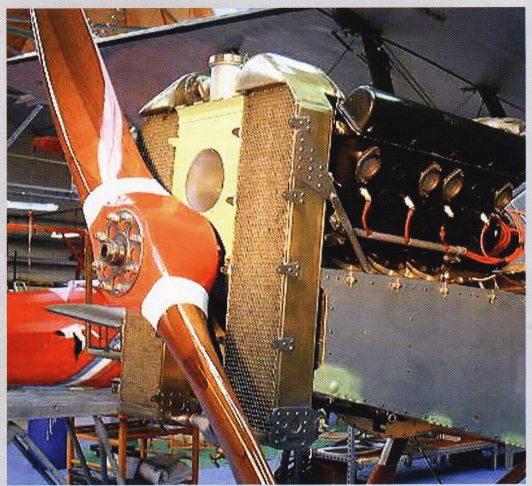
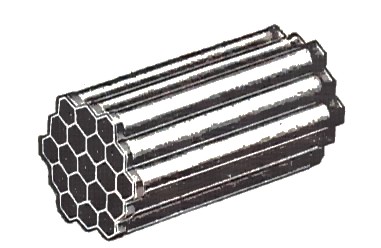
I have always been fascinated with the old honeycomb or bunch of tubes
type WW II heat exchangers. They obviously were not all that inefficient in
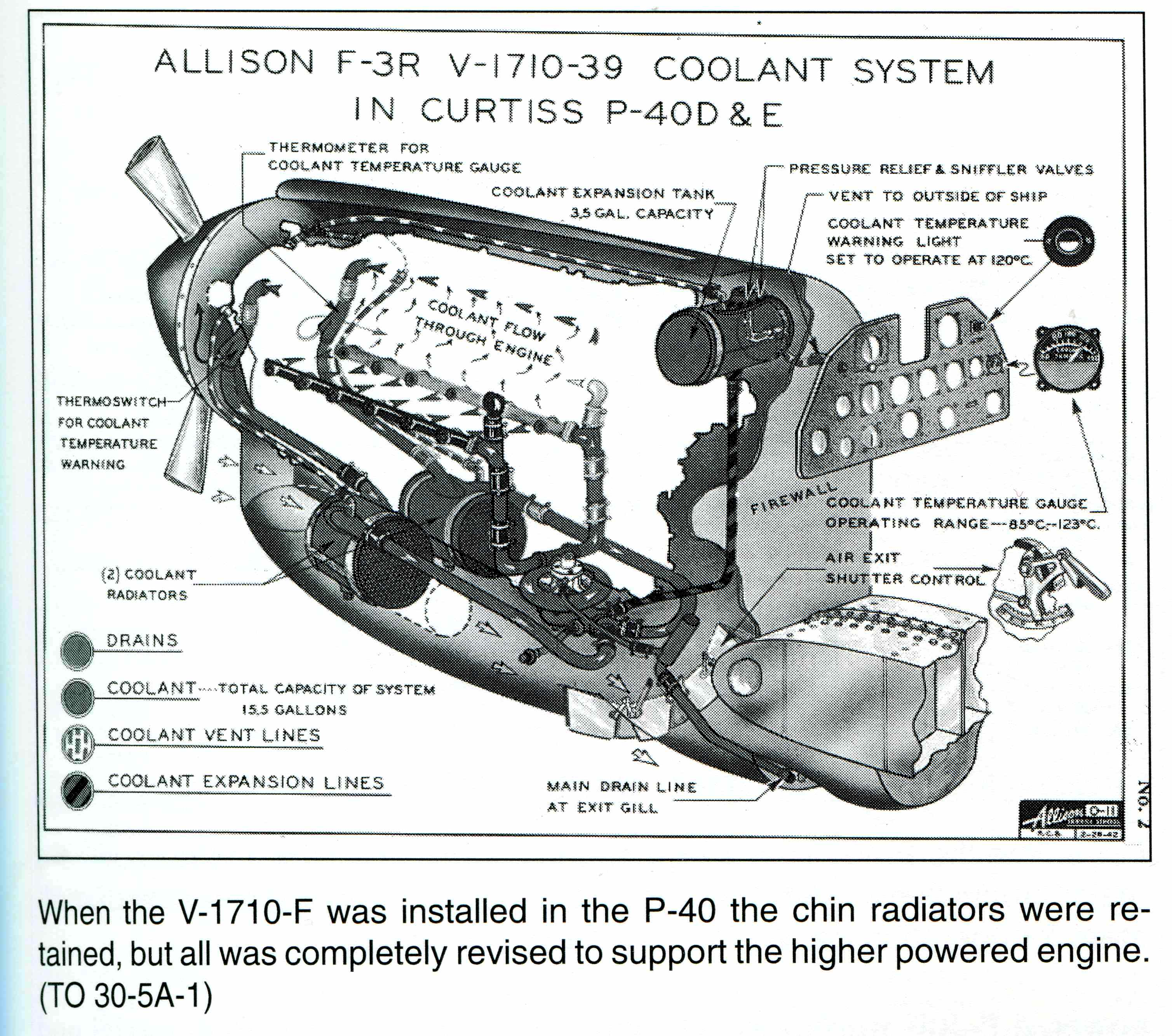
the versions that were not too thick. Apparently the hot coolant was dumped
into the top and made it's way to the bottom surround all the air tubes
in the process. Also the temperature of the tube near the front of the
core was cooler than that near the rear.
Good argument for keeping the length of the tubes short.
In the thicker versions the designer was motivated to keep the frontal
area down as little was known about modern diffusers. The scoop had
the same opening area as the frontal area of the core more or less.
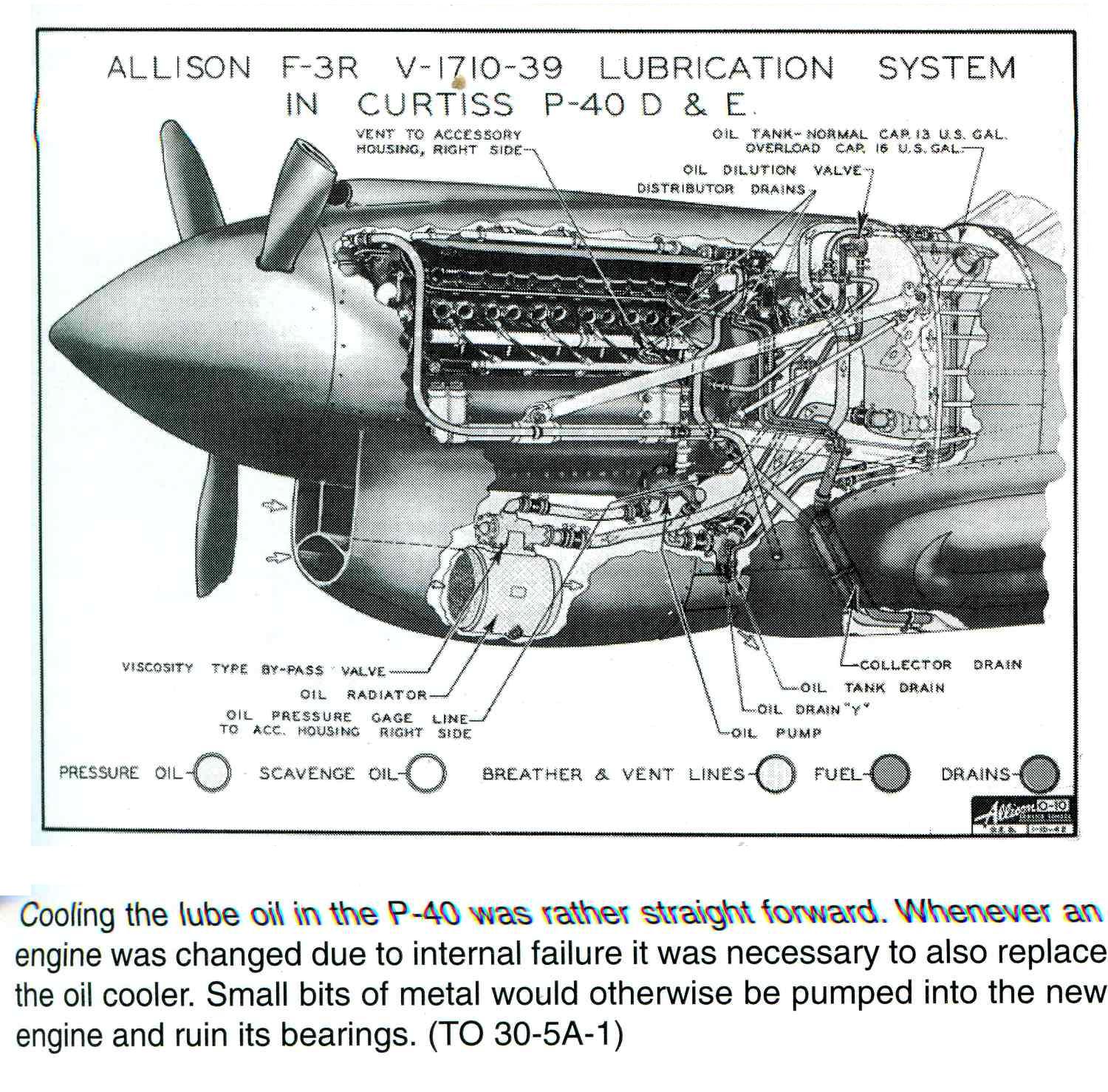
The P40 is a good example.
I would love to see a finite analyst
of such a core showing the temperature of all the parts.
The great thing about these cores is they are cheap and easy
to make and can be made in any two dimensional shape. Want a rad surrounding
your gear box? No problem. Swag the end of the tubes to a hex shape and
furnace braze them together. Brass, copper or aluminum.
http://www.replicore.co.nz/warbirds.htm
This guy can do it for you.
rumbo@replicore.co.nz
Paul Lamar
--
The Rotary Engine News Letter. Powered by Linux.
ACRE NL web site.
http://www.rotaryeng.net
You Tube key word PaulLamar2
Copyright 1998-2012 All world wide rights reserved.