Paul,
Thanks for the heads up on the P-39. Do you have any references
to the problem(s) and cure?
Thanks,
Jim Rudholm
From the book "V's for Victory".
Paul Lamar
------------------------------------------------------------
A New Generation of Fighter Aircraft
Overall, it had taken several months for Allison to both literally invent
and develop the new type of hydraulic vibration damper sufficiently to
complete the contract required engine qualification tests prior to
authorizing the first flight. Using the first model of the vibration
damper,
work went ahead in preparation for the first flight. Active development of
the hydraulic damper for the XP-39 continued until July 31, 1939 when the
35
hour qualification test was successfully completed.
After identifying the 1/2-order vibration from the long extension shaft,
Allison at first argued that the Army should proceed with flight tests of
the airplane and simply minimize operation in the high speed range where
the
vibration became objectionable. Wright Field objected, noting that should
a
single cylinder short-out during high power operation that 1112 of the
power
of the engine would be contained in the vibration, a condition they
maintained as unsafe. This was confirmed by Allison on their workhorse
engine when they demonstrated a violent shaking when the event was
simulated. As a result Allison designed new extension shafts that were 30
percent stiffer by increasing them from 2-1/2 inch diameter and 5/32 inch
(0.156 inch) wall to 2-5/8 inch diameter and 0.200 inch wall. This, in
combination with the further improved hydraulic damper, raised the system
natural frequency and better dampened torsional vibrations so that there
were no serious resonant speeds for torsional vibration encountered from
600
to 3100 rpm.127 The new extension shafts were not available prior to the
airplane being sent to the NACA for wind tunnel testing, further
suggesting
that the airplane was never allowed to attempt a full power performance
demonstration of its capability before being rebuilt as the XP-39B.
Finally, on April 6, 1939, the XP-39 flew for twenty minutes with Bell
test
pilot James Taylor, USNR, at the controls. The engine incorporated the
hydraulic vibration damper, but not the stiffened extension shaft, so care
was taken to minimize operation of the engine in the high vibration
ranges.
John Kline, the Allison man assigned to the XP-39 relates that, "We had
the
Goo Damn'st Party that night at the Biltmore that you ever saw!"128
------------------------------------------------------------------
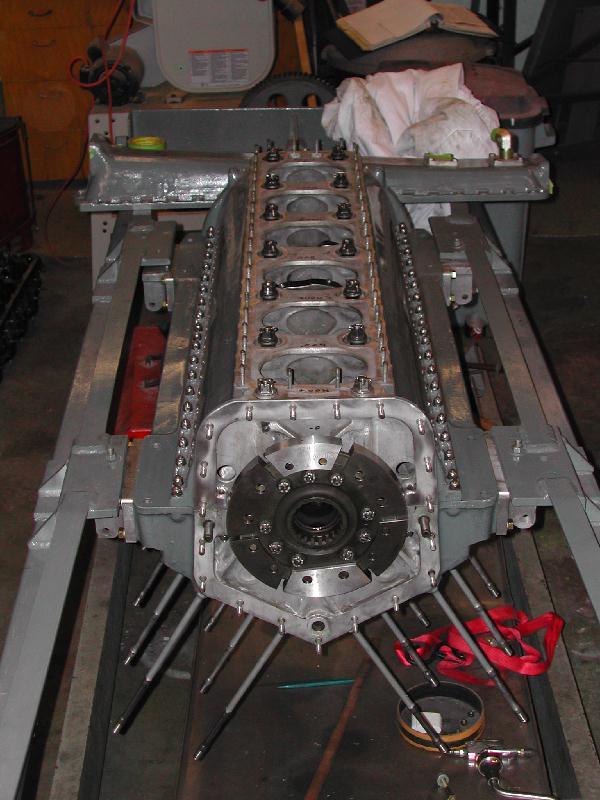
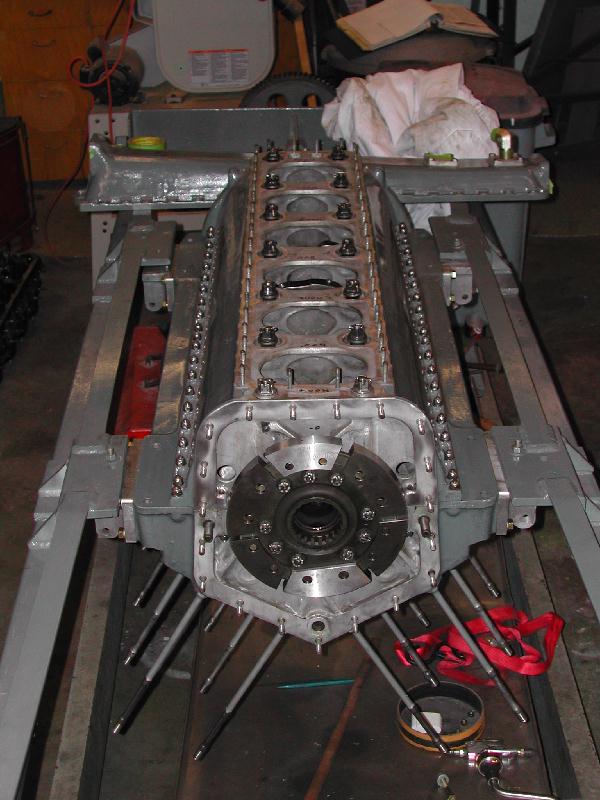
Hi, a quick look at the book and pictures show no damper between the
crankshaft and gearbox. The hydraulic damper mentioned seems to be on the
other end of the crank.
Murry I Rozansky
The nose of the crank is the usually places for torsional dampers.
Just about all V8's have them there.
Even the 4 rotor does not need one :)
This looks like a mechanical version.
BTW have you used the prop dyno I donated to the EAA chapter yet?
Paul Lamar
The Rotary Engine News Letter. Powered by Linux.
ACRE NL web site.
http://www.rotaryeng.net
You Tube key word PaulLamar2
Copyright 1998-2012 All world wide rights reserved.
`