As I progress toward the final installation of the turbo, I noticed striking
similarities between the old one I have for the 13b, and the one on my
truck. My truck is a dodge with the cummins diesel in it with a turbo that
is rated for continuous duty. I know from mountain pulling that the truck
wont burn over 8.4 gallons per hour WOT, because I have held it down for
long enough to know. My 2500 pickup has pulled heavy equipment all its
life, tagged for 34K lbs and fully equipped with all the DOT stickers that
are required. 225K miles later it hasn't even had as much as a belt changed
out on it. It gets 24 MPG highway and 22 city. If the engine didn't weigh
1800 lbs running, I would try to find a way to put her in the plane :).
Back to the turbo- the stock turbo on the truck has an A/R of close to 1 on
the turbine side, large turbines, internal wastegate and wet bearings.
Earlier models had roller bearings and no wastegate.
The truck turbo is slightly larger than the mazda T03/ T04 but the exhaust
flange is remarkably close to a bolt on fit.
I am thinking that the turbine speed is a function of the energy in the
exhaust, a combination of volume and velocity. Velocity is reduced by a
larger turbine housing going through a larger turbine. The displacement of
the Cummins is 359 ci, and its max rpm is 2800. This equates to 8260 liters
per minute for the diesel, compared to 7800 lpm at 6000 for the 13b. Lower
A/R turbos are designed to spool up fast and hard, higher A/R turn up slower
and hold out at higher RPMs. I think the latter is what we need for our
application.
In the cummins this turbo normally outputs 21psi, and if you hop up the
truck and adjust the wastegate 40 is easily possible with cherry red exhaust
as a byproduct. This same turbo is used on our boat engines, which are run
at 2400 rpm, 85% max power for hours and hours on end. One boat has
insulated dry turbos, the other has wet- i.e. water cooled turbos. In both
cases the turbos outlasted the engines. In the case of the dry turbos, they
outlasted the engines and after checking were reinstalled on the new engines
and their work continues..............over 3000 hours and counting.
http://www.ebay.com/itm/Cummins-Dodge-Ram-5-9L-Turbo-Turbocharger-HX35W-3538881-new-/1810390073
Kevin Alderman
Diesel exhaust is 200 to 300 F cooler than the rotary exhaust.
When the red lines get closer together the turbine blades fail
from bending fatigue.
Paul Lamar
Hi Paul and all.
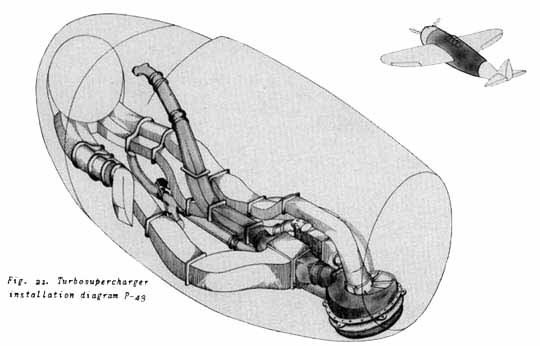
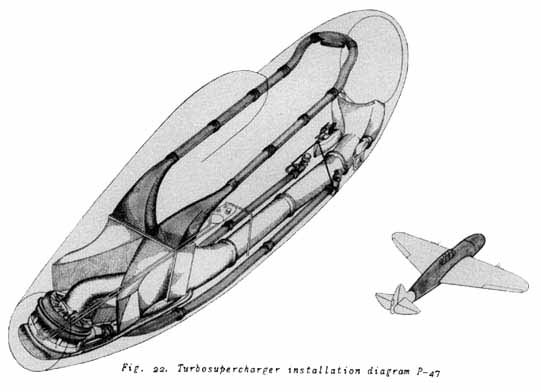
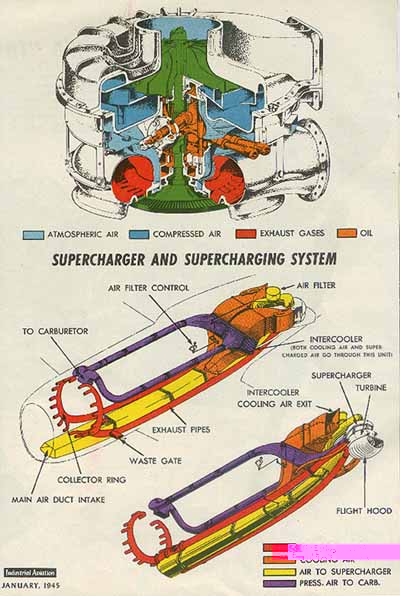
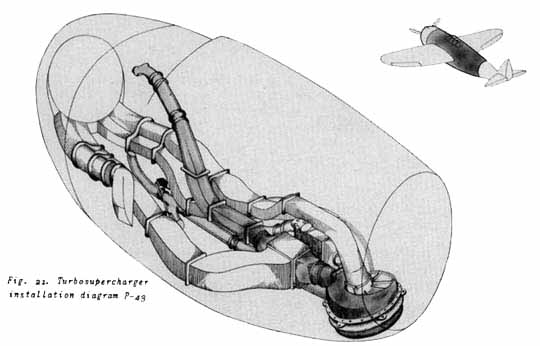
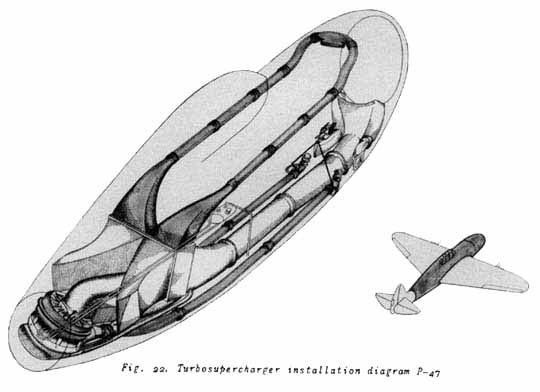
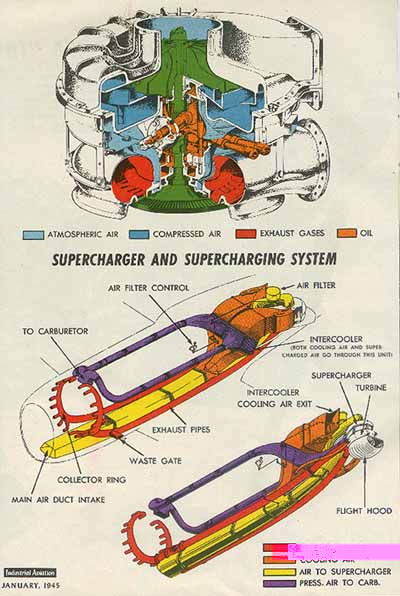
What is the effect of placing the turbo further away from the ports?
I seem to recollect that some war time turbos where a long way from the engines.
I would expect less thermal and kinetic energy, but if there is an abundance of these
could this be used to reduce the turbine temps and so reduce the load on the blades.
Steve Izett
Two things. The exhaust gas cools and loses energy.
Some more boost pressure is lost in the long intake duct.
Paul Lamar
So moving the turbo down stream to lower the temps could be a strategy
for turbo longevity?
Steve Izett
Yes but I prefer the turbine RPM sensor with redline.
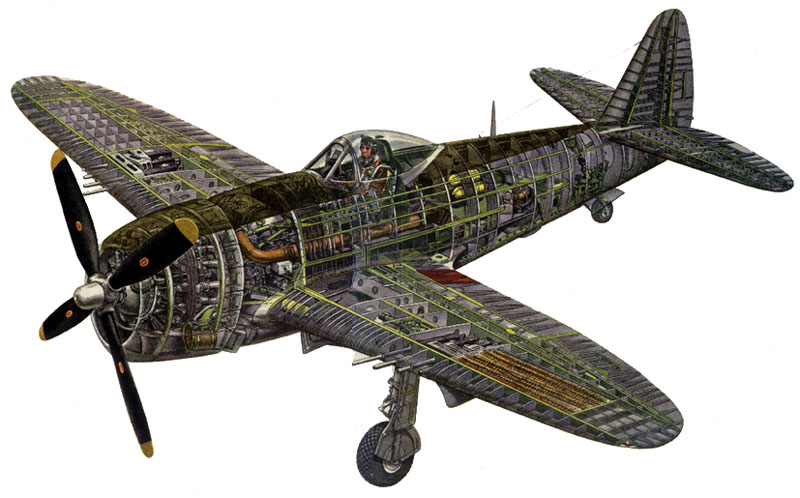
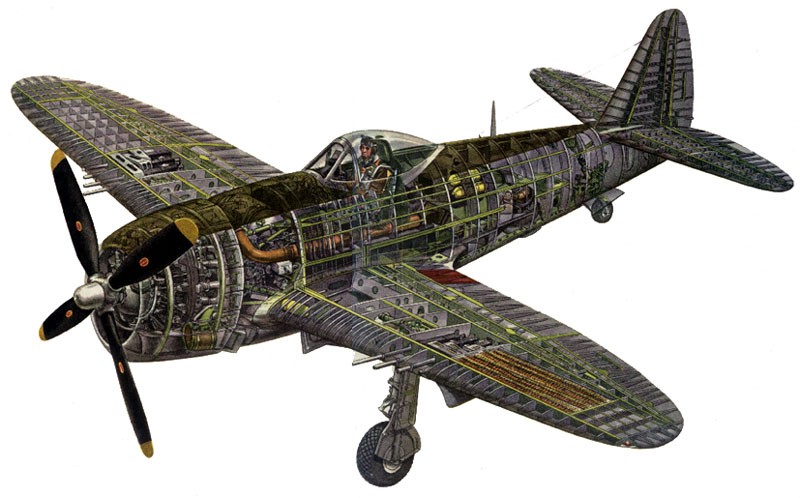
Less plumbing and ducting. The P47 paid a frontal area penalty
with a deeper fuselage.
Paul Lamar
The Rotary Engine News Letter. Powered by Linux.
ACRE NL web site.
http://www.rotaryeng.net
You Tube key word PaulLamar2
Copyright 1998-2013 All world wide rights reserved.