Hello,
From today's AVwebflash:
http://www.avweb.com/eletter/archives/avflash/2414-full.html#207980
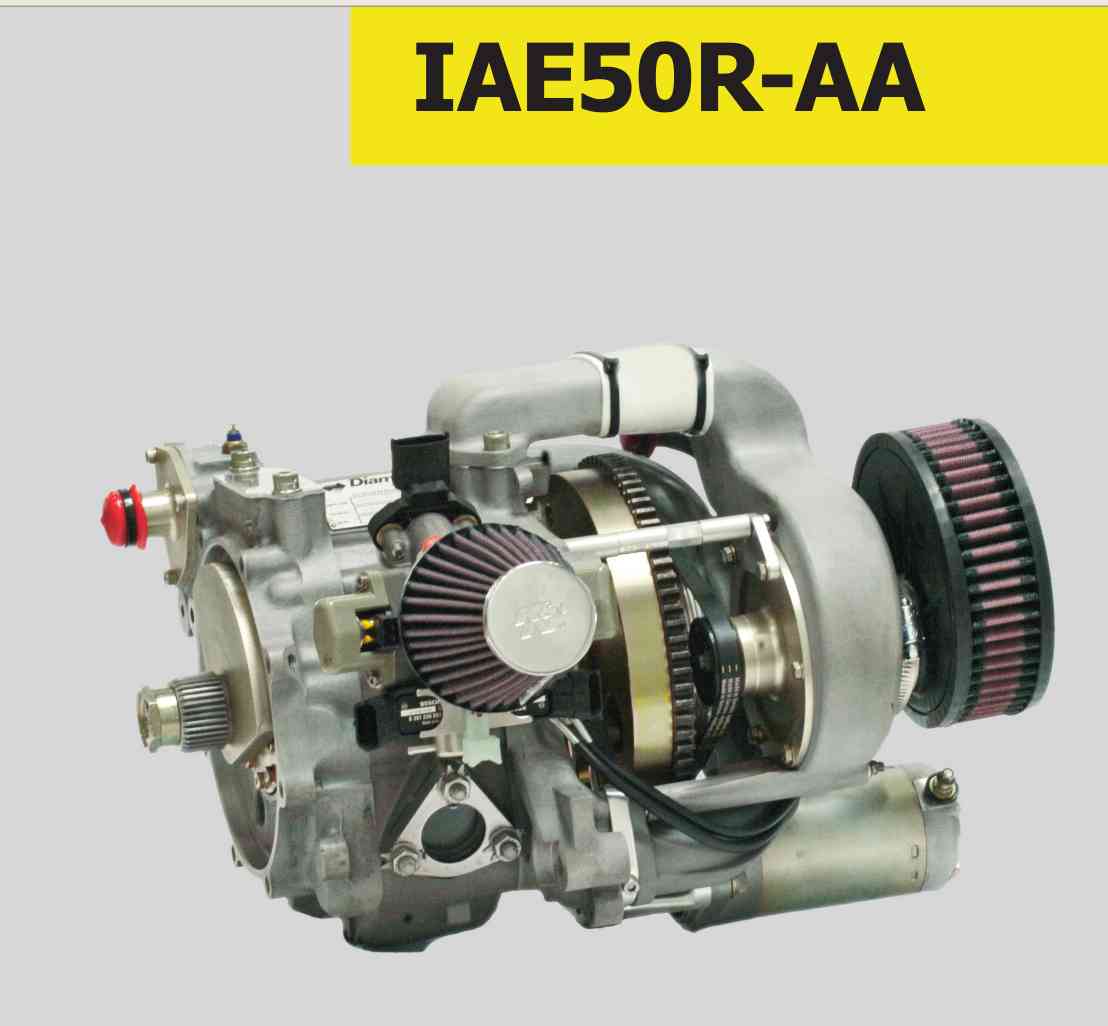
"Diamond Aircraft's Austro Engines has bench tested a new dual
FADEC-controlled rotary aircraft engine, the AE80R, that aims to match a
weight of 60 pounds with a power output of 80 hp. The engine has been in
development for more than two years and builds on Austro's experience
with the AE50R 55-hp rotary engine but has differences in its internal
design that incorporates a "no loss lubrication system."
AE official release:
http://austroengine.at/en/news-und-press
If engine is fine and price is right... this is going to be the new Rotax?
Cheers,
Petri
"Diamond Aircraft's Austro Engines has bench tested a new dual
FADEC-controlled rotary aircraft engine, the AE80R, that aims to match a
weight of 60 pounds with a power output of 80 hp. The engine has been in
development for more than two years and builds on Austro's experience with
the AE50R 55-hp rotary engine but has differences in its internal design
that incorporates a "no loss lubrication system." The new engine is
targeting the LSA and ultralight aircraft markets, and may also see use in
unmanned aircraft. Austro Christian Dries, chairman and owner of Diamond
Aircraft, which owns Austro, says the new engine "has no vibration" and is a
good fit for weight-sensitive small aircraft."
"According to Diamond, the dual FADEC system will keep fuel consumption at
its lowest possible limits and the engine oil system will result in
extremely low oil consumption, maximizing its efficiency. Austro Engine last
summer pursued airframe manufacturers other than Diamond, seeking potential
matches for its diesel engines, which it sees as a growing segment in
European aircraft markets. The company already offers diesel and rotary
style engines. Austro's recent production of AE50-series rotary engines has
been close to 125 engines per year."
They are making a lot of claims but they are not telling us how they
are doing it. Hopefully they did away with charge cooling.
Correction Austro rotaries are not charged cooled rotors.
They are air cooled with a blower that sucks a bit of HP.
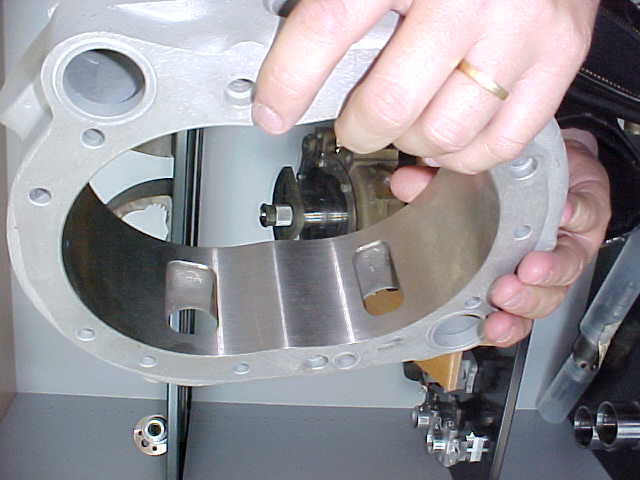
Here are a bunch of pictures I took when I visited the factory
a few years ago. The rotor on the right is the new 80 HP one
rotor.
Paul Lamar
Most of these engines are used in alexander schleicher motor gliders.
http://www.alexander-schleicher.de/produkte/ash31/ash31_main_e.htm
Powerful fuel-injected engine
Now a word or two on the drive unit. We have decided in favour of the more
powerful fuel-injected version of our well-proven and liquid cooled rotary
engine. It is already in service with well over 400 self-launching
Schleicher gliders and is equipped with a dual ignition system.
Its modern fuel injection system features automatic altitude compensation to
ensure that the generous power output of 41 kW (56 hp) and the 4 m/s (8 kt)
climb rate are hardly compromised at altitude. Rotary engines offer
simplicity and reliability in a compact design while having a very high
power output for their weight and size. There is also no requirement for
special fuel such as AVGAS or two-stroke mixture.
Thanks to the electronic fuel-injection system, the fuel consumption is
significantly lower compared to conventional two-stroke engines. Our
standard 16 liter fuselage tank allows almost a full hour of engine running
but for even greater endurance, the owner can install additional wing tanks
holding up to 30 liters.
A very simple engine management system is another hallmark of this power
plant. A mechanical propeller stop eliminates the need for a host of
sensitive electronics, sensors and switches and this contributes to overall
reliability. Even during operation the engine remains firmly bolted to the
noise-shielding fuselage where it is permanently connected to a large and
effective silencer. This is not only a big plus for the environment but is
just as important for pilot comfort. Only the propeller pops out of the
fuselage and the drive belt is only under tension while the engine is in
use.
Another major advantage of the engine is the vibration-free running at all
power settings. This allows extended power cruising for ferry flights and
avoids the usual "Saw tooth" climb/cruise method. Even flying through
controlled airspace at an assigned altitude presents no problem to this
aircraft or its engine. It is best conducted at 70 to 75 kt (approx. 140
km/h) and represents another most welcome advantage over conventional
two-stroke technology.
But that is not all this engine has to offer. For maintenance purposes the
entire power plant can be easily removed. It has no service life limitations
and doesn?t require an overhaul after reaching a certain number of running
hours or years of service.
In summary, the new self-launching ASH 31 Mi represents a "world?s first" as
it meets the requirements of the FAI 18m Class on one hand and Open Class on
the other. The optional outer wing panels with 21 meters span further
enhance performance without sacrificing its superb handling and the modern
rotary engine comes as a bonus. It is without doubt the most sophisticated
drive unit available for self-launching gliders today and provides the owner
with a long list of advantages over conventional power plants.
The Rotary Engine News Letter. Powered by Linux.
ACRE NL web site.
http://www.rotaryeng.net
You Tube
http://tinyurl.com/amz8apm
Copyright 1998-2013 All world wide rights reserved.