Paul, no problem to 9000 rpm.
But you should never need anything that high in an aircraft!
From one of the threads, "3ms will net around 115mj".
Price is higher, about $75 each.
Barry
The rotary is a high RPM engine. 3.12:1 PSRU's are in the works.
Paul Lamar
Paul,
I think you will want to avoid continuous operation in the 9000rpm
range because of the tooth loading on the stationary
external gear. (Yamamoto '71, p.49)
( see attached)
Barry
Very good Barry. I like to see references for claims made.
Thanks
They have made some advances in this area in 1984.
This is from SAE 841017. The solution was trivial and very low cost.
They added 3 small roll pins.
The paper is available on the web site.
http://www.rotaryeng.net/1984-recent-tech.pdf
Page 9.
Paul Lamar
Most rotary engine machine shops recommend the roll pins or circlips, as
mentioned, hardening treatment of the stationary gear
http://atkinsrotary.com/store/13B-Rear-Type-I-Hardened-Stationary-Gear-10015.html
as well as bearing and rotor clearance for engines that run above 8500 rpm.
Speed costs !!!
Graeme Riley
Most of that is done on the RX8 engine. The red line is 9000.
I think the gears are a bit wider as well.
Paul Lamar
Well there you go, I wonder if we could get hold of a 16x it probably
has more improvements. Mazda must have some tooling done. Just a quick
question regarding direct injection, if one was to increase
compression ratio to say 16:1 or higher would it be possible to
control ignition timing using the injection timing?
Graeme Riley
With the current geometry 16:1 is out of the question.
SuperTech might be using other geometry.
Supertec also claims a .44 BSFC. We shall see. The Mazda best
so far is .47.
Paul Lamar
Paul,
Lightening the rotors will help lower the load on the gears. But consider those test were for transitional loads . For
aircraft its like an RX7 pulling a loaded trailer up an endless hill.
Next problem with sustained high revs.... the water pump cavitates... depending on type and pulley ratios, for me it is
at about 7300 rpm and 43psi, (with a Rick Engman Remedy pump). 3rd gen pumps are very poor. 2nd alot better. Worth a
test.
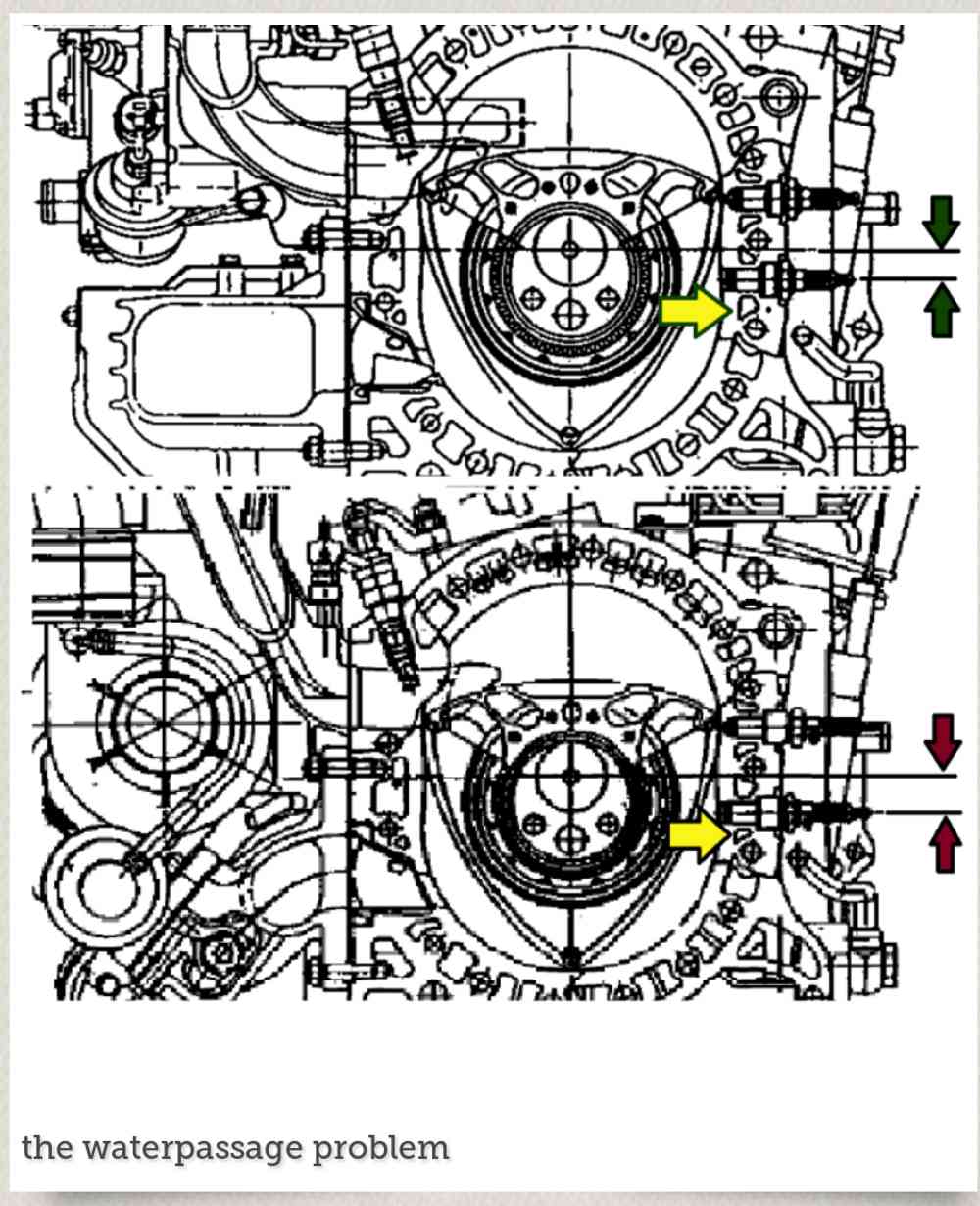
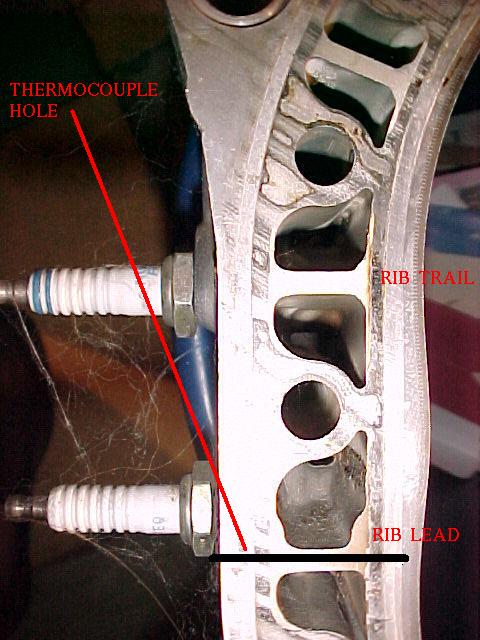
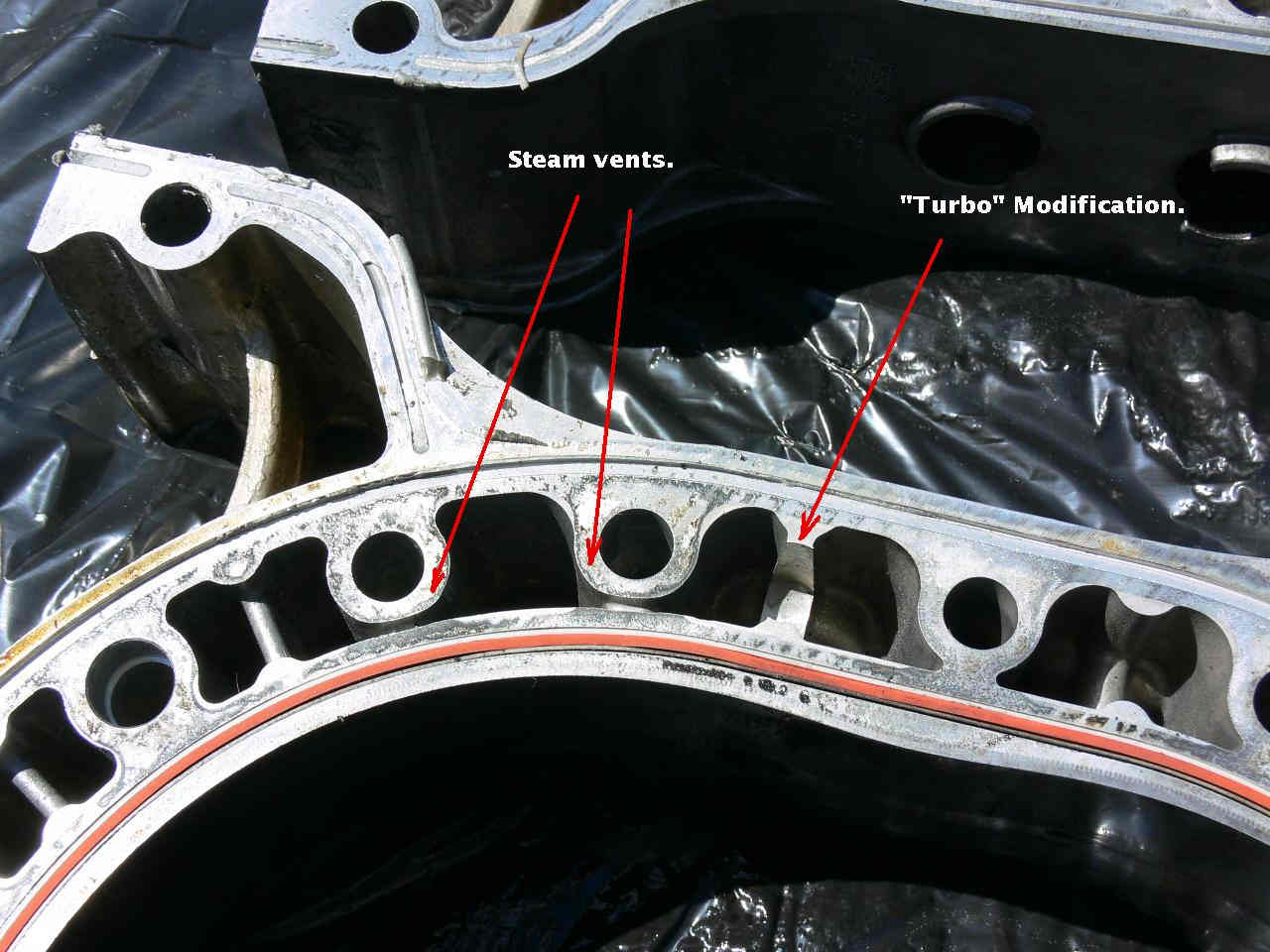
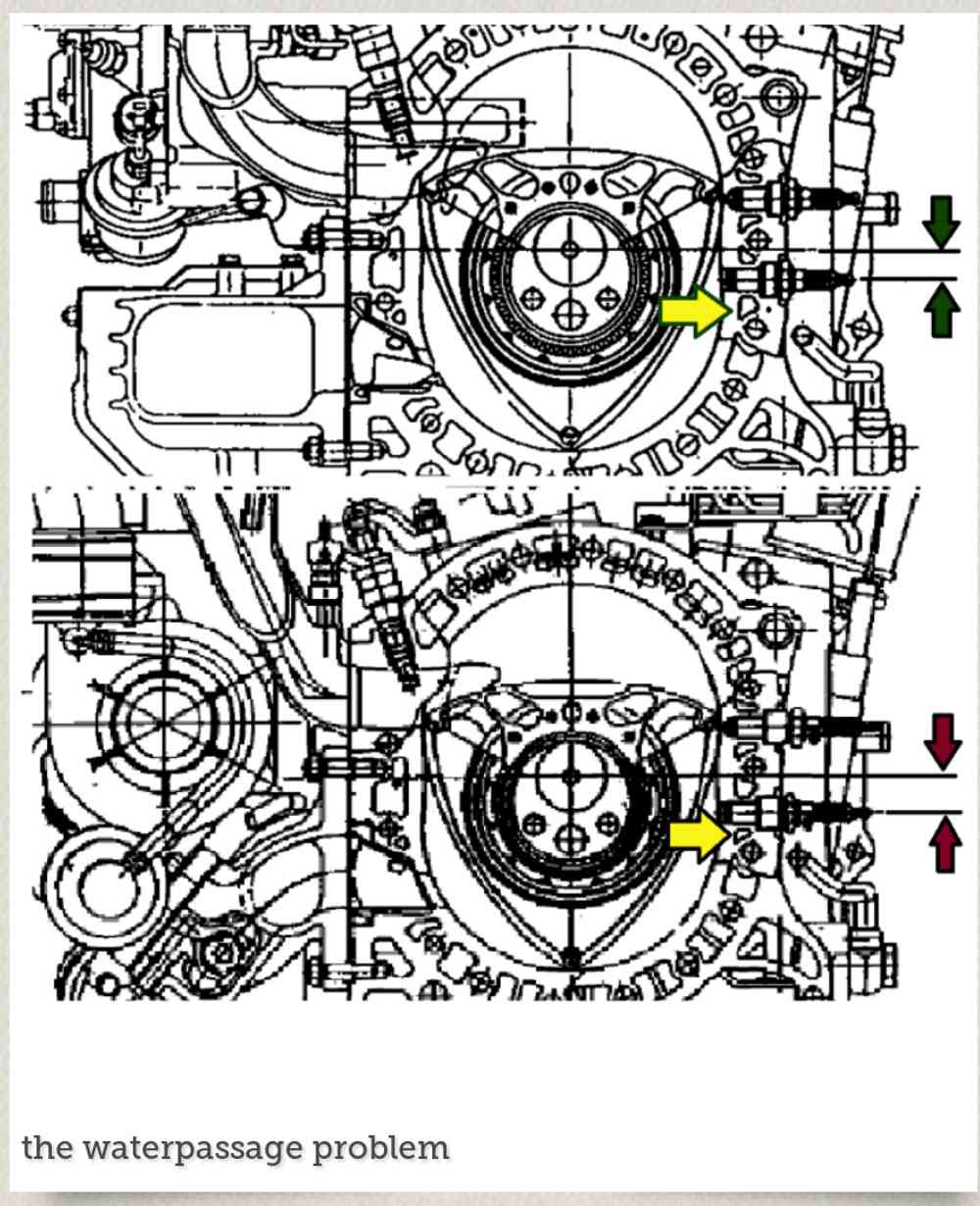
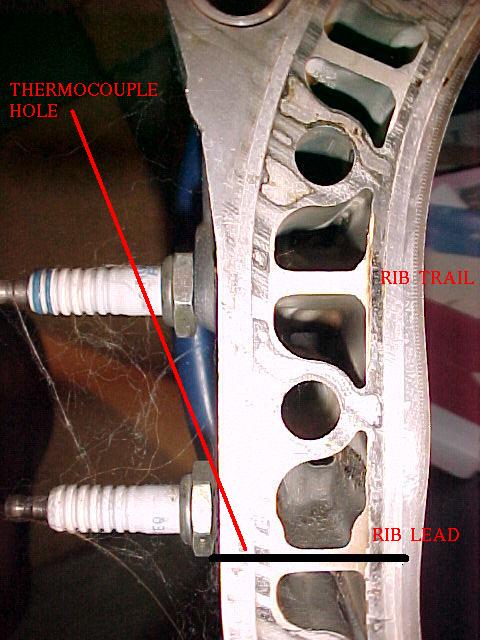
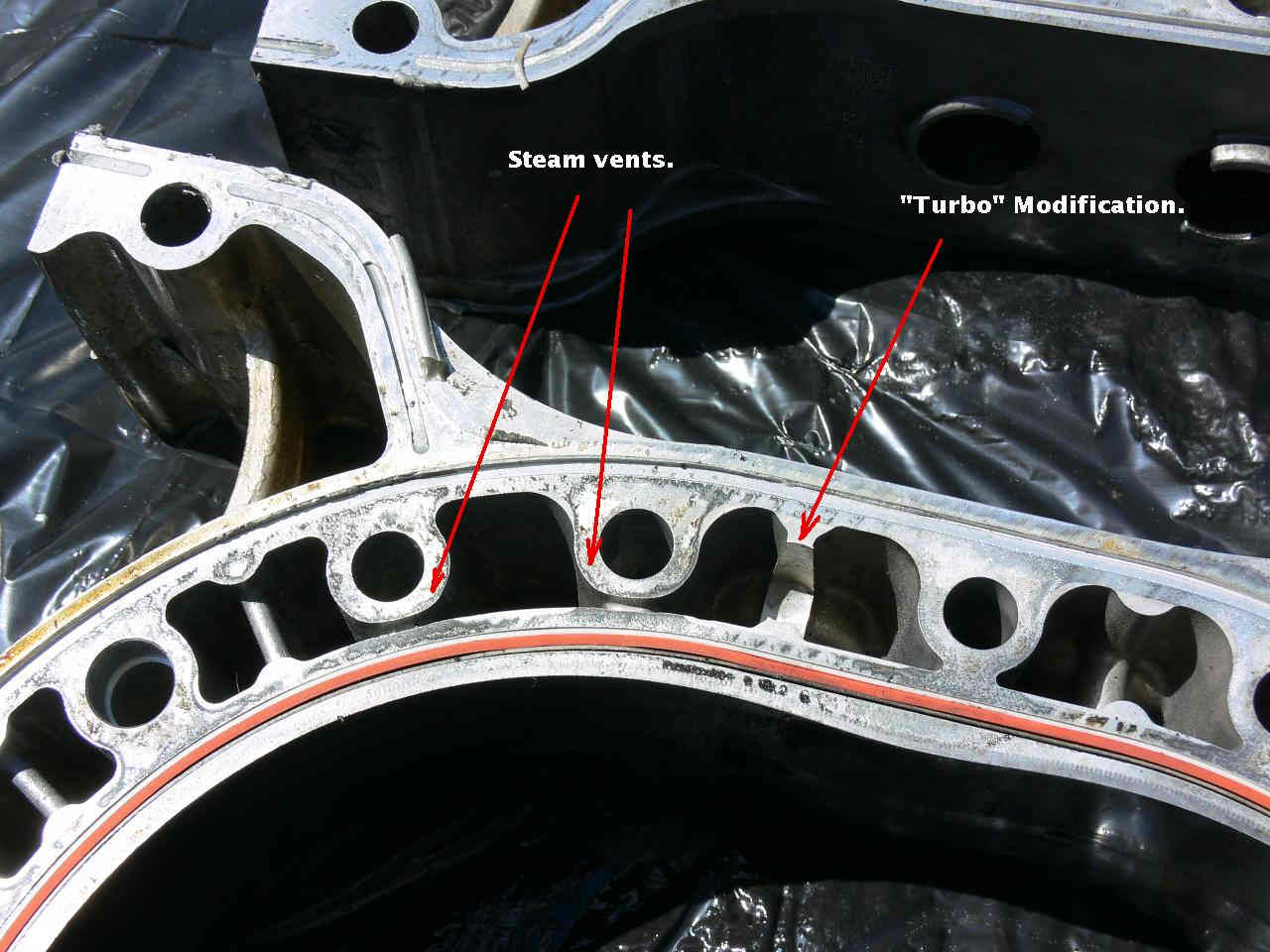
Have you guys addressed the leading spark plug cooling passages problem?
When Mazda spread the plugs on later 13B housings (for better burn-rate) the two most critical passages became smaller
to accommodate using same bolt pattern. These should be carefully ported. The 16X addresses this in its new breadth
dimensions.
Are you planning on using a variable pitch prop with 9000rpm only for take off?
Barry Bordes
Milo is working on a variable pitch gear box.
We have not found any problems with the rotor housing metal over heating.
Mark Steitle installed a "cyl head" thermal couple and it is less than
an aircraft engine cylinder head temperature.
Paul Lamar
Along those lines, has anyone tried the standard spark plug CHT thermocouple on the Mazda? It would be interesting
to know what the delta T is from Mark's embedded thermocouple and the spark-plug location; generate a standard rule
of thumb for future users.
Chris Cosman
It is kind of hard to do because of the spark plug recess in the rotor housing.
Paul Lamar
Paul,
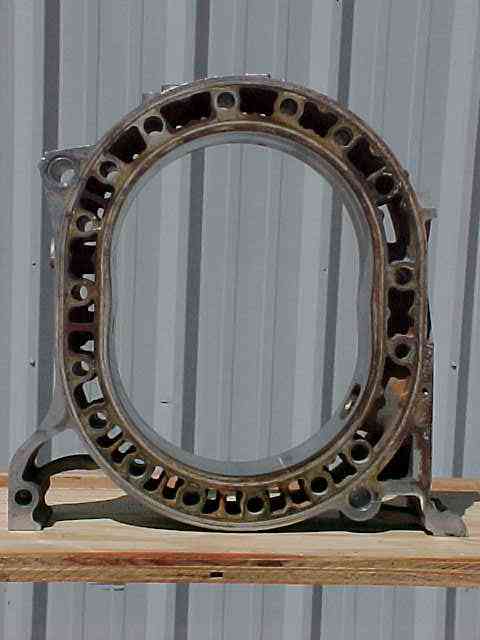
Have you seen any housings with the carbon spots on the sides of the plug bores?
(See attachment 1)
This from Mazda testing.... the temps around the spark plugs... (Attachment 2)
This was aggravated when Mazda spread the plugs on later 13B housings (for better burn-rate) the two most critical
passages became smaller to accommodate using same bolt pattern. (attachment 4)
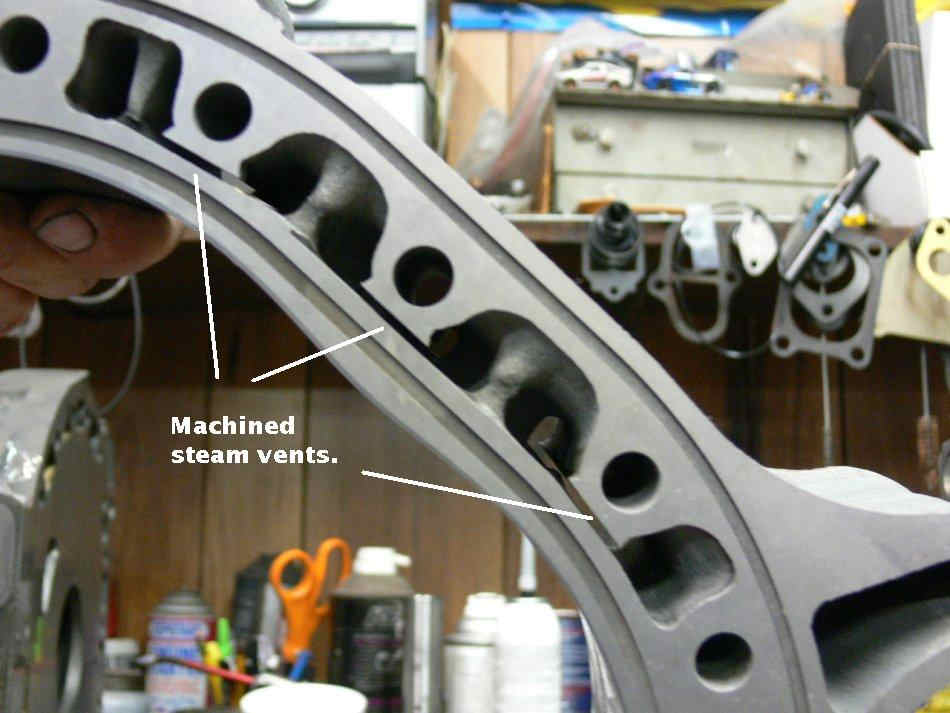
The apex seals chip their ends off because they are rocking across this bump. High cycle fatigue finally takes its toll.
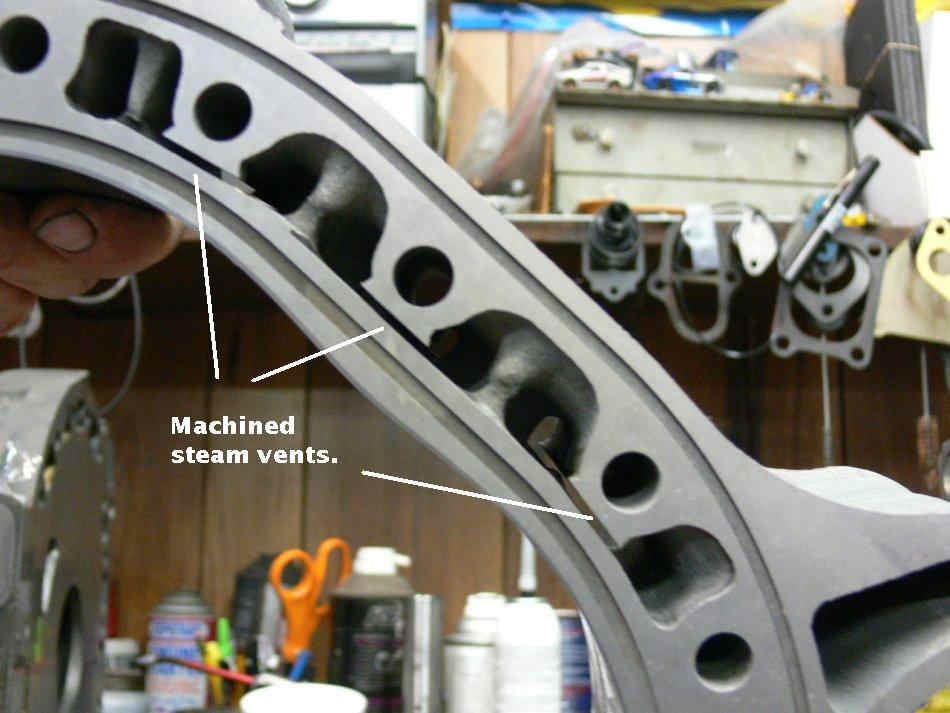
One Mazda trick was to sever the housings at the through bolts allowing the housing face to float on the higher spark
plug boss. _Read carefully those who don't run thermostats._ (attachment 3).
People attempt to correct this problem with harder or more flexible seals but they are not addressing the "root
cause".... which is flatten the surface by cooling the hot spot better.
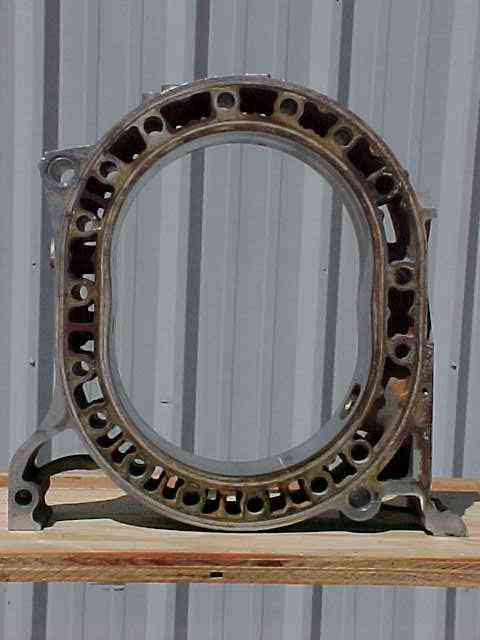
I try to duplicate the passages on the the manufactures peripheral race housings. (attachment 5).
Barry Bordes
"Have you seen any housings with the carbon spots on the sides of the plug bores?"
Yes we have but I think that is due to dumb ass cooling mistake causing over
heating. I have seen less of them since I starting selling my book :)
People will soup up the engine and go racing with out souping up the cooling system. More HP more cooling.
Those pictures you sent are too small to be usable. Please scan them at higher rez.
Paul Lamar
Paul, I don't know which format would support size best.
Could you look in my photobucket account and tell me which is best?
The possible image links include; Email & IM, Direct Link, HTML code, and IMG code.
http://s287.beta.photobucket.com/user/bbordes/media/waterpassagesearly.png.html?sort=3&o=28#/user/bbordes/media/waterpassagesearly.png.html?sort=3&o=28&_suid=136241240438105942462305302636
Barry
They look OK on there.
This diagram is misleading. Mazda uses a restriction in the water passages to promote turbulence. Turbulence enhances
the heat transfer from the metal to the coolant.
You have the old Rotary Engine book. Download the 1981 version.
http://foxed.ca/index.php?page=rx7manual
The damage to the wear surface come from cheap after market steel apex seals.
Steel makes a lousy apex seal. Use only stock cast iron apex seals or Ianetti silicon nitride. The auto industry found
that out about 100 years ago :)
http://www.rotaryeng.net/history.html
Paul Lamar
The Rotary Engine News Letter. Powered by Linux.
ACRE NL web site.
http://www.rotaryeng.net <http://www.rotaryeng.net/>
You Tube
http://tinyurl.com/beqqxas
Copyright 1998-2013 All world wide rights reserved.