I know there have been rotary diesels made that were
self-supercharging, but I was wondering if the same could be done
with a 13B style engine. I was thinking along these lines:
The front rotor would have a custom housing with a mirrored p-port
setup such that it created an intake and compression event on both
sides of the housing. This compressed air would be ducted together
and then to the intake of the rear rotor giving you an nearly 2:1 PR
supercharge (there would be some losses). When compressed at ~9:1
in the rear, the total CR would be around 18:1, which would be
sufficient for compression ignition. The leading plug could be
replaced by a direct injection nozzle, and the trailing plug could be
a glow plug.
There would be some things to work out with sealing, housing
thickness, etc, to handle compression ignition, but I think it's
doable.
A quick guesstimation showed that this should produce around
100-120hp at 7500 rpm counting the power needed for the compressor
section. Combined with a turbo, you could probably push it to
150-175... turbocompound would be even better.
Any thoughts?
Josh
Diesel exhaust is hazardous to your health according to WHO ....AKA
World Health Organization. A diesel rotary may not run at 7500 RPM
because of burn rate issues.
Paul Lamar
Hi!: Rolls-Royce, I don't remember well if it was RR or Mercedes who
discovered the nickasil coverage for trochoid surface, worked in a
two-stage Diesel Rotary Combustion Wankel Engine for military
purposes, it had a big lower section rotor that acted as a
compressor, and an smaller upper high pressure section rotor where
combustion took place, the author was David W Garside, and a report
about it exists in a technical publication of the British Society of
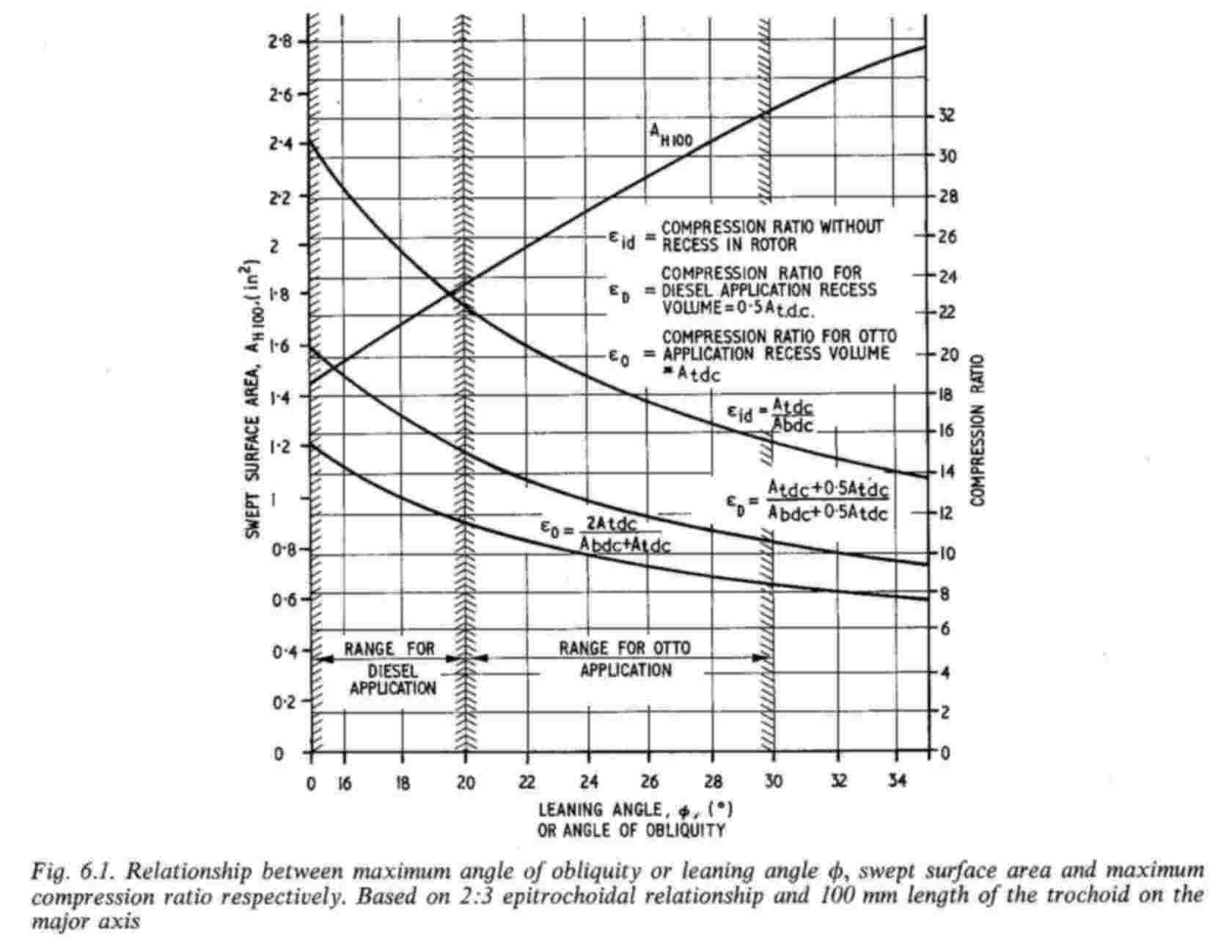
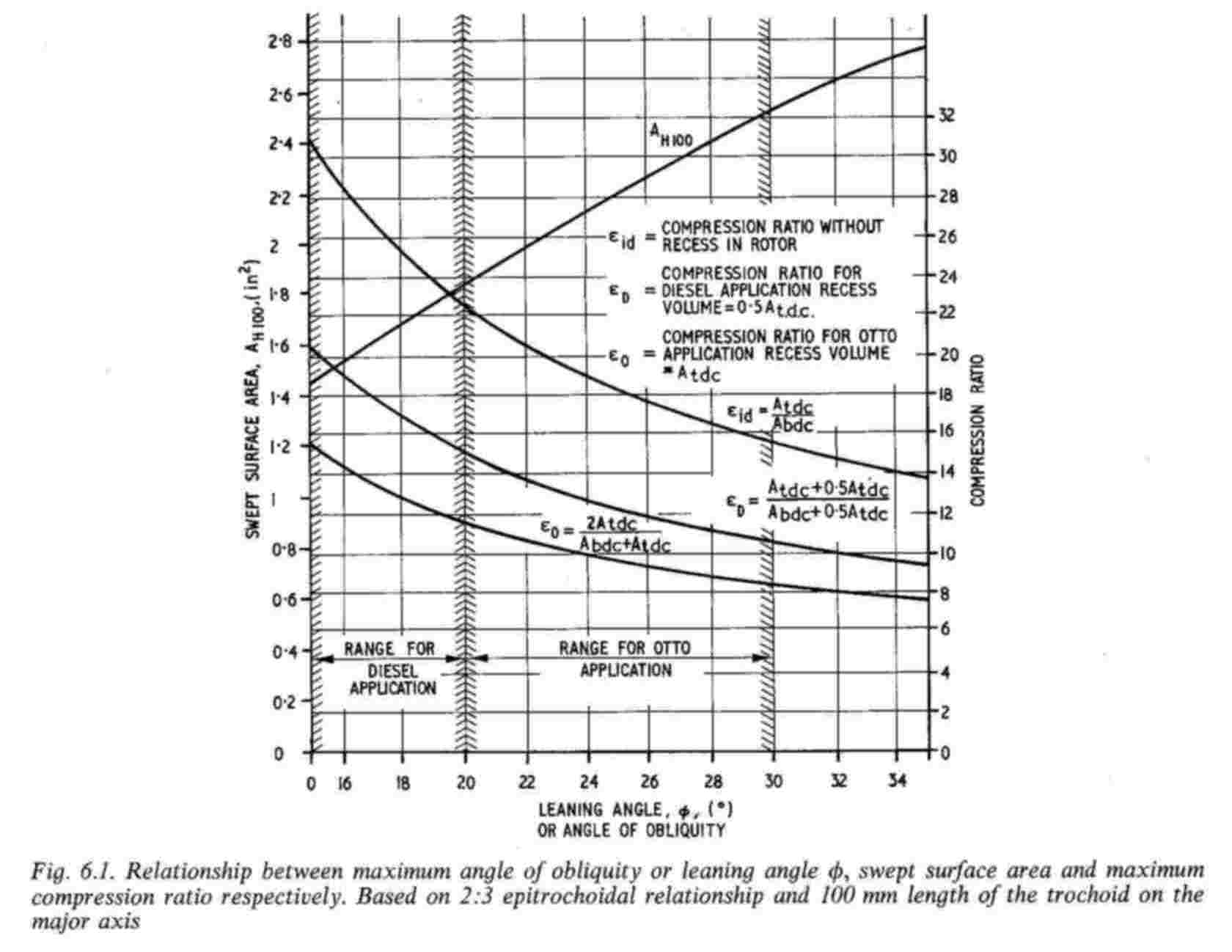
Automobile Engineers proceedings. The inherent problem in compression
ignition Wankel RCEs would be that the nature of Wankel engine makes
impossible because of geometrical reasons obtaining in a single rotor
compression ratios high enough for the Diesel range, there is at
least a SAE paper about a low compression ratio Diesel Wankel RCE,
but the images of the chimney they used to evacuate exhaust gases
show a very thick smoke column. There are some patents on other
two-stage arrangements for Wankel RCE Diesel engines where the big
and the small rotors are placed in line, not one over the other as in
the Garside design, but I'm not aware of any practical unit using the
concept, you can access the patents by entering ESPACENET, and then,
in advanced search mode, writing the key words -Diesel or
-Compression Ignition -Rotary Engine Should you have news, please let
us know. Regards, salut +
Jose Gros-Aymerich
I bought that paper regarding the RR 2 stage diesel. It's
definitely interesting, and there is some useful information, but
most of it is quite dated. Holy smokes though... $32 for that
paper... info that old should be free to anyone bored enough to read
it.
I think that with some research into the design of the rotor dish
and compression ignition, good seals (maybe double side seals along
with ceramic apex seals), and a supercharger, this concept is
definitely workable. I think when replacing anything smaller than
the O-320, the self-supercharging idea would probably be ok. For
O-320 and larger, you'd probably want to go ahead and add a
supercharger like the 1.6L whipple to get the pressure up high enough
and use both rotors for power.
A turbo could act as a normalizer, a power adder, or it could take
over for the supercharger all together once at altitude and play
both rolls. The latter sounds like it would be the most efficient
option, but you'd have to have a bigger turbo than with the first
option.
That's about all I have for now.
Josh
Josh, you are describing what Detroit Diesel did for the old 2 stroke
diesels- first we had the -71 series. L 4 and 6 and later V8
versions with
only a roots blower- termed the Natural series. Later the
displacement went
to 92 and up per cylinder with the 92 series, still called
naturals with
only the blower.
Then to get more power they added a turbo and called them such
names as
6-71 T to denote the turbo. Then they found out that the turbo
and its
higher compression of the charge air was bad so an intercooler
was added
and its name changed to 6-71 TI. Now we are making enough power
that the
blower is in the way at mid to high RPM and power, to the added a
bypass
and its name changed to the 6-71 TIB. The 6-71 naturals never
went much
higher than about 280HP, but Johnson and Towers was able to get
over 700
from a TIB model. However, this power came with a cost. A 6-71
natural can
easily go 10,000 hours and often hit 20,000, while the TIB rarely
goes
3,000.
My boat has 12V71 naturals in it with around 8,000 on each
engine. Detroits
have the inspection plates that allow us to peek inside the cylinders
toward the bottom, and mine still have visible crosshatching on
the walls.
I expect many more hours before I need to get inside the engine for
anything. But with 852 CI making only 550 HP at 2,000 rpm it
should run
virtually forever.
So to get back to rotaries, we could do what I think Audi did at
one point-
they injected gasoline into the intake to get the diesel started
then it
ran on the diesel fuel. This was due to the low compression of
the engine
and its refusal to start at low rpm. The detroit 2 stroke diesels
wont
start without more than 300 rpm starter speed, and wont run above
idle
without the blower. So, if the compression ratio is the issue
then we need
to get it started and force feed it air, thus increasing the
compression
ratio with pressure.
I think the Chevy diesels today only have around 13:1 compression
which is
why they need glow plugs to start. My 2003 cummins has 17:1,
which makes it
easier to start without help from glow plugs.
Can the rotary compression be increased to the 13:1 range?
Kevin Aldermam
Not with out a complete redesign.
Paul Lamar
The Rotary Engine News Letter. Powered by Linux. ACRE NL web site.
http://www.rotaryeng.net You Tube
http://tinyurl.com/beqqxas
Copyright 1998-2013 All world wide rights reserved.