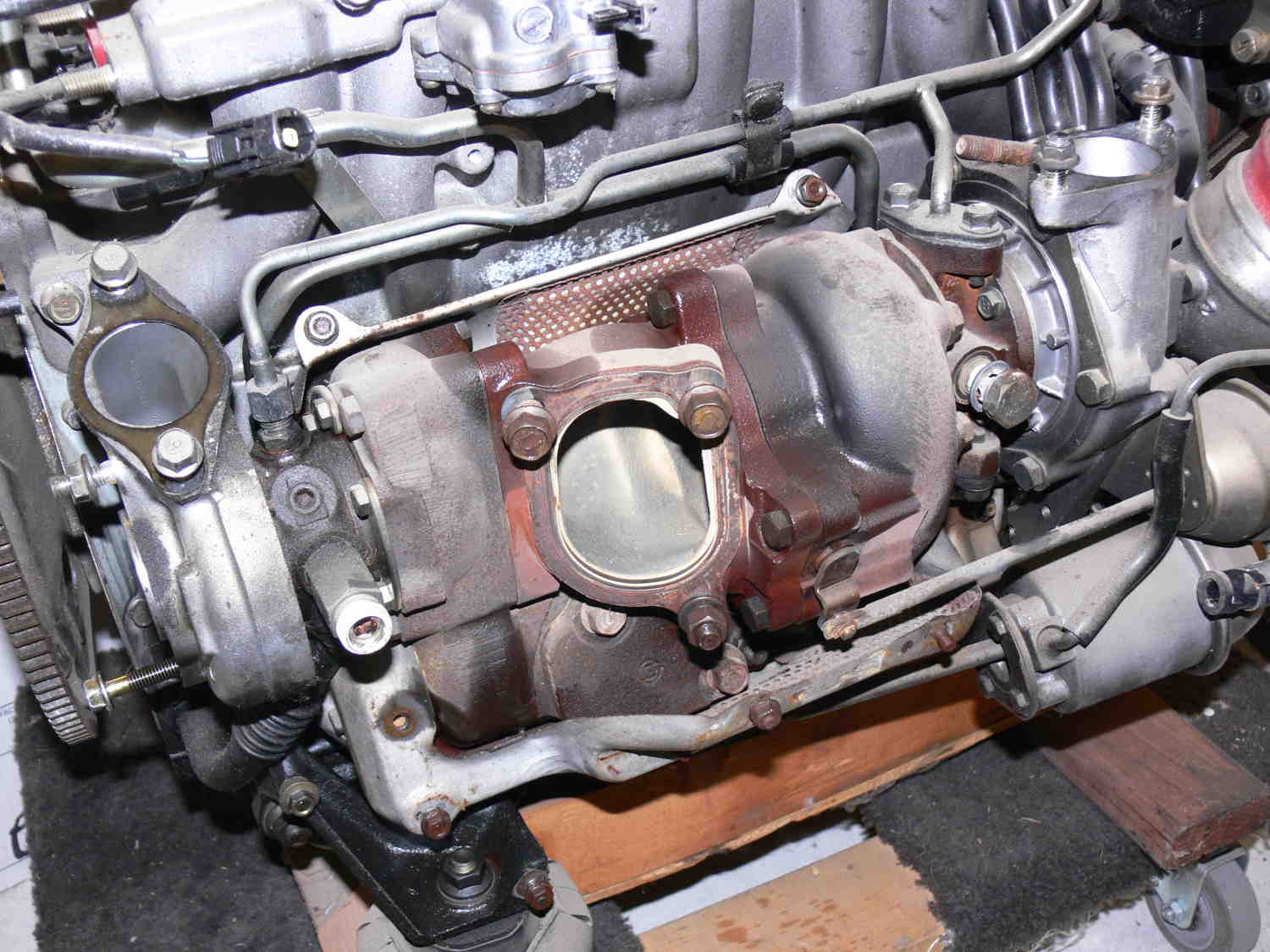
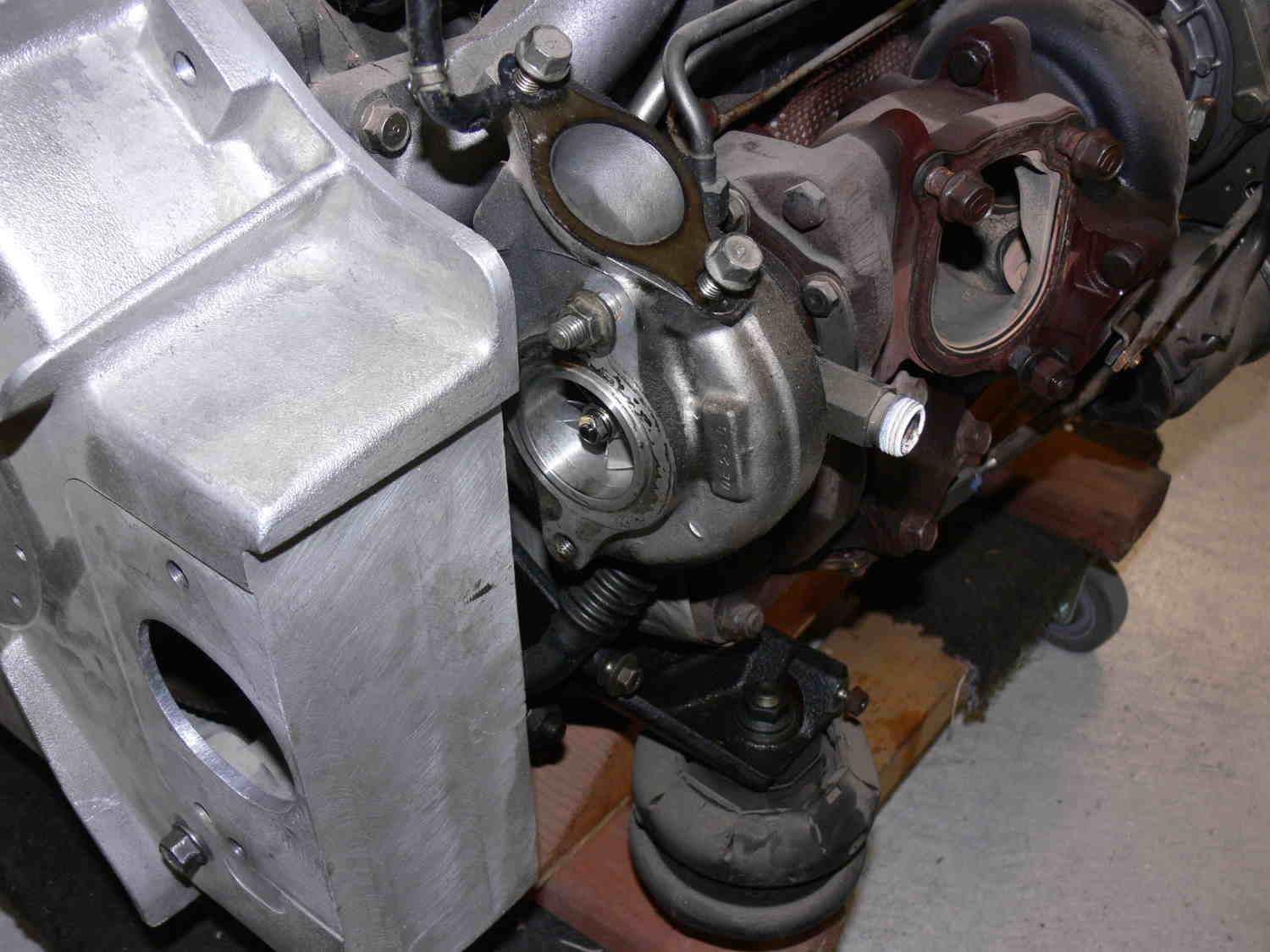
I counted the teeth of the gear reduction in the DD15
gear box. The turbine gear had 22 teeth and the big gear
had 107 teeth. That is a gear reduction of 4.86:1.
That means at 40,000 turbine RPM (the reputed operating RPM of the
DD15 power recovery turbine) the out rotates at 8,230 RPM.
PERFECT FOR THE ROTARY!!!!!!!!!!!
Looking into the huge exhaust port of the turbine the turbine is
rotating clockwise. Looking at the output shaft of the TC gear
box it is rotating counter clockwise.
Looking at the rotary from the bell housing end the rotary
e-shaft also rotates counter counter clockwise. The exhaust and
intake on the right.
IT COULD NOT BE BETTER IF THE DD15 TURBO COMPOUND SYSTEM
HAD BEEN DESIGNED FOR THE ROTARY!!!!!!!!!
All we now need is a simple shaft coupling. shown in the
3D as a black cylinder. No cog belt drive lash up necessary.
This would make a great boat engine. A turbo charged P-port 3
rotor followed with a DD15 turbo compound system.
1000 HP at a BSFC in the diesel range. Below .4 !!!!!!!
20,000 hour life with all ceramic seals.
1000 to 1500 pounds less weight than a diesel with about
the same fuel burn.
Paul Lamar
Fantastic news and great job !
Anyhow, I'm a bit puzzled about 2 points :
1/ DD15 turbine and reduction gear box is supposed to run at steady speed if fed with
"tranqulized" exhaust gas flow. but, in
the same time the torque and thus the rotation speed of the engine is pulsating.
A belt drive could provide a certain amount of damping, and if slipping, some torque
clipping.
With a direct coupling is there no need for a dedicated damping device, or is it built in
the DD15 gearbox itself ?
2/ The DD15 turbine is designed to work downstream of the diesel turbocharger.
In a way, it looks very much like a Low pressure turbine stage located downstream of the
High pressure turbine stage of a
turbofan jet engine.
The design characteristics (pressure and temperature) of the exhaust gasses feeding the
DD15 should be rather low.
On the "TC-test-config31" I can't see any turbocharger between the rotayr exhaust and the
DD15 turbine.
Knowing that there is a large amout of energy to recover in a rotary exhaust gasses, is
thre no risk of "burning" the DD15
turbine ?
Of course, this problem should not occur with a turbocharged rotary.
As there is a lot of energy to recover from the exhaust gasses of a rotary, cannot the
temperature ever exceed the max design
temperature of the turbocharger ?
On the Ford "ecoboost" 3 cylinder engine (100 HP with only 1 liter displacement !) this
problem is solved by die casting the
exhaust pipes into the liquid cooled cylinderhead.
For automotive application, where the average power is low and liquid cooling system is
expected to heat the passengers as
soon as possible, this makes sense.
For an aircraft application, where each extra heat that flows through the liquid cooling
system costs extra weight and drag,
this would be pure nonsense !
A much better solution would be to "desuperheat" the exhaust gasses by mixing some cooler
air from the turborcharger
compressor as indicated on the following sketch.
In this case there is no extra cooling requirement nor heat losses (lower temperature to
turbocharger, but more mass flow)
(See attached file: Turbocompound rotary with desuperheater.jpg)
Philippe Dejean
1/ There is a fluid coupling inside the DD15 TC gear box.
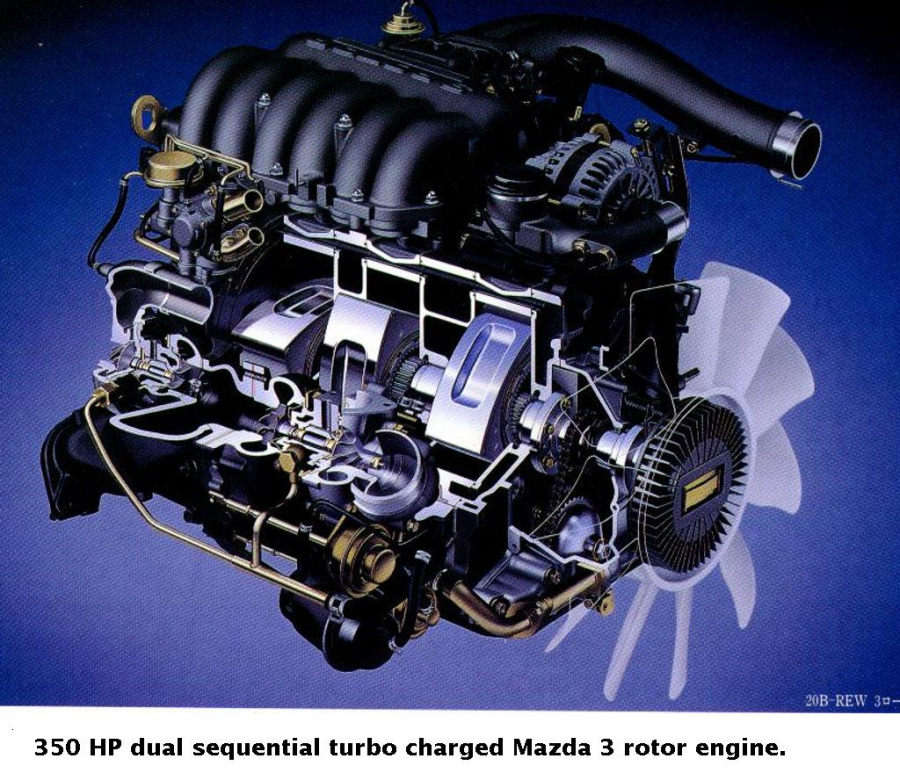
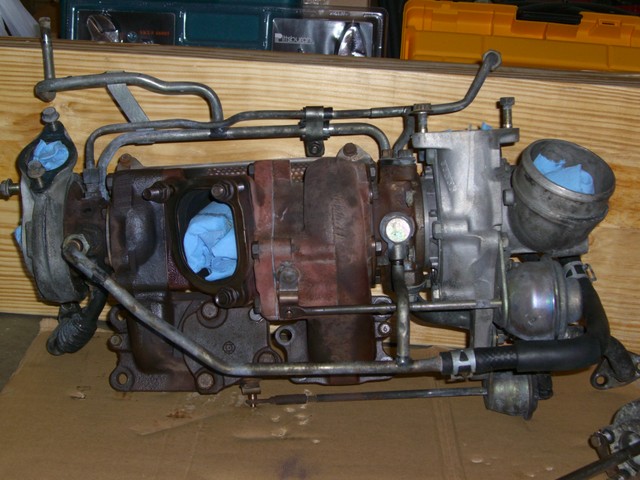
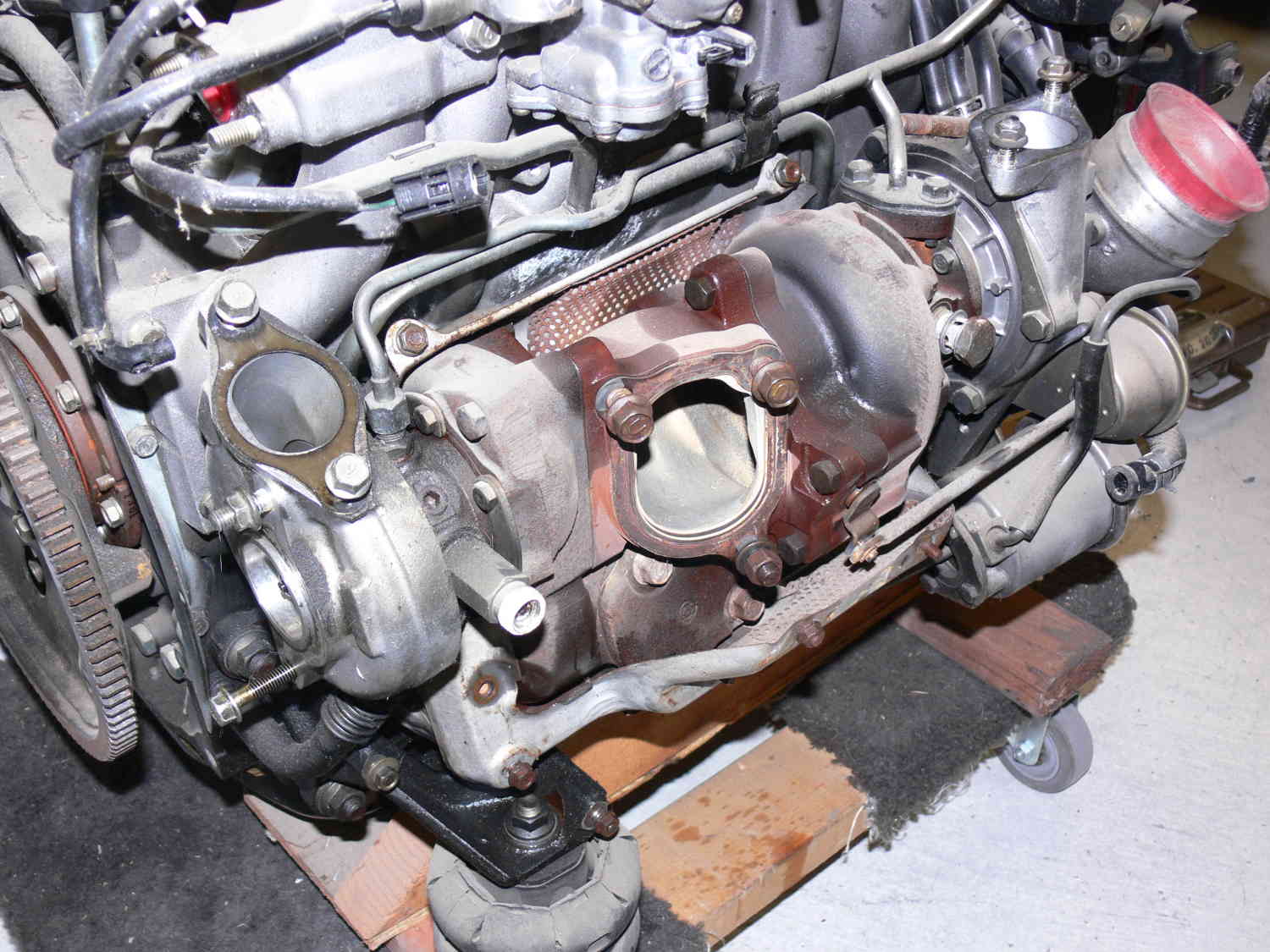
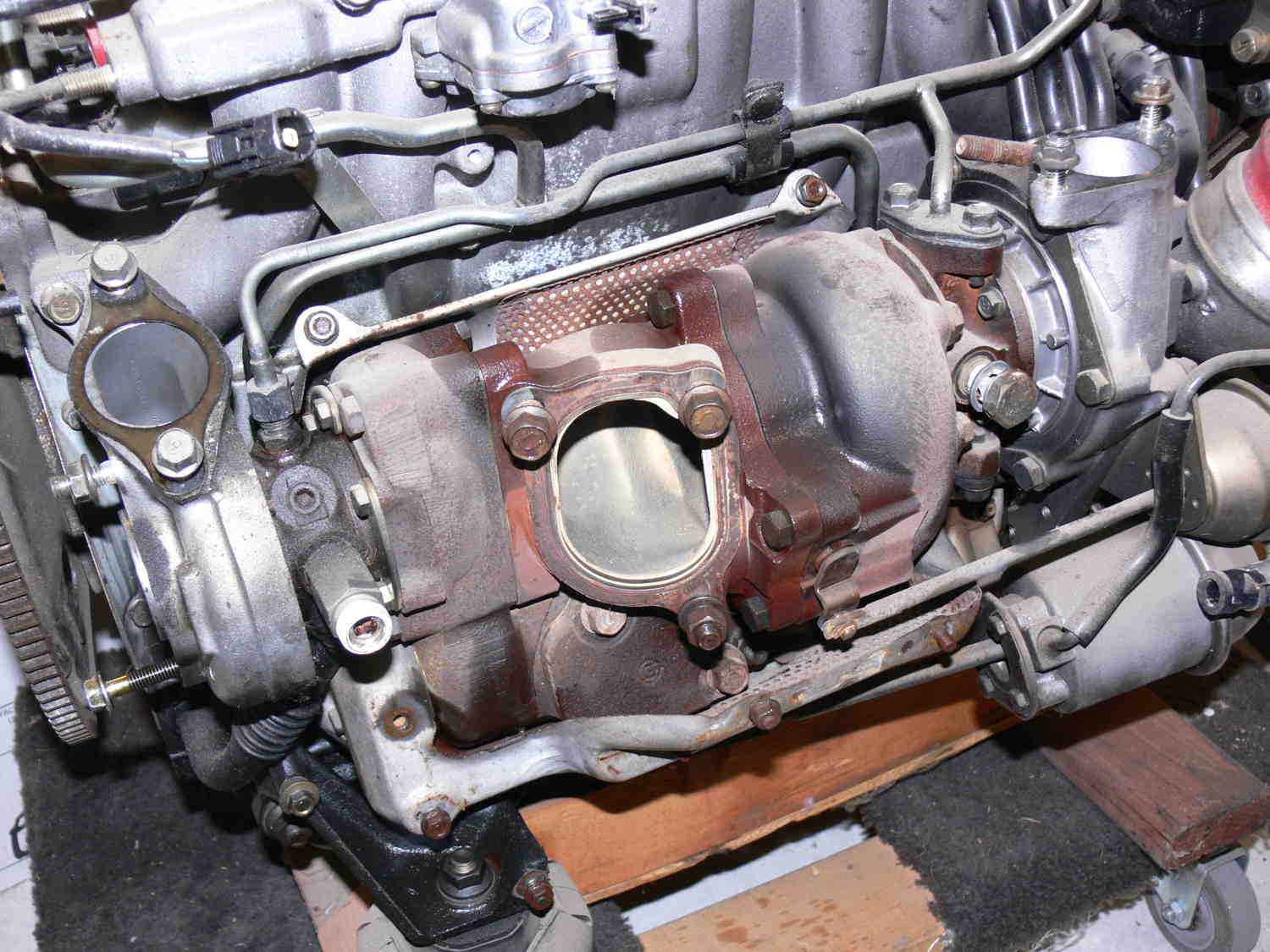
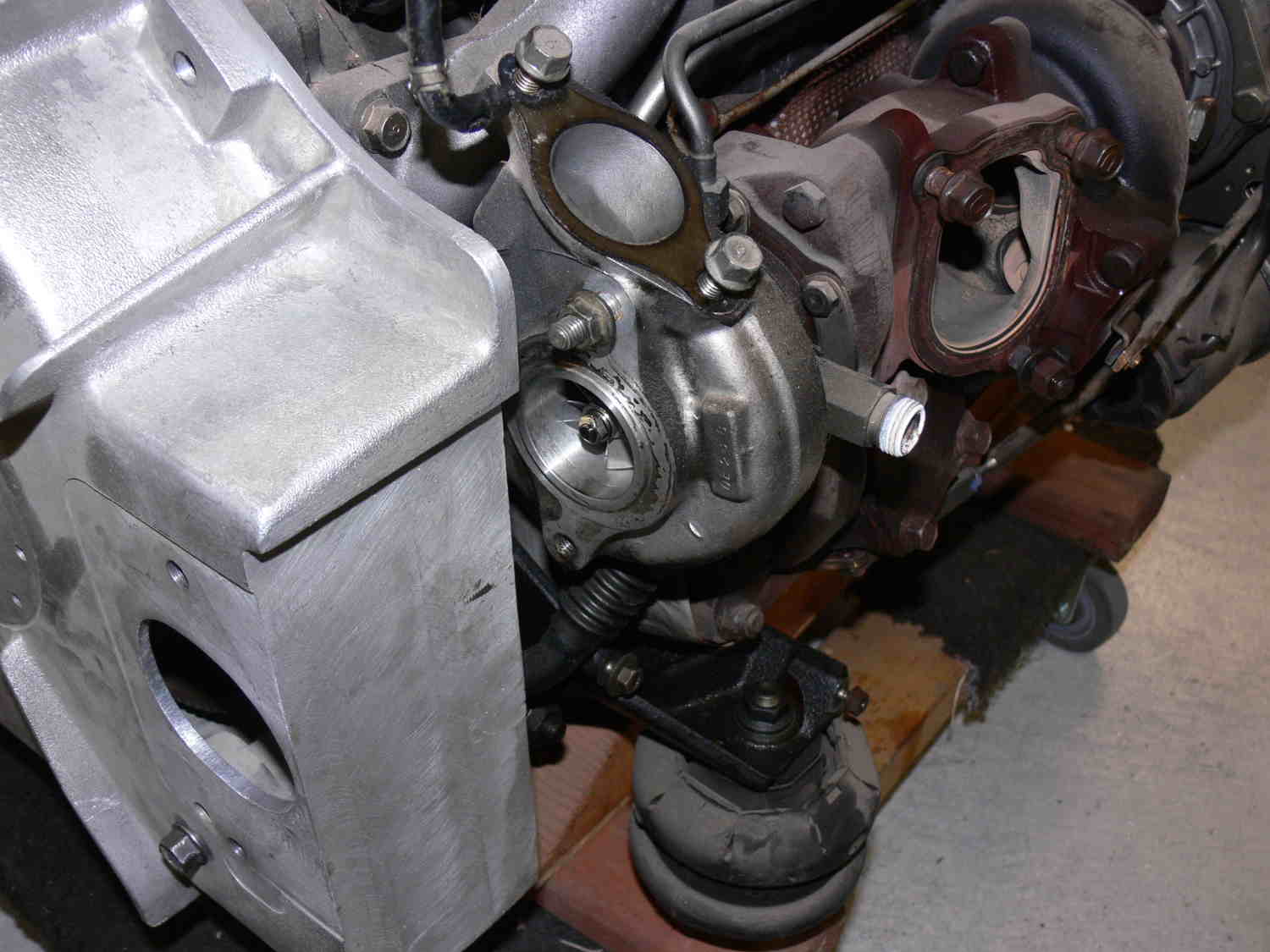
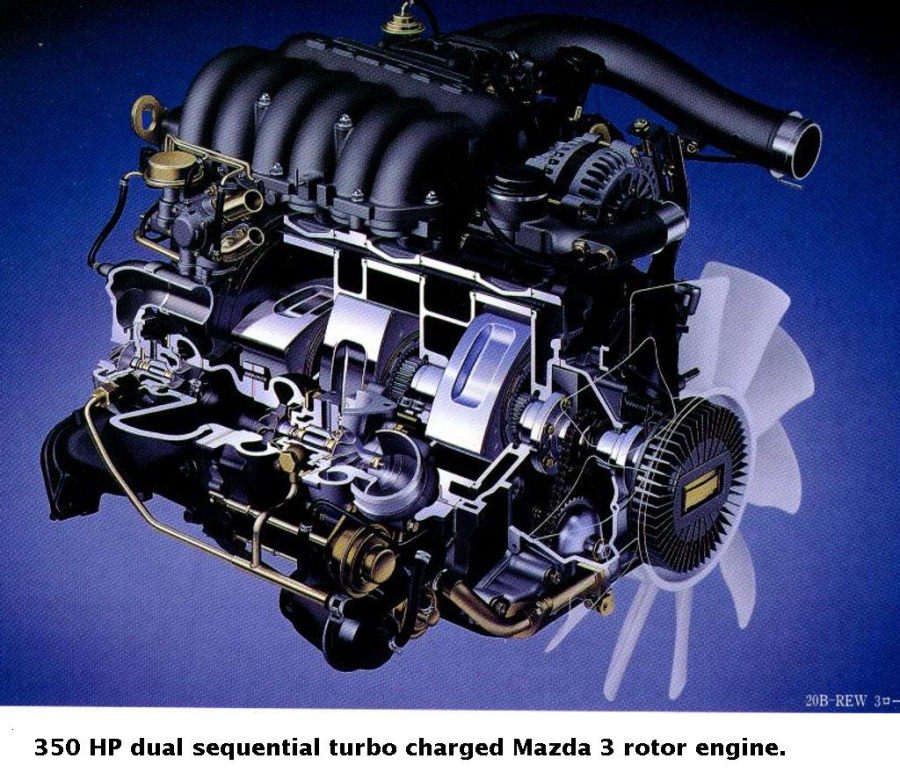
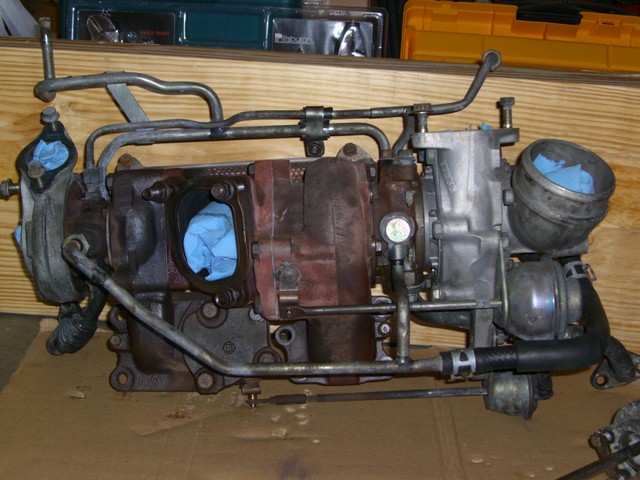
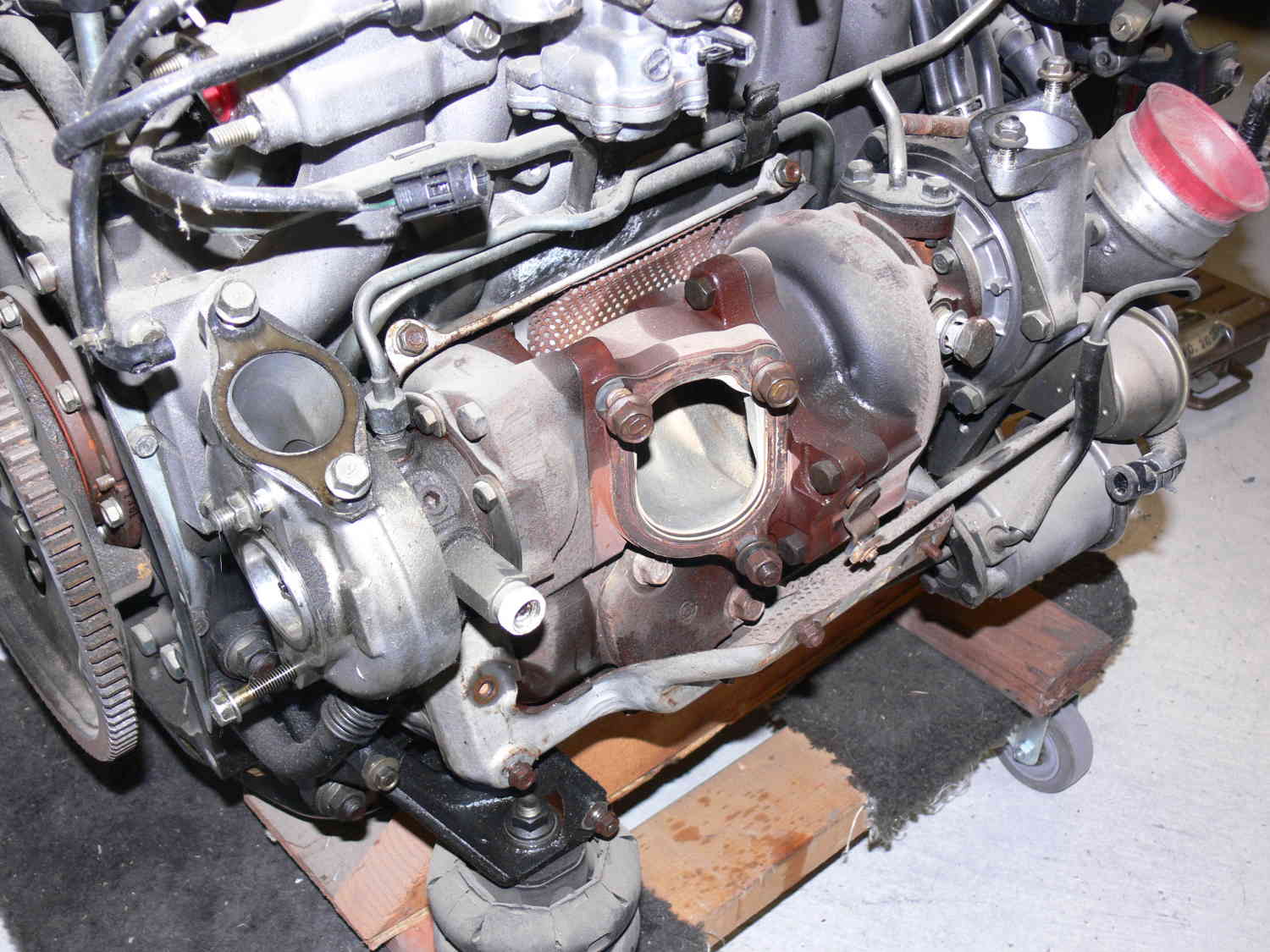
2/ ON the stock 3 rotor sequential turbo charged engine there
are two turbo chargers. You can see them in these pictures.
I did not draw them in the 3D.
There is a risk of burning
the DD15 turbine but we have a longer pipe between the turbo
and the TC so that should cool the exhaust gases. Maybe too
much so we may have to insulate part of it.
You could also carry water to inject into the exhaust
during take off. Since it would convert to steam that
would be a tremendous HP boost.
Paul Lamar
The Rotary Engine News Letter. Powered by Linux.
ACRE NL web site.
http://www.rotaryeng.net.
You Tube
http://tinyurl.com/beqqxas.
Copyright 1998-2013 All world wide rights reserved.