I have been reading about a psru developed for the R1200 bmw
motorcycle engine that is used in aircraft tractor and trike
pusher configuration. It uses a centrifugal clutch like ones in
most chainsaws only much larger, this has solved the torsional
dampening problem. The engines are rated 100-115hp continuous 6300
rpm. The clutch eengauges at 1800 - 2000 rpm and has to be changed
every 400 hrs. These engines have run 2000 hrs in this
configuration. They initially had flywheel cracks when they used
light ones, beefed them up cracks stopped engine ran smoother.
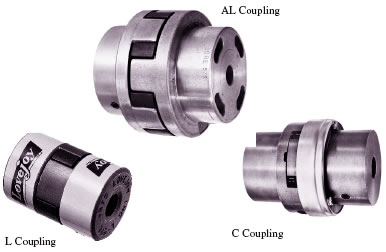
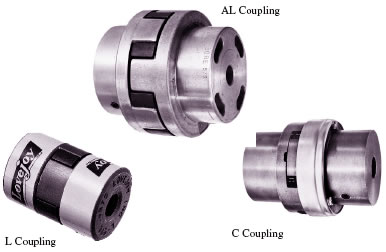
Has anyone considered the rubber coupling used to couple a high hp.
electric motor to air compressors and pumps ect. If i understand
there operation correctly they will absorb energy transmitted back
to the motor and shaft miss alignment between motor and equipment.
I have seen these couplings with several thousand hrs. on them with
no visible wear. Steve Hudson
How high is the HP?
Paul Lamar
I have used these couplings and have 10's of hours on the ground with
good results.
chris smale
Do you have a dwg? It must fit in a cylinder six inches in dia. and
1.7 inches long.
If it is only rubber the failure would be catastrophic.
If the rubber fails in mine it only increases the back lash. The final
is metal to metal.
Paul Lamar
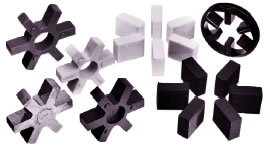
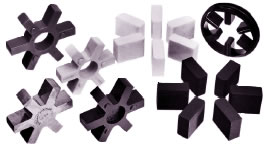
The rubber inserts are approx. 1 1/4" in thickness for a 200hp
electric motor,they are similar to the ones in the attachment.
Steve Hudson
Which size and type do you recommend and what are the dimensions?
We have a length of only 1.7 inches to work with.
It is not enough to suggest something one thinks might work.
One must do one's engineering home work.
An electric motor is not an internal combustion engine.
200 HP AC electric motors do not rotate at 8000 RPM.
Finally as I have mentioned several times before since we are
making our own rubber couplings we can control the effective
durometer over a wide range.
I have not spent a lot of time reading all their catalogs.
If you have please let me know the part number.
Paul Lamar