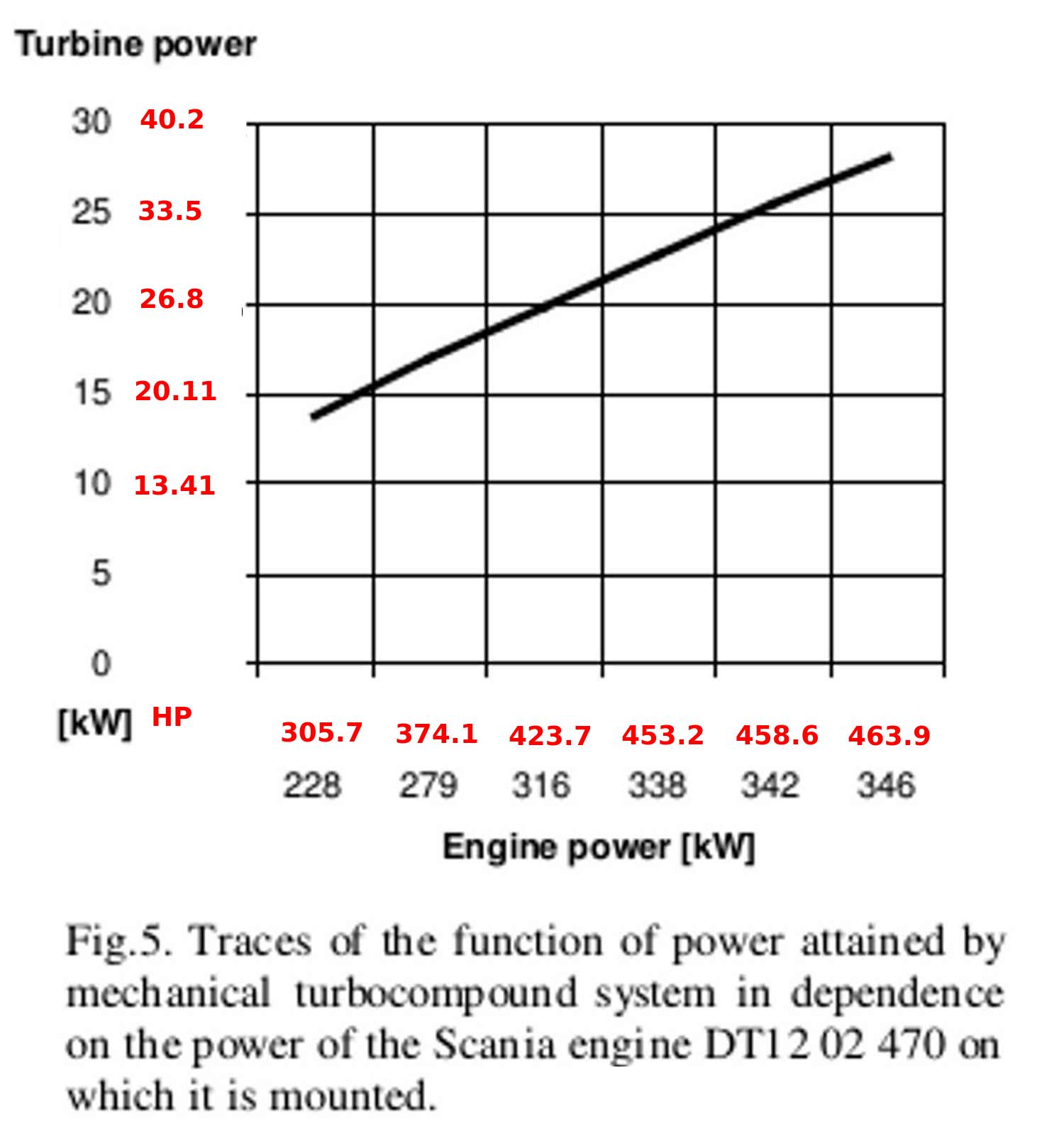
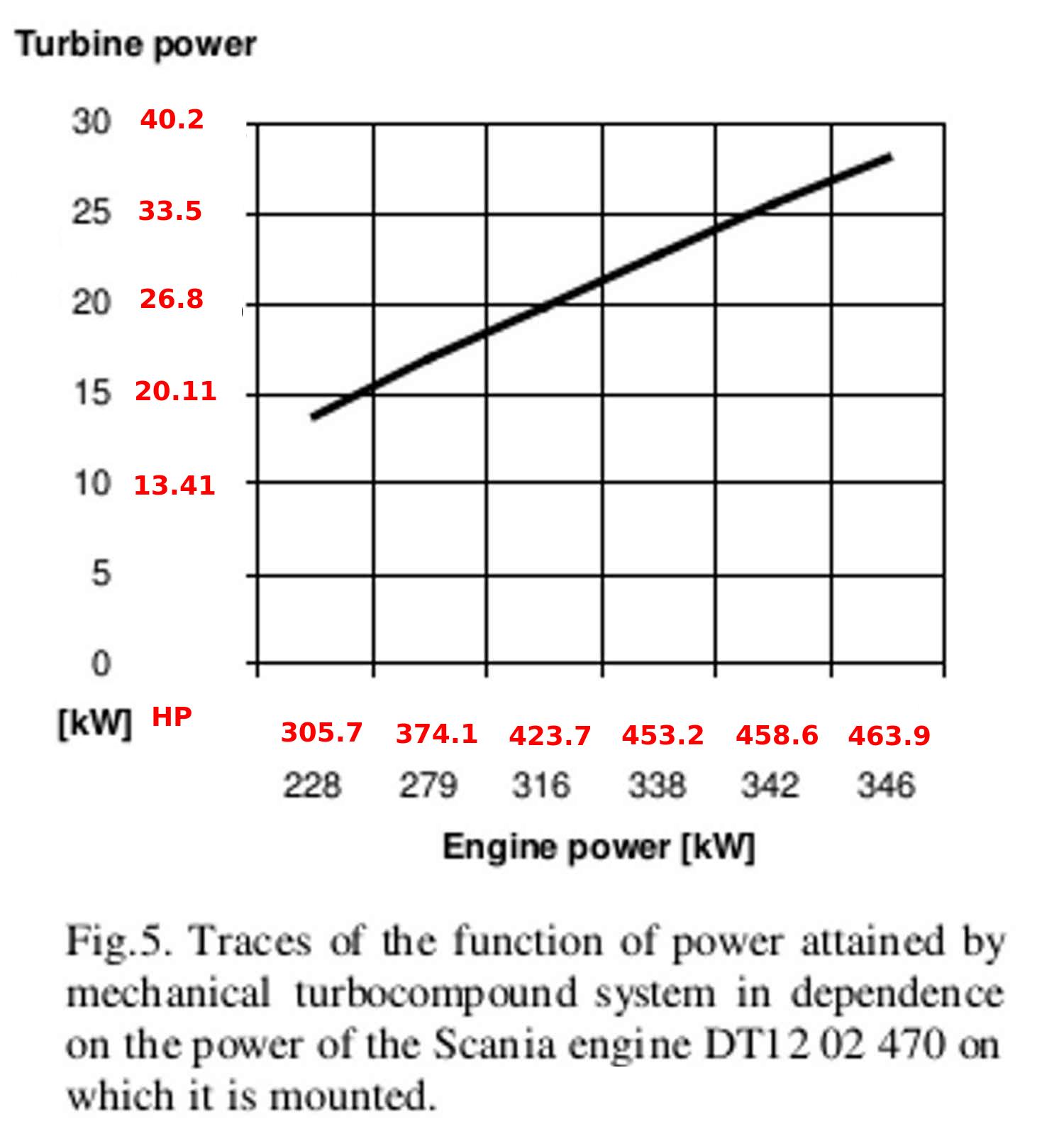
Scania was a pioneer in turbo compound diesel engines.
I recently ran across this chart of turbine power
verses engine HP. Detroit Diesel improved this result
in the DD15 about 25% by detail design of the aerodynamics
and thermodynamics.
Any diesel engine has limited potential for turbo compound
as there is less waste energy in the exhaust to begin with.
Here is the first message we published on turbo compound
rotary engines that I could find in our archives. There are many
others since that time.
Because we published this article this invalidates all patents on turbo
compound rotaries granted since that time. Those are the patent rules.
There are several such patents. One or two by Pratt & Whitney Canada.
Paul Lamar
====================================================
-------- Original Message --------
Subject: Turbo Rotary Exhaust Temps
Date: Wed, 24 Jun 1998 04:25:23 -0700
From: Paul <
rotaryeng@earthlink.net
To: junk@any
Bill Freeman wrote:
Paul,
So Tracy reports pretty normal temps for normally aspirated; does
this go up dramatically for a blown engine??
It should some... according to the turbo books I just bought.
You could cool it a little and monitor it as well. Also the length of
the pipe
between the turbo and the exhaust port is going to have a very large
effect on the TIT.
The guy I heard this from is Tom Jordan, who says he has been in
contact with Tracy about his project, and I just assumed that he
was the source of the EGT info. Any help on where he may have
gotten this number?? I believe he will be using an intercooler,
unlike say a T210.
Bill
The roots blower gets ALL its HP from the crank so that is fuel down
the tubes. The turbo on the other hand gets all of its HP from what is
normally waste energy in the exhaust. Hence the engine will have much
better overall BSFC.
As you well know, if he is just looking for better MPG he could hook
the turbine part through a gearbox to the crank without the blower and
get up to 20% more HP with no additional thermal load on the engine or
additional fuel burn. Its been done on the R-3350-TC. For those who have
not heard of it... it is called turbo compounding.
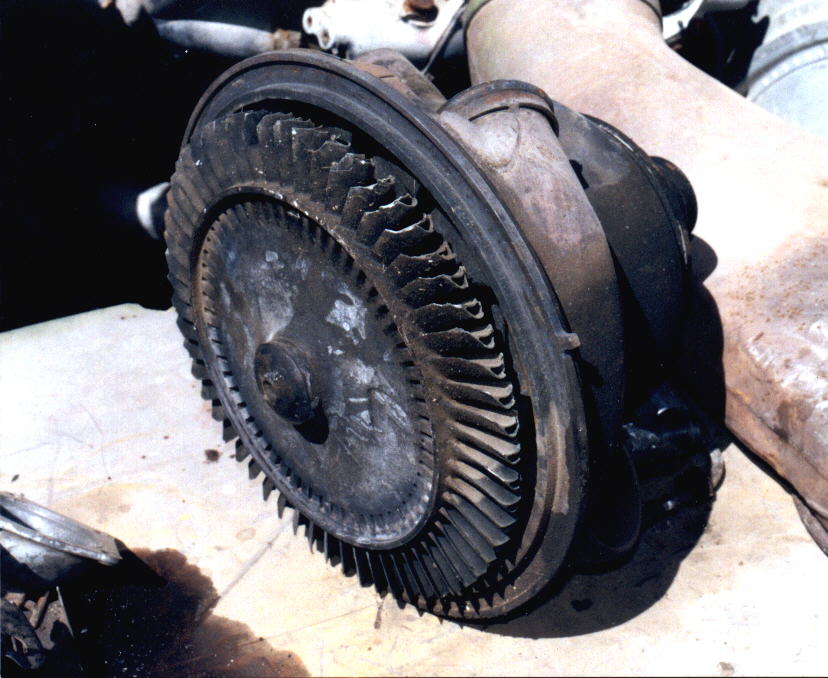
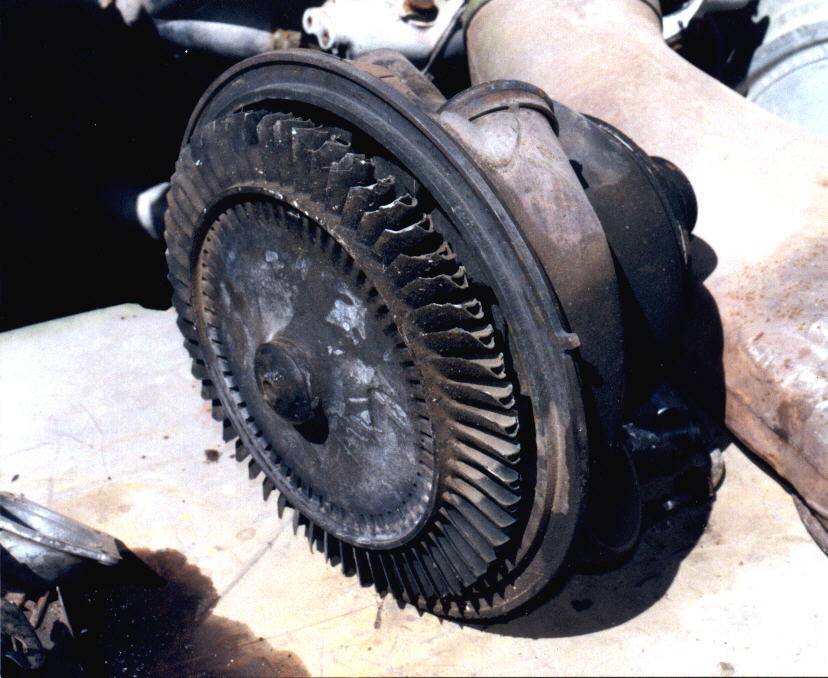
The attached photo (at 200 dots/per inch) is of a blow down turbine from
an R-3350-TC.
It is about 10 or 12 inches in dia. and it adds about 300 HP to the
R-3350-TC with no increase in fuel burn. It is one of three such on a
R-3350-TC.
Roots blowers have their place but I don't think it is on AC engines. I
would try
to talk him out of it. He could blame the rotary for the resulting high
gallons per hour fuel burn. They are not real good in that department to
begin with.
Paul [Lamar]