Paul,
Bob Darrah can locate the holes to within a few thousandths. But we'll
have to see how close I got when positioning the fins for welding. I
measured & located them using a dial caliper, but not sure that it is
within the tolerances we're looking at now. With the first design I
didn't
see the need to position the fins within +/- .012". (Maybe we'll get
lucky.) I would prefer to keep the fins as is to allow for the most
silicone material.
I don't see a problem with drilling the disk for the 10mm bolts, slipping
them into the holes to help locate the fins for welding. In fact it
should
ease the fabrication process somewhat.
Mark
On Sat, Jul 20, 2013 at 1:23 PM, rotaryeng <
rotaryeng@earthlink.netwrote:
Mark S,I had another idea to give us more room for
the coupling. Replace the 5" long 1/4 inch hex head bolts with
socket head versions and counter bore the holes in Tracy's
1/2 inch thick adapter plate 1/4 inch deep from the back side.
Maybe I can get Jeff to do this on his version of the adapter
plate. Details details :)
Paul Lamar
Paul,
I was thinking that it would make things easier to assemble if the six
holes were clocked so that three of them were concentric with the 3/4 x
1-1/4 blades so they could be inserted down through center of the blades.
That would leave the other three holes centered between two blades and
should line up with the three blades on the second part of the adapter
(the
piece that attaches to the splined hub). As it is currently, the holes
are
very close to the sides of the blades.
Regarding the socket-head bolts, what size ID hose do I need to buy? I
see
that Oreilly's Auto Parts has quite a selection of silicone hose. I pass
two of them on my way to the airport.
Also, do you have a spare splined hub that we could use for this so that
I
don't have to drill holes in flight hardware?
Mark
Another great idea Mark. The socket head 10 MM will fit down
in there easily as will the Allen wrench.
The head diameter is 16 MM or .629 or 5/8th inches.
This is evolving nicely as all good products do.
Yes on the splined hub. I'll ship it to you next Monday.
Paul Lamar
OK, sounds good. Should I get with Bob Darrah to re-drill the 6
re-located
10mm bolt holes?
Will the splined hub be drilled for the 20 #10 bolts and the six 10mm
bolts?
Mark
That will be fine for testing. Yes I can drill it for the six
10 MM bolt clearnace. You will have to drill the front sheet metal part.
We can also do the same thing for the front part by favoring
the compression side. That will allow making the front fins longer.
That will give about .3" or so deflection before the socket
head contacts the inner wall of the front fin. The inner dim
of the front fin is about .9". I'll work that out in terms
of angles.
Brilliant idea you had Mark.
Paul Lamar
Kill this that won't work. Only .7 to work with.
"We can also do the same thing for the front part by favoring
the compression side. That will allow making the front fins longer.
That will give about .3" or so deflection before the socket
head contacts the inner wall of the front fin. The inner dim
of the front fin is about .9". I'll work that out in terms
of angles."
Paul Lamar
It will work if I change the width of the fins to 1 inch
instead of 3/4. Down the road lets test it as is.
The availability of those 10 mm socket head screws changed everything.
BTW Bob may have to machine the head of the socket head
screws slightly. Do you have a set? If not I can send
you a set. If that is the case I can turn them down to
fit the 3/4 wide fins. The inner dim of the fin is .65 and the socket
head is .625 dim. Rather tight. He has to be right on for the new
holes.
Paul Lamar
Paul,
Forgot to answer your question regarding the 10mm bolts. At present, I
don't have any socket-head 10mm bolts. There's a place in Austin that may
have them, but they're closed today, so I can't call and check. I'll call
them next week, or you could drop 6 ea. in with the hub.
Mark
OK. That 1.25 pitch is rare. Will do.
Paul Lamar
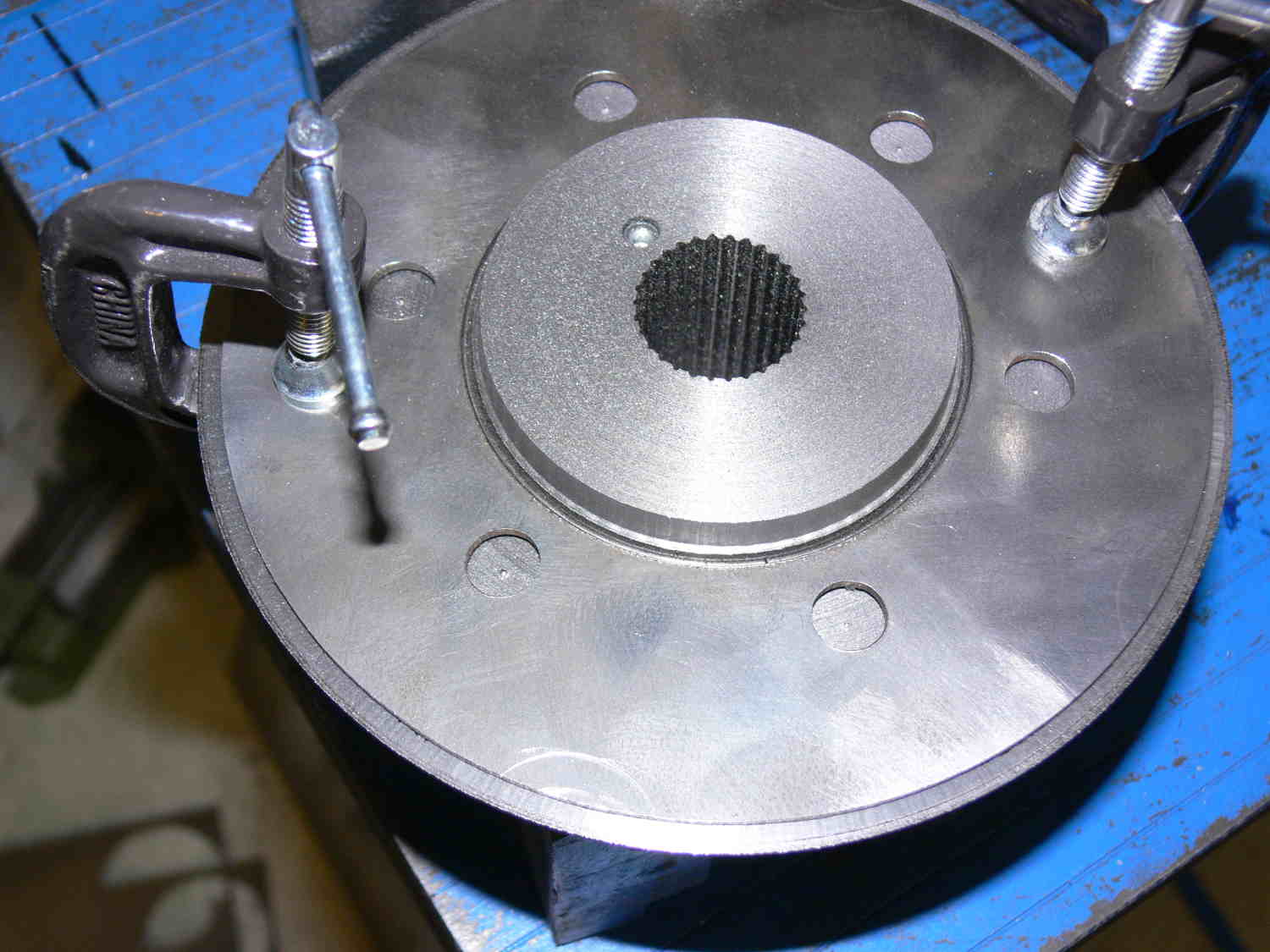
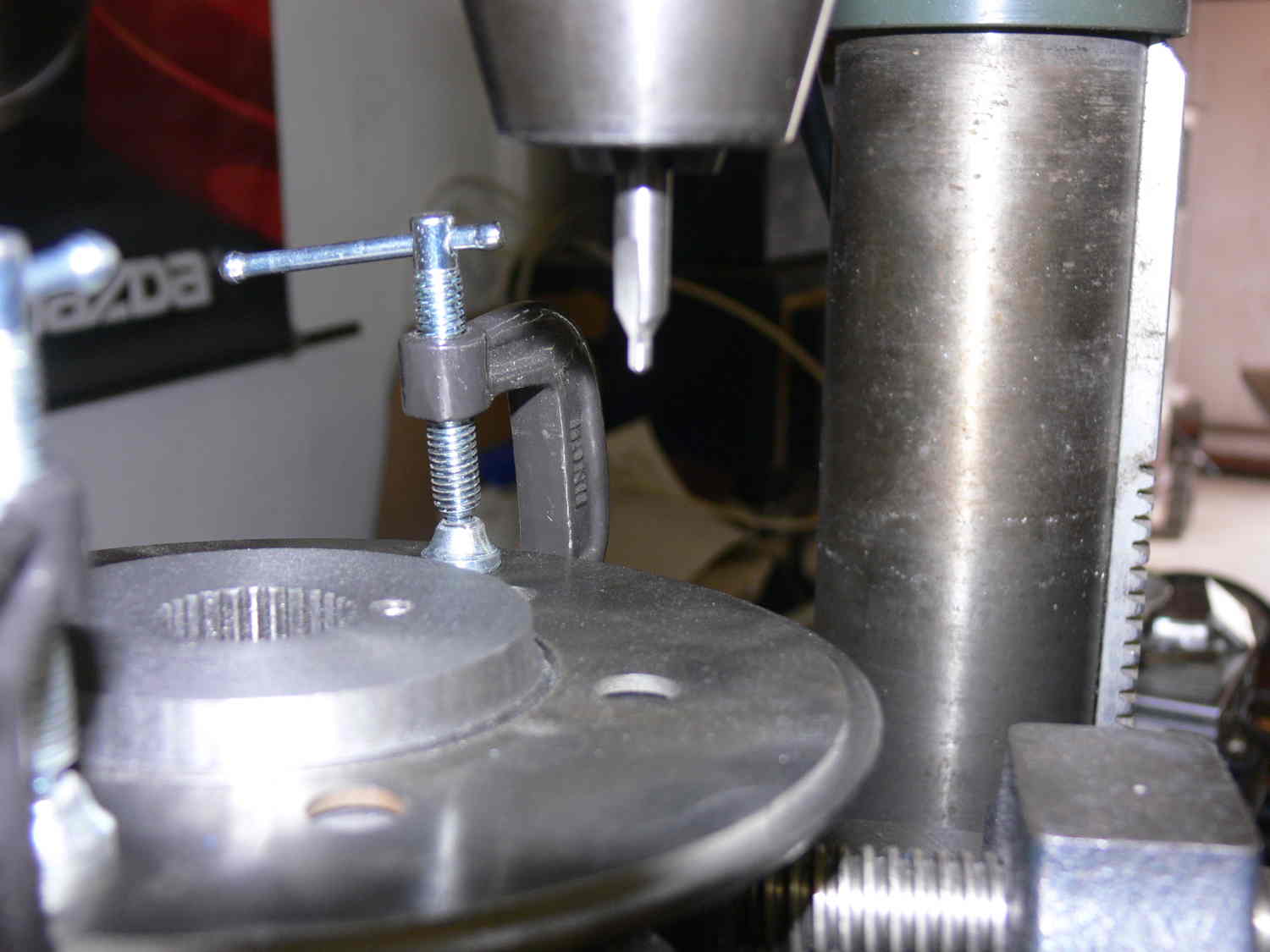
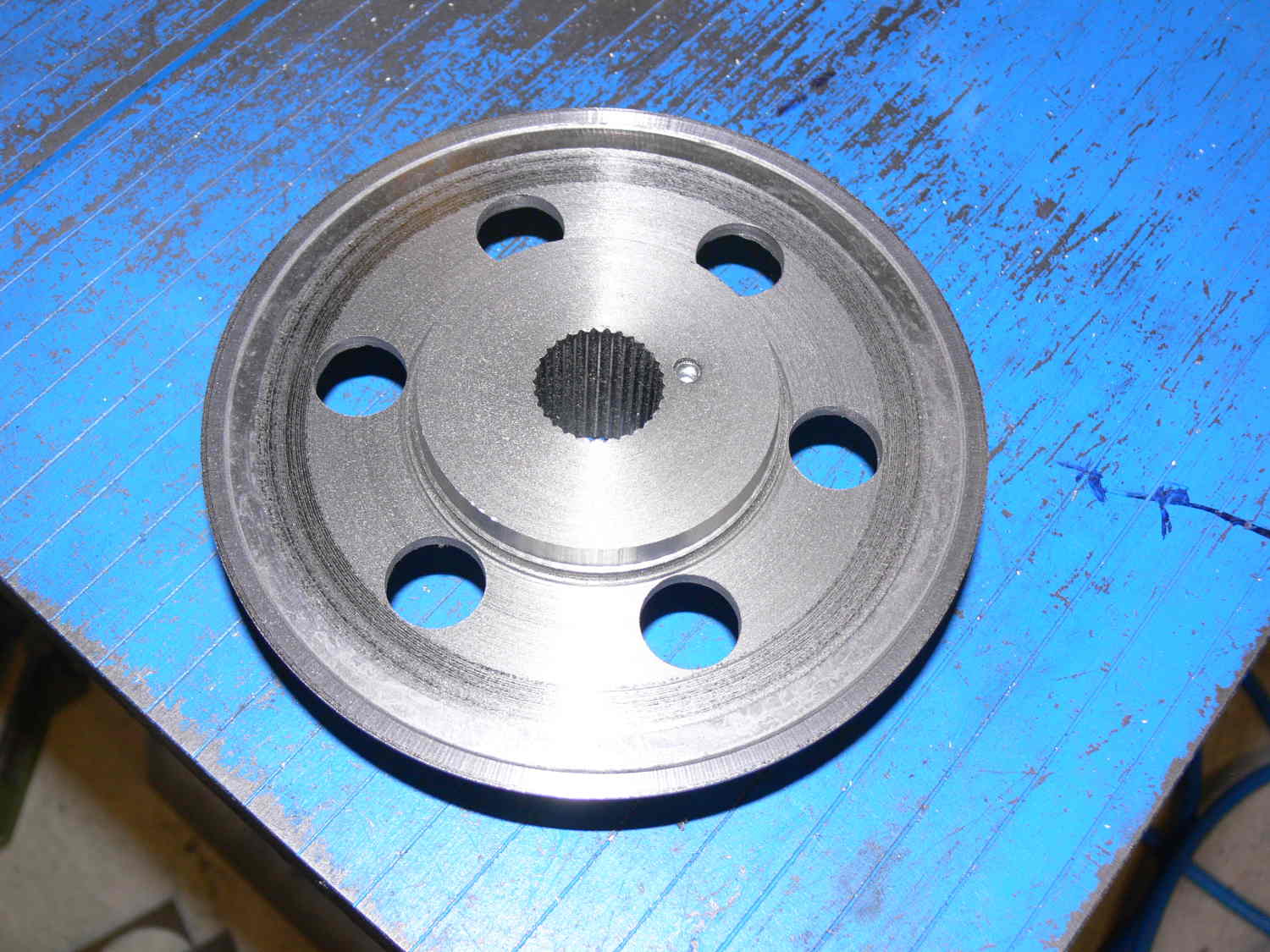
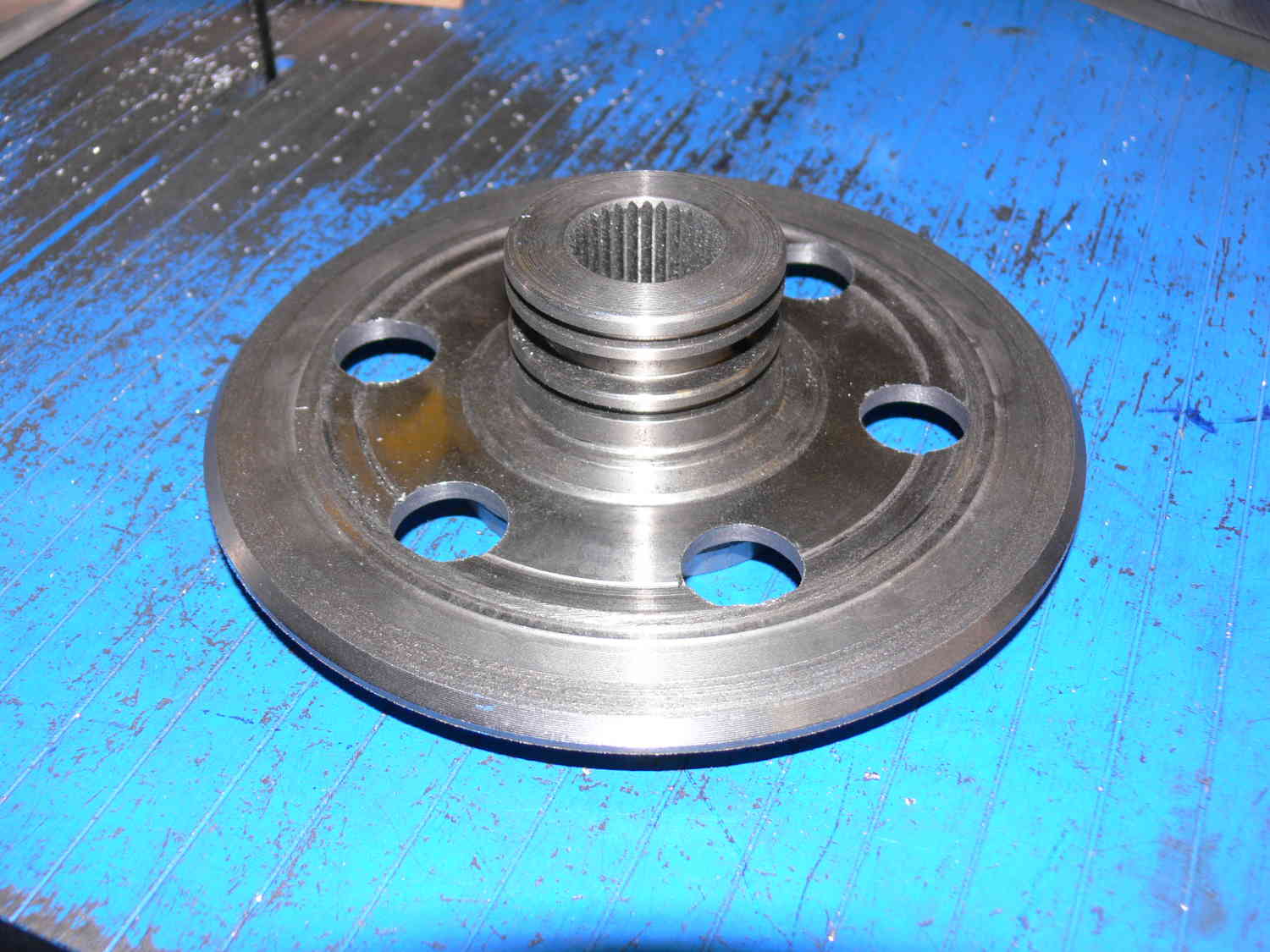
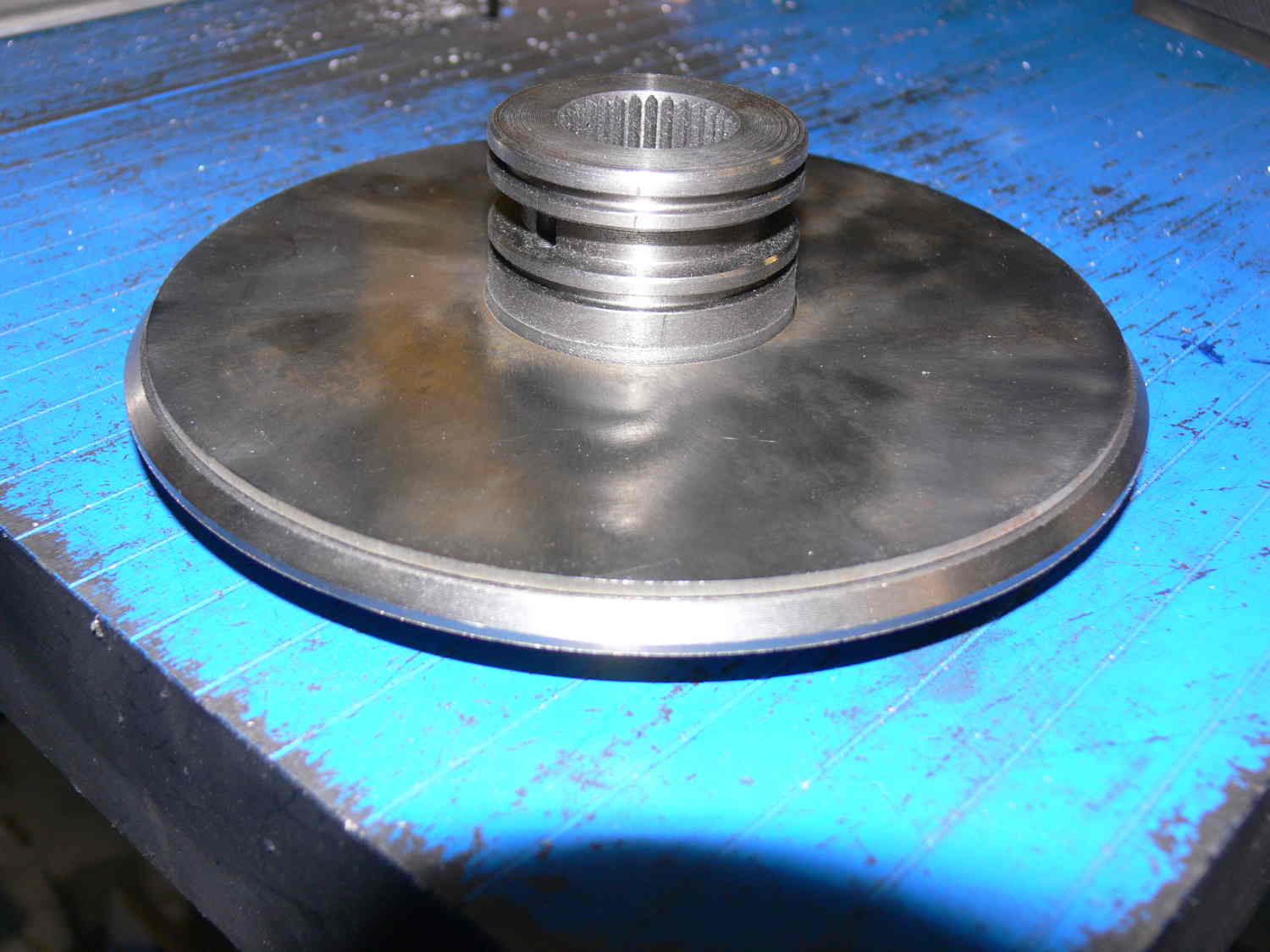
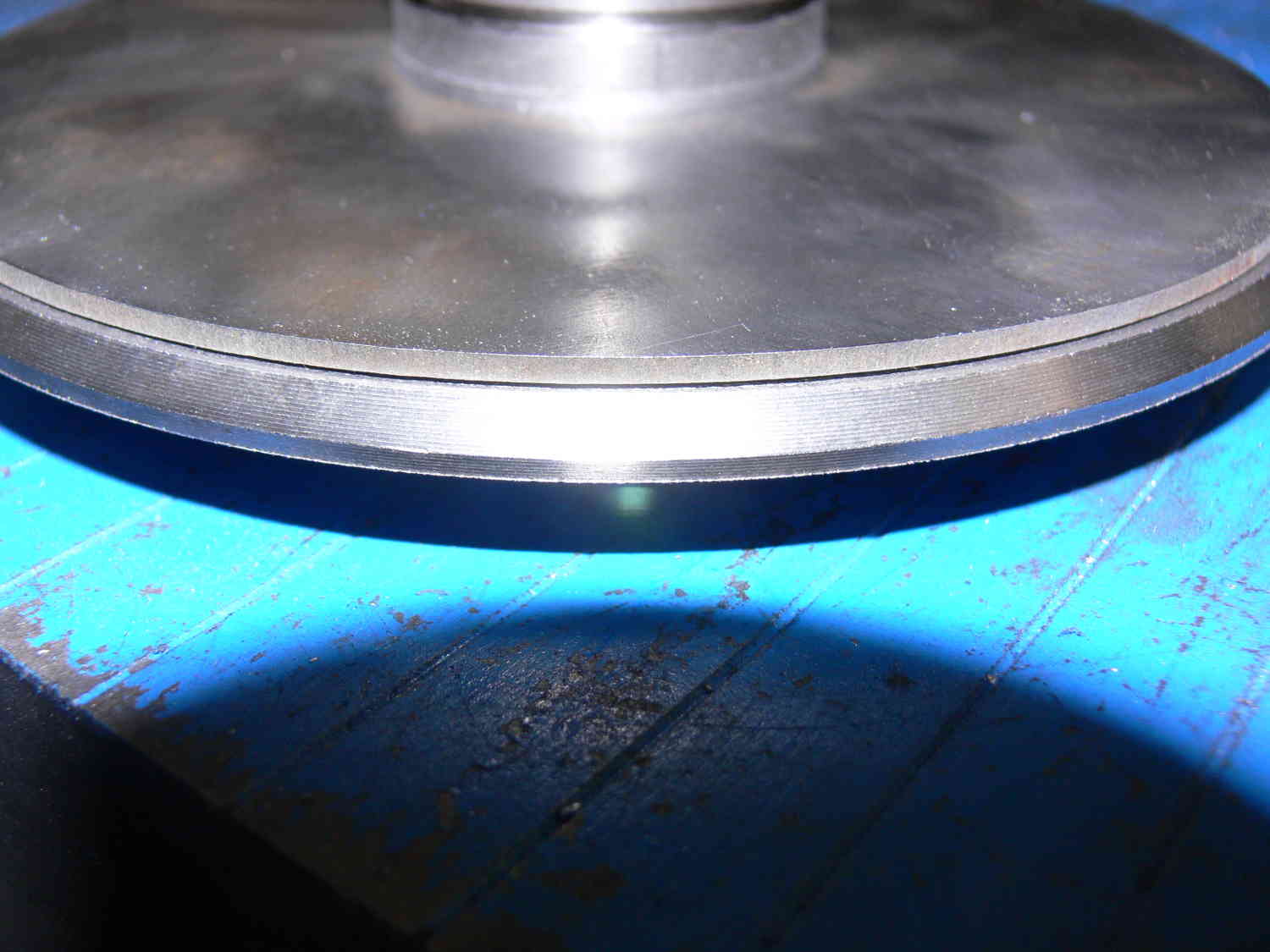
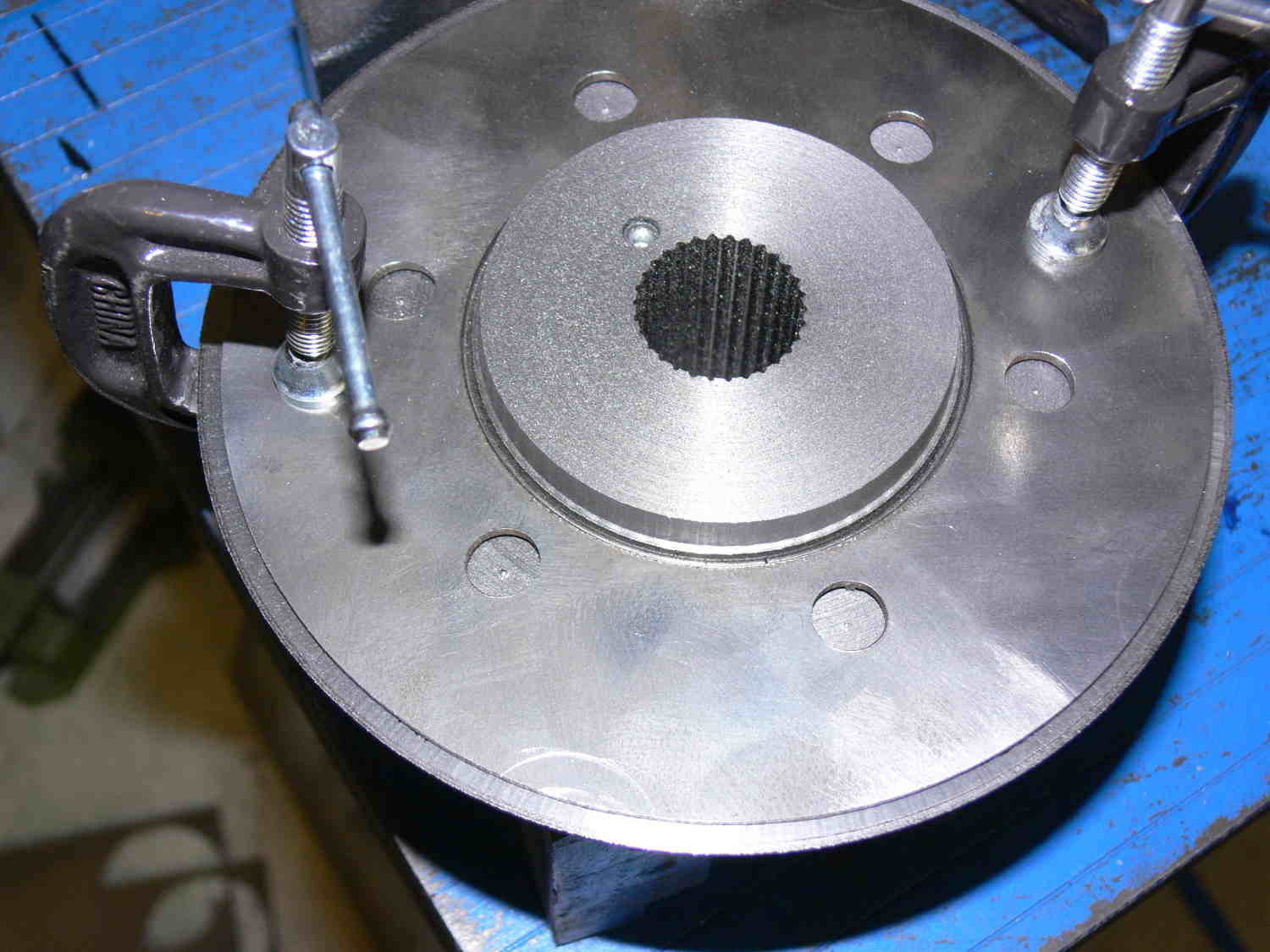
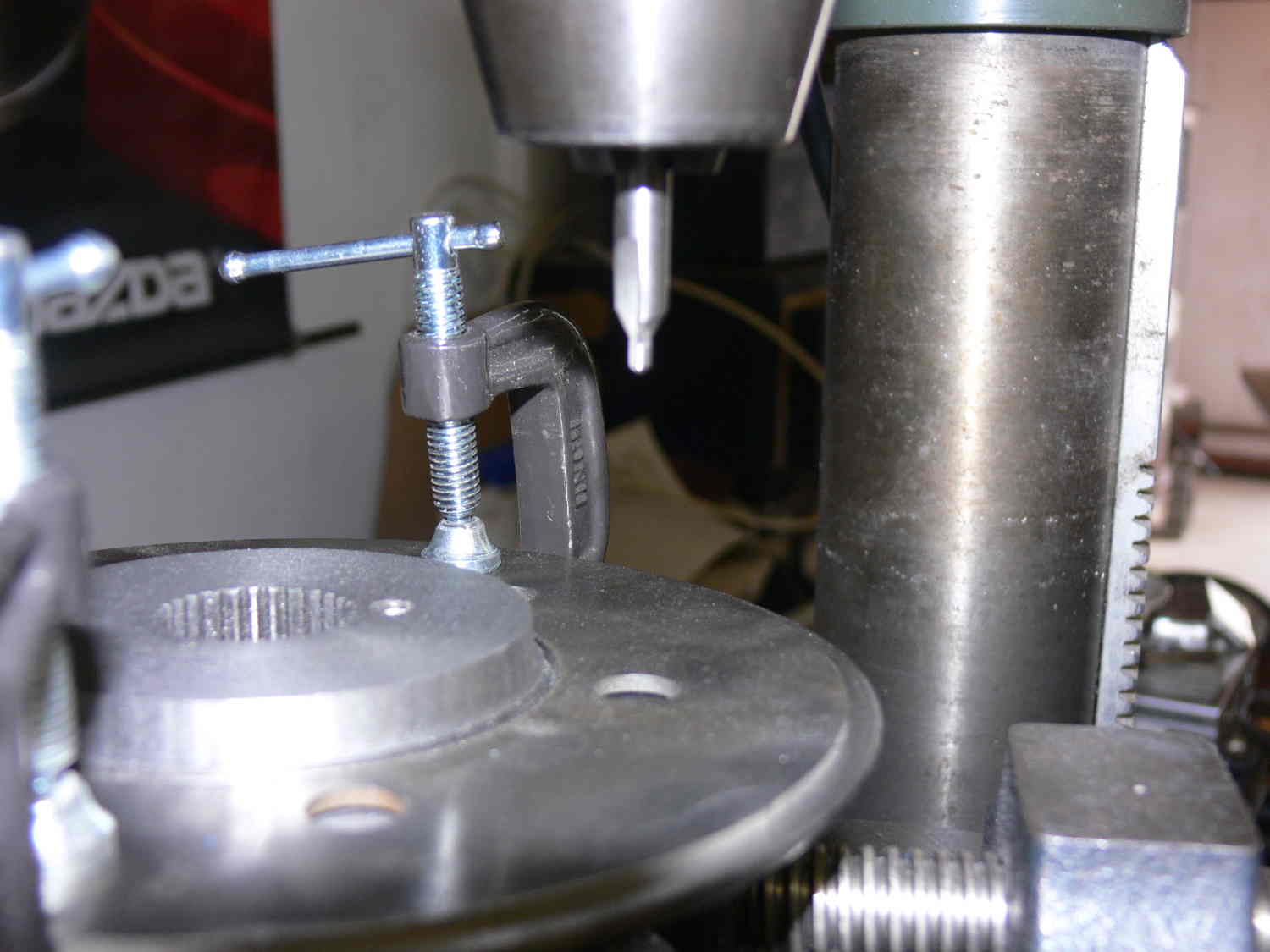
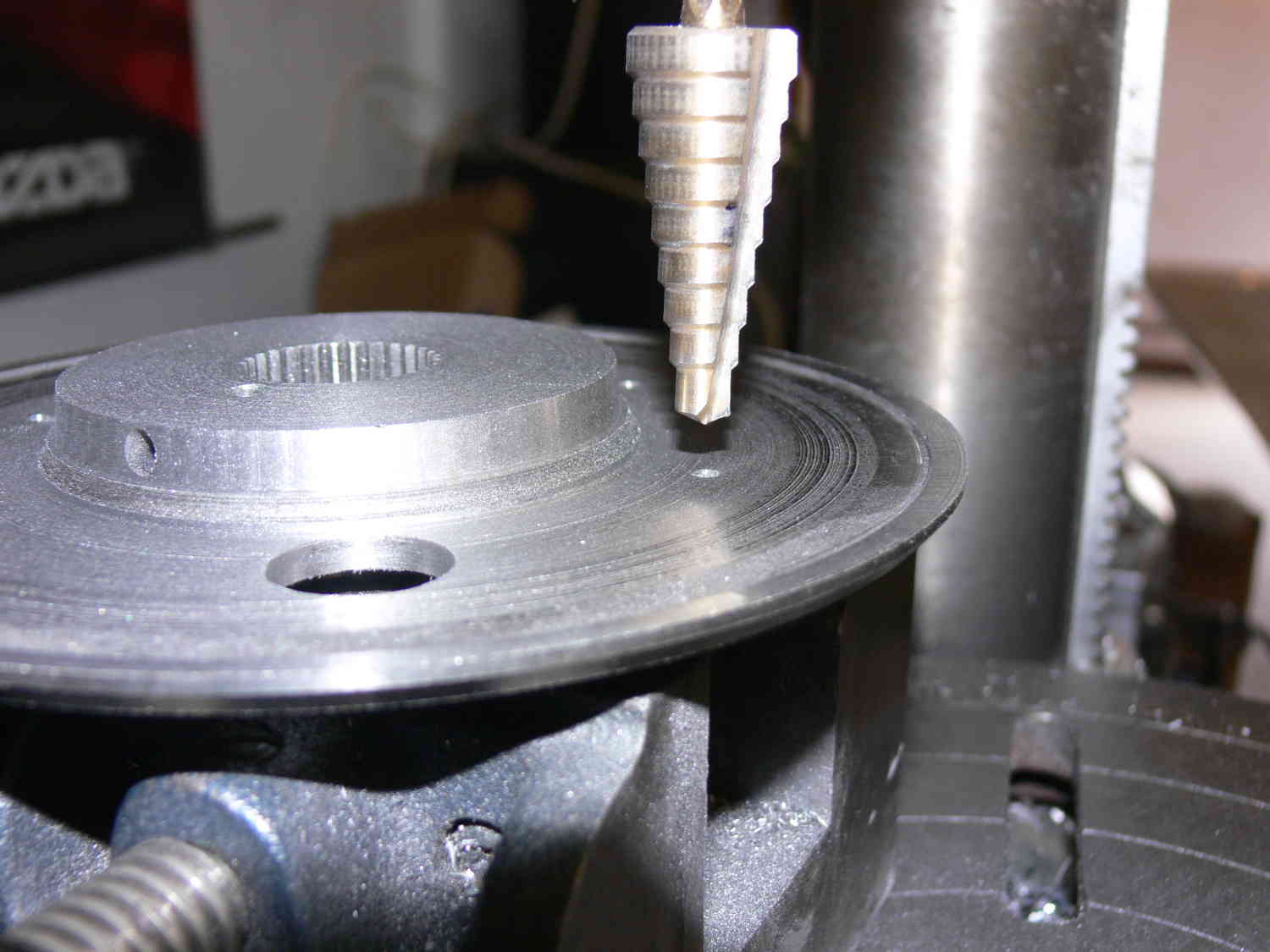
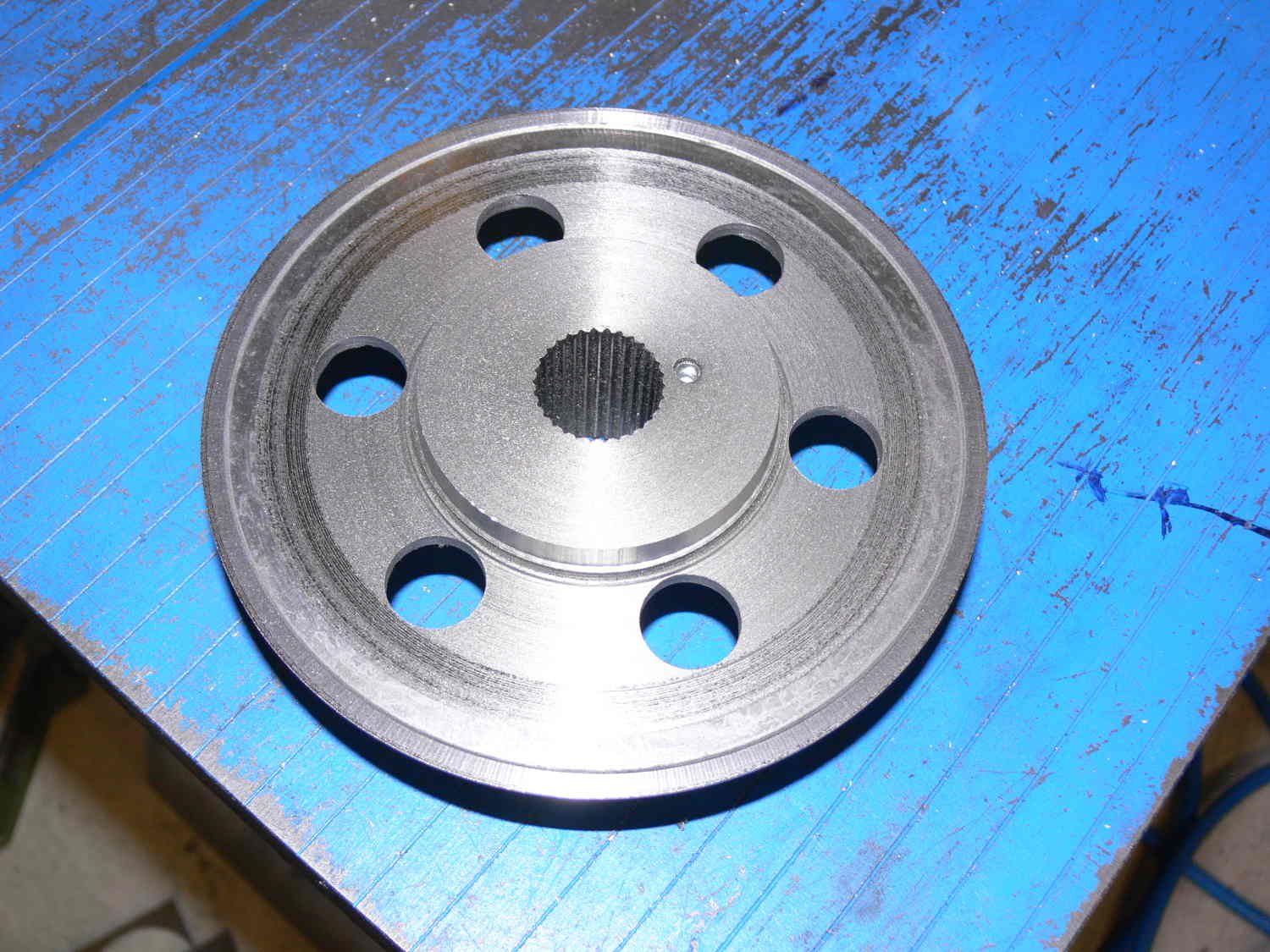
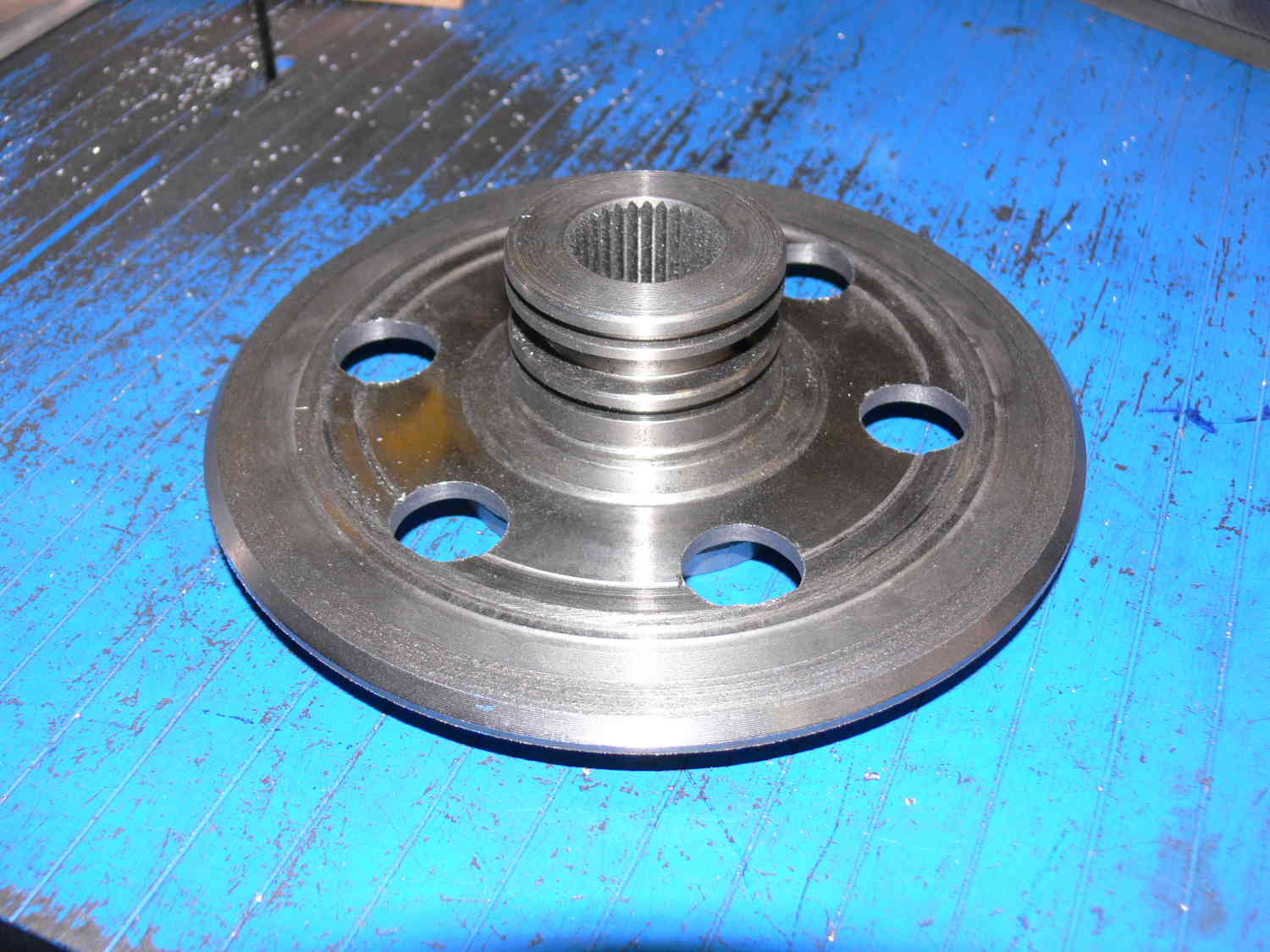
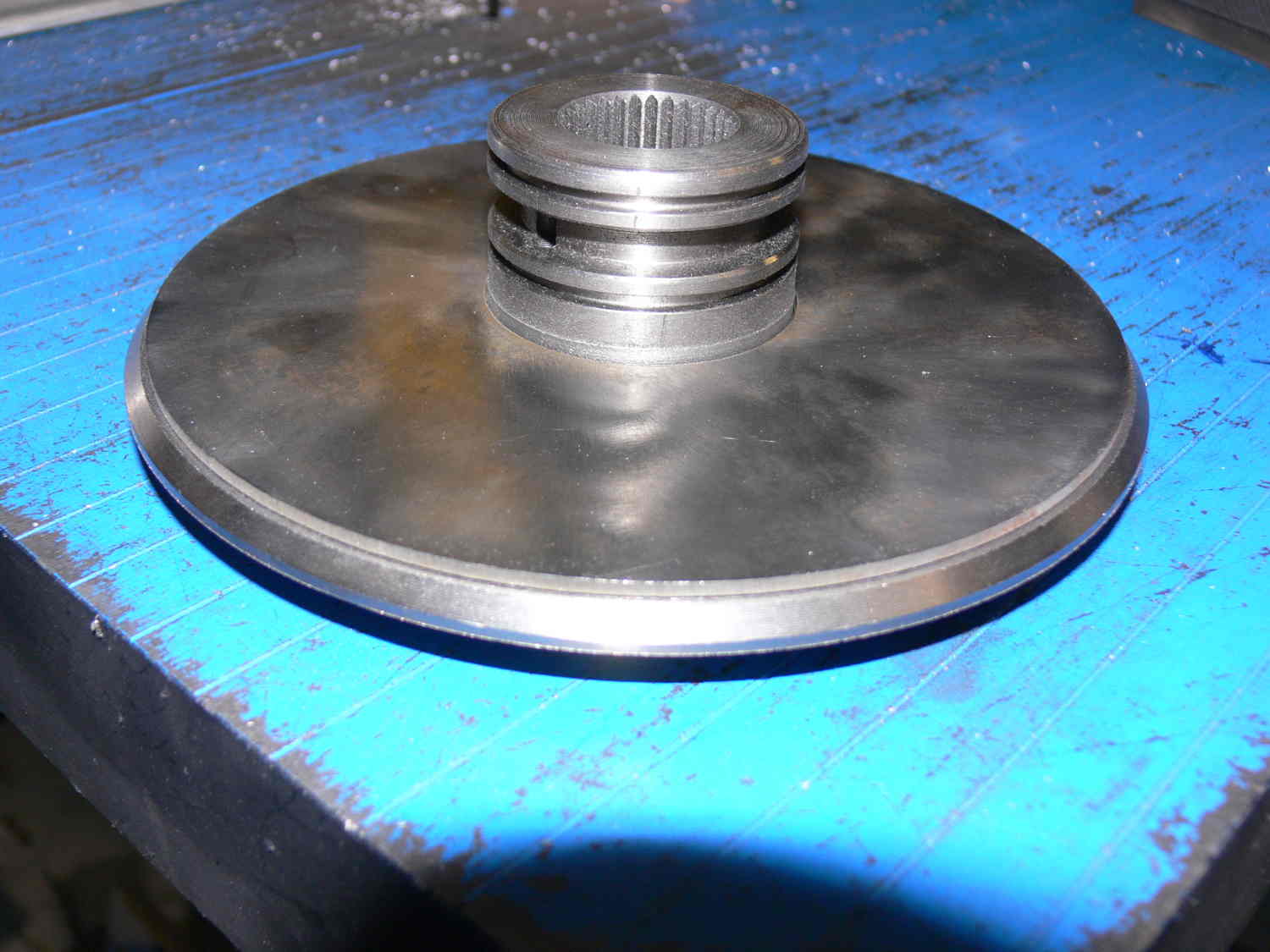
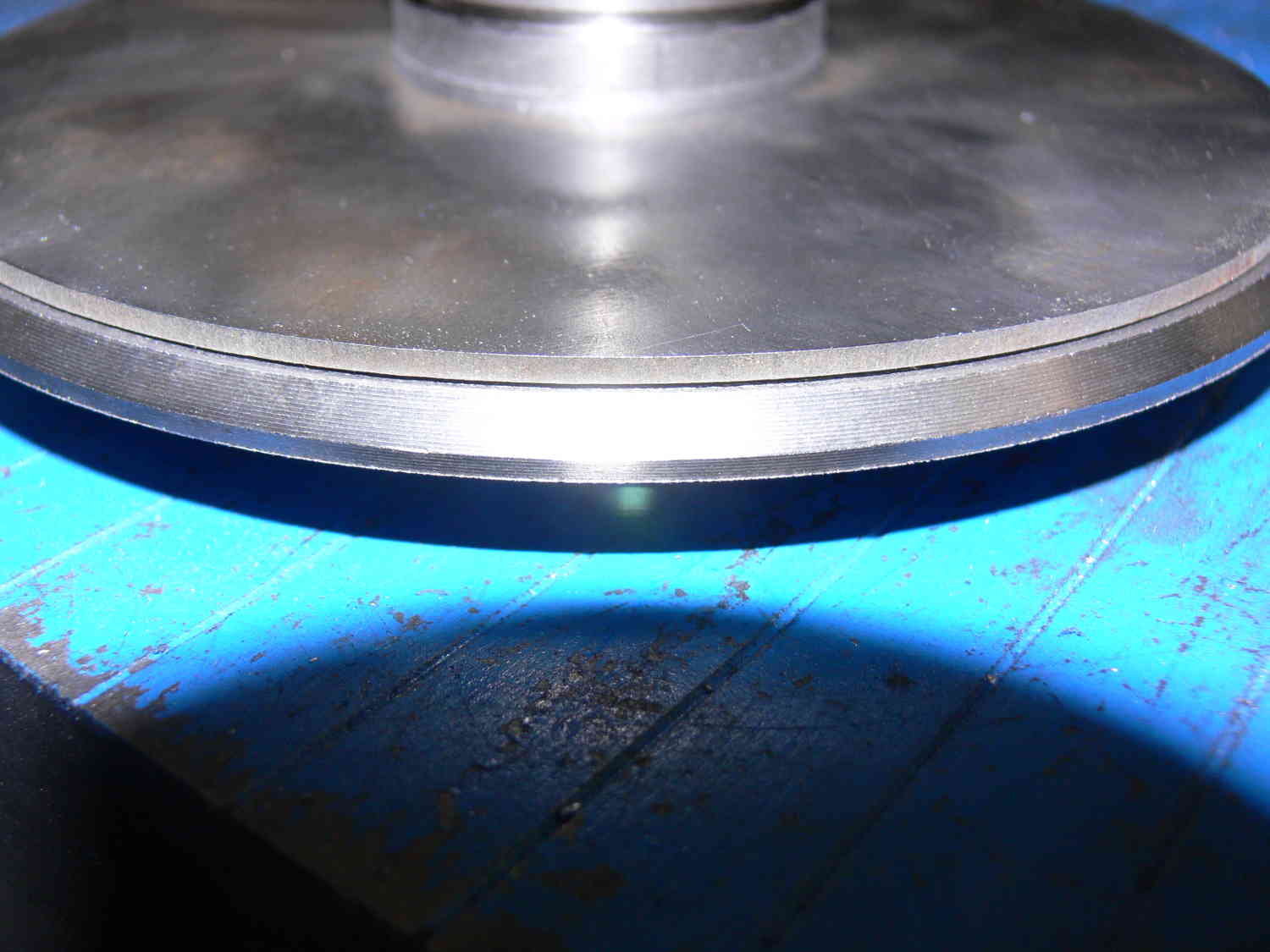
Here is the machined spline plate.
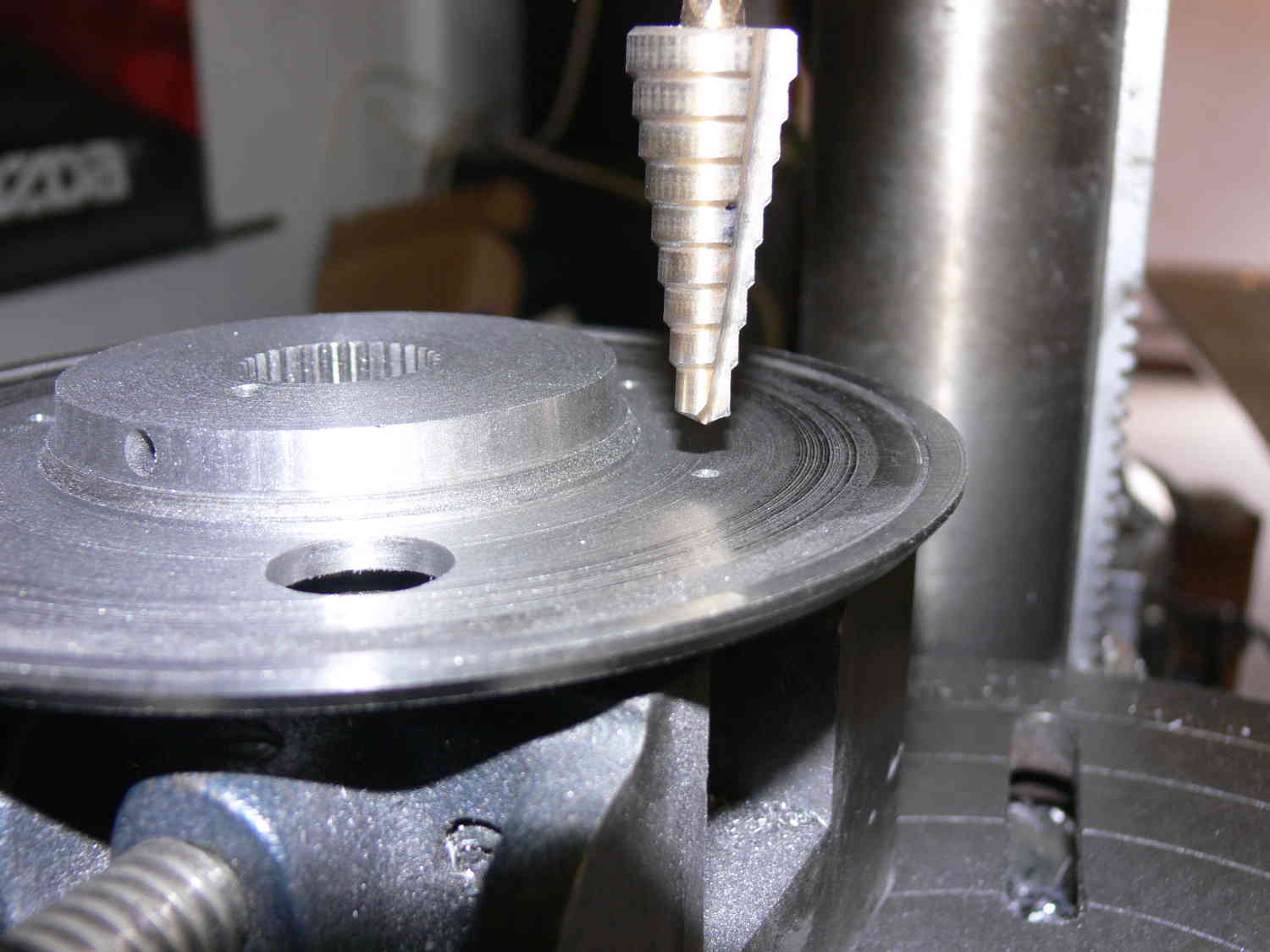
If you don't have one of these step drills you are not properly equipped :)
They don't really "drill" the hole. They machine it. Better yet they pilot
on the previous hole. A major invention. Invaluable.
This part is important as we will be using it on into the future for the
New Ross
gear boxes.
Paul Lamar