Hi Paul,
I started to fly my RV-7A, even with the help you provided, It took 9 years
and 4 months and I still have finish work to do, Probably a year worth of
work.
I have one major issue with the propeller: Wood prop D = 76 in, Pitch = 88
in, Static RPM = 5700
No increase in RPM with speed increase, Take off takes over 1500 feet Top
speed 105 mph
I tried a Wood prop D = 69, P = 56, Static RPM over 7300 Could not fly it
because of vibration.
What would you suggest?
Thanks,
JP
Assuming you have a 2.85:1 gear box cut 4 inches off the first wood prop
diameter and rebalanced it.
Balance the second wood prop and try it again.
Pass a round bar through the hub and use horizontal and parallel steel bars
to static balance it.
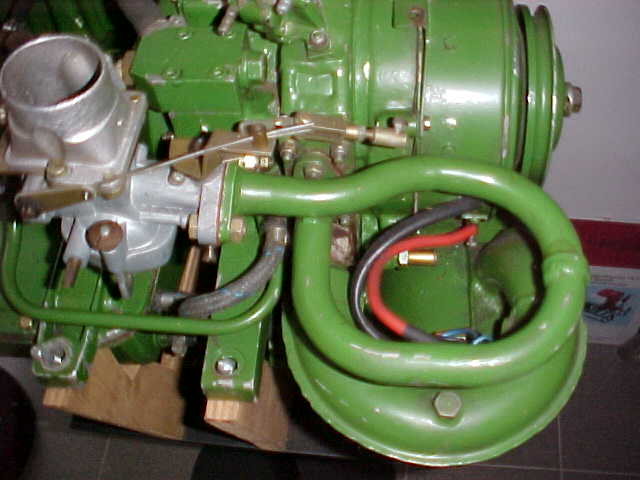
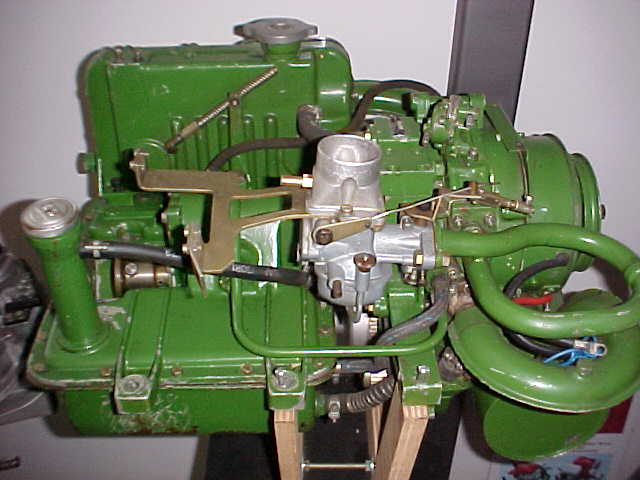
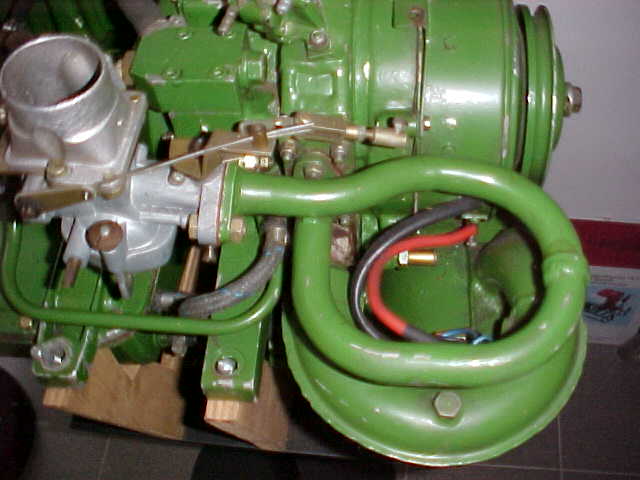
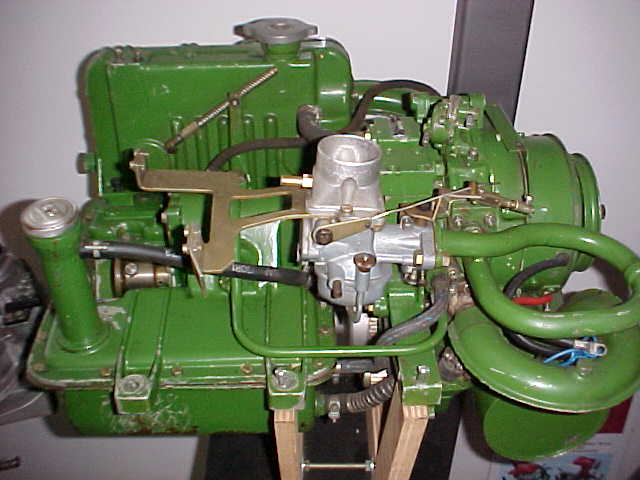
Take some pictures of the intake manifold and email them to me.
Put the word "PRIVATE" in the email subject box if you don't want me to
publish them.
Paul Lamar
paul, curious: what's the interest in the intake? novice here, excuse me if
is stupid question........
jess
The key to tuning a rotary engine is the design and construction of the
intake manifold.
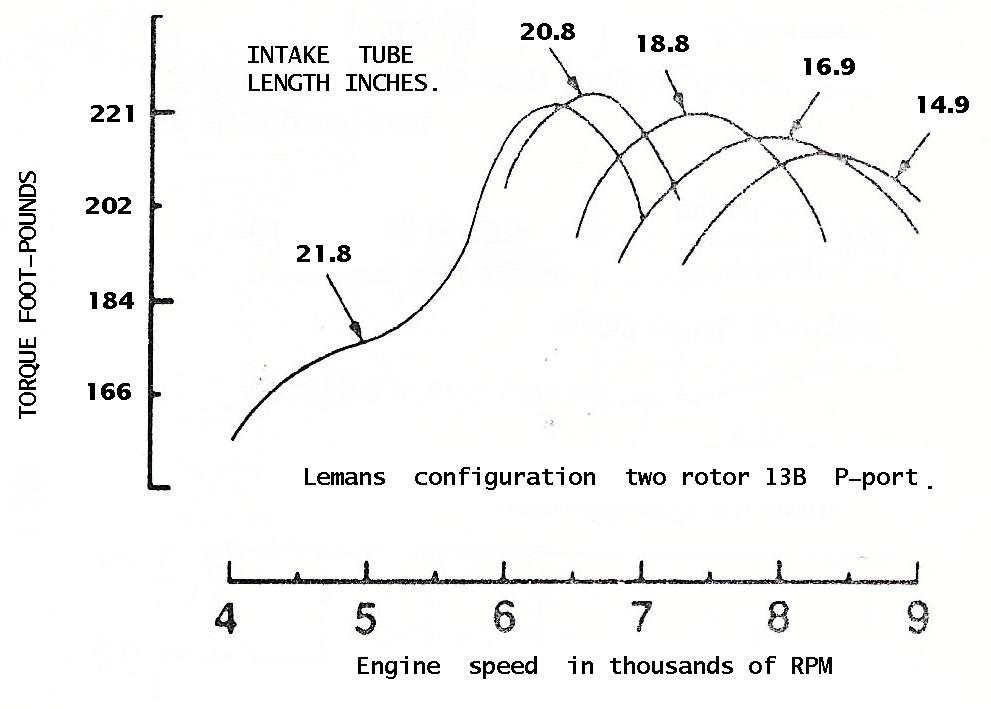
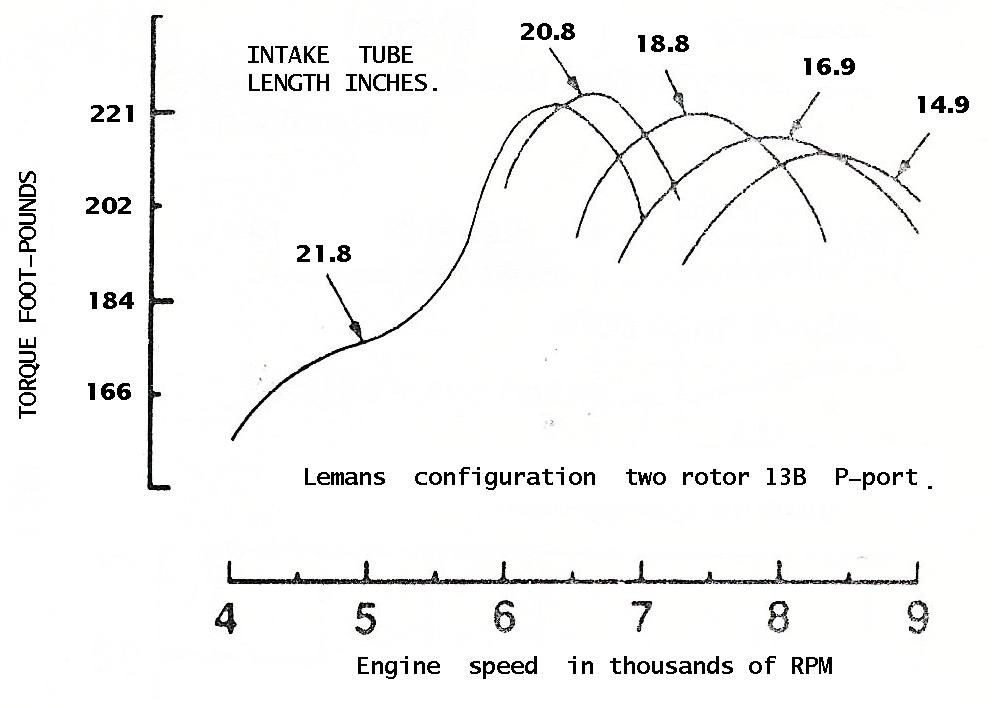
18 inch 2" OD runners and a p-port is optimum.
Anything less that this is less power.
Paul Lamar
Good night Paul,
As promised, see pictures attached.
By the way, I cut my prop 1.5 inches today, Ground test looked good, will
fly it tomorrow if weather is fine.
Will cut another half inch if needed, will see!!!
PS, I am sending one picture, otherwise, may not go thru.
Thanks a lot
JP
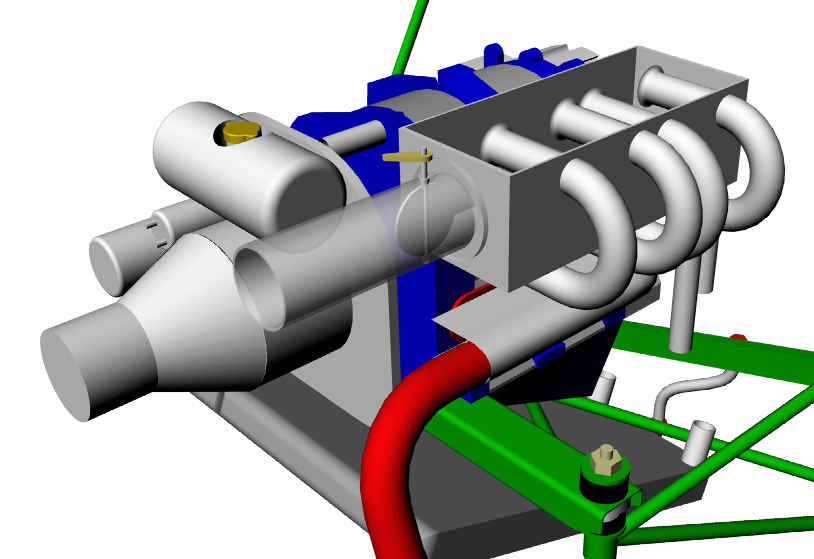
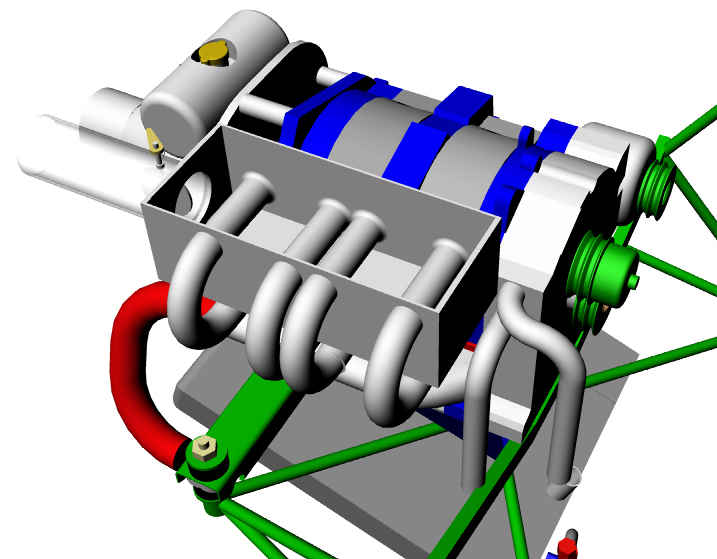
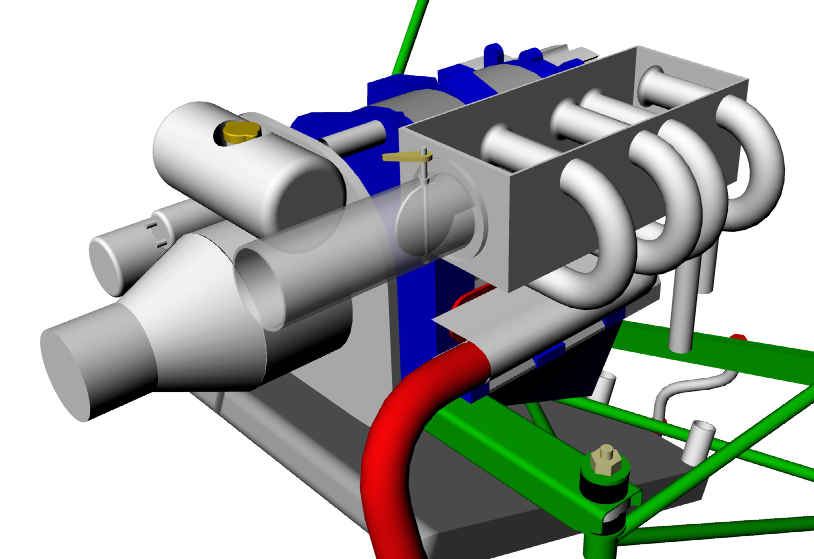
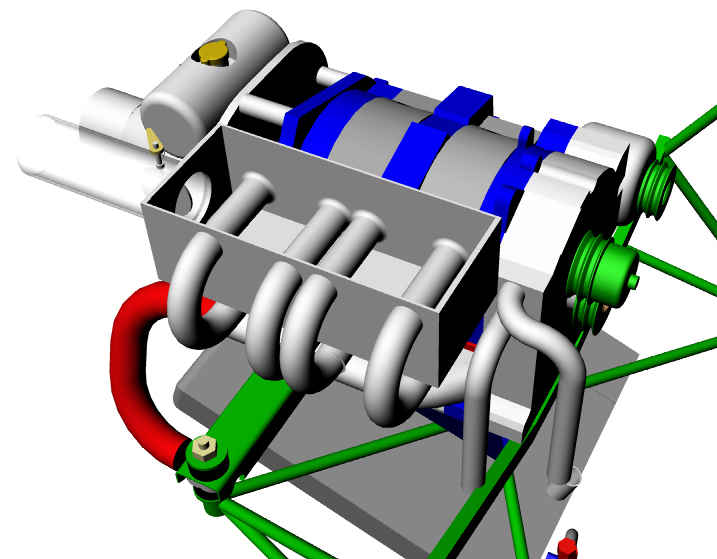
What is inside the large box bolted to the side of the block?
P-port or side port?
If each port does not have an individual long runner or tube there will be
very modest amount of HP generated.
With no tubes or runners one would be lucky to see 100 HP.
The optimum length for the tubes or runners is around 18" with side ports or
P-ports.
If a side port engine is 200 HP a p-port version will be 250 HP.
Shorter runners than 18" indicates the max power will occur higher than 7500
RPM which is not good for a 2.85:1 gear box.
Paul Lamar
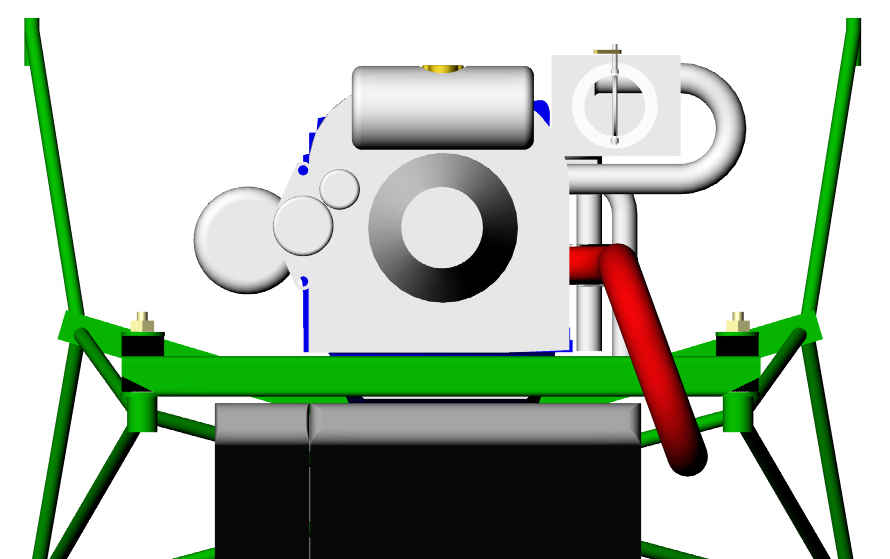
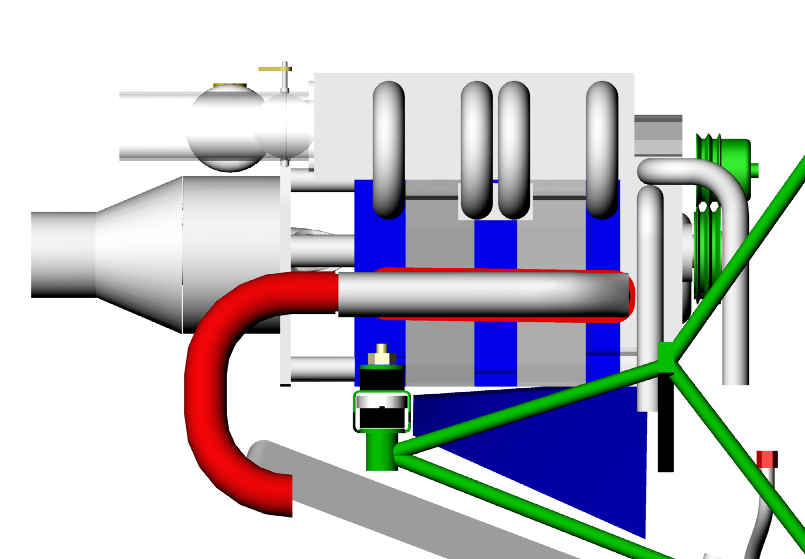
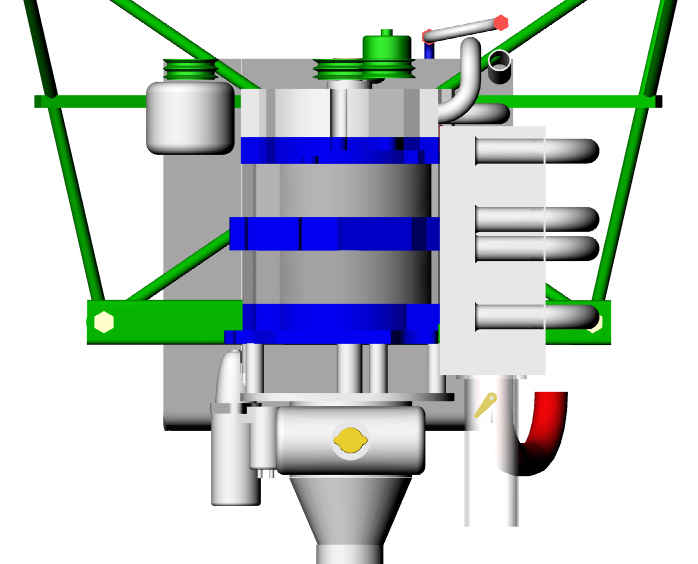
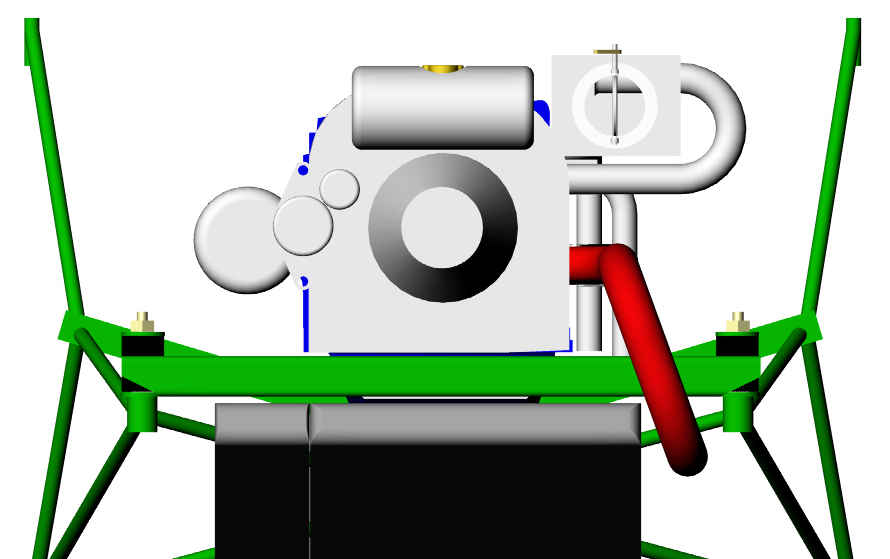
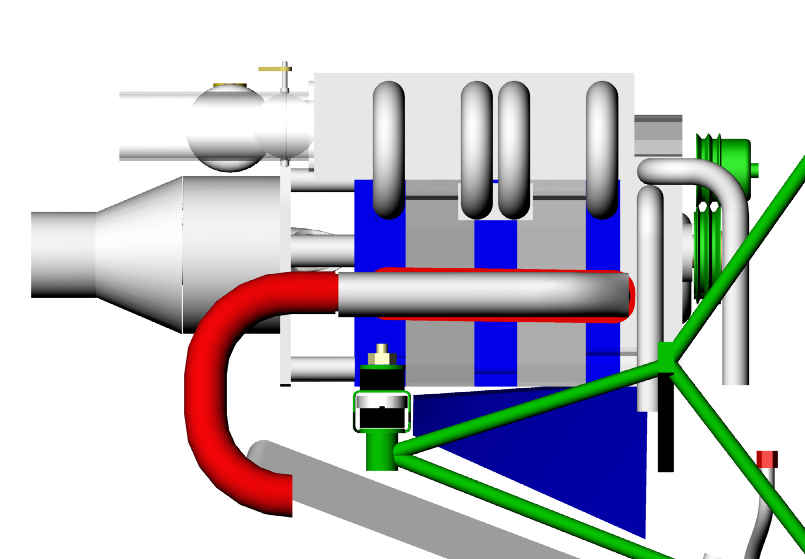
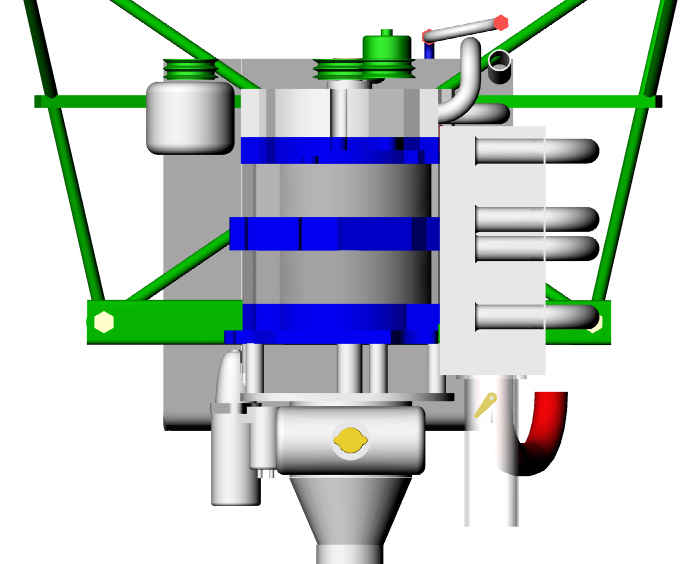
This is a 13lb piece of aluminum with holes for intakes and injectors (side
port).
The runners are part of this piece, they are about 6 inches long.
I attached the solid work drawing.
I do not know what power it is supplying yet, I just cut the prop yesterday,
may try it today.
Always start first shot, idles at 1800 RPM; mixture easy to adjust; I was
hoping to get 160 hp.
On my first attempt I had long runners, but my lay out was messy and I could
not fit everything under the cowl, The engine was not stable, RPM was
changing by itself all the time, mixture did not work well.
JP
I assume you have Tracy's EFI :)
The "not stable, RPM was changing by itself all the time, mixture did not
work well." Had nothing to do with the long runners :)
Where were you monitoring the intake manifold pressure?.
That makes a huge difference with Tracy's system.
As far as I know he does not take multiple readings to average them. That is
one of the problems with that method of controlling the mixture.
The best place is the oil injector holes in the rotor housings.
This gives the most stable readings as that is the amount of air actually
getting into the engine. The orifice should be small to even out the
pressure variations.
The EFI world switched to mass airflow sensors years ago :) Scrap Tracy's
system and get a Motec with mass airflow sensor.
The six inch runners put the torque peak way beyond 7500 RPM.
I cannot estimate the HP until the runners are long enough to work.
18 to 20 inch runners put the torque peak at about 6000 RPM and the HP peak
at about 7500 RPM.
Also your throttle body is a bit over size.
Is it six side ports or four side ports?
Can you send that file in IGES?
You have plenty of room for long runners if you do it this way.
P-port or side port.
I notice you are using the quick and simple cooling system under the
fuselage. How is that working?
Paul Lamar
--
Yes, I am using Tracy's EFI which I am happy with, right now,
it is stable, reliable and easy to use.
Will switch to Motec only if I need to, this would be another year of work
without flying.
My engine is a six side ports as you can see on the IGES, hope conversion
worked.
I was using Mazda bottom and top intake castings modified and their manifold
pressure tube feeding the EFI.
From what you say, I should crank up the RPM as high as I can
chopping my prop half an inch at the time and stop before the engine gets
damaged because of excessive RPM.
What is the max RPM I can run safely? Probably wearing and noise would be
the biggest issues.
Mind you noise is not an issue in my case, comments are that is not worst
than Cesnas,
I think it is due to the thick tubing I am using Regular Stainless Steel but
0.109 thick.
The cooling system certainly add some drag but it is easy to do, it is clean
and it works,
That is all I needed. Also noticed the inverted NACA on the top cowling,
this keeps
The temperature under the cowl very low. I noticed the RVs under cowl
temperature
Runs very high at least for the one I have seen at our local airport this
was my solution to
Lower it, it makes some difference on engine cooling as well.
JP
With only six inch runners you won't be able to crank the RPM up far
enough to work.
The more you cut down the dia. of the prop the less efficient it becomes.
I had trouble tuning Tracy's EFI with the same set up on my RV4.
One of the reasons I took it off and put a 2 barrel Holley on.
It was also ugly :) Mazda never used it with a manifold pressure
based EFI. They always used a mass airflow sensor. That pressure
tap point was subject to wide variation in the pressure readings.
I think you are now measuring the pressure in the large box
the way Tracy's did it later on in his RV4. In that case it is measuring
the average pressure of all four runners. The large box tends
to smooth out the readings.
With 1.75" dia end port runners you can buy 3" center line radius U bands .
You can weld them together and make circles. Total dia. of the circle
is only 4.50". The center runner can be 1.5" dia so the outside dia of the
center circles will be 4.25".
Four of these will fit in a large box so you can keep your
current configuration with the pressure sensor where it is.
Just make a larger box.
Paul Lamar
The Rotary Engine News Letter. Powered by Linux.
ACRE NL web site.
http://www.rotaryeng.net
You Tube
http://tinyurl.com/beqqxas
Copyright 1998-2013 All world wide rights reserved.