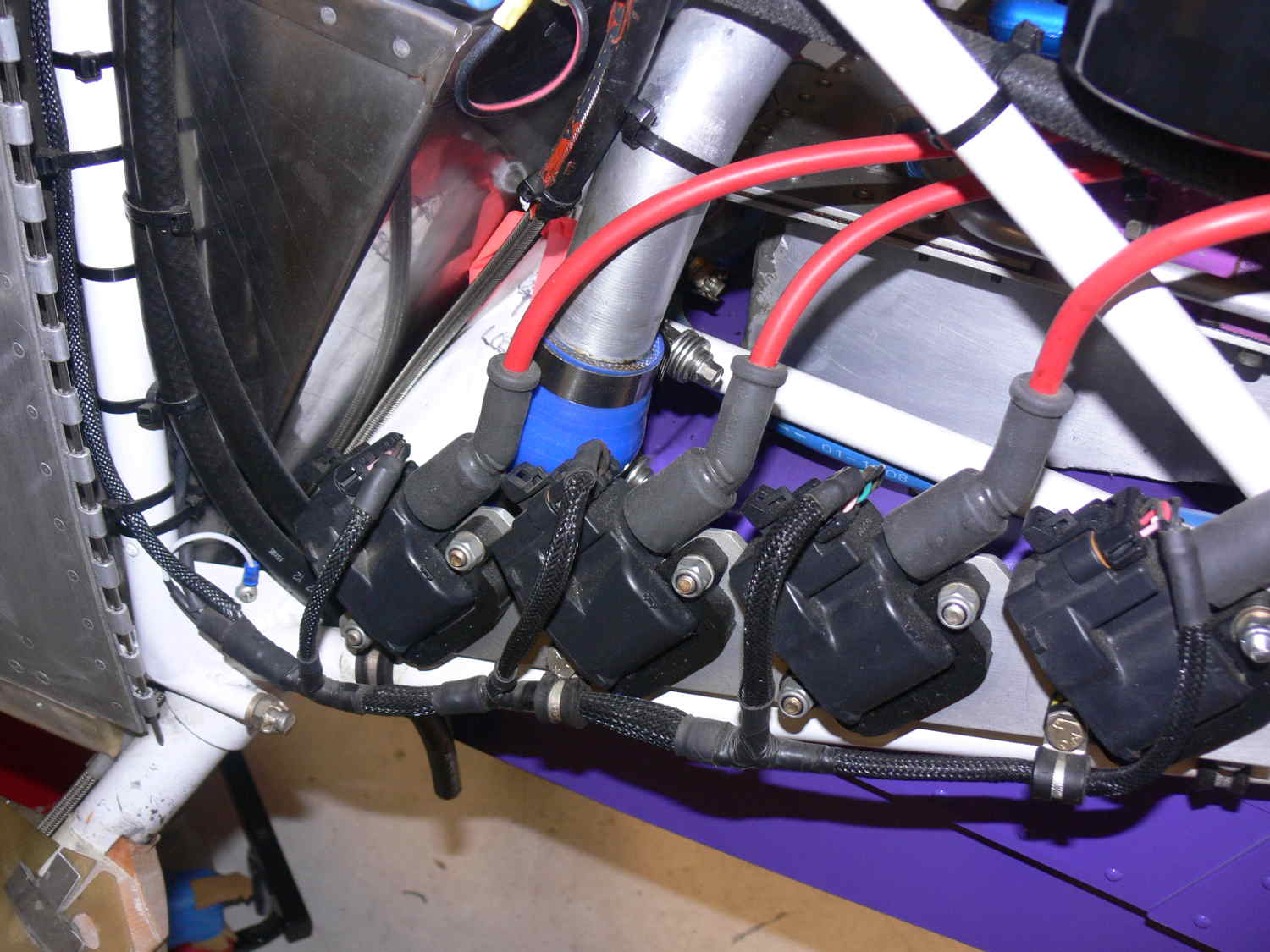
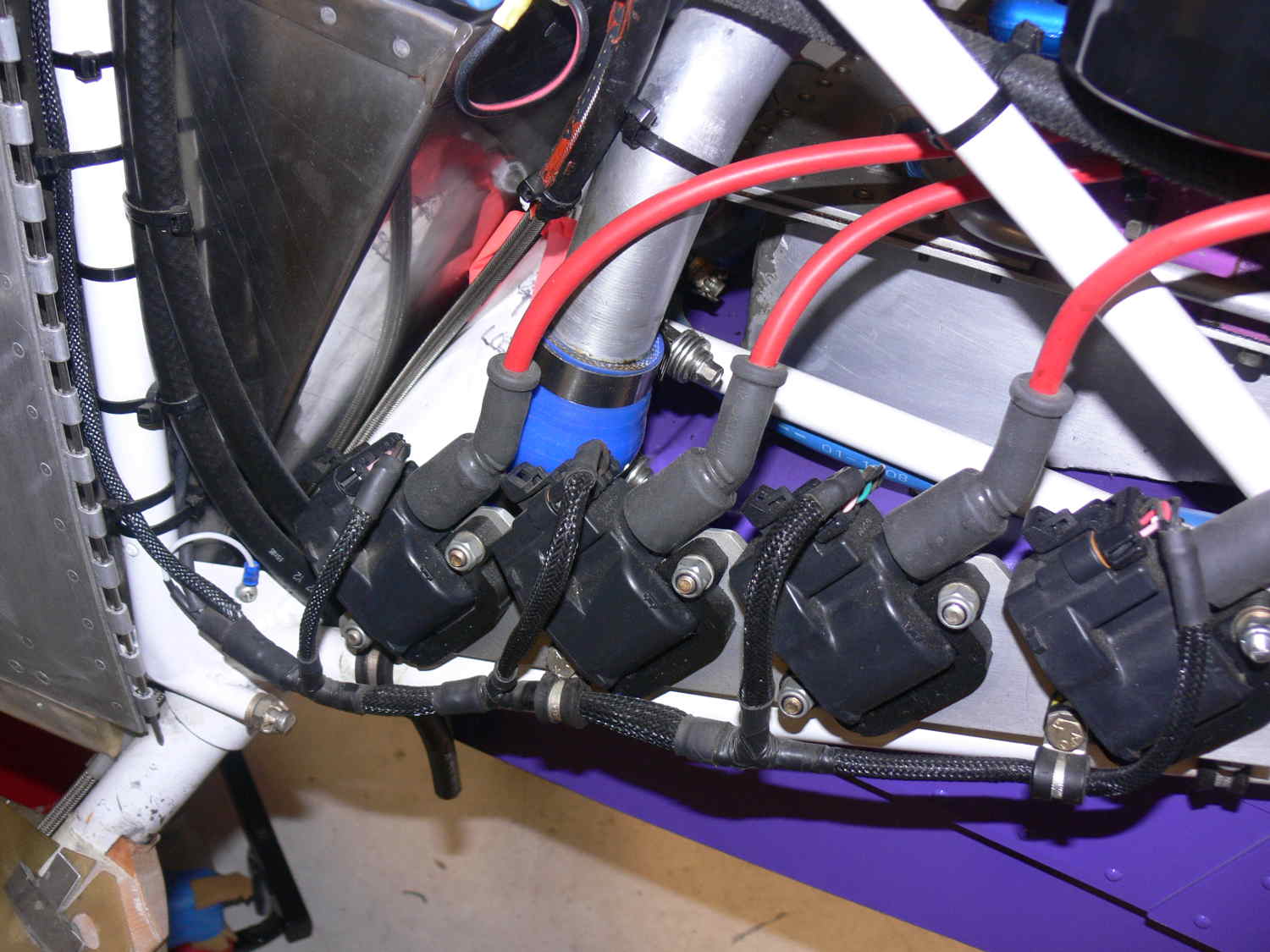
Does anybody know how many amps the smart coils pull when charging?
I have an idea and this information would be helpful.
Kevin Alderman
RX8 coil. Over 7 amps with 5 V applied to the trigger. That is all my
power supply could handle. It reduced the PS 12 Volts to about 6
volts with 7 amps If you leave it connected it will shut down. They
are designed to be "on" for only 4 ms.
You need a real low impedance power supply or a 12 volt battery to
make them work.
I'll let you know tomorrow as I have a motor cycle battery back at
the house. I am at the hangar now.
Paul Lamar
Next question- with the knowledge that a constant 12v across C and B,
the coil will charge and eventually overheat. Can the coil charge for
4ms, then sit for another short period before being triggered?
Or will there be a spark as soon as the field collapses from the
input voltage drop?
The answer will have an effect on the timing.
Kevin Alderman
With computer chips less than a buck I would not surprise me if it
shut off if an attempt was made to keep it on for more than about 4
ms.
I have no way of knowing with out doing a lot of analyses testing.
In any case as far as I can tell it takes an EFI system to control
them.
I want to make a simple ignition and carb fuel system so it takes
less than 5 or 10 years to install a rotary.
Besides I would not be a bit surprised if the RX8 flooding problem
was not mitigated by a simple CD ignition. It has the proven ability
to punch through fouled (AKA shunt resistance) plugs.
The other thing about CD's is they will work up to 11,000 RM or
higher which a smart coil will not. The RX8 coils are on the
bleeding edge of inductive coils at 9000 RPM.
Paul Lamar
Paul, here is what I have in my head- (dont laugh at what is in my
head, its stuffed so full of stuff like this it isn't even funny)
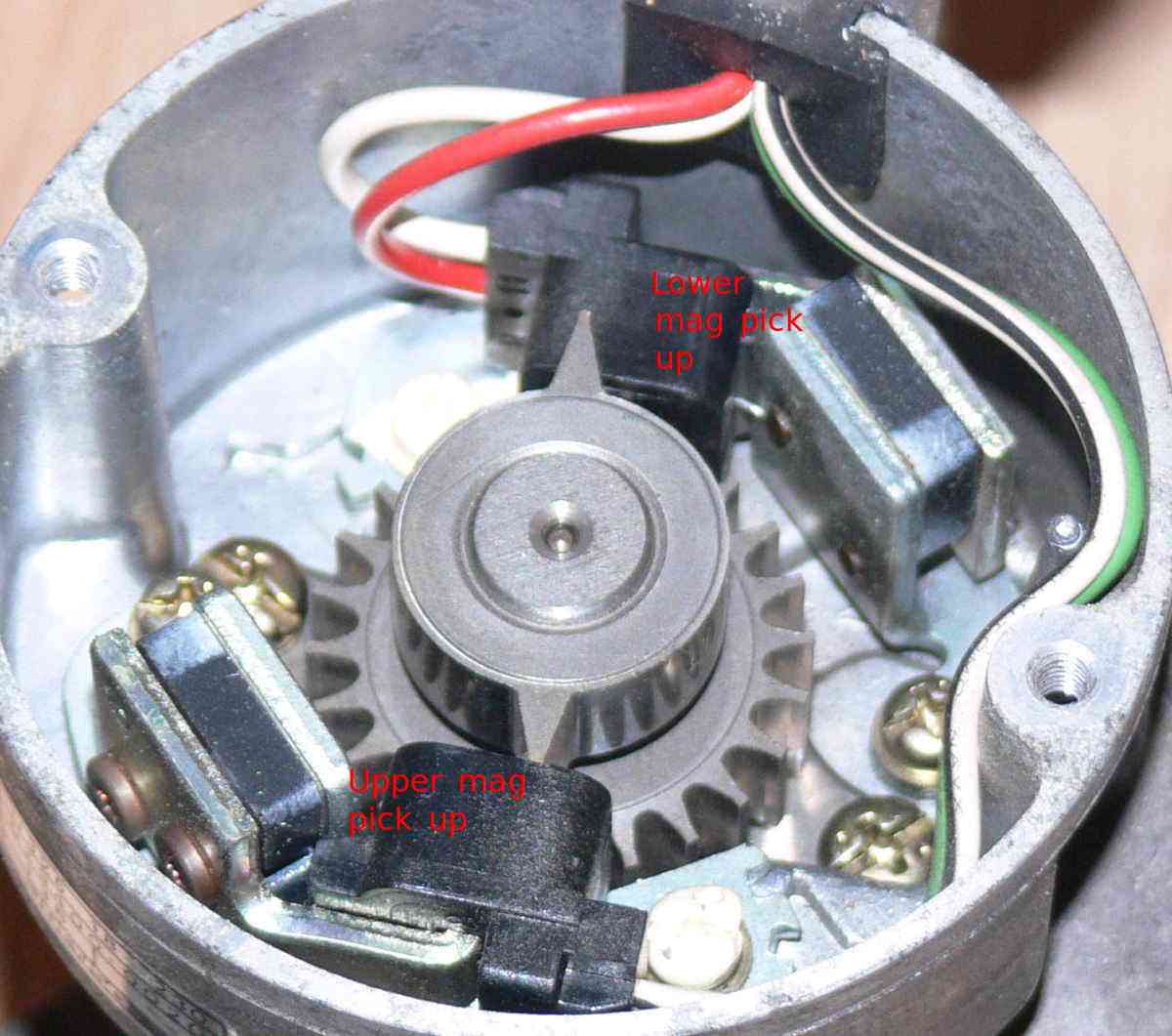
For about 50$ or so I can use a small atmel board and an LM1815
Variable reluctance board and program it using a few other
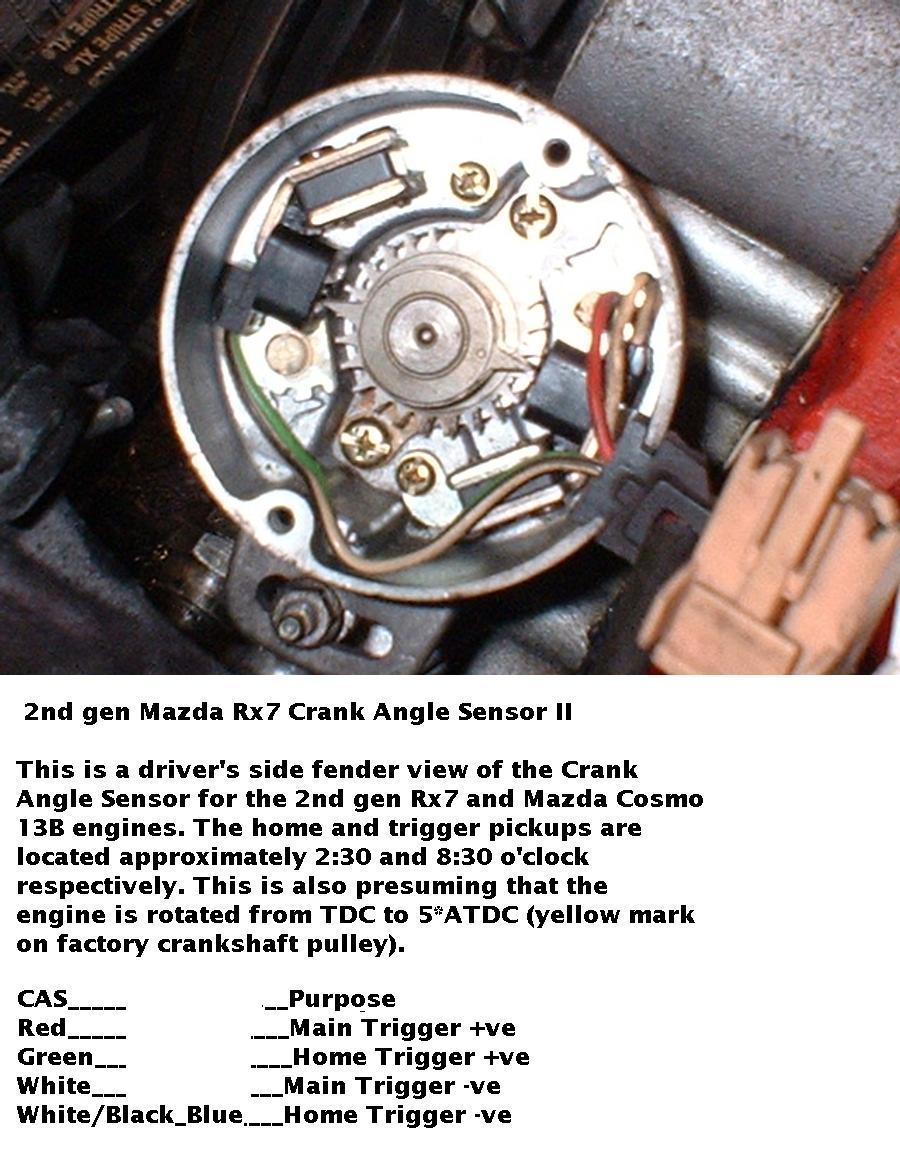
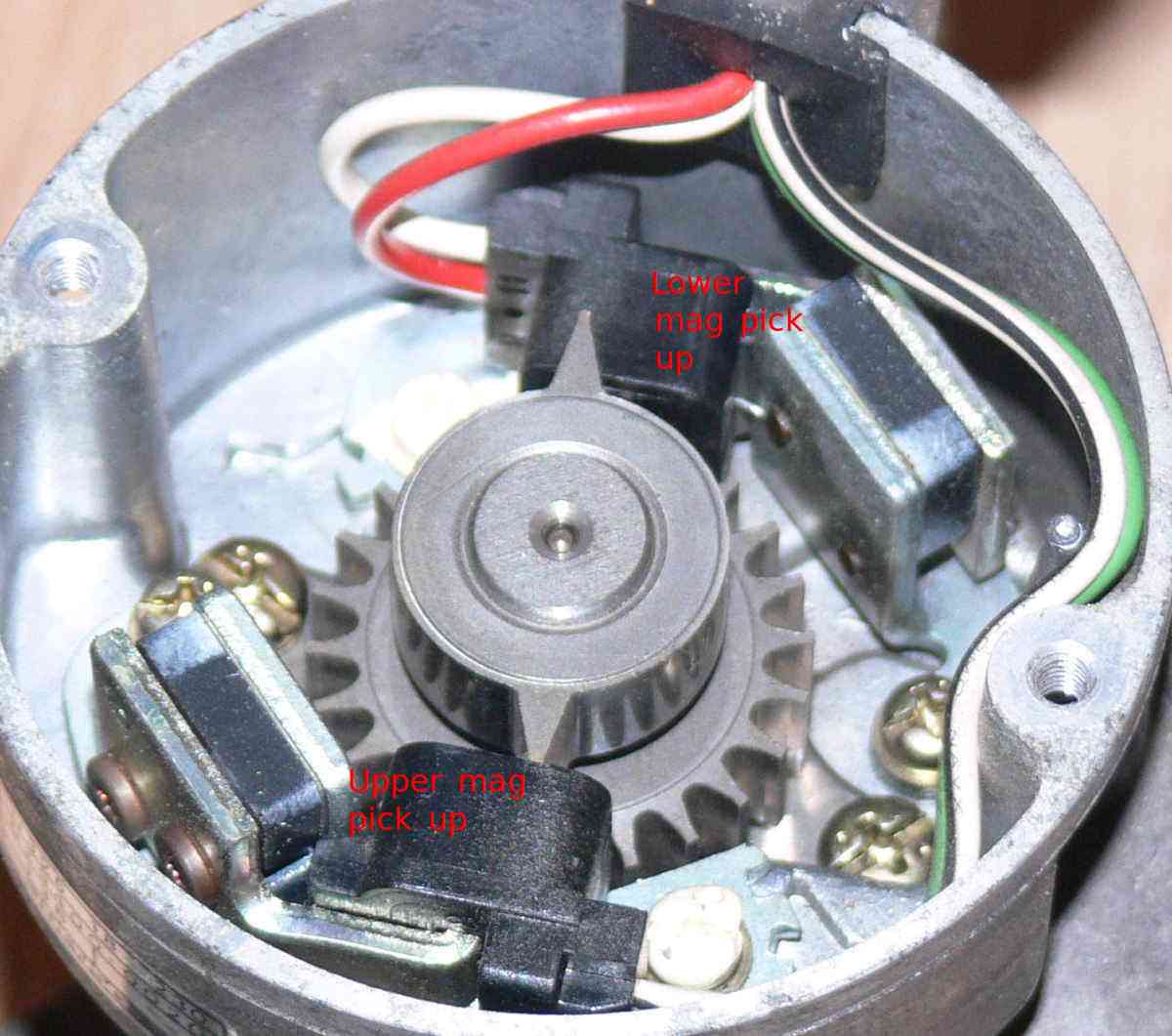
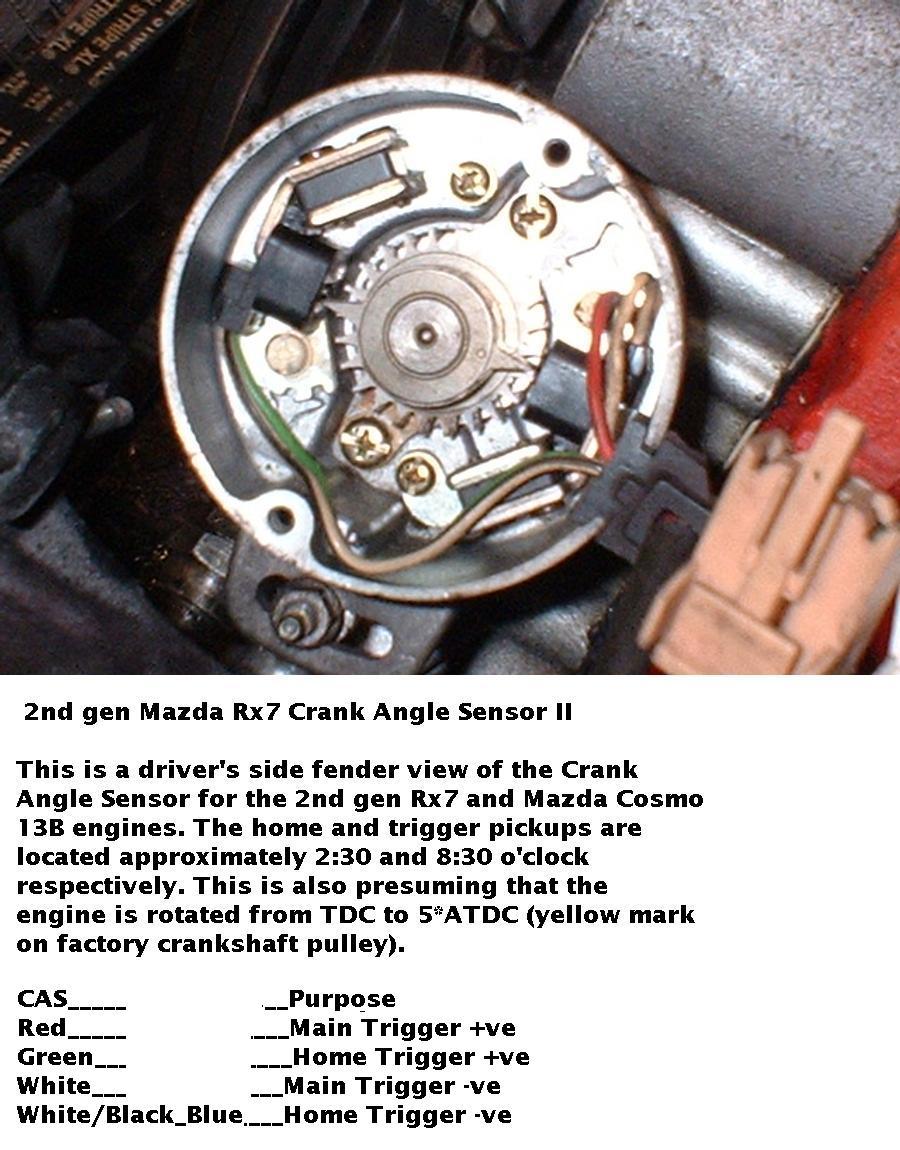
components diodes, transistors, etc. to read the stock CAS sensor
every time both sets of teeth produce a signal. The programming would
simply calculate the rpm (or probably read simple table), and from
that calculate the amount of time needed to get in the 4ms dwell, and
then let the CAS fire the coil. The coils will fire every time they
get a trigger event from the CAS, except for the first time which
will be before it charges. So with that information, we only need to
calculate dwell as a time interval that precedes the next firing
event based on the last firing event. So, we read a firing event,
and in the 180 degrees anticipate the next event, charge the coil 4
ms before it needs to fire, and when it fires turn off the charge
until next time. For those that have a stock CAS with 2nd gen coils
or even later coils, this should be a cost effective way to add spark
at a fixed timing advance and be reliable. A couple of connections,
a small box, add a carb and go flying. An alternative might be to
read the CAS 180 degrees ahead of firing and delay the firing based
on RPM. This way there would be more wiggle room for timing advance
adjustment based on RPM. Would be more code- might be version 2.0.
If I read the rpm off of the bottom teeth, and let the top teeth
trigger the firing, it shouldnt be too difficult to get it to work.
If we start adding retard and advance, it will get progressively more
and more complex as we go. To provision for a turbo would mean
reading MAP and retarding the timing with boost.
I need to go get a couple of rx8 coils to try it out and run some
tests on them. I have 2 sets of 2nd gen coils so I can experiment on
those as soon as I get back from a short trip I have to take this
week. It probably wont turn out quite that simple, but I think that
it will work. If it works and is reliable, then someone could buy a
junkyard engine, add a carb, use the factory CAS or hall effect
sensor and coils and be running much easier than tuning an EFI.
Kevin Alderman
Sounds like a plan that will work. I just got some $4 LM1815 and
they look good. Not as good as a hall effect but the best for a VR
sensor due to the zero crossing feature.
My ultimate goal is to have the rotary engine run with no electrical
system dependence. Just like a Lyc or Cont. with mags.
The outboard-motor/motor-scooter ignition system will do that. If
one had a low wing, a cowl tank and a hand pump you could keep the
engine running with a failed electrical system. I had a failed
electrical system at night one time in the C182 going into Las Vegas
right after an annual. The mechanic forgot to tighten the alternator
belt tension lock nut.
BTW High wings have lower accident rates due to fuel supply issues.
I'll trade 4 RX8 coils for two waste spark 2nd gen coils.
Paul Lamar
--
I will trade you the waste spark coils for the rx8 coils. I will send
them out today before I leave on my trip in the morning.
Redundancy is never a bad thing.
In my Viking I remember picking it up from annual, filling her up
with gas and taking off. And when my gear wouldnt stay retracted and
I had very little hydraulic pressure, staying in the pattern and
landing. Turns out that if you remove and rebuild a retract cylinder,
you might need to add a bit of hydraulic oil too. :) The mechanic
apologized, and it turned out well, but....
Kevin Alderman
Thanks for the coil swap Kevin.
Paul Lamar
-- You are welcome Paul. Maybe this will be an inexpensive and
simple way to get people flying.
Kevin Alderman
I have known of people spending a year or more trying to tune
Tracy's EFI. One or two gave up and put a Lyc in.
Paul Lamar
I dont have his code, but that shouldn't be happening. I told you
that I have been talking to Fred the coder behind the free ems
system. Like megasquirt, his system is capable of running a car with
it starting, stopping, mid throttle, etc. issues, and after our
discussions about the rotary airplane engine, we agreed that most of
his code can be discarded for our uses. Our planes have a really
narrow operating window, which is why they can use fixed timing
advance, carbs and magnetos. A car could not function today with this
setup.I think the key is the manual leaning and a proper fuel table.
Or even better a suitable calculation for fuel that takes a reading
from a Mass Air Flow sensor for its baseline. As I read through the
megasquirt code, I cant help but see lots of code that we dont need
for this system. We need to read the engine temp, rpm and mass of air
coming in to determine our mixture and then adjust the fuel and
timing from there. If we are getting too hot, add fuel to the mixture
and change the timing. This isn't a difficult program but could
easily get way too complex if you aren't careful.
The coder has to think like a carburetor- this much air comes in, it
needs this much fuel to burn. Fred is a programmer by day and a
weekend drag racer. He has a racing pickup truck with a 2.0 liter 4
cyl engine using his efi, a turbo and mazda injectors pushing 600 hp.
There are others, one in particular is a volvo station wagon that
used to be carb and points/coil that now gets over 20 mpg and drives
every day.For now, the easiest way would be the carb and a way to
make sparks, and I think I have the answer for that.
Kevin Alderman
http://www.efi101.com/forum/ <
http://www.efi101.com/forum/
this is a good site for just what you are working on about coils. You
may have to go back a bit in the forum to search for all the info. This
is a professional site and the moderators have years of experience.
chris smale
Kevin when you get that thing working I will test it for you on the RV4.
I still have four smart coils on it and a 2nd gen CAS.
Your coils went out today priority Mail.
Paul Lamar
--
The Rotary Engine News Letter. Powered by Linux.
ACRE NL web site.
http://www.rotaryeng.net
You Tube
http://tinyurl.com/beqqxas
Copyright 1998-2013 All world wide rights reserved.