http://www.nzherald.co.nz/motoring/news/article.cfm?c_id=9&objectid=11164644
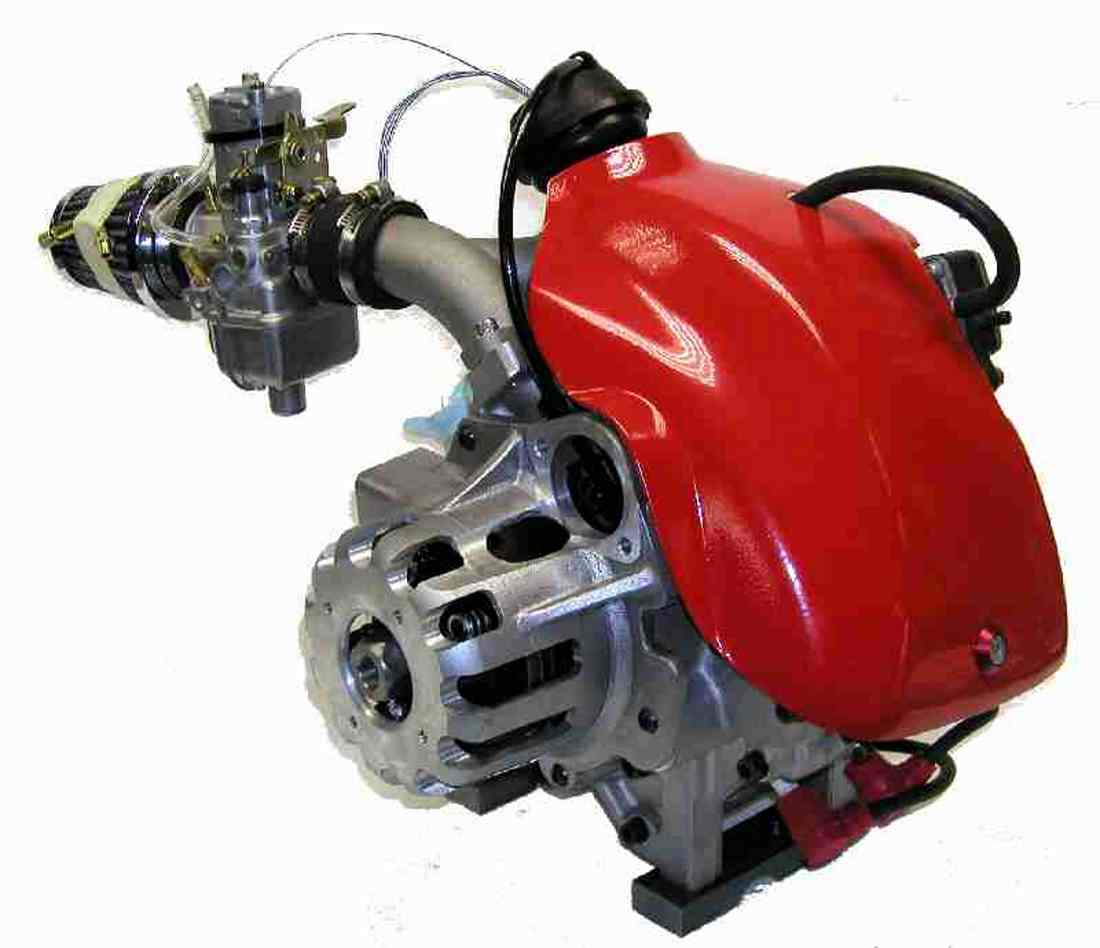
Its got side-port intake, so its just a periport and exhaust port
massaging away from double the HP!
-Dan
"Yamanouchi had said the main problem with rotaries was the lack of
torque and need to rev hard, thus using a lot of fuel. His solution
was large displacement engines, far bigger than the 12A, 13B and 20Bs
the company has produced over the years. Suzuki confirmed that
passenger rotaries were still very much on the table."
Hmmm...
Their relationship is far more than arms length these days ( Mazda /
Ford ) but the Eco-Boost System used on a couple of their engines
have a flat torque curve ( which IMHO was pretty revolutionary and no
one saw it ) , my guess is this is achieved by modulating the
turbo-design and the wastegate. Why would not be this a natural
application for the Rotary and not have to upsize ?
Anthony AKA John Smith :)
They are wrong.
All they need is a European style auto shafting manual transmission for
better acceleration.
No need for a bigger engine.
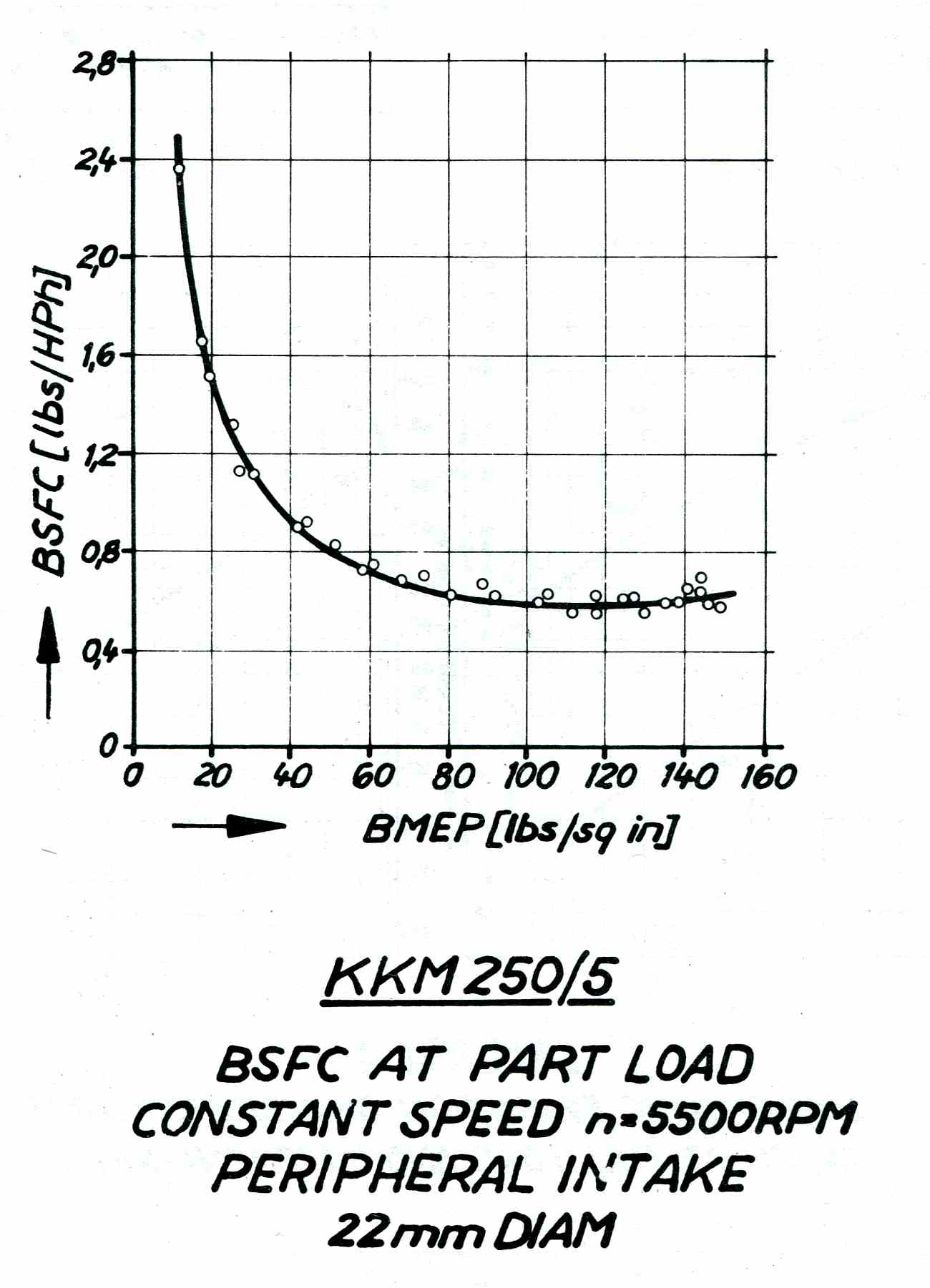
The rotary engine suffers from high BSFC at low loads.
Low loads are the name of the game for automotive engines.
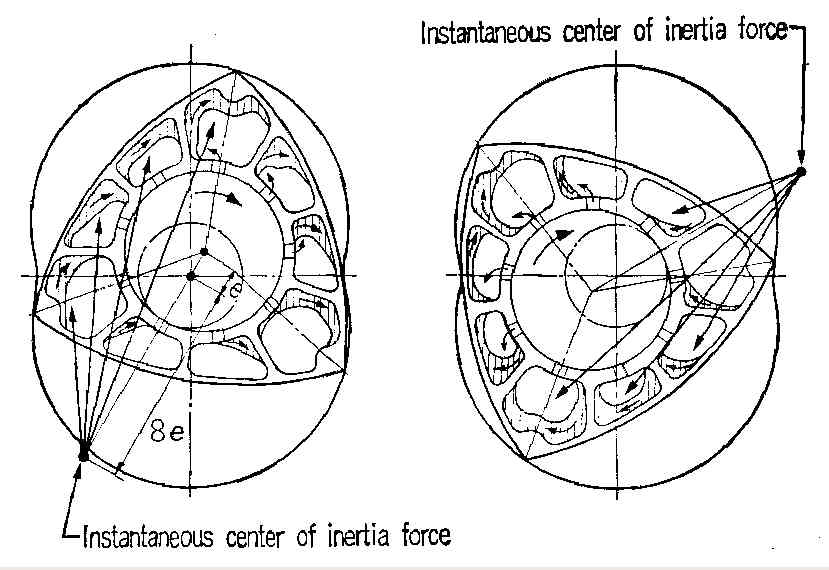
GM found back in 1978 that the temperature of the rotor face had a strong
effect on the low load BSFC. A 9.8% improvement in the BSFC
was possible with a hot rotor at low loads. Higher rotor temperatures gave
lower fuel burn at low loads. However if the rotor was not
cooled at high loads the cast iron over heated.
GM got a patent in 1976 on a hot rotor face insulated from
the rest of the rotor. Here is a pdf on the 3,995,602 patent.
The SAE GM paper on the subject was 780419.
The obvious solution is to control the temperature of
the rotor as a function of the load on the engine.
The amount of oil cooling on the rotor is now controlled
by a ball and a spring that opens at a certain RPM.
RPM is not the problem. Engine load is the problem.
A way can be found to cut off the oil cooling to the
rotor at low loads regardless of the RPM. In other
words run the rotor face as hot as possible at all RPM's.
One mechanical way of doing that is insert a stationary tube
in the center of the e-shaft that moves back and
fourth controlled by a servo that senses engine
load and cuts off the cooling oil supply to the
rotor. A piece of cake for todays computer controlled
engines. In fact it need not be controlled by a computer
or electrical servo but by a simple air servo connected to the
intake manifold pressure.
Patent applied for :)
Here is another way.
Install a small cruise rotary engine bolted to the RX8 diff. A
mechanical hybrid so to speak.
Take advantage of the small size and light weight features of the rotary
engine.
Get an AIXRO Kart engine and mount it on the back of the RX8 differential.
Remove the stock rear cover. Use a second pinion gear and run the AIXRO
only at cruising speed with a one way clutch to disconnect it at lower
speeds.
Assume a 30 inch diameter tire and that gives a 94.248" circumference.
That is 7.85 feet in
circumference. At 95 feet per second or 65 MPH that is 12 revs per second or
720 RPM. Multiplying by the 4.77:1 rear axle ratio yields 3434 AIXRO
engine RPM.
So you will need a 2.17 planetary gear reduction given 7452 RPM max HP
for the AXIRO engine.
That is also 114 revs per mile... per hour or 96 MPH at 11,000 AIXRO max
RPM.
My guess is the MPG running on the AIXRO alone will
be .73/.52 X 25 will be about 35 MPG. Converting the AIXRO to an oil
cooled rotor and EFI and the RX8 MPG could jump to 38.8 MPG.
Going the full turbo compound route on the AIXRO and getting
the BSFC down to .4 or below the RX8 MPG would jump to
.73/.4 X 25 or 46 MPG at a steady 65 MPH.
The cost of testing this is not beyond the means of an individual.
Paul Lamar
The Rotary Engine News Letter. Powered by Linux. ACRE NL web site.
http://www.rotaryeng.net <
http://www.rotaryeng.net/ You Tube
http://tinyurl.com/beqqxas Copyright 1998-2013 All world wide rights
reserved.