Hi Paul,
Has anyone any experience with converting a rotary to steam??
I'm working with a guy who is building a Pietenpol and has built a 3
cylinder radial steam engine for it. He is a 'traditional' guy and
whenever I bring up the subject of the Wankel rotary i get subjected to
a barrage of abuse and negativity. (It wont breathe, the apex seals will
melt, etc, etc).
Does anyone have any Ammo I can fire back?? Studies done??
Thanks, Russ Ward
The rotary would make a fine steam engine. Every third revolution
inject water and
not gasoline. Eliminates the cooling system as well. Patent applied for.
Paul Lamar
I wonder if such an engine would be practical. Would water evaporate
that
fast?
We are talking about a few thousand RPM
GAO, Gordon
It has been tested in a piston engine.
"The six-stroke engine is a type of internal combustion engine based on
the four-stroke engine Four-stroke_engine, but with additional complexity
intended to make it more efficient and reduce emissions. Two types of
six-stroke engine have been developed since the 1890s:"
"The pistons in this type of six-stroke engine go up and down three
times
for each injection of fuel. There are two power strokes: one with fuel,
the other with steam. The currently notable designs in this class are the
Crower six-stroke engine invented by Bruce Crower of the U.S.; the
Bajulaz
engine by the Bajulaz S.A. company of Switzerland; the Velozeta
Six-stroke engine built by the College of Engineering, at Trivandrum in
India; and the NIYKADO Six Stroke Engine invented by Chanayil Cleetus
Anil, NIYKADO Motors, India under patent number IN252642 granted on 25
May
2012."
http://en.wikipedia.org/wiki/Six-stroke_engine
It is a form of turbo compounding as the otherwise waste cooling heat is
used to vaporize the
water and turn it into steam.
"The enthalpy of vaporization is the energy required to turn water into
the gaseous form when it increases in volume by 1,600 times at standard
temperature and pressure; this change in volume can be converted into
mechanical work in a piston engine and in steam turbines."
http://en.wikipedia.org/wiki/Steam
Paul Lamar
It sounds to my possibly ignorant mind that water injected between the
exhaust port and the DD15 (?) turbine might be a good location. It
should be
fairly simple to implement, cool the exhaust gas for the blades and
increase
the gas flow through the turbine. I believe some one might have suggested
steam erosion of the blades would be an issue but that should apply no
matter where the water goes in.
John Gibbons
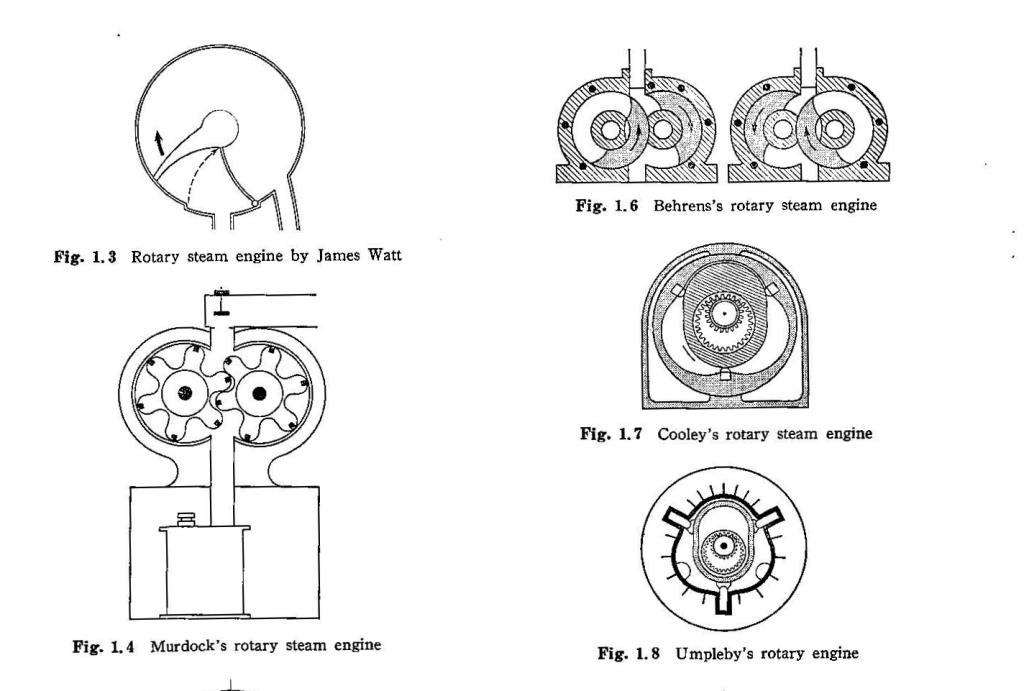
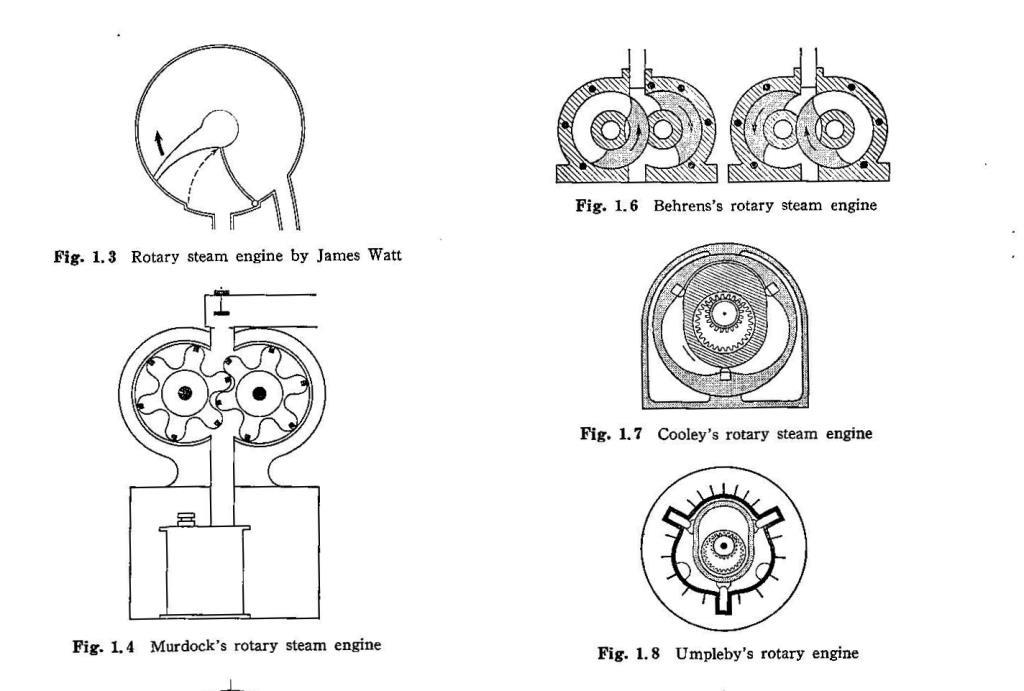
I guess one of the first Rotary engines, the design by Umpleby, that is
currently in exhibition somewhere in the UK, was based in the Rotary
Steam machine by Cooley. Attached images are from the Kenichi
Yamamoto book: 'Rotary Engine', 1981 edition, that is available on the
web.
Good weekend, best regards. Salut
Jose Gros-Aymerich
Madrid, Spain
The Rotary Engine News Letter. Powered by Linux.
ACRE NL web site.
http://www.rotaryeng.net.
You Tube
http://tinyurl.com/beqqxas.
Copyright 1998-2013 All world wide rights reserved.