In regards to these Wankels as range extenders, did anyone ever see
Audi's work with Aluminum Rotors?
http://www.ipmd.net/articles/001927.html
I haven't been a fan of the 3D Printing technologies, I know enough
about metallurgy to make me dangerous and I couldn't see parts being
made that were robust enough via printing. My mind is changing after
hearing about GE making all sorts of parts via printing in their
"Hot Sections" of their turbine engines, and seeing the CEO of 3D
systems on one of the Financial channels.
I also saw the other day two articles about printing Titanium and how
cheap it may become, and printing it....
http://www.economist.com/news/science-and-technology/21571847-exotic-useful-metals-such-tantalum-and-titanium-are-about-become-cheap
http://www.domain-b.com/technology/engineering/20140101_titanium.html
So with that as a background, is a printed Titanium ( or Aluminum
Rotor ) a possibility?
Are at one of those rare junctures in history where material advances
and manufacturing techniques put us at a place of potential rapid
change aka a paradigm shift ?
My best,
John Smith ?
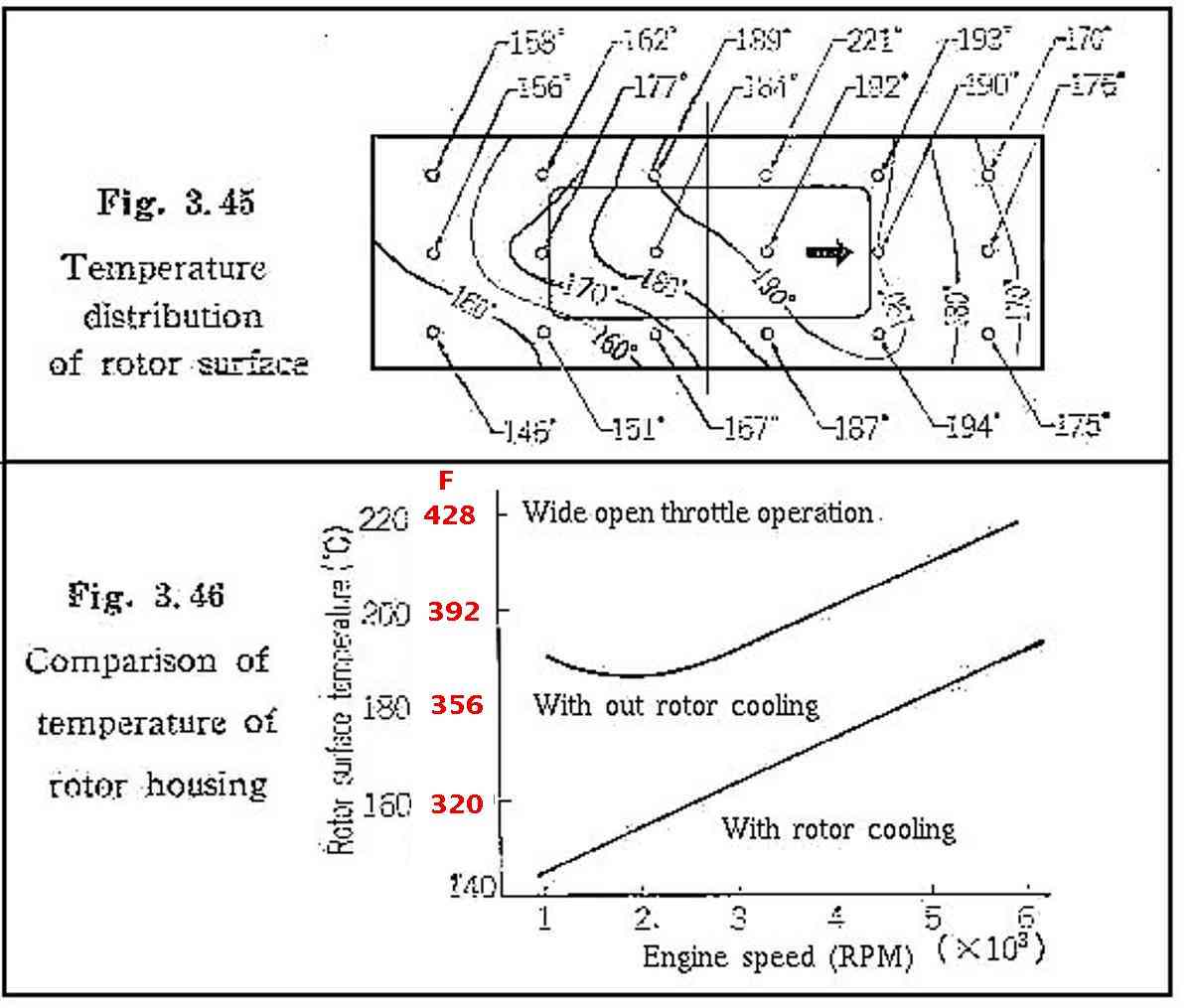
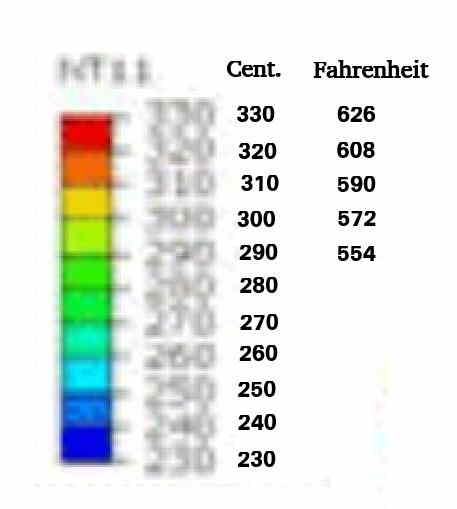
Won't work. Top workable temperature for aluminum is 500 F.
Paul Lamar
Paul, it seems like aluminum is used in situations where it sees much
more than 500 degrees. A piston crown for instance. Aluminum might
not be tough enough at the apex seal area but titanium would be.
Direct metal laser sintering has been used to make turbine blades, so
it is plenty tough.
Bill Jepson
The piston crown gets cooled by the incoming charge every other
revolution.
400F is the absolute limit for aircraft cylinder heads. The apex
seal slot is high stress and wear area on the rotor. Not to mention
the phasing gear fixing.
Aluminum losses half it's strength at 500 F and melts about 1100 F.
Sintered metal is hard but brittle. It can be fractured with a
hammer blow.
Paul Lamar
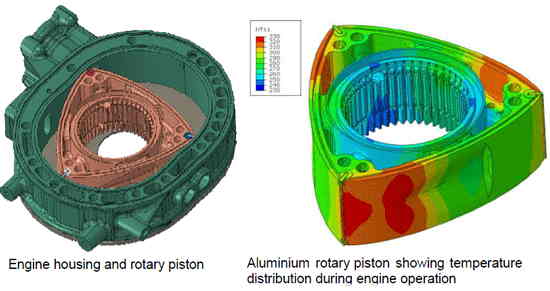
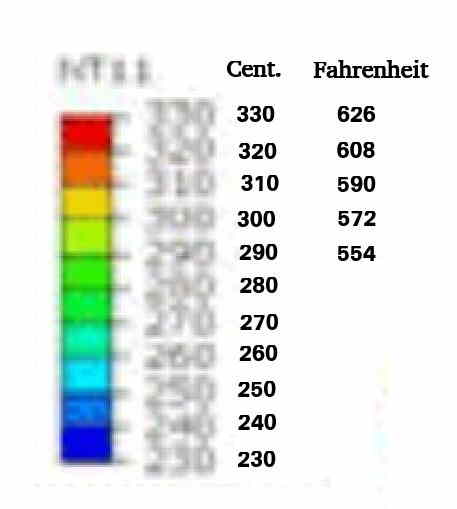
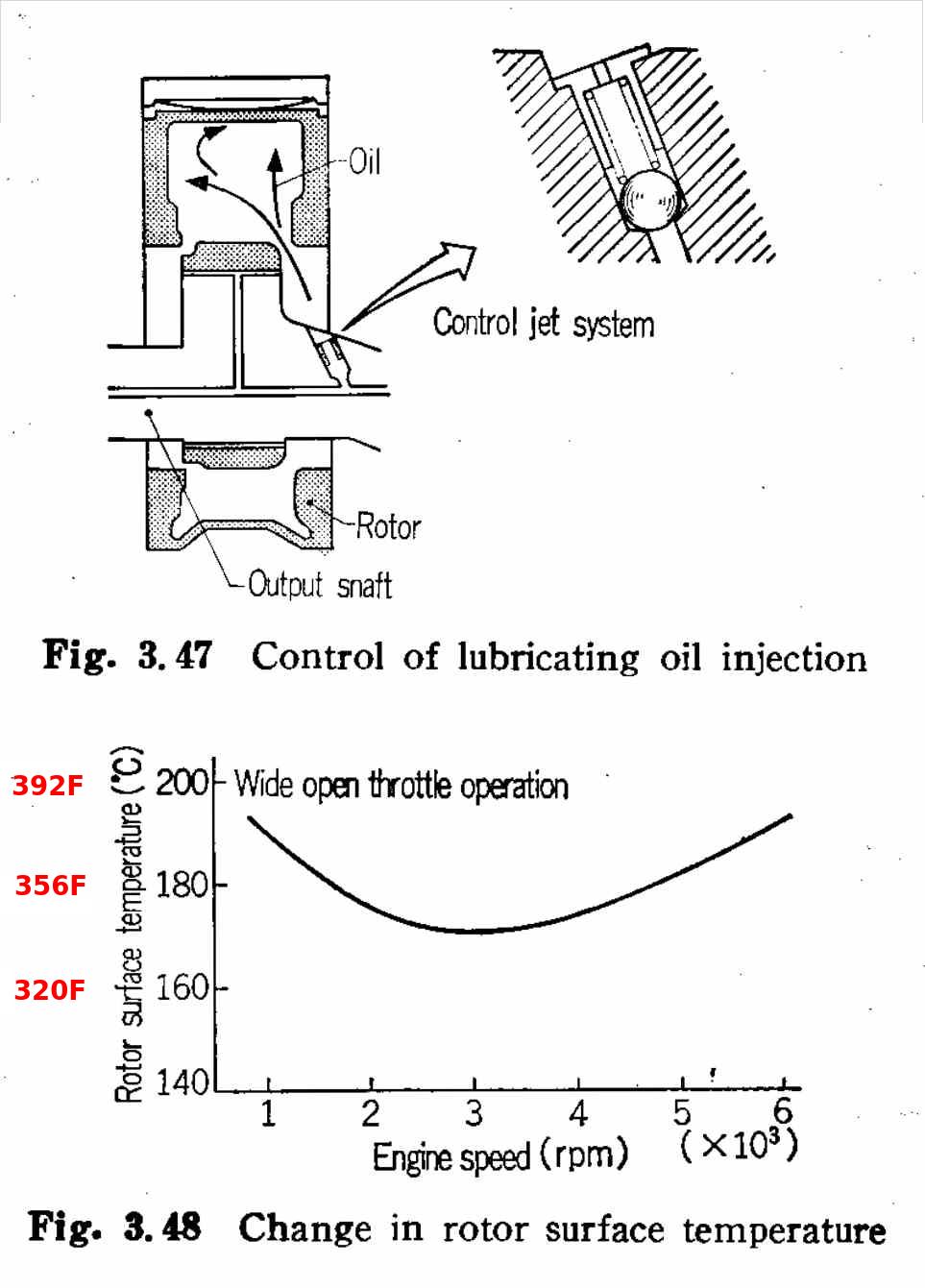
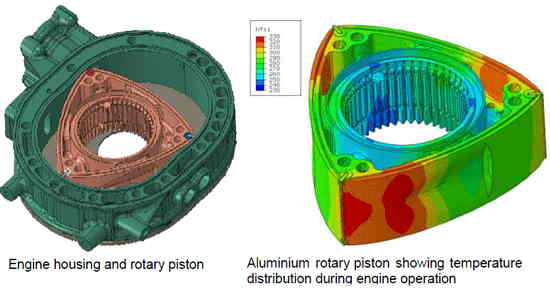
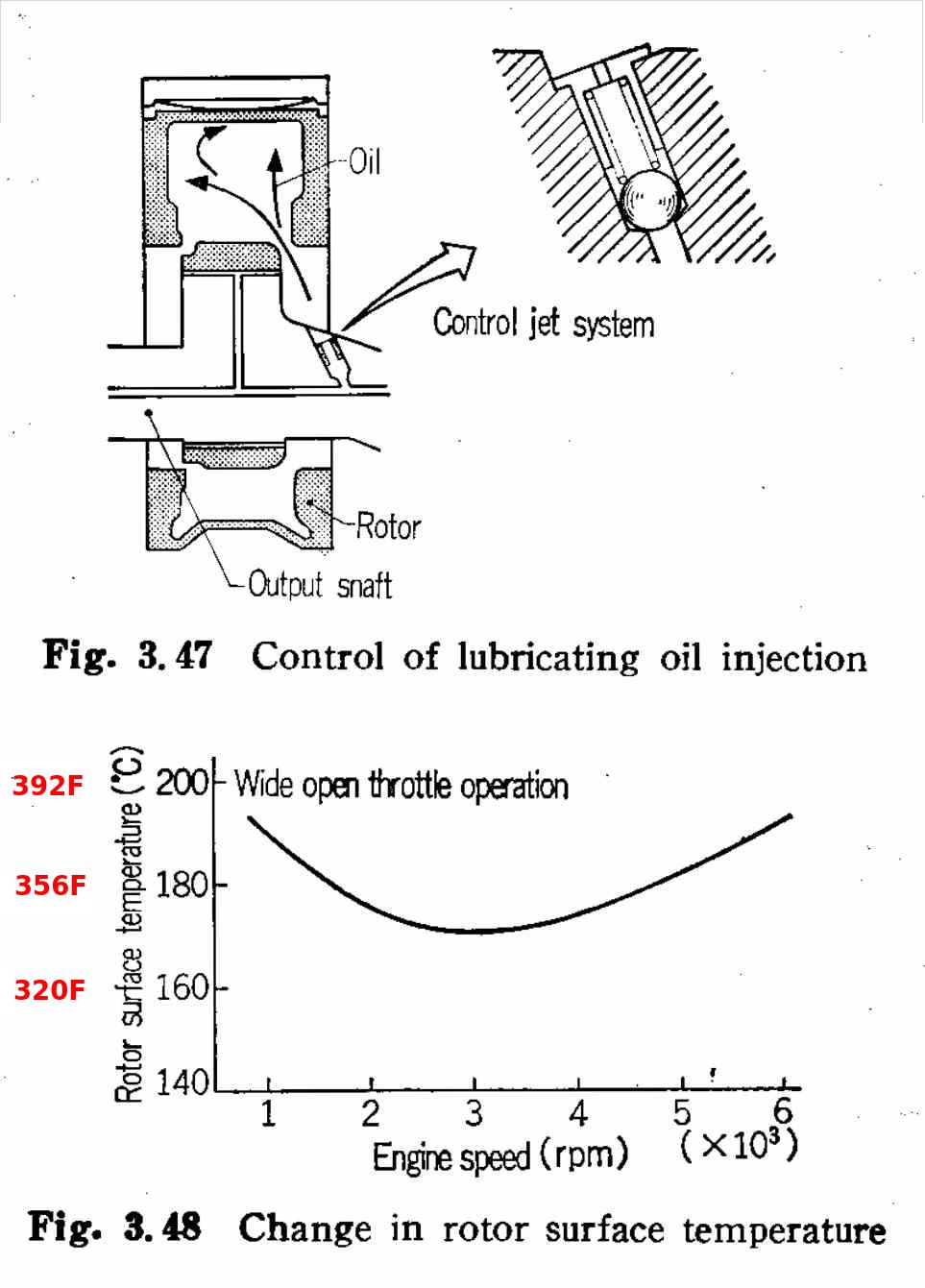
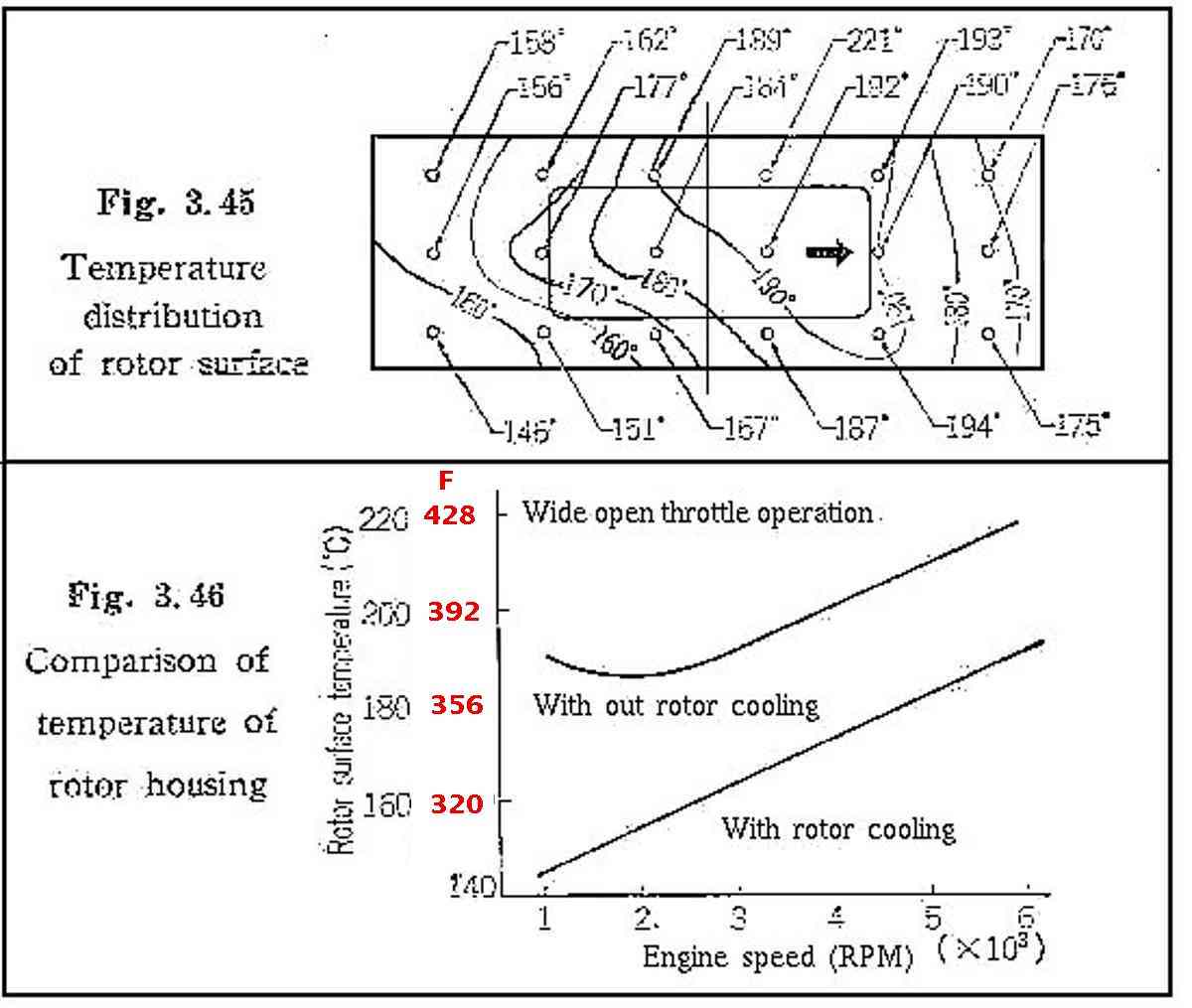
I believe the picture shows rotor surface temperature of cast iron (?).
Would an aluminum rotor conduct the heat away fastes, possibly resulting in
a cooler rotor, possibly into the range aluminum could handle ?
Higher oil cooling load if it does I guess.
John Gibbons
The cast iron rotor temperature patterns are different. It is for the
aluminum rotor.
Paul Lamar
Rotary Engine News Letter. Powered by Linux. ACRE NL web site.
http://www.rotaryeng.net. You Tube
http://tinyurl.com/beqqxas.
Copyright 1998-2013 All world wide rights reserved.